Side-by-Side Cognitive Profiles: A Detailed Look
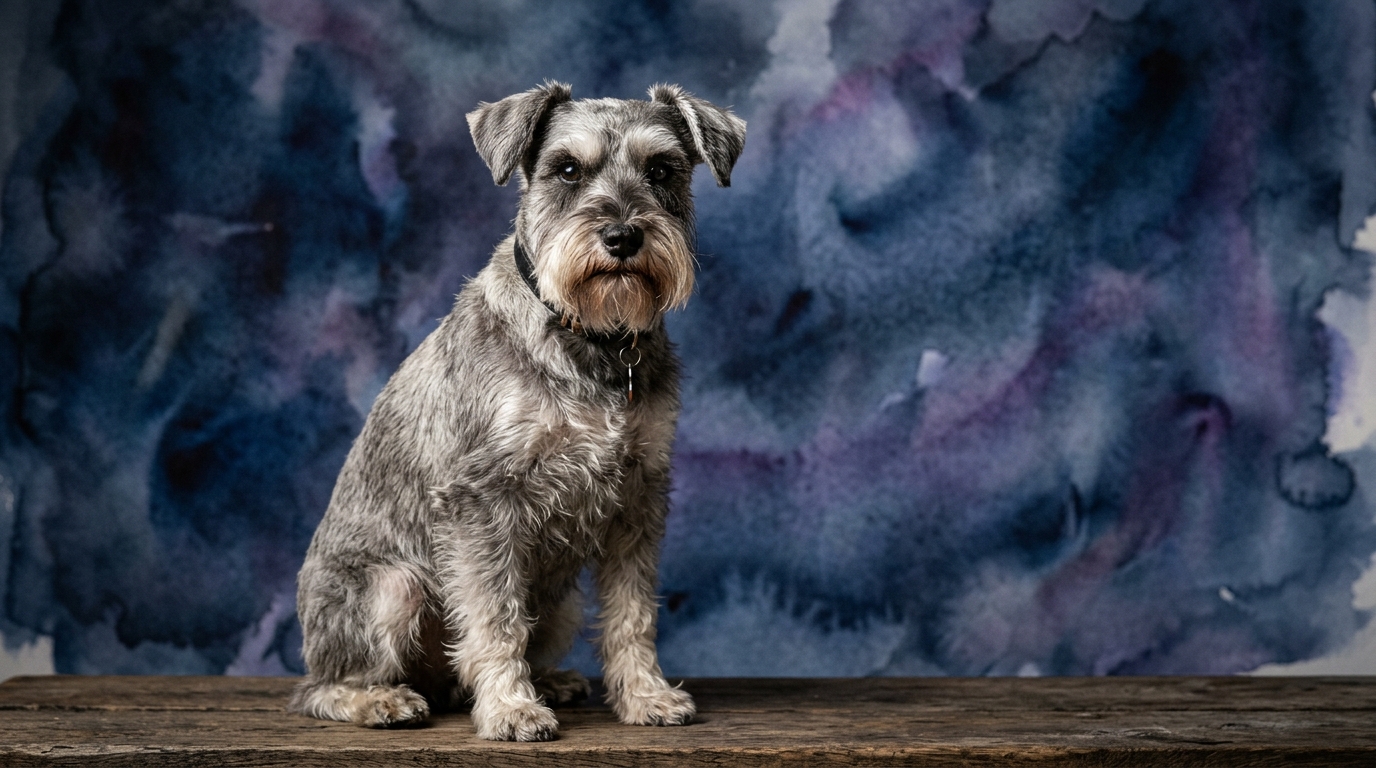
At The Cosmic Pet Pet IQ Lab, we evaluate canine intelligence across five key dimensions, providing a granular view of each breed's cognitive strengths. For the Miniature Schnauzer, our analysis shows a well-rounded cognitive profile, reflecting their reputation as adaptable and responsive companions. Their Problem Solving is rated at 4/5, indicating an adeptness at navigating novel situations and figuring out puzzles, often demonstrating a thoughtful approach to challenges. Training Speed is a standout at 5/5, signifying their rapid grasp of new commands and routines, making them exceptionally responsive learners. Social Intelligence, at 4/5, points to their strong ability to interpret human cues and adapt their behavior accordingly, fostering deep connections. Their Instinctive Drive, rated 4/5, suggests a significant but often manageable prey drive, typical of a terrier, which can be channeled into focused activities. Finally, Memory at 4/5 means they retain learned behaviors and experiences effectively over time, contributing to their consistent performance.
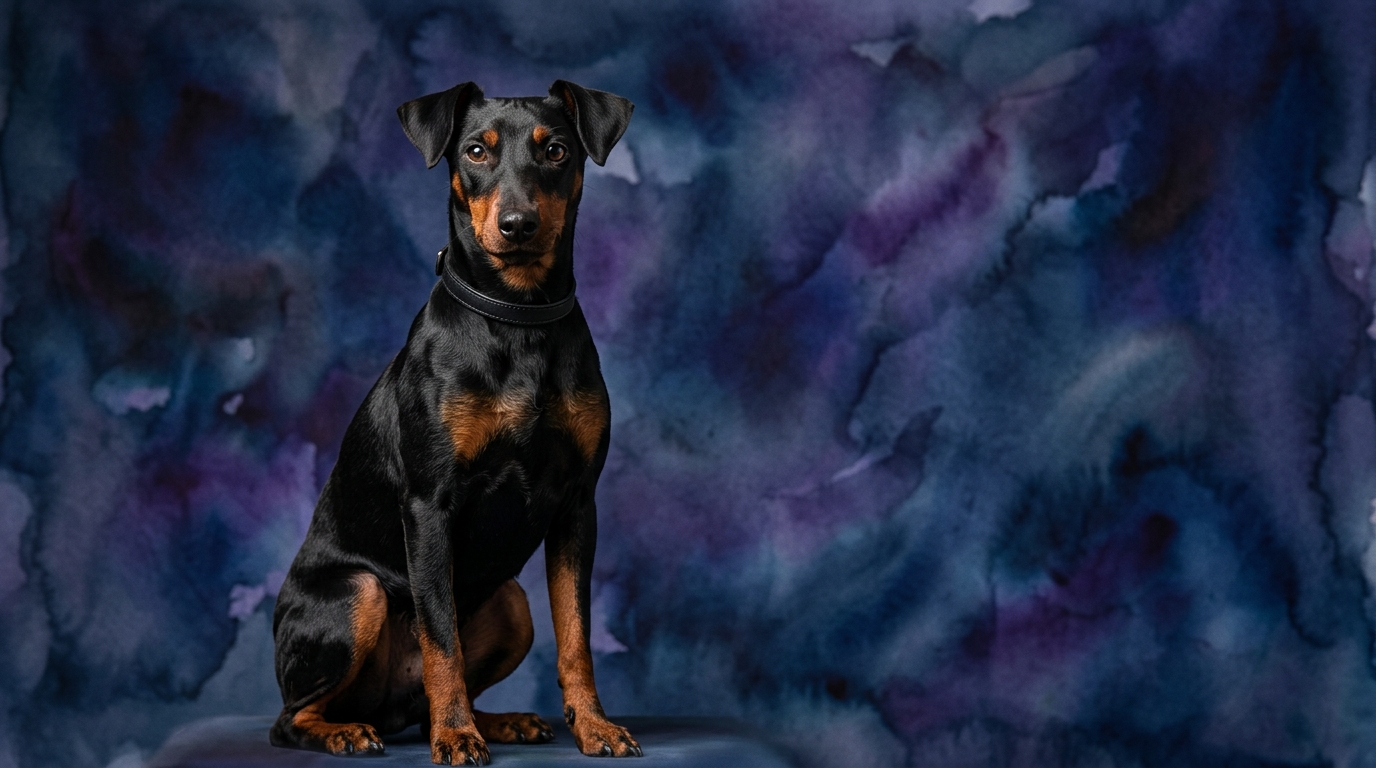
The Manchester Terrier, while sharing the terrier spirit, presents a distinct cognitive blueprint. Their Problem Solving score is 3/5, suggesting they can tackle challenges but might require more guidance or repetition compared to their Schnauzer counterparts. Training Speed is also rated 3/5, indicating a steady learning pace that benefits from consistency and patience, rather than rapid assimilation. Social Intelligence, at 3/5, means they form good bonds with their families but might exhibit a less nuanced interpretation of complex human emotions or subtle cues. Instinctive Drive, also 3/5, points to a moderate prey drive; while present, it may be less intense or persistent than some other terrier breeds, making it somewhat easier to manage for certain owners. Their Memory, at 3/5, ensures they recall training and routines, though perhaps with less precision or long-term retention than a breed scoring higher in this dimension.
Where the Miniature Schnauzer Shines Cognitively
The Miniature Schnauzer consistently demonstrates a cognitive advantage in areas demanding quick comprehension and intricate problem-solving. With a Coren ranking of #12, they fall into a category of breeds that grasp new commands in fewer than five repetitions and obey the first command 95% of the time or better. This places them significantly higher than many breeds, including the Manchester Terrier, which does not appear in Coren's top rankings. Their superior Training Speed (5/5) means they not only learn rapidly but also exhibit a strong desire to engage in the learning process, often anticipating the next cue. This translates to an easier time teaching complex sequences of commands or preparing for advanced dog sports like obedience and agility, where precision and speed are paramount.
Furthermore, their elevated Problem Solving (4/5) and Social Intelligence (4/5) scores allow Miniature Schnauzers to excel in environments requiring adaptability and a keen understanding of their human companions. They are often observed independently figuring out how to open gates or retrieve hidden toys, showcasing a proactive approach to mental challenges. Their social acumen means they are more likely to pick up on subtle changes in human tone or body language, allowing for a more responsive and interactive partnership. This cognitive blend makes them particularly adept at roles requiring close cooperation and a nuanced understanding of their environment, such as therapy work or even learning intricate tricks that demand sequential thinking.
Where the Manchester Terrier Exhibits Unique Cognitive Strengths
While the Manchester Terrier's cognitive scores are generally lower than the Miniature Schnauzer's, their distinct profile highlights certain strengths, particularly for specific owner lifestyles. Their Instinctive Drive at 3/5, coupled with a Problem Solving score of 3/5, suggests a more focused, practical intelligence often directed towards their immediate environment and tasks. This moderate drive means they possess a natural inclination for chasing and exploring, but it may be less overwhelming or persistent than in breeds with higher drive scores. This can be an advantage for owners who appreciate a dog with a clear purpose and independence without the constant need for highly structured mental stimulation that a higher-drive, higher-problem-solving breed might demand.
The Manchester Terrier's cognitive makeup, characterized by steady learning and solid memory, contributes to a reliable and consistent companion once trained. Their 3/5 in Social Intelligence might imply less emotional overtness, but this can translate into a more self-possessed and less demanding social presence. They are often described as having a 'no-nonsense' attitude, being affectionate but not clingy. This independence, while requiring more consistent training effort initially, means they may be less prone to separation anxiety or over-reliance on human guidance for their emotional well-being. For owners who value a dog that is self-assured and less prone to needing constant validation or direction in social situations, the Manchester Terrier's cognitive style can be a distinct advantage.
Training Dynamics: Miniature Schnauzer vs. Manchester Terrier
When it comes to ease of training, the data from The Cosmic Pet Pet IQ Lab clearly points to the Miniature Schnauzer as the more straightforward student. Their Training Speed of 5/5 means they absorb new commands with remarkable rapidity, often understanding what is expected after just a few repetitions. This is bolstered by their 4/5 Problem Solving, which allows them to generalize learned behaviors to new contexts and quickly adapt to variations in commands. Behavioral differences underpin this; Schnauzers typically exhibit a strong desire to please their handlers and are highly motivated by positive reinforcement, eager to engage in interactive learning sessions. They thrive on consistency and clear communication, making them excellent candidates for advanced obedience, rally, and trick training, where their quick uptake of cues is a significant asset.
The Manchester Terrier, with a Training Speed of 3/5, requires a more patient and consistent approach. While certainly trainable, they may take longer to master new commands and might require more repetitions to solidify learning. Their 3/5 Problem Solving score means they might not generalize commands as readily, potentially needing specific practice in various environments. Real behavioral differences include a stronger independent streak; Manchester Terriers are terriers at heart, often displaying a 'what's in it for me?' attitude. Their focus can be more easily diverted by interesting scents or sights, necessitating a handler who can maintain engagement and make training sessions highly rewarding and engaging. They respond best to fair, firm, and consistent methods, and their intelligence is often expressed through cunning rather than eager compliance, meaning owners must be creative and persistent to maintain their attention.
Lifestyle Match: Active vs. Relaxed Owners
Choosing between these two breeds based on an owner's activity level involves understanding their inherent energy and cognitive needs. The Miniature Schnauzer, with its robust cognitive profile across the board, generally suits active owners who are keen to engage their dog in structured activities beyond just physical exercise. Their 4/5 Social Intelligence means they thrive on interaction and being a central part of family life, often seeking out companionship and participation in daily routines. An owner who enjoys teaching new tricks, participating in dog sports like agility or earthdog trials, or simply engaging in regular, varied mental challenges will find the Schnauzer a highly rewarding partner. Their relatively strong Instinctive Drive (4/5) also means they benefit from outlets for their terrier energy, but their trainability makes it easier to channel this drive into constructive activities.
The Manchester Terrier, while undeniably a terrier and requiring regular exercise, might be a better fit for owners whose 'active' lifestyle leans more towards consistent physical activity rather than constant mental problem-solving games. Their 3/5 Instinctive Drive suggests they enjoy a good run or chase, but perhaps without the intense focus or persistence seen in higher-drive breeds. For owners who enjoy long walks, jogs, or active playtime in the yard but aren't necessarily looking for a dog to compete in advanced obedience, the Manchester Terrier's steady temperament can be a good match. Their somewhat lower Social Intelligence (3/5) might mean they are content with less constant human interaction, valuing their independence and quiet time, provided their exercise needs are met. This can appeal to owners who appreciate a dog that is affectionate but also capable of entertaining itself or resting independently without demanding constant attention.
The Verdict
Choose the Miniature Schnauzer if you desire a highly engaged, quick-learning companion eager for mental challenges and structured activities, thriving on close cooperation and rapid skill acquisition.
Opt for the Manchester Terrier if you value a more independent, steady learner who enjoys consistent routine, moderate activity, and less pressure for complex mental work, appreciating their self-assured temperament.
🧠 Find Your Pet's IQ Score
Our Pet IQ Lab assessment covers 25+ tests across 5 cognitive dimensions — personalized to your breed.
Take the Full IQ Test →Frequently Asked Questions
Which breed is better for first-time dog owners?
The Miniature Schnauzer is generally more approachable for first-time owners due to their higher trainability and eagerness to please. Their quick learning curve (Training Speed 5/5) makes basic obedience easier to establish, fostering confidence in new handlers.
Do Miniature Schnauzers and Manchester Terriers get along with other pets?
Both breeds can coexist with other pets, especially if socialized from a young age, but their terrier instincts require consideration. Miniature Schnauzers (Instinctive Drive 4/5) might be more amenable due to higher social intelligence, while Manchester Terriers (Instinctive Drive 3/5) may have a more pronounced prey drive towards small, fast-moving animals, needing careful introductions and supervision.
How do their grooming needs compare?
Miniature Schnauzers require regular grooming, including hand-stripping or clipping every 6-8 weeks to maintain their coat and prevent matting, along with daily brushing. Manchester Terriers have a short, smooth coat that is much lower maintenance, needing only occasional brushing and bathing to keep it clean.