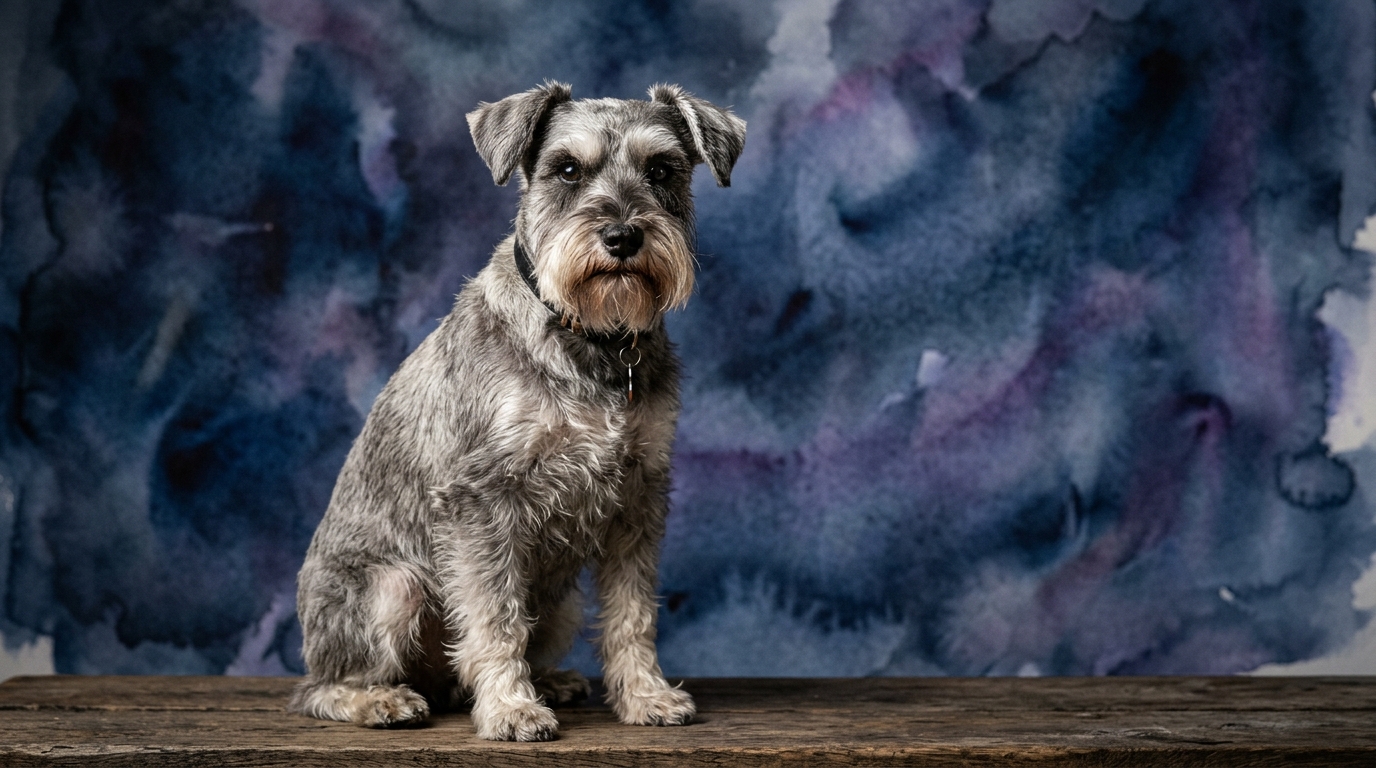
Side-by-Side Cognitive Profiles: Miniature Schnauzer
The Miniature Schnauzer, a lively member of the Terrier group, secures an impressive Coren rank of #12, reflecting a substantial capacity for learning and adaptability. Our IQ Lab data highlights their cognitive strengths across the board. In problem-solving, they score 4/5, demonstrating an aptitude for figuring out puzzles and navigating complex situations, often with a determined, self-reliant approach characteristic of their breed heritage. This translates into a dog that can quickly assess environmental changes or challenges and devise solutions, whether it's opening a cabinet or finding a hidden treat.
Their training speed is rated an exceptional 5/5, indicating an eagerness to absorb new commands and behaviors with minimal repetition. This rapid acquisition of skills is often paired with a strong desire to engage with their human companions. Social intelligence for the Miniature Schnauzer stands at 4/5; they are adept at interpreting human moods and cues, fostering strong bonds, and adapting their behavior within a family unit. Their instinctive drive, also 4/5, manifests as a vigilant nature, a keen prey drive, and a playful tenacity, all contributing to their engagement with the world. Finally, their memory, rated 4/5, ensures that once a lesson is learned or an experience encountered, it is retained effectively, building a robust behavioral repertoire.
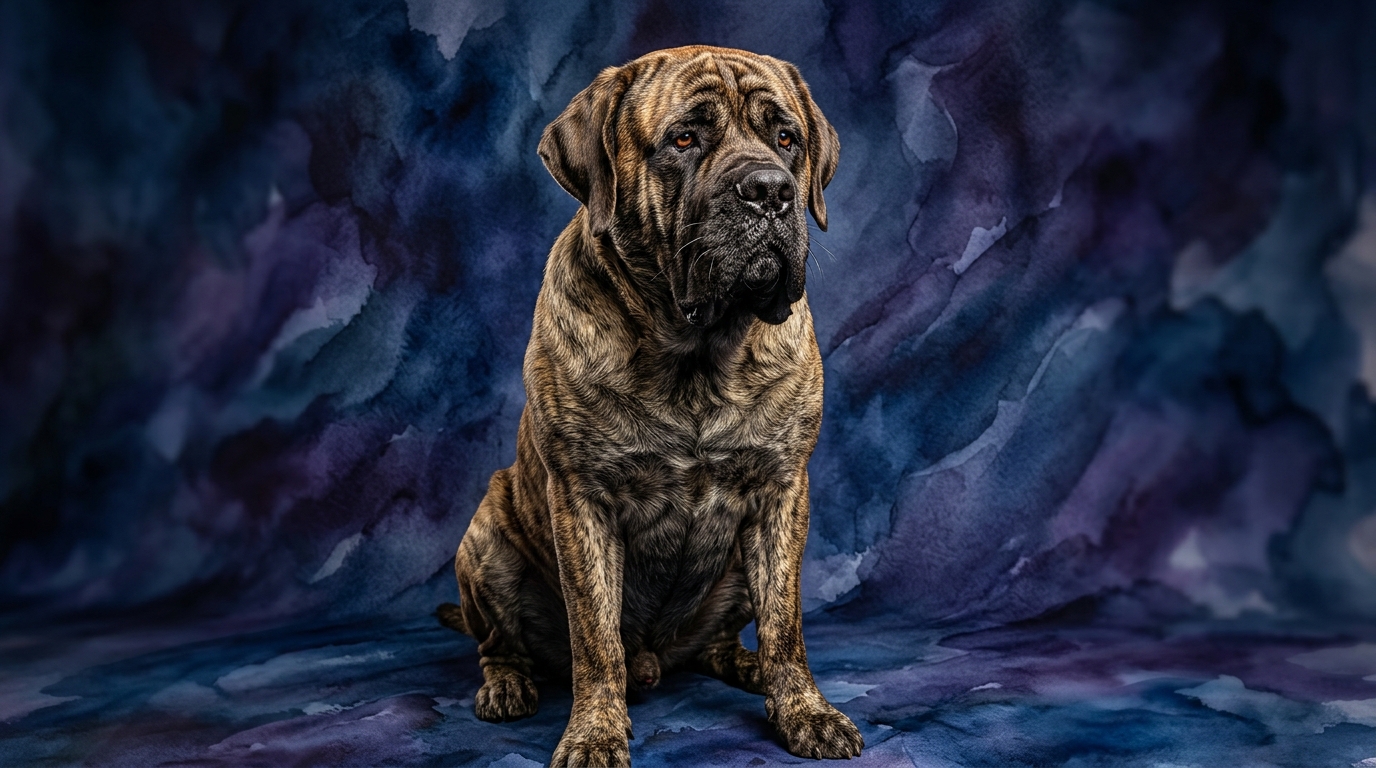
Side-by-Side Cognitive Profiles: Mastiff
In stark contrast, the Mastiff, a dignified member of the Working group, holds a Coren rank of #72. While this places them lower on the traditional obedience intelligence scale, their cognitive profile reveals a different, yet equally valuable, set of strengths. Their problem-solving score is 3/5, suggesting they are capable of resolving issues but may approach them with a more deliberate, less impulsive style than the Schnauzer. They are not necessarily quick to react but will methodically consider their environment.
The Mastiff's training speed is 3/5, meaning they require consistent, patient instruction and more repetitions to solidify new commands. Their independent nature and sometimes stoic demeanor mean they are less driven by constant human direction and more by their own internal assessment. Social intelligence is also 3/5; Mastiffs are deeply loyal and form profound bonds with their families, often displaying a calm discernment in social interactions, particularly with strangers. Their instinctive drive, rated 3/5, leans towards protection and territorial guardianship, executed with a quiet confidence rather than frenetic energy. Their memory, at 3/5, is sufficient for retaining crucial family routines and established behaviors, though perhaps not as sharp for intricate, rapidly changing sequences as the Schnauzer.
Where the Miniature Schnauzer Excels Cognitively
The Miniature Schnauzer's cognitive strengths shine brightly in areas demanding agility of thought and rapid response. Their superior problem-solving (4/5) and training speed (5/5) means they are often quicker to grasp new concepts and execute complex command sequences. For instance, a Schnauzer is more likely to excel in dog sports like agility or obedience trials, where quick decision-making, precise execution, and rapid learning are paramount. Their innate curiosity and terrier persistence mean they will often persist in trying different approaches to a puzzle, whether it's manipulating a food-dispensing toy or figuring out how to get to a forbidden area. This mental nimbleness, combined with their strong social intelligence, makes them highly adaptable to various training methodologies and eager participants in interactive learning.
Their instinctive drive (4/5) further fuels their cognitive engagement, often manifesting as a keen observation of their surroundings and a quick reaction to novel stimuli. This alertness, while sometimes leading to a bark, also means they are constantly processing information, making them proactive learners. When presented with a new environment or a novel task, the Miniature Schnauzer is typically quick to explore, assess, and integrate new data, building upon their memory (4/5) to form robust associations. This breed thrives on mental stimulation, leveraging their cognitive resources to continuously learn and adapt.
Where the Mastiff Excels Cognitively
While not possessing the rapid-fire cognitive processing of the Miniature Schnauzer, the Mastiff demonstrates a unique depth of cognitive strength, particularly in areas requiring measured judgment and deep loyalty. Their social intelligence, rated 3/5, manifests as a profound, unwavering bond with their family, often displaying an almost empathetic understanding of their human companions' emotional states. This isn't about quick reactions but about a deep, steady connection and discernment. A Mastiff might not instantly learn a complex trick, but they are exceptionally good at understanding the nuances of their household's routines and emotional climate, often offering quiet comfort or protection without explicit instruction.
Their instinctive drive (3/5) is less about energetic pursuit and more about a calm, watchful guardianship. This translates into a cognitive strength in assessing threats and maintaining vigilance with remarkable composure. A Mastiff's problem-solving (3/5) might be slower, but it is often characterized by a deliberate, thoughtful approach. They may take longer to react, but their decisions are often well-considered and effective, particularly in situations requiring patience and a steady presence. Their memory (3/5) is geared towards retaining critical information about their family and territory, ensuring consistent protective behaviors and a reliable understanding of their social roles over the long term. This cognitive profile makes them exceptional, steadfast companions and guardians.
Training Dynamics: Miniature Schnauzer vs. Mastiff
When it comes to training, the Miniature Schnauzer's superior training speed (5/5) and eager-to-please nature make them generally easier to instruct. They respond enthusiastically to positive reinforcement and thrive on engaging, varied training sessions. Their problem-solving (4/5) means they can often anticipate what is expected, making the learning curve steep and rewarding for both dog and owner. For example, teaching a Schnauzer a new trick might involve just a few short sessions, as they quickly connect the command to the action and the reward. Their strong instinctive drive (4/5) can be channeled effectively into tasks, making them persistent students who enjoy the mental challenge.
The Mastiff, with a training speed of 3/5, requires a different approach. Patience, consistency, and a calm demeanor from the trainer are paramount. They might take more repetitions to master a command, and their independent streak means they are less inclined to perform simply for the sake of it. Training a Mastiff often involves motivating them through strong positive reinforcement and making the training feel like a partnership rather than a command-and-response exercise. For instance, teaching a Mastiff to heel might take weeks of consistent, short, positive sessions, building on their understanding and trust rather than relying on rapid absorption. Their social intelligence (3/5) ensures they eventually understand the importance of cooperation within the family unit, but it takes time to cultivate.
Activity Levels and Owner Suitability
The cognitive makeup of these two breeds also dictates their suitability for different owner lifestyles. The Miniature Schnauzer, with its high problem-solving, training speed, and instinctive drive, is an ideal match for active owners who enjoy engaging in mental and physical activities with their dog. They thrive on structured play, regular training sessions, and opportunities to explore. Owners who are keen on dog sports, extended walks, or even just daily interactive games will find the Miniature Schnauzer's cognitive energy and enthusiasm a perfect fit. Their need for consistent mental stimulation means a relaxed, hands-off owner might find them developing their own, potentially undesirable, problem-solving strategies if left unstimulated.
Conversely, the Mastiff's more measured cognitive pace and generally calmer demeanor make them better suited for relaxed owners who appreciate quiet companionship. While they still require regular, moderate exercise for their physical health, their mental demands are less about constant activity and more about a stable, predictable environment. A Mastiff is often content to observe and be near their family, requiring less intense mental engagement throughout the day. Owners who enjoy a serene home environment and appreciate a deeply loyal, protective presence without the need for constant interaction or complex training challenges will find the Mastiff's cognitive profile aligns well with their lifestyle. Their social intelligence and memory are geared towards understanding and maintaining family harmony, making them excellent, albeit large, homebodies.
The Verdict
Choose the Miniature Schnauzer if you desire an agile-minded companion eager for mental challenges, rapid learning, and an active partnership in training and daily life.
Opt for the Mastiff if you seek a calm, deeply loyal guardian whose cognitive strengths lie in patient observation, steadfast protection, and a profound, quiet bond with their family.
🧠 Find Your Pet's IQ Score
Our Pet IQ Lab assessment covers 25+ tests across 5 cognitive dimensions — personalized to your breed.
Take the Full IQ Test →Frequently Asked Questions
Do Miniature Schnauzers need a lot of mental stimulation?
Yes, Miniature Schnauzers, with their high problem-solving and instinctive drive, benefit greatly from consistent mental stimulation. Engaging them in puzzle toys, learning new tricks, and varied training sessions helps prevent boredom and channel their cognitive energy constructively.
Are Mastiffs difficult to train because of their Coren rank?
Mastiffs are not difficult to train, but their Coren rank of #72 indicates they require more patience and consistency than breeds with higher ranks. Their training speed is moderate, meaning they learn effectively with positive reinforcement and repetition, fostering a strong, trusting relationship.
How does social intelligence differ between these breeds?
The Miniature Schnauzer's social intelligence (4/5) often manifests as quick adaptability and responsiveness to human cues, while the Mastiff's (3/5) is characterized by deep loyalty, a calm discernment of family dynamics, and a measured approach to strangers. Both form strong bonds, but express their social acumen differently.