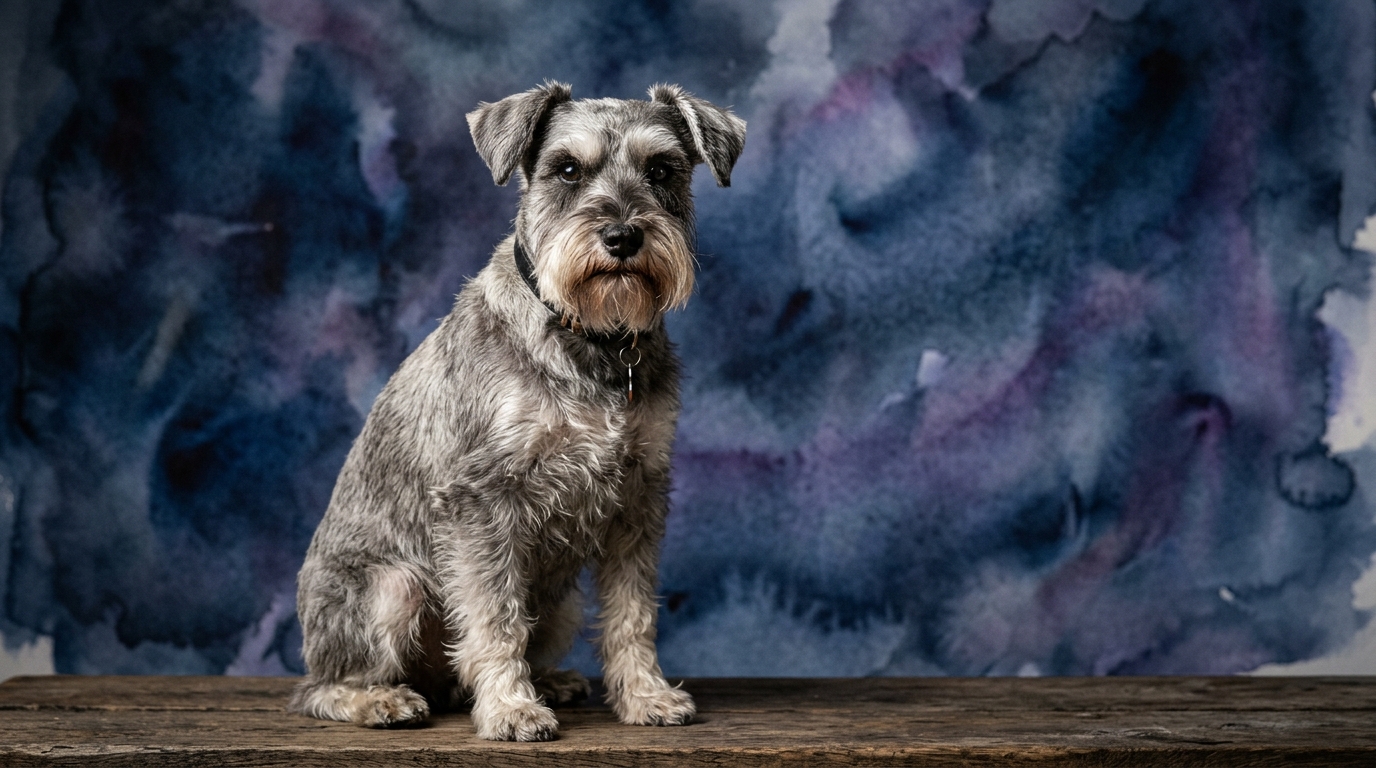
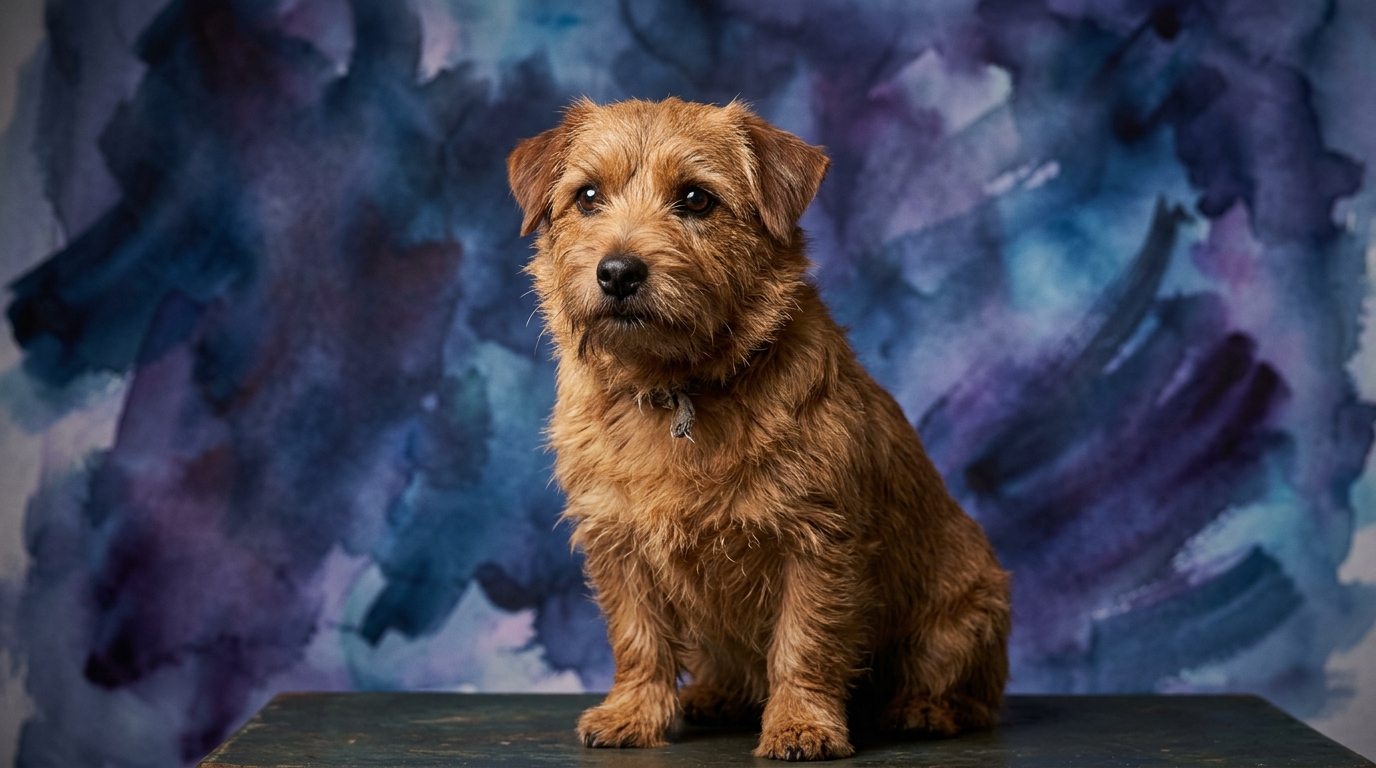
Side-by-Side IQ Profile: Miniature Schnauzer vs Norfolk Terrier
The Cosmic Pet Pet IQ Lab employs a comprehensive five-dimensional framework to assess canine intelligence, moving beyond simple obedience to understand the nuances of a breed's cognitive landscape. For the Miniature Schnauzer, their Coren rank of #12 places them among breeds demonstrating considerable working and obedience intelligence, a testament to their capacity for learning and adaptation. Their Problem Solving is rated at 4/5, indicating a robust capacity for figuring out novel challenges and often demonstrating strategic thinking to achieve desired outcomes. Training Speed, at an impressive 5/5, means they absorb new commands and routines with remarkable rapidity, typically requiring fewer repetitions to master complex tasks. Their Social Intelligence, rated 4/5, reflects a keen awareness of human cues and emotional states, allowing them to adapt behavior effectively within social contexts. Instinctive Drive, at 4/5, signifies a strong, purposeful drive, often channeled into tasks like guarding, pursuing, or focused activity, reflecting their working heritage. Finally, their Memory, also 4/5, ensures they retain learned information and experiences over significant periods, recalling commands and environmental details with consistency.
The Norfolk Terrier, while not appearing on Coren’s extensive ranking, possesses a unique cognitive profile that aligns with its charming and tenacious personality. Their Problem Solving is rated 3/5, meaning they approach new obstacles with persistence, but may require more trial-and-error or external guidance to resolve complex situations. Training Speed, also 3/5, suggests they learn at a steady pace, generally requiring consistent repetition and positive reinforcement to solidify new behaviors. Their Social Intelligence is rated 3/5, indicating they engage with human and animal companions, understanding basic social cues, though perhaps with less nuance in their interpretations than some breeds. Instinctive Drive, at 3/5, reveals a moderate terrier drive, expressed in curiosity and occasional pursuit, but generally less intense or focused than some working breeds. Their Memory, at 3/5, means they remember familiar routines and people reliably, though perhaps not retaining intricate sequences or less common commands with the same precision.
Where Miniature Schnauzer Wins Cognitively
The Miniature Schnauzer’s cognitive profile clearly indicates an edge in several key areas. Their 4/5 Problem Solving score means they’re more inclined to analyze a situation and devise a solution independently, perhaps figuring out how to open a child-proof gate or retrieve a toy from an awkward spot with less human intervention. This strategic thinking contrasts with breeds that might rely more on brute force or repeated attempts. Their 5/5 Training Speed is particularly notable; they pick up new commands and multi-step routines exceptionally quickly, often seeming to anticipate what's asked of them after just a few repetitions. This translates into rapid mastery of obedience, tricks, or even agility courses. Furthermore, their 4/5 Social Intelligence suggests a more nuanced understanding of human emotions and intentions, allowing them to adapt their behavior more smoothly in varied social settings and form deeper, more responsive bonds. The strength of their 4/5 Instinctive Drive also means they can maintain focus on a task for longer, whether it's tracking a scent or performing a learned sequence, leveraging their purposeful nature. Finally, their 4/5 Memory ensures that once a lesson is learned or an experience understood, it sticks, making retraining less necessary and reinforcing their quick learning.
Where Norfolk Terrier Wins Cognitively
While the Norfolk Terrier's IQ scores are generally lower than the Miniature Schnauzer's, their cognitive makeup presents distinct advantages for particular lifestyles. Their 3/5 Problem Solving, for instance, suggests they are less likely to constantly test boundaries or invent complex schemes to outsmart their human companions, potentially leading to a more straightforward household dynamic. Instead of intricate planning, they often approach challenges with a charming tenacity, which can be less disruptive than a dog constantly re-evaluating its environment for new puzzles. The 3/5 Training Speed means they learn at a steady, manageable pace; this can be ideal for owners who prefer a more gradual, less intense training journey, enjoying the process without the pressure of a dog that masters concepts almost instantly. Their 3/5 Social Intelligence translates to a generally agreeable and adaptable nature, making them pleasant companions who integrate well into family life without demanding overly complex social interactions or constant intellectual stimulation. The moderate 3/5 Instinctive Drive means their innate terrier tendencies, while present, are often less overpowering, making them potentially easier to manage in environments where high prey drive or intense focus on tasks might be challenging. Their 3/5 Memory, while not photographic, reliably holds everyday routines and essential commands, ensuring a consistent and predictable companion without requiring constant mental exercise to prevent boredom.
Which is Easier to Train and Why
Based on their respective IQ profiles, the Miniature Schnauzer clearly presents as the easier breed to train. Their exceptional 5/5 Training Speed means they absorb new commands and routines with remarkable rapidity, often requiring fewer repetitions to achieve mastery. This swift comprehension is bolstered by their 4/5 Problem Solving ability, which allows them to connect actions with consequences more readily and understand the 'why' behind a request. For example, a Miniature Schnauzer might quickly grasp the concept of 'stay' not just as a command, but as a strategic pause that leads to a reward, making them less likely to break it prematurely. Their 4/5 Social Intelligence also contributes significantly; they are adept at reading human body language and vocal cues, which facilitates clearer communication during training sessions. This responsiveness means they are often eager to please and quick to respond to positive reinforcement. In contrast, the Norfolk Terrier, with a 3/5 Training Speed, requires a more patient and consistent approach. While certainly trainable, they may need more repetitions and a longer period to solidify new behaviors. Their 3/5 Problem Solving means they might take longer to generalize a learned behavior to new situations or environments, requiring more specific guidance. For instance, teaching a Norfolk to 'leave it' might involve more direct intervention and practice in varied scenarios. Their 3/5 Social Intelligence, while perfectly adequate for companionship, means they might not interpret subtle human cues with the same precision, necessitating clearer, more explicit instructions. Therefore, while both breeds are capable of learning, the Miniature Schnauzer’s inherent cognitive attributes make the training journey generally faster and smoother.
Which Suits Active Owners vs Relaxed Owners
For owners with an active lifestyle who relish engaging their canine companion in a variety of activities, the Miniature Schnauzer is often the more fitting choice. Their 4/5 Instinctive Drive, combined with their 4/5 Problem Solving and 5/5 Training Speed, means they thrive on mental and physical challenges. They excel in activities like agility, obedience trials, advanced trick training, or even roles as therapy dogs where their social intelligence and quick learning are leveraged. An active owner can channel their purposeful nature into constructive outlets, preventing boredom and potential behavioral issues. They relish having a 'job' and respond enthusiastically to opportunities for structured play and learning. Conversely, for individuals or families who prefer a more relaxed pace and a less intensely demanding companion, the Norfolk Terrier often proves to be an ideal match. Their moderate 3/5 Instinctive Drive and 3/5 Problem Solving mean they are content with regular walks, interactive play sessions, and a consistent, predictable routine without requiring constant, complex mental stimulation. While they certainly enjoy activity, they are less prone to becoming restless or destructive if their daily schedule is not packed with rigorous training or extensive engagement. Their agreeable 3/5 Social Intelligence ensures they integrate smoothly into a household without needing to be the constant center of intellectual attention, making them wonderful companions for those who appreciate a cheerful, lower-key presence.
The Verdict
Opt for the Miniature Schnauzer if you desire a highly trainable, cognitively agile companion eager to learn, excel in various dog sports, and form a deeply responsive bond through nuanced communication.
Select the Norfolk Terrier if you seek a charming, tenacious, and generally agreeable companion whose moderate cognitive demands align perfectly with a more relaxed household rhythm and straightforward training approach.
🧠 Find Your Pet's IQ Score
Our Pet IQ Lab assessment covers 25+ tests across 5 cognitive dimensions — personalized to your breed.
Take the Full IQ Test →Frequently Asked Questions
Are Miniature Schnauzers good for first-time owners?
Yes, their high trainability (5/5 Training Speed) and social intelligence (4/5) make them an excellent choice for first-time owners willing to invest in consistent training. They readily pick up commands and are responsive to guidance, which simplifies the learning process for both dog and human.
What kind of mental exercise does a Norfolk Terrier need?
Norfolk Terriers benefit from regular, moderate mental engagement like puzzle toys, scent games, and consistent reinforcement of basic obedience commands. While their problem-solving (3/5) isn't as intense as some breeds, they still enjoy activities that stimulate their curiosity and natural terrier instincts.
How do the instinctive drives differ between these two terriers?
The Miniature Schnauzer's 4/5 Instinctive Drive is typically more focused and purposeful, often manifesting in strong guarding tendencies or a determined approach to tasks, reflecting their working heritage. The Norfolk Terrier's 3/5 Instinctive Drive is present but generally less intense, expressed as curiosity and a moderate prey drive, making them spirited but often more adaptable in varied environments.