Side-by-Side IQ Profile: Unpacking Cognitive Dimensions
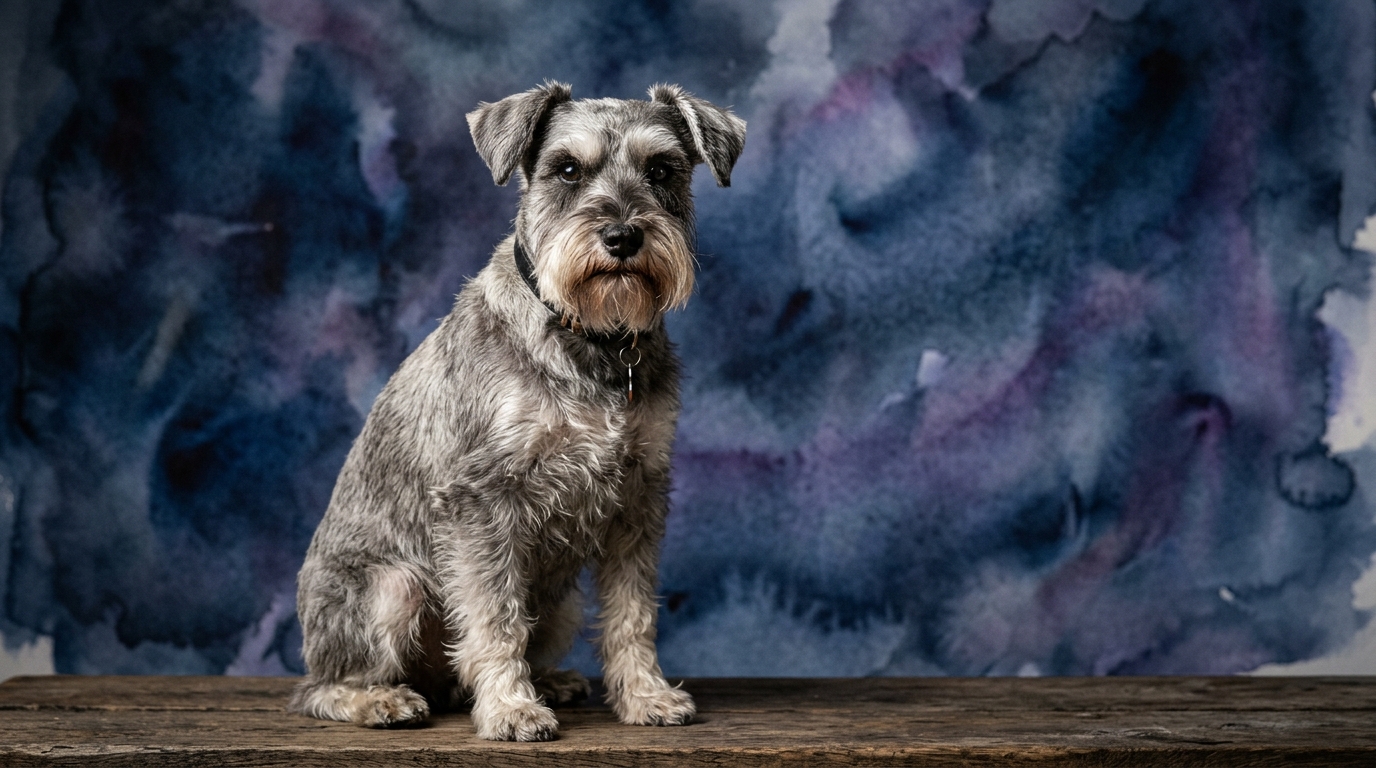
At The Cosmic Pet Pet IQ Lab, we evaluate canine intelligence across five key dimensions. For the Miniature Schnauzer, a breed recognized by Stanley Coren as ranking #12 in working and obedience intelligence, its cognitive profile is robust and consistent. It earns a 4/5 in Problem Solving, indicating a strong capacity to navigate novel situations and devise solutions; a remarkable 5/5 in Training Speed, showcasing rapid learning and retention; a 4/5 in Social Intelligence, reflecting a nuanced understanding of human cues and social dynamics; a 4/5 in Instinctive Drive, pointing to a well-channeled purposefulness; and a 4/5 in Memory, signifying excellent recall of experiences and learned behaviors.
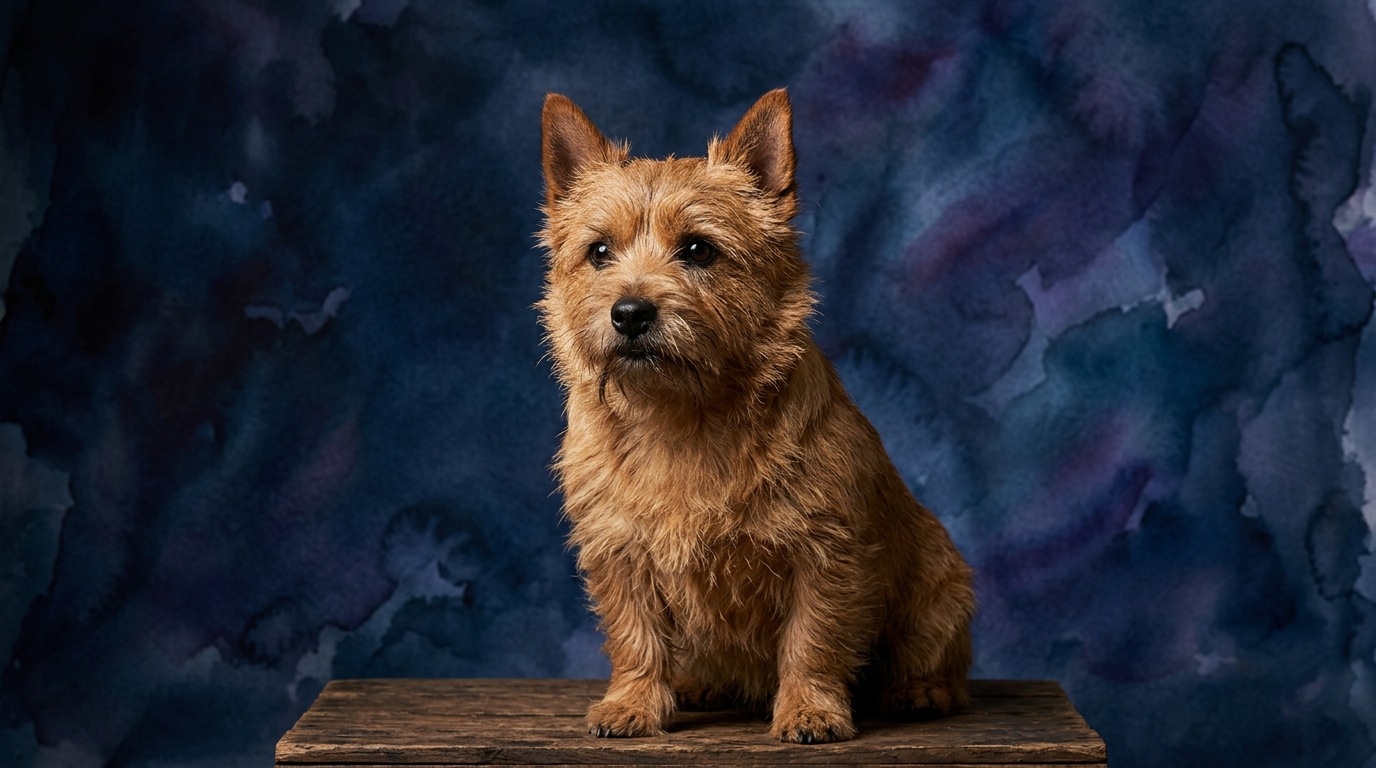
The Norwich Terrier, while not appearing on Coren's specific ranking, presents a uniformly balanced cognitive profile. Across all five dimensions – Problem Solving, Training Speed, Social Intelligence, Instinctive Drive, and Memory – it consistently achieves a score of 3/5. This suggests a practical, steady, and reliable cognitive approach rather than extreme peaks in any single area. A 3/5 in Problem Solving means they are capable of finding solutions to everyday challenges, though perhaps not the most complex puzzles. A 3/5 in Training Speed denotes a steady learner, absorbing commands with consistent effort. Their 3/5 Social Intelligence indicates straightforward interactions, while a 3/5 Instinctive Drive suggests a moderate, manageable level of typical terrier purpose. Finally, a 3/5 in Memory implies good retention for routine tasks and familiar scenarios.
Where the Miniature Schnauzer Excels Cognitively
The Miniature Schnauzer’s cognitive profile presents a clear advantage in areas demanding agility of thought and rapid adaptation. Their 4/5 in Problem Solving means they are adept at figuring out how things work, whether it's opening a gate or navigating a new obstacle course. This isn't just about physical prowess; it’s about the mental process of evaluating a situation and implementing a solution, often with creative flair. This translates into a dog that can be engaged with mentally stimulating games and tasks, thriving on challenges that require more than rote memorization.
The most striking cognitive strength lies in their 5/5 Training Speed. This indicates an exceptional capacity to grasp new commands and routines quickly, often with fewer repetitions than many other breeds. Owners will observe a Miniature Schnauzer picking up complex sequences, chaining behaviors together, and responding reliably to cues after relatively brief training sessions. This rapid acquisition of knowledge is complemented by their 4/5 Memory, ensuring that once a lesson is learned, it is retained. Their 4/5 Social Intelligence further enhances this, as they are often keenly attuned to human intentions and emotional states, making them highly responsive partners in training and daily interactions. This combination of quick learning, good memory, and social awareness makes them exceptionally versatile for various disciplines, from obedience to agility.
Cognitive Strengths of the Norwich Terrier
While the Norwich Terrier’s scores are consistently moderate at 3/5 across all categories, this uniformity represents a distinct cognitive strength: a balanced and predictable mental architecture. Their 3/5 in Problem Solving signifies a practical intelligence, focused on immediate, tangible solutions rather than abstract complexities. This means they are perfectly capable of navigating their environment and solving everyday dilemmas, like finding a dropped toy or getting around a closed door, without overthinking or getting easily frustrated by overly intricate puzzles. Their approach to challenges is typically direct and persistent, rather than analytical.
The consistent 3/5 in Training Speed and Memory points to a steady, reliable learning process. Owners will find the Norwich Terrier to be a consistent learner, perhaps not as lightning-fast as a Miniature Schnauzer, but dependable in their acquisition and retention of commands over time. This makes them less prone to 'burning out' on intense training sessions and more suited to a patient, consistent teaching approach. Their 3/5 Social Intelligence suggests a straightforward, honest interaction style; they are less likely to engage in subtle manipulations or complex emotional 'games,' offering a companion whose social cues are generally clear and uncomplicated. Furthermore, their 3/5 Instinctive Drive means their terrier instincts, while present, are often more manageable and less intensely focused on prey or digging compared to breeds with higher scores, contributing to a generally resilient and uncomplicated temperament.
Training Ease: Miniature Schnauzer vs. Norwich Terrier
When it comes to ease of training, the Miniature Schnauzer holds a significant edge, primarily due to its exceptional 5/5 Training Speed and robust 4/5 Memory. This breed typically demonstrates an eagerness to please and a keen focus during training sessions, allowing them to absorb new commands and complex routines with remarkable efficiency. Owners often report that Miniature Schnauzers pick up on cues after just a few repetitions, and their strong memory ensures that these lessons stick. This translates into a dog that can progress rapidly through obedience levels, learn numerous tricks, and adapt quickly to new behavioral expectations, often thriving on the mental engagement that training provides. Their social intelligence further aids this by making them highly responsive to verbal and non-verbal cues from their handler.
The Norwich Terrier, with its 3/5 Training Speed and Memory, requires a more patient and consistent approach. While certainly trainable, they might not demonstrate the same lightning-fast acquisition of new behaviors. Owners should anticipate more repetitions and a steadier pace for the Norwich to fully grasp and retain commands. Their learning style is often described as more independent; they might need to process information at their own speed and may not always be driven by the same intense desire to perform. This isn't a deficit in capability but a difference in cognitive processing and motivation. Training a Norwich is rewarding, but it demands consistency and positive reinforcement, focusing on making the learning process enjoyable and building a strong, trusting bond rather than pushing for speed.
Matching Breeds to Lifestyles: Active vs. Relaxed Owners
The cognitive profiles of these two terriers suggest different ideal matches for owner lifestyles. The Miniature Schnauzer, with its higher scores across the board, particularly in Problem Solving (4/5) and Instinctive Drive (4/5), thrives with active owners who can provide consistent mental and physical engagement. This breed benefits immensely from regular training, puzzle toys, and activities that challenge their intellect, such as agility, rally obedience, or even advanced trick training. An owner who enjoys teaching new things and integrating their dog into a dynamic daily routine will find the Miniature Schnauzer to be an enthusiastic and capable partner. Without sufficient mental stimulation, their sharp minds can become bored, potentially leading to inventive, but perhaps undesirable, problem-solving behaviors.
The Norwich Terrier, presenting a consistent 3/5 across all cognitive dimensions, is well-suited for owners seeking a companion with a balanced and predictable temperament. While still a terrier requiring regular exercise and mental engagement, their moderate drives and problem-solving inclinations mean they might not demand the same intensity of complex stimulation as a Miniature Schnauzer. They are adaptable to various routines, appreciating consistent walks and opportunities to explore, but perhaps less inclined to require constant, high-level intellectual challenges. A Norwich will enjoy a good game of fetch or a sniffari, but might be less prone to developing destructive habits if a puzzle toy isn't rotated daily. This makes them an excellent fit for owners who appreciate a resilient, straightforward companion that is engaged but not overly demanding in its cognitive needs, fitting seamlessly into a moderately active household.
The Verdict
Choose the Miniature Schnauzer if you are an active owner eager to engage in advanced training and provide consistent mental challenges for a highly responsive and quick-learning companion.
Opt for the Norwich Terrier if you value a balanced, predictable cognitive profile and seek a resilient, straightforward companion that learns steadily and adapts well to a moderately active, consistent lifestyle.
🧠 Find Your Pet's IQ Score
Our Pet IQ Lab assessment covers 25+ tests across 5 cognitive dimensions — personalized to your breed.
Take the Full IQ Test →Frequently Asked Questions
Are Miniature Schnauzers good with children?
Miniature Schnauzers, with their 4/5 social intelligence, can be excellent with children, often forming strong bonds. Early socialization and consistent training are key to ensuring they interact politely and appropriately with younger family members, given their energetic and sometimes assertive terrier nature.
Do Norwich Terriers bark a lot?
Norwich Terriers are terriers, and like many in their group, they can be prone to barking, especially as an alert or when excited. Their moderate instinctive drive (3/5) means this behavior is usually manageable with consistent training and redirection from a young age, focusing on appropriate vocalization.
Which breed is more independent?
The Norwich Terrier, with its consistent 3/5 scores across cognitive dimensions, tends to exhibit a more independent streak compared to the Miniature Schnauzer's higher social intelligence and eagerness to please. While both are loyal, the Norwich often possesses a self-reliant charm, content to entertain itself at times, whereas the Schnauzer typically seeks more direct engagement.