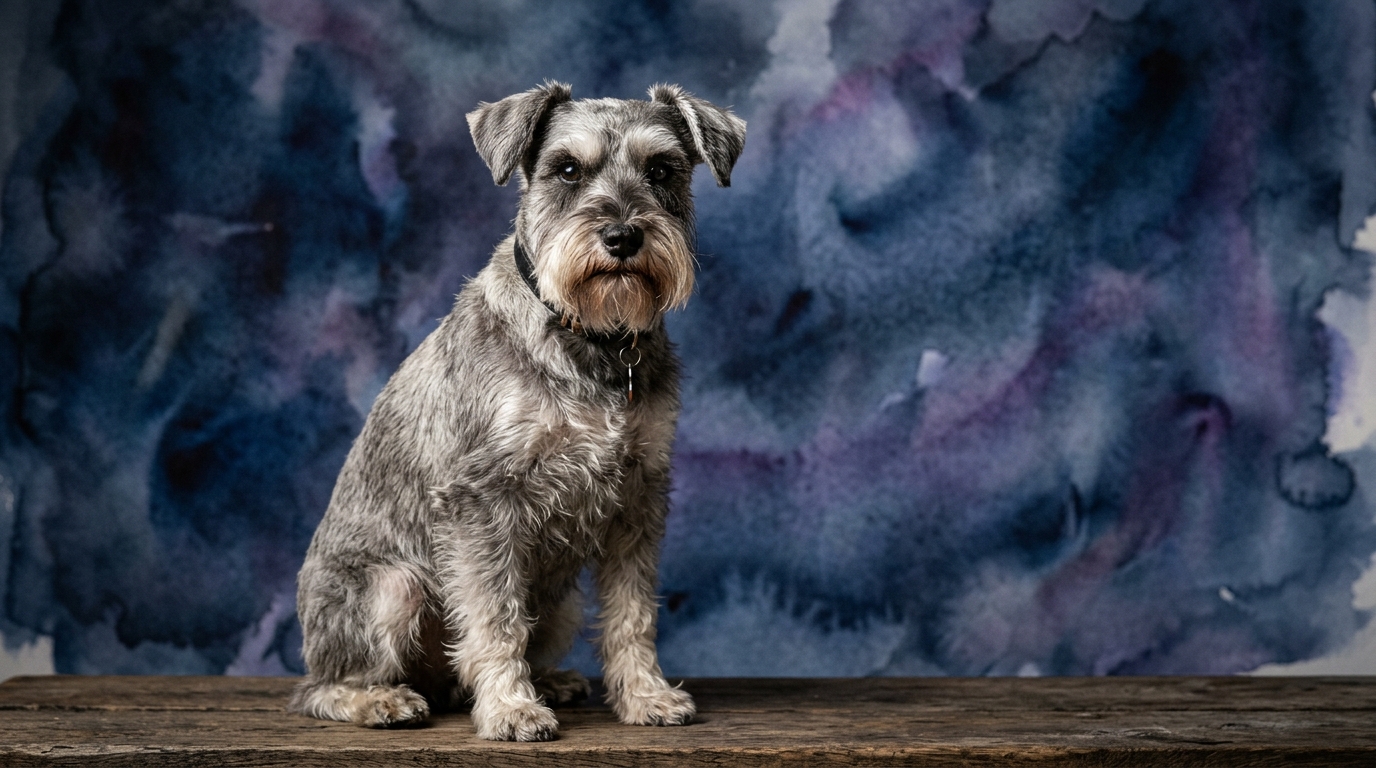

Side-by-Side Cognitive Profiles: Schnauzer vs. Sheepdog
The Miniature Schnauzer, holding a commendable Coren rank of #12, exhibits a sharp and agile mind. Its problem-solving skills are rated 4/5, indicating a strong capacity to figure out complex tasks and navigate novel situations with resourceful thinking. The breed truly shines in training speed, earning a perfect 5/5, reflecting its eagerness to learn and quick grasp of commands and routines. Social intelligence, rated 4/5, suggests a keen awareness of human cues and a desire for interaction, often leading to a communicative and adaptable companion. With an instinctive drive of 4/5, the Miniature Schnauzer retains a robust working ethic, channeling its terrier tenacity into various activities. Its memory, also 4/5, ensures that learned behaviors and established routines are retained effectively over time, making consistency a rewarding endeavor.
In contrast, the Old English Sheepdog, with a Coren rank of #44, presents a more deliberate and independent cognitive profile. Its problem-solving ability is rated 3/5, indicating a capable but perhaps less spontaneous approach to new challenges, often preferring familiar methods or requiring more guidance. Training speed for the OES is 3/5, suggesting that while trainable, they may require more repetition and patience compared to breeds with higher scores, often due to their independent herding nature. Social intelligence is also 3/5; they are affectionate and attuned to their family, but might display a more reserved or selective engagement with strangers or new social dynamics. Their instinctive drive, rated 3/5, reflects their historical role in herding, which involves a degree of self-reliance and a focus on the task at hand rather than constant human direction. Interestingly, the Old English Sheepdog matches the Schnauzer in memory, scoring 4/5, highlighting their capacity to recall vast amounts of information and past experiences, which is crucial for flock management over large areas.
Where the Miniature Schnauzer Excels Cognitively
The Miniature Schnauzer's cognitive strengths are particularly evident in its rapid acquisition of new behaviors and its proactive approach to mental challenges. With a training speed of 5/5, a Schnauzer often picks up new commands in just a few repetitions, making them highly responsive to positive reinforcement and eager participants in obedience, agility, or trick training. Their 4/5 problem-solving score means they are adept at navigating complex puzzle toys, figuring out how to open gates, or devising creative ways to get what they want. This isn't just about mischief; it's about a dog that actively processes its environment and seeks solutions.
Furthermore, their social intelligence (4/5) allows them to be highly attuned to their owners' moods and intentions, often anticipating requests or offering comfort intuitively. This makes them excellent therapy dogs or companions who seem to 'understand' their human counterparts. Their instinctive drive (4/5), rooted in their ratting terrier heritage, translates into a determined focus when given a task, whether it's tracking a scent, learning a complex agility course, or simply guarding their home with vigilance. This combination of quick learning, resourceful problem-solving, and social attunement gives the Miniature Schnauzer a cognitive edge in environments that demand adaptability and responsiveness.
Where the Old English Sheepdog Holds Its Own Cognitively
While the Old English Sheepdog may not exhibit the same lightning-fast training speed as the Miniature Schnauzer, its cognitive profile boasts unique strengths, particularly in its impressive memory (4/5). This strong memory is a cornerstone of its herding lineage, enabling it to remember flock movements, pasture boundaries, and complex routes over long periods. This capacity translates into a dog that, once taught a routine or command, retains it with remarkable consistency, even if the initial learning phase takes more patience. Owners will find that a well-established OES understands its boundaries and expectations over its lifetime.
The OES's instinctive drive (3/5) is not about relentless pursuit but rather methodical management. Their herding intelligence involves assessing situations, understanding group dynamics, and making independent decisions to keep a flock together. This translates into a dog that can be surprisingly thoughtful and deliberate, weighing options rather than reacting impulsively. Their social intelligence (3/5), while not as overtly demonstrative as some breeds, fosters deep, unwavering loyalty to their family unit. They are observers, often absorbing information about their environment and the people within it, processing it in their own time before responding. This thoughtful, memory-driven intelligence makes the Old English Sheepdog a steadfast and reliable companion for those who appreciate a more considered approach to the world.
Training Dynamics: Miniature Schnauzer vs. Old English Sheepdog
When it comes to ease of training, the Miniature Schnauzer generally presents a more straightforward experience due to its 5/5 training speed and 4/5 problem-solving abilities. They are eager to please, respond quickly to positive reinforcement, and enjoy the mental stimulation of learning new things. Their terrier spirit means they can sometimes be a bit stubborn if bored, but their desire to engage with their owner typically overrides this. Owners can expect to make rapid progress in basic obedience and even advanced activities, provided training is kept engaging and consistent.
The Old English Sheepdog, with its 3/5 training speed and 3/5 problem-solving, requires a different approach. They are not 'stubborn' in a defiant sense, but rather possess an independent streak born from their history of making decisions while herding without constant human supervision. This means they might process commands more slowly or need more repetitions to fully internalize a behavior. Patience, consistency, and understanding their herding instincts (which might manifest as 'nosing' or 'gathering' family members) are key. While they might not be the fastest learners, their excellent memory (4/5) ensures that once a lesson is learned, it is deeply ingrained, making them reliable once trained.
Cognitive Profiles and Lifestyle Suitability
For active owners seeking a dog that thrives on constant mental engagement and participatory activities, the Miniature Schnauzer is often an ideal match. Their high problem-solving capacity and training speed mean they excel in dog sports like agility, obedience, and rally, and relish tasks that challenge their minds. They need daily mental stimulation beyond just physical exercise to prevent boredom-induced behaviors. Owners who enjoy teaching tricks, going on exploratory walks, or engaging in interactive games will find the Schnauzer's eager and responsive intellect incredibly rewarding. Their social intelligence also means they generally enjoy being a central part of family activities.
The Old English Sheepdog, while requiring regular physical activity, might better suit owners who appreciate a more thoughtful, self-directed companion for mental engagement. Their cognitive strengths, particularly their strong memory and methodical problem-solving, mean they thrive on routine and purpose. They might not be as keen on rapid-fire trick training but will excel at tasks that require focus, endurance, and independent decision-making, like long hikes or 'flock management' of the family. While generally relaxed indoors, they benefit from a consistent schedule and opportunities to 'work' in a way that aligns with their herding heritage. Owners who appreciate a dog with a gentle, somewhat reserved social intelligence and a deep, enduring bond will find the OES a wonderful companion, even if their intellectual expression is less overtly demonstrative.
The Verdict
Choose the Miniature Schnauzer if you desire a quick-witted, highly trainable companion eager for mental challenges and interactive engagement, excelling in rapid learning and problem-solving.
Opt for the Old English Sheepdog if you value a thoughtful, independent dog with excellent memory and a steady temperament, appreciating consistency and a more deliberate approach to learning and interaction.
🧠 Find Your Pet's IQ Score
Our Pet IQ Lab assessment covers 25+ tests across 5 cognitive dimensions — personalized to your breed.
Take the Full IQ Test →Frequently Asked Questions
Which breed is better for first-time dog owners?
The Miniature Schnauzer's higher training speed and eagerness to please often make them a more forgiving choice for first-time owners, provided their need for mental stimulation is met. The Old English Sheepdog's independence requires more patience and understanding of their unique herding instincts.
Do Miniature Schnauzers and Old English Sheepdogs get along with children?
Both breeds can be excellent with children when properly socialized and trained. Miniature Schnauzers are typically playful and robust, while Old English Sheepdogs are often gentle giants, though their herding instinct might lead them to 'herd' children, which needs gentle redirection.
What kind of mental exercise do these breeds need?
Miniature Schnauzers thrive on puzzle toys, obedience training, agility, and learning new tricks due to their high problem-solving and training speed. Old English Sheepdogs benefit from consistent routines, 'find it' games, and tasks that engage their herding instincts in a structured way, leveraging their strong memory.