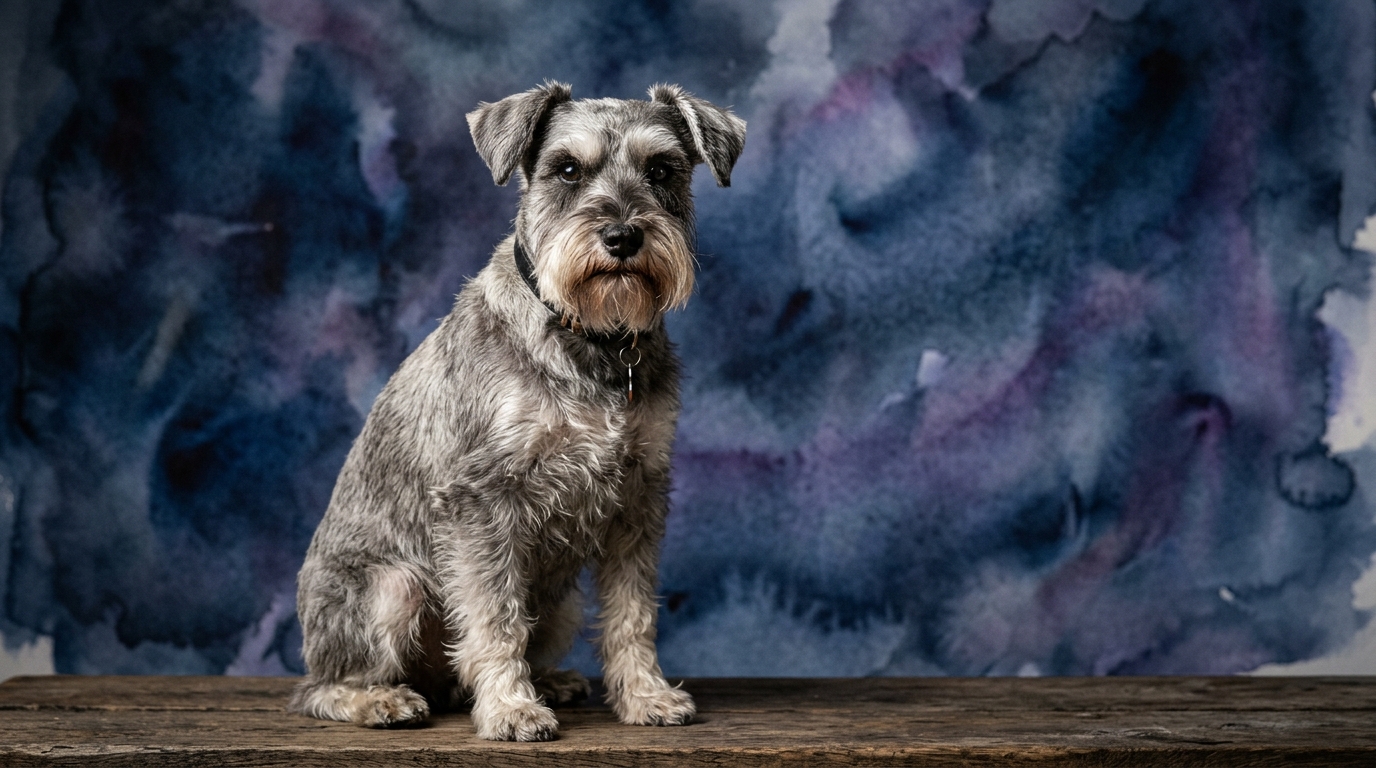
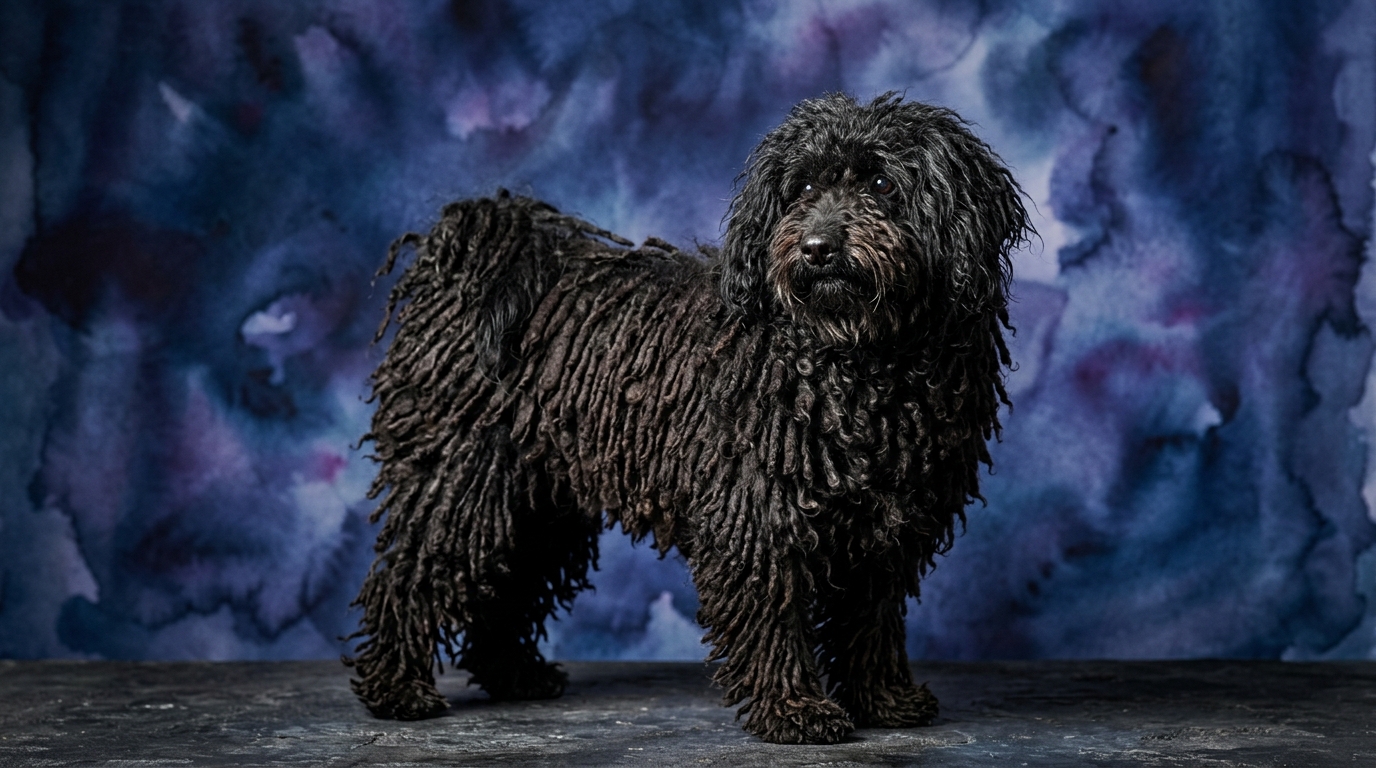
Side-by-Side Cognitive Profiles: Miniature Schnauzer vs. Puli
The Miniature Schnauzer, ranking #12 on the Coren scale, presents a robust cognitive blueprint. Their Problem Solving is rated 4/5, indicating a keen ability to navigate complex situations and strategize. Training Speed, at 5/5, signifies their exceptional aptitude for quickly grasping new commands and routines. Social Intelligence, a strong 4/5, points to their responsiveness to human cues and emotional states, fostering a deep connection. An Instinctive Drive of 4/5 reflects their tenacious terrier spirit, fueling persistence in tasks, while Memory, also 4/5, ensures they retain learned behaviors and experiences effectively over time.
The Puli, positioned at #25 on the Coren scale, showcases a different, yet equally capable, cognitive makeup. Their Problem Solving matches the Schnauzer at 4/5, demonstrating a capacity for intricate thought, often applied to spatial and strategic challenges inherent in their herding background. Training Speed registers at 4/5, indicating a solid, though perhaps not instantaneous, learning curve. Social Intelligence at 3/5 suggests they are attentive to their primary handler but may be less outwardly expressive or universally people-focused than some breeds. Their Instinctive Drive, rated 3/5, speaks to a focused, purposeful energy, typically geared towards their herding heritage. Memory, like the Schnauzer, is a strong 4/5, highlighting their ability to recall complex sequences and information over time.
Where the Miniature Schnauzer Excels Cognitively
The Miniature Schnauzer's cognitive profile shines particularly bright in areas demanding rapid assimilation and social engagement. Their superior Training Speed, a perfect 5/5 compared to the Puli's 4/5, means they typically require fewer repetitions to master new commands or tricks. This isn't merely about obedience; it reflects a quick-thinking mind eager to engage and understand what's being asked, making them highly adaptable to varied learning environments and new challenges.
Furthermore, their Social Intelligence, rated 4/5 against the Puli's 3/5, positions them as more acutely attuned to human emotional nuances and social dynamics. This heightened awareness fosters a more fluid communication channel, allowing them to anticipate owner intentions and respond with greater sensitivity. Owners often report a palpable sense of partnership, where the Schnauzer seems to 'read their mind' or adjust their behavior based on subtle human cues, making them incredibly responsive companions.
Finally, the Schnauzer's Instinctive Drive, at 4/5 versus the Puli's 3/5, translates into a tenacious persistence. This terrier drive fuels a determined approach to tasks, whether it's solving a puzzle toy or excelling in an agility course. When channeled appropriately, this focused energy becomes a formidable asset for learning and achieving goals, making them resilient participants in any mental or physical challenge they undertake.
Puli's Distinct Cognitive Strengths
While the Puli doesn't outscore the Miniature Schnauzer in any single dimension, their cognitive profile demonstrates a distinct and profound depth, particularly in areas critical to their herding legacy. Their Problem Solving, a robust 4/5, is often expressed through strategic thinking and spatial reasoning. Unlike the Schnauzer's quick, often reactive problem-solving, a Puli might approach a challenge with a more thoughtful, methodical assessment, strategizing how to maneuver objects or influence movement, much like managing a flock. This involves a deep understanding of cause-and-effect and anticipating outcomes.
Their Memory, also a strong 4/5, is a cornerstone of their herding aptitude. Pulis excel at retaining complex sequences of commands, geographical layouts, and the specific behaviors of individuals, whether they be sheep or family members. This isn't just about recalling a 'sit' command; it's about remembering intricate routines or the location of a specific item after a long period, reflecting a highly organized mental database essential for their working roles.
The Puli's Instinctive Drive, rated 3/5, while numerically lower, is characterized by a focused, purposeful intensity rather than a broad, energetic pursuit. Their drive is about control, management, and the execution of specific tasks, often with a remarkable degree of independence and self-direction. They possess an innate understanding of boundaries and order, channeling their energy into maintaining harmony within their perceived 'flock.' This thoughtful drive means they aren't easily distracted from a task once committed, valuing precision and efficacy in their actions.
Trainability: Miniature Schnauzer vs. Puli
When considering ease of training, the Miniature Schnauzer generally holds an advantage due to their higher Training Speed (5/5) and Social Intelligence (4/5). Their exceptional ability to quickly grasp new concepts and their eagerness to please, coupled with their strong responsiveness to human cues, makes them highly receptive students. They often enjoy the collaborative process of training, thriving on positive reinforcement and the attention it brings. This means less repetition is typically needed to solidify commands, and they are often quick to generalize learned behaviors to new situations. Their keen social awareness also helps them understand what their human wants, even with subtle body language or vocal tone, making the training journey smoother.
The Puli, with a Training Speed of 4/5 and Social Intelligence of 3/5, presents a different training dynamic. While perfectly capable learners, their process might require more patience and consistency from their owner. Pulis are independent thinkers, a trait honed by centuries of making decisions autonomously while herding. This means they might question a command or attempt to find a more efficient solution to a task, rather than simply complying. Their strong problem-solving skills mean they learn quickly, but their slightly lower social intelligence might mean they are less inherently motivated by constant human approval alone. Training a Puli benefits greatly from engaging their strategic mind, using reward-based methods, and offering clear, consistent communication that respects their thoughtful nature. They respond best to a trainer who understands their herding instincts and can channel their focus and drive into productive learning, rather than expecting blind obedience.
Lifestyle Suitability: Active vs. Relaxed Owners
The choice between a Miniature Schnauzer and a Puli often comes down to the owner's lifestyle and how they prefer to engage with their canine companion's energy and intellect. For active owners who thrive on structured engagement, consistent training, and a dog that is always ready for the next adventure, the Miniature Schnauzer is often an excellent fit. Their Instinctive Drive of 4/5 and terrier zest mean they require regular mental and physical stimulation. They excel in dog sports like agility, obedience, and earthdog trials, and genuinely enjoy having a 'job' to do. A Schnauzer is not content to be a mere ornament; they want to be an active participant in family life, making them ideal for individuals or families who enjoy an on-the-go lifestyle and can provide ample opportunities for their dog to think and move.
The Puli, while certainly not a sedentary breed, offers a different flavor of activity, making them suitable for owners who appreciate a blend of thoughtful engagement and focused companionship. Their Instinctive Drive of 3/5, coupled with their strategic problem-solving, means they thrive on tasks that engage their herding intelligence, such as herding games, scent work, or complex puzzle toys. They require regular exercise, but their energy might be expressed through thoughtful patrolling of their yard, focused play sessions, or long, exploratory walks rather than constant, high-intensity bursts. Pulis can adapt to active lifestyles, excelling in agility or obedience, but they also appreciate periods of observation and close companionship. They suit owners who enjoy a deep, often quiet, bond and who can provide consistent mental stimulation that respects their independent, strategic mind, without necessarily requiring constant high-octane activity. They are often described as having an 'off switch' once their needs are met, making them adaptable to owners who enjoy both activity and quieter moments at home.
The Verdict
Choose a Miniature Schnauzer if you desire a highly responsive, quick-learning companion eager for structured activities and close social engagement, thriving in an active household.
Opt for a Puli if you appreciate a thoughtful, strategic thinker who thrives on purposeful work and a deep, independent bond, suitable for owners who value consistency and engaging their dog's unique herding intellect.
🧠 Find Your Pet's IQ Score
Our Pet IQ Lab assessment covers 25+ tests across 5 cognitive dimensions — personalized to your breed.
Take the Full IQ Test →Frequently Asked Questions
Do Miniature Schnauzers require a lot of mental stimulation?
Yes, Miniature Schnauzers, with their high Problem Solving (4/5) and Instinctive Drive (4/5), absolutely thrive on mental challenges. They benefit from puzzle toys, training sessions, and varied activities to keep their sharp minds engaged and prevent boredom and destructive behaviors.
Are Pulis good with children and other pets?
Pulis, with their Social Intelligence of 3/5, can be excellent family dogs, forming strong bonds with their immediate 'flock.' Early socialization is key, and their herding instincts mean they might try to 'herd' children or other pets, which needs gentle guidance and supervision.
How do the grooming needs of these two breeds compare?
Miniature Schnauzers require regular brushing and professional grooming (stripping or clipping) every 5-8 weeks to maintain their characteristic coat. Pulis, with their unique corded coat, have minimal shedding but demand specific, though infrequent, grooming to prevent matting and maintain their cords, which is a specialized process that can be time-consuming.