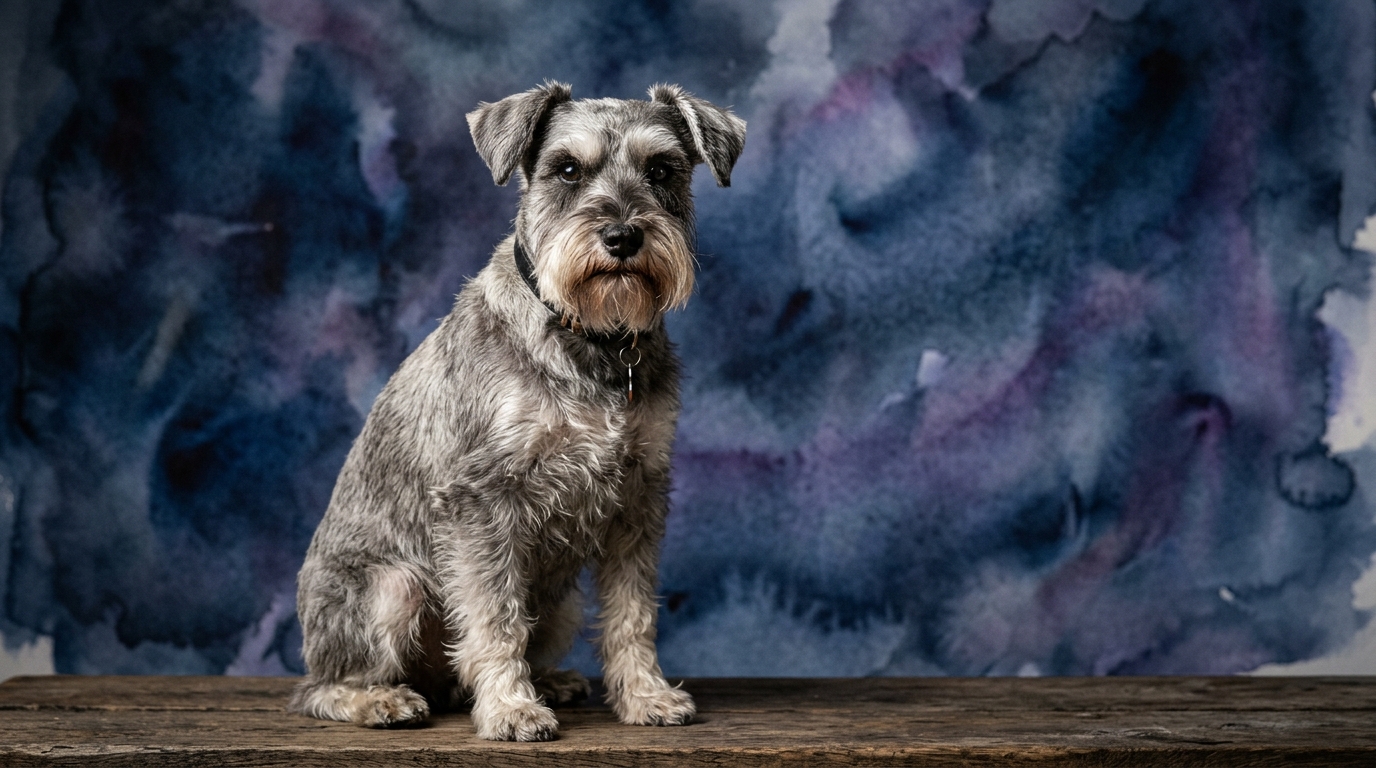

Side-by-Side IQ Profile: Miniature Schnauzer vs. Russian Toy
The Miniature Schnauzer, a recognized member of the working terrier group, boasts a significant Coren ranking of #12, indicating a high capacity for obedience and working intelligence. Our Pet IQ Lab assessment reveals a comprehensive cognitive profile that underscores their versatility and responsiveness. Their Problem Solving is rated 4/5, meaning they are adept at navigating complex environments, figuring out how to open latches, or learning multi-step sequences. This resourcefulness stems from their terrier heritage, which encourages a persistent, investigative approach to challenges, seeking solutions rather than giving up. Training Speed is an exceptional 5/5; these dogs are remarkably quick learners, often grasping new commands after just a few repetitions, driven by an eagerness to engage and a desire for mental stimulation. Social Intelligence scores 4/5, reflecting a keen understanding of human moods and social cues, allowing them to form strong, reciprocal bonds and adapt their behavior within household dynamics. Their Instinctive Drive, at 4/5, is rooted in their vermin-hunting past, manifesting as a desire to 'do' things—be it digging, patrolling, or engaging in tasks. Finally, their Memory is strong at 4/5, ensuring excellent recall for commands, routines, and experiences, making training efforts enduring.
In contrast, the Russian Toy, a delicate toy breed, does not appear on the Coren ranking, indicating a different cognitive emphasis. Our Pet IQ Lab assessment highlights a profile geared more towards companionship than complex work. Their Problem Solving is rated 3/5; they are capable of solving straightforward problems, such as finding hidden treats in a simple puzzle or navigating familiar routes, but might require more guidance or repetition for complex tasks, relying on learned patterns rather than independent, innovative solutions. Training Speed is 3/5, meaning they learn at a moderate pace, requiring consistent and patient training methods, responding well to positive reinforcement but potentially needing more repetitions and shorter sessions to maintain focus. Social Intelligence also stands at 3/5; they form close bonds with their primary caregivers and can be sensitive to their emotions, but their social circle might be smaller, and they may be more reserved with strangers or in novel social situations. Their Instinctive Drive is a moderate 3/5, primarily oriented towards companionship and play, generally lacking the intense prey drive or working instincts of a terrier, making them content with domestic life. Their Memory is also 3/5, good for routines and familiar commands, though complex sequences might fade without regular reinforcement.
Where Miniature Schnauzer Wins Cognitively
The Miniature Schnauzer's cognitive profile demonstrates clear advantages in areas demanding intellectual rigor and sustained engagement. Their superior Problem Solving (4/5) means they are more likely to independently figure out novel situations or puzzles, making them highly adaptable to new tasks and environments. This cognitive agility allows them to excel in activities that require critical thinking, such as advanced obedience or agility courses, where they must process information rapidly and make quick decisions.
Furthermore, their exceptional Training Speed (5/5) and robust Memory (4/5) combine to make them incredibly efficient learners. They acquire new commands with remarkable swiftness and retain them over long periods, allowing for a broader and more complex repertoire of behaviors. This cognitive efficiency translates into a dog that is not only quicker to teach but also more reliable in executing learned tasks, providing a more consistent and predictable response to cues.
Their higher Social Intelligence (4/5) also offers a distinct edge, enabling them to read and respond to human emotions and social dynamics with greater nuance. This allows them to integrate seamlessly into diverse family structures and adapt to various social interactions, often anticipating their owner's wishes or reacting appropriately to changing moods, fostering a deeply communicative relationship.
Where Russian Toy Wins Cognitively
While the Russian Toy’s scores are generally more moderate, their specific cognitive profile presents unique advantages for certain lifestyles and owner preferences. Their 3/5 Instinctive Drive is a significant 'win' for owners seeking a companion less prone to intense working behaviors characteristic of terriers, such as digging, persistent barking at perceived vermin, or an overwhelming urge to patrol. This lower drive means they are often more content with a quieter, less demanding home environment, making them an excellent fit for urban living or smaller residences where such instincts could be problematic.
The Russian Toy’s moderate Social Intelligence (3/5), while not as broadly encompassing as a Schnauzer’s, fosters a deep, focused bond with its core family without the potential for overwhelming social demands on the owner. They tend to be intimately connected to their person, preferring close companionship over actively 'working' a room or seeking extensive external interactions. This can be ideal for individuals who desire a devoted, less socially expansive companion.
Furthermore, their 3/5 Problem Solving and Memory, while not geared for complex tasks, means they are less likely to independently get into intricate mischief or create their own elaborate 'jobs' that might require constant supervision. This cognitive profile can lead to a less 'busy' mind, contributing to a more relaxed and manageable demeanor in a home setting for owners who appreciate a calmer, less cognitively demanding presence in their daily lives.
Which is Easier to Train and Why
When it comes to ease of training, the Miniature Schnauzer distinctly holds the advantage, primarily due to its exceptional Training Speed (5/5) and strong Memory (4/5). These dogs pick up new commands with remarkable swiftness, often after just a few repetitions, making the training process highly efficient and rewarding. Their terrier eagerness and innate desire to engage with tasks mean they approach training as a stimulating activity, thriving on structured lessons and mental challenges. This cognitive disposition, coupled with their consistent recall of learned behaviors, makes them highly responsive pupils for advanced obedience, dog sports, or mastering complex routines.
The Russian Toy, with a Training Speed of 3/5 and Memory of 3/5, is certainly trainable but requires a different approach. They learn at a moderate pace, necessitating more patience, repetition, and consistency from their handler. Their attention spans can be shorter, making brief, frequent training sessions more effective than long, drawn-out ones. While they respond well to positive reinforcement delivered enthusiastically, the process is generally slower, and complex commands may require more sustained effort and regular refreshers to cement in their memory. Their motivation might be more tied to immediate rewards and affection rather than the inherent joy of the 'work' itself, which can influence their responsiveness in formal training scenarios.
Which Suits Active Owners vs. Relaxed Owners
The Miniature Schnauzer is ideally suited for active owners who can provide ample mental and physical engagement. Their 4/5 Instinctive Drive and Problem Solving capabilities demand outlets beyond simple walks. They thrive on having a 'job,' whether it's participating in agility, advanced obedience, solving intricate puzzle toys, or enjoying vigorous daily walks and play sessions that challenge both their bodies and minds. An owner who enjoys consistent training, outdoor adventures, and engaging their dog in various activities would find a Miniature Schnauzer a highly rewarding and enthusiastic partner. Without sufficient stimulation, their intelligent minds and energetic bodies can lead to restlessness or mischievous behaviors.
Conversely, the Russian Toy is better suited for more relaxed owners who appreciate a charming, affectionate companion with moderate activity needs. Their 3/5 Instinctive Drive and Problem Solving mean they are typically content with daily walks, indoor play, and plenty of cuddle time. While they enjoy interaction and benefit from consistent engagement, they generally don't require the intense mental and physical stimulation that a terrier does. They fit well into a quieter household where their primary role is that of a devoted lap dog and attentive family member, making them an excellent choice for individuals or families seeking a loving presence without the demands of a high-drive working breed.
The Verdict
Choose the Miniature Schnauzer for individuals or families seeking a highly trainable, mentally agile, and active companion eager to learn and participate in varied activities, thriving on purpose and engagement.
Opt for the Russian Toy if you desire a devoted, moderately active, and charming companion whose cognitive demands are manageable, offering deep affection and a quieter presence without intense working drives.
🧠 Find Your Pet's IQ Score
Our Pet IQ Lab assessment covers 25+ tests across 5 cognitive dimensions — personalized to your breed.
Take the Full IQ Test →Frequently Asked Questions
Is the Miniature Schnauzer difficult to manage due to its high instinctive drive?
While Miniature Schnauzers possess a strong instinctive drive (4/5), this translates into a desire for engagement rather than inherent difficulty. Channelling this drive through consistent training, puzzle toys, and regular exercise helps manage their energy and prevents unwanted behaviors like excessive digging or barking.
Can a Russian Toy participate in dog sports despite its moderate IQ scores?
Absolutely. While their training speed and problem-solving are rated 3/5, Russian Toys can certainly participate and enjoy dog sports like novice obedience, rally, or even some agility, especially at a recreational level. Success requires patience, positive reinforcement, and understanding their individual pace, focusing on fun and bonding over competition.
How do their social intelligence differences impact household dynamics?
A Miniature Schnauzer's 4/5 social intelligence means they are often highly attuned to family dynamics and can navigate complex social interactions, making them adaptable companions. The Russian Toy's 3/5 social intelligence, while focused, means they form deep bonds with their core family but might be more reserved or require more gradual introductions to new people or pets, preferring a smaller, consistent social circle.