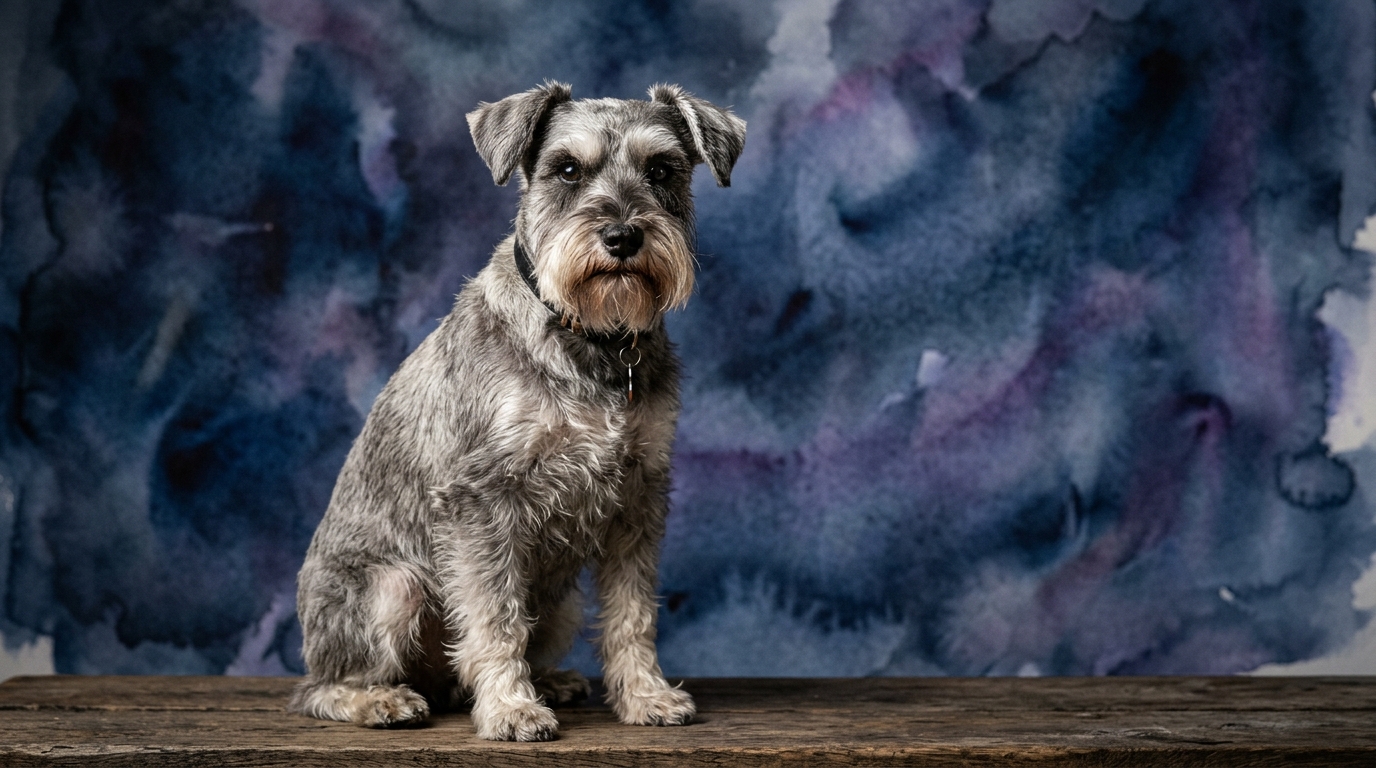
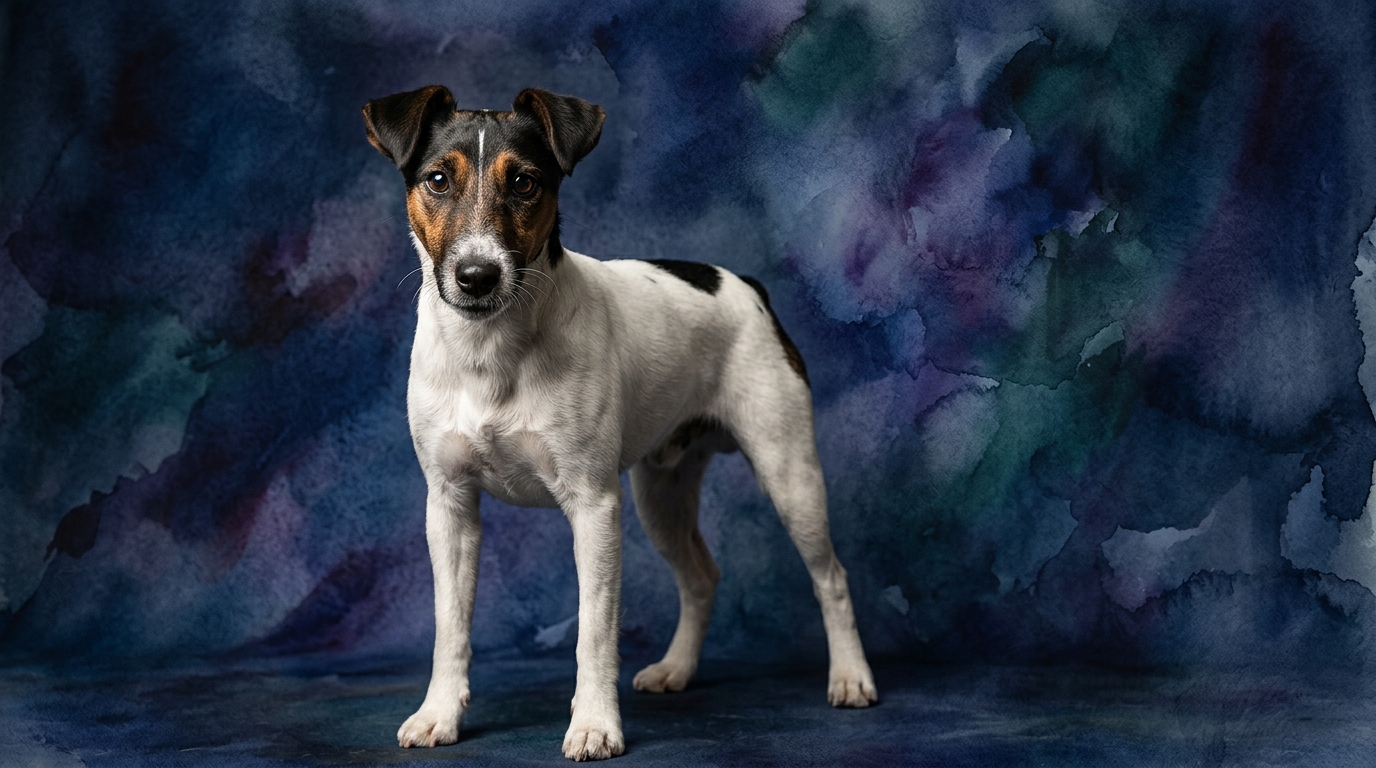
Side-by-Side IQ Profile: Miniature Schnauzer vs. Smooth Fox Terrier
The Cosmic Pet Pet IQ Lab's assessment reveals intriguing differences in the cognitive makeup of these two spirited breeds. The Miniature Schnauzer, holding a Coren rank of #12, consistently demonstrates elevated scores across most intellectual dimensions. Their problem-solving ability is rated at 4/5, indicating a strong capacity for independent thought and strategic navigation of challenges. An exceptional training speed of 5/5 highlights their readiness to absorb and execute new commands with remarkable efficiency. Social intelligence, at 4/5, points to a deep understanding of human cues and household dynamics, while their instinctive drive (4/5) underscores their inherent terrier zest for exploration and activity. Completing their profile, a memory score of 4/5 ensures robust retention of learned experiences and commands.
In contrast, the Smooth Fox Terrier, while not Coren-ranked, presents a balanced and robust cognitive profile that emphasizes consistency. Their problem-solving skill is assessed at 3/5, showing competence in navigating daily challenges without necessarily seeking out complex mental puzzles. A training speed of 3/5 suggests they learn at a steady, reliable pace, requiring consistent, engaging methods. Social intelligence, also at 3/5, indicates they are capable of forming strong bonds and understanding routine interactions, though perhaps with less nuance than their Schnauzer counterparts. Their instinctive drive (3/5) reflects a healthy terrier energy for chasing and exploring, and a memory score of 3/5 ensures they retain important lessons over time, making them reliably capable companions.
Where Miniature Schnauzer Wins Cognitively
The Miniature Schnauzer's cognitive strengths truly shine in areas demanding rapid learning and nuanced social interaction. With a training speed of 5/5, they are exceptionally quick to pick up new commands and complex sequences, making them prime candidates for advanced obedience or canine sports. Their problem-solving score of 4/5 means they are more likely to figure out how to open a gate or retrieve a hidden toy, showcasing a higher degree of independent thought and ingenuity. Furthermore, their superior social intelligence (4/5) allows for a deeper understanding of human emotions and household routines, often anticipating needs or reacting appropriately to subtle cues from their family members. This blend of quick learning, inventiveness, and social perceptiveness positions the Miniature Schnauzer as a cognitively agile companion, often appearing to be "one step ahead" in understanding their environment and their people.
Where Smooth Fox Terrier Wins Cognitively
While the Smooth Fox Terrier may not boast the same top-tier scores as the Miniature Schnauzer, their cognitive profile offers a different kind of advantage, particularly in consistency and mental resilience. Their balanced 3/5 scores across all categories suggest a less intense, more predictable intellectual engagement. This can translate into a dog that is less prone to overthinking situations or becoming easily bored with repetitive tasks, which can be a distinct benefit in certain training scenarios requiring steady focus. Their instinctive drive, while not as high as the Schnauzer's, still provides ample motivation for engaging in typical terrier activities without the potential for overwhelming focus or complex mischief. The Smooth Fox Terrier often excels in environments where a steady, good-natured intelligence is valued over exceptional quickness, making them reliably capable without the potential for intricate problem-solving leading to unintended consequences. Their cognitive strengths lie in their straightforward approach and robust mental fortitude, making them less likely to be flustered by unexpected changes or overly sensitive to minor inconsistencies.
Which is Easier to Train and Why
The Miniature Schnauzer unequivocally presents as the easier breed to train, primarily due to their outstanding training speed (5/5) and strong social intelligence (4/5). Their eagerness to learn and retain commands means they often require fewer repetitions and respond well to varied methods, quickly forming associations between commands and actions. A Schnauzer is more likely to master complex multi-step commands, like "fetch the leash," with relative ease and precision. Their social intelligence also means they are highly attuned to their owner's mood and intentions, often making them more cooperative during training. In contrast, the Smooth Fox Terrier, with a training speed of 3/5, will require more patience and consistency. While perfectly trainable, they may take longer to grasp new concepts and might need more engaging, game-based training to maintain focus. Their instinctual drive (3/5) can sometimes lead to momentary distractions, requiring an owner to be more persistent and creative in their approach.
Which Suits Active Owners vs. Relaxed Owners
For active owners seeking a canine partner for sports or extensive outdoor adventures, the Miniature Schnauzer's cognitive and physical attributes are often a more natural fit. Their high instinctive drive (4/5) and problem-solving ability (4/5) make them excellent candidates for agility, obedience trials, or hiking where they enjoy mental challenges. They thrive on having a "job" and will eagerly participate in activities that stimulate their quick minds, such as learning new tricks or navigating complex terrains. The Smooth Fox Terrier, with its balanced instinctive drive (3/5) and slightly less intense cognitive profile, can be a good match for owners who are active but perhaps not seeking the same level of rigorous mental challenge. They enjoy regular walks, playtime, and exploring, but may be more content with a less structured daily routine compared to the Schnauzer. For truly relaxed owners, both breeds might present a challenge due to their terrier energy, but the Smooth Fox Terrier's slightly lower cognitive intensity might be marginally easier to manage, provided physical exercise needs are still met.
The Verdict
Opt for a Miniature Schnauzer if you desire a highly trainable, quick-witted dog eager to learn complex commands and participate in advanced activities. They suit owners who appreciate a perceptive companion capable of deep social understanding and enjoy providing consistent mental stimulation.
Select a Smooth Fox Terrier if you value a consistent, resilient companion with a solid, reliable intellect that responds well to patient, engaging training. They are ideal for active individuals who enjoy outdoor adventures and appreciate a dog with a straightforward, spirited temperament.
🧠 Find Your Pet's IQ Score
Our Pet IQ Lab assessment covers 25+ tests across 5 cognitive dimensions — personalized to your breed.
Take the Full IQ Test →Frequently Asked Questions
Do Miniature Schnauzers get bored easily?
Yes, Miniature Schnauzers, with their 4/5 problem-solving and 4/5 instinctive drive, require significant mental stimulation to prevent boredom. Owners should provide puzzle toys, training sessions, and varied activities to keep their quick minds engaged.
Are Smooth Fox Terriers good at learning tricks?
Smooth Fox Terriers are capable of learning tricks, scoring 3/5 in training speed, but may require more patience and repetition than some other breeds. Engaging, game-based training methods often work best to hold their attention and make learning enjoyable.
Which breed is better for a first-time dog owner?
The Miniature Schnauzer's higher training speed (5/5) and social intelligence (4/5) can make them slightly more forgiving for a first-time owner willing to commit to consistent training. However, both breeds benefit from owners who understand terrier traits and are prepared for their energy and mental needs.