Side-by-Side Cognitive Profiles
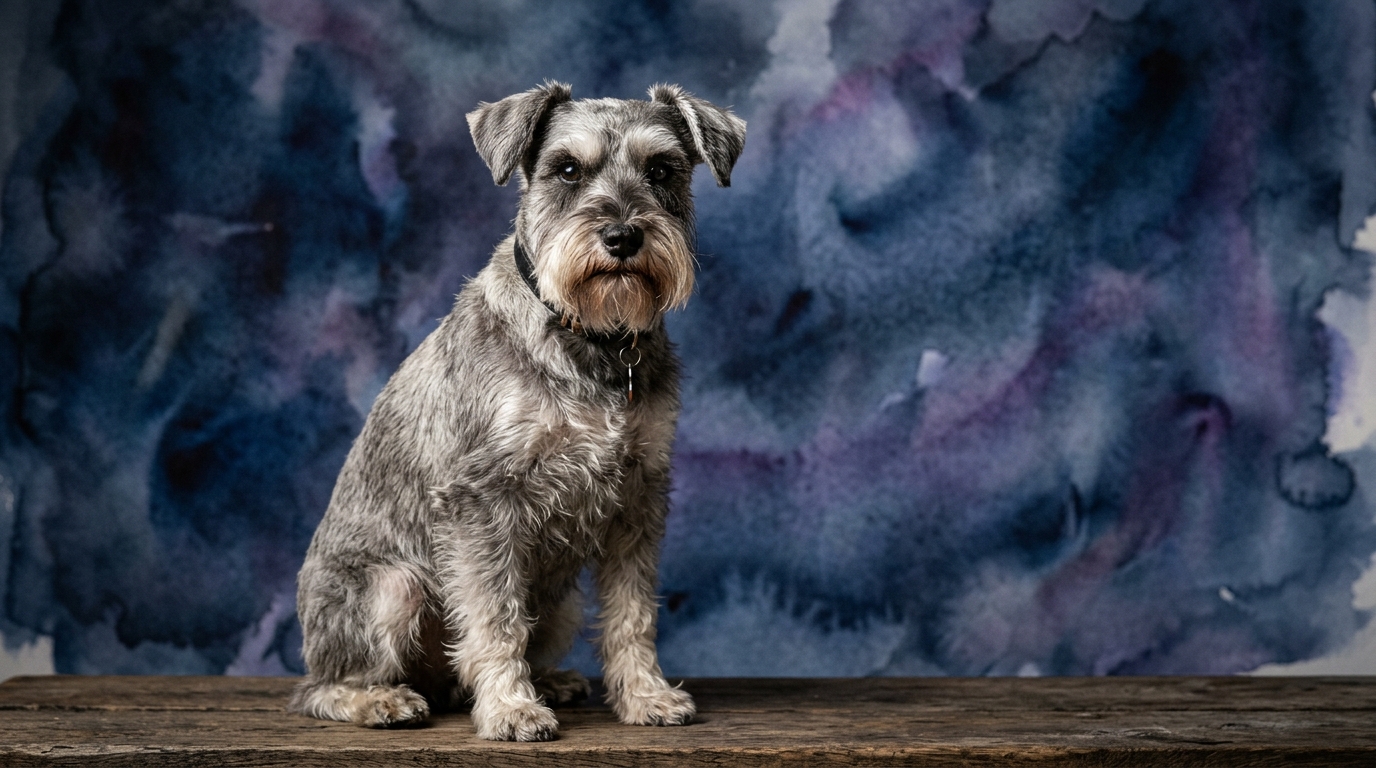
The Miniature Schnauzer, holding a respectable Coren rank of #12, exhibits a refined cognitive profile. Its Problem Solving ability, rated 4/5, suggests a dog adept at navigating complex environments and figuring out routes to desired outcomes, such as opening latches or devising strategies to acquire a hidden treat. Training Speed, an impressive 5/5, indicates a breed that grasps new commands and routines with remarkable alacrity, often requiring fewer repetitions to achieve proficiency. Social Intelligence, also 4/5, points to a keen awareness of human cues and other animals' dispositions, allowing for nuanced interactions and adaptability in various social settings. The Miniature Schnauzer’s Instinctive Drive, scored at 4/5, reflects its terrier heritage—a strong inclination towards patrolling, scent work, and a determined pursuit of small prey, channeled effectively with consistent guidance. Finally, its Memory, rated 4/5, ensures that learned behaviors, both good and bad, are retained over long periods, making early positive reinforcement crucial for shaping its future conduct. This comprehensive cognitive toolkit makes the Miniature Schnauzer a highly responsive and engaging companion.
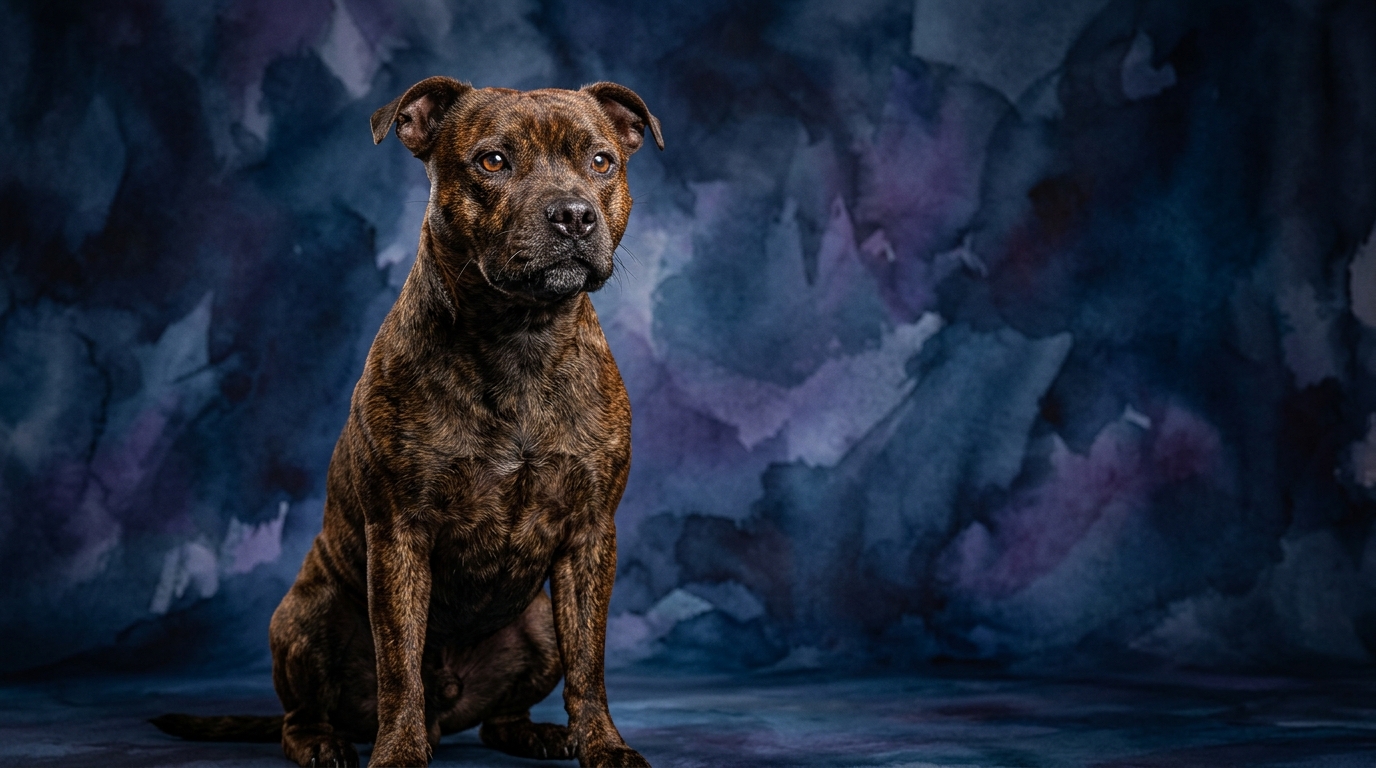
The Staffordshire Bull Terrier, though not Coren-ranked, presents a distinct set of cognitive strengths, with consistent scores of 3/5 across all five dimensions. Its Problem Solving capacity (3/5) indicates a dog that can resolve challenges, though perhaps with less intricate strategy than its Schnauzer counterpart, often preferring direct action over elaborate schemes. Training Speed (3/5) suggests a dog that learns at a steady pace, requiring consistent and patient repetition, yet capable of mastering a wide range of commands with sufficient motivation. Social Intelligence (3/5) implies a straightforward approach to social interactions; while capable of forming strong bonds and reading basic cues, they might not interpret subtle social nuances with the same depth, often preferring clear communication. The Staffordshire Bull Terrier's Instinctive Drive, also 3/5, is a powerful force, rooted in its history as a determined and resilient working dog, manifesting as focused tenacity and a strong desire to engage in physical activities. Its Memory, rated 3/5, means that learned behaviors are retained, but perhaps with a slightly longer fade rate if not regularly reinforced, underscoring the importance of ongoing practice. These scores collectively paint a picture of a robust, earnest, and dedicated companion.
Where the Miniature Schnauzer Wins Cognitively
The Miniature Schnauzer demonstrably outpaces the Staffordshire Bull Terrier in several cognitive domains, primarily due to its higher scores in Problem Solving, Training Speed, Social Intelligence, and Memory. Its 5/5 Training Speed is a significant advantage, allowing it to pick up complex command sequences, tricks, and even multi-step tasks with impressive efficiency. This means a Miniature Schnauzer can often move from basic obedience to advanced agility or rally training much faster, absorbing new information like a sponge. Its 4/5 Problem Solving aptitude allows it to excel at tasks requiring strategic thinking, such as navigating puzzle toys designed to release treats or finding creative ways around obstacles during scent work. This breed is more likely to pause, assess a situation, and attempt different approaches before resorting to brute force. Furthermore, the Schnauzer's 4/5 Social Intelligence gives it a refined ability to read human emotions and intentions, making it highly responsive to subtle changes in tone or body language, and often more adaptable to varied social dynamics involving strangers or new pets. The 4/5 Memory score ensures that once a behavior or command is learned, it tends to stick, reducing the need for constant reteaching and building a strong foundation for ongoing learning. These combined strengths make the Miniature Schnauzer a highly versatile and intellectually agile companion, capable of engaging in a broad spectrum of mentally stimulating activities with relative ease and quick mastery.
Where the Staffordshire Bull Terrier Excels Cognitively
While the Staffordshire Bull Terrier's individual scores of 3/5 might not numerically exceed the Miniature Schnauzer's, its consistent cognitive profile represents a distinct form of strength and functional intelligence. The Staffy's 3/5 Instinctive Drive, for instance, is not a weakness but a testament to its unwavering tenacity and resilience. This drive manifests as a powerful, focused determination that, when channeled appropriately, makes them exceptionally persistent in tasks they enjoy, such as tug-of-war, fetch, or specific forms of scent work. They may not devise complex strategies, but their sheer will to succeed in a given task is formidable. Their 3/5 Problem Solving approach often favors directness and robust effort over intricate planning; if a path isn't immediately obvious, a Staffy might try a forceful, repetitive action, which can be highly effective in certain physical challenges or when a straightforward solution is required. This directness can be a "win" in scenarios where overthinking is counterproductive. Similarly, their 3/5 Social Intelligence often translates into a clear, uncomplicated presence; they are typically less prone to neurotic interpretations of social cues, offering a straightforward, affectionate, and loyal companionship that is highly valued by many owners. Their cognitive profile, while not marked by the same rapid learning or intricate problem-solving, reflects a robust, steadfast, and earnest companion whose strengths lie in their unwavering dedication, physical prowess, and uncomplicated, loving nature.
Which is Easier to Train and Why
When comparing ease of training, the Miniature Schnauzer holds a significant advantage, primarily due to its stellar 5/5 Training Speed and 4/5 Memory. Miniature Schnauzers typically absorb new commands and routines with remarkable swiftness, often requiring only a few repetitions before demonstrating understanding. Their eagerness to please, coupled with their sharp cognitive abilities, means they are often highly motivated by positive reinforcement and respond well to varied training techniques. They are quick to generalize learned behaviors to new environments and can progress rapidly through obedience levels. In contrast, the Staffordshire Bull Terrier, with its 3/5 Training Speed and 3/5 Memory, requires a more patient, consistent, and often more physically engaging approach. Staffies learn at a steady pace, but they generally need more repetitions and a stronger incentive to master new behaviors. Their strong instinctive drive means training often benefits from incorporating play and activities that appeal to their natural tenacity, such as tug or retrieving. While capable of learning a vast array of commands, a Staffy might exhibit more selective hearing if not adequately motivated or if the training isn't perceived as engaging. Their training success hinges on clear, firm, and fair leadership combined with highly rewarding experiences, whereas the Schnauzer often thrives on intellectual challenge and praise alone.
Which Suits Active vs. Relaxed Owners
Both breeds generally benefit from active engagement, but their specific needs and how they align with owner lifestyles differ. The Miniature Schnauzer, with its high Problem Solving and Instinctive Drive scores, thrives with owners who can provide consistent mental stimulation alongside physical exercise. These dogs enjoy learning new tricks, participating in dog sports like agility or obedience, and engaging in puzzle toys or scent games. They are well-suited for active owners who appreciate a dog that is always ready for a new challenge and can keep up with a varied routine involving both physical exertion and brain work. A relaxed owner might find a Miniature Schnauzer's need for mental engagement overwhelming, potentially leading to boredom-induced behaviors. The Staffordshire Bull Terrier, while not possessing the same cognitive agility scores, equally suits an active owner who can channel its powerful 3/5 Instinctive Drive into structured physical activities. Staffies need vigorous daily exercise, such as long walks, runs, or intense play sessions. They excel in dog sports that leverage their strength and tenacity, like weight pulling or flyball. A relaxed owner might struggle to meet the Staffy's physical exercise requirements, which are crucial for maintaining its well-being and managing its robust energy. While both prefer an active lifestyle, the Schnauzer leans more towards mental engagement complementing physical activity, whereas the Staffy's activity needs are often more purely physical and strength-based, requiring an owner capable of matching their robust energy.
The Verdict
Opt for a Miniature Schnauzer if you desire a highly trainable, cognitively agile companion eager to learn complex tasks and participate in diverse mental challenges. This breed thrives with owners who can provide consistent intellectual stimulation and appreciate a responsive, nuanced social partner.
Select a Staffordshire Bull Terrier if you seek a robust, tenacious, and straightforward companion who thrives on strong physical engagement and direct, consistent guidance. They are ideal for active owners who appreciate unwavering loyalty and a powerfully built friend for vigorous outdoor activities.
🧠 Find Your Pet's IQ Score
Our Pet IQ Lab assessment covers 25+ tests across 5 cognitive dimensions — personalized to your breed.
Take the Full IQ Test →Frequently Asked Questions
Are Staffordshire Bull Terriers difficult to train?
Staffordshire Bull Terriers are not difficult to train, but they do require consistency, patience, and strong motivation due to their 3/5 Training Speed. They respond best to positive reinforcement and training methods that engage their natural drive and tenacity, often requiring more repetitions than some other breeds.
Do Miniature Schnauzers need a lot of mental stimulation?
Yes, Miniature Schnauzers, with their 4/5 Problem Solving and 4/5 Social Intelligence, thrive on mental stimulation. They enjoy learning new commands, puzzle toys, and participating in dog sports, benefiting greatly from owners who can provide regular intellectual challenges alongside physical exercise.
Which breed is better for first-time dog owners?
The Miniature Schnauzer's higher Training Speed and Problem Solving scores might make it slightly easier for a first-time owner willing to engage in consistent mental training. However, a dedicated first-time owner prepared for robust physical activity and consistent, firm guidance could also successfully raise a Staffordshire Bull Terrier.