
Side-by-Side IQ Profile
Originating as guardians, the Neapolitan Mastiff exhibits a cognitive profile tailored for watchful protection and deliberate action. Their Problem Solving is rated at 3/5, indicating a methodical, often ponderous approach to challenges rather than quick, agile solutions. Training Speed also sits at 3/5, suggesting they absorb commands steadily but require consistent, patient reinforcement to integrate new behaviors. Social Intelligence, at 3/5, reflects their ability to discern intentions and form deep bonds within their family unit, making them astute observers of human emotion and social cues, especially concerning their protective duties. Their Instinctive Drive is 3/5, manifesting as a strong, inherent desire to guard their territory and people, often with an unyielding resolve. Finally, their Memory, at 3/5, allows them to retain learned behaviors and social dynamics over time, though perhaps not with the immediate recall of more performance-oriented breeds.
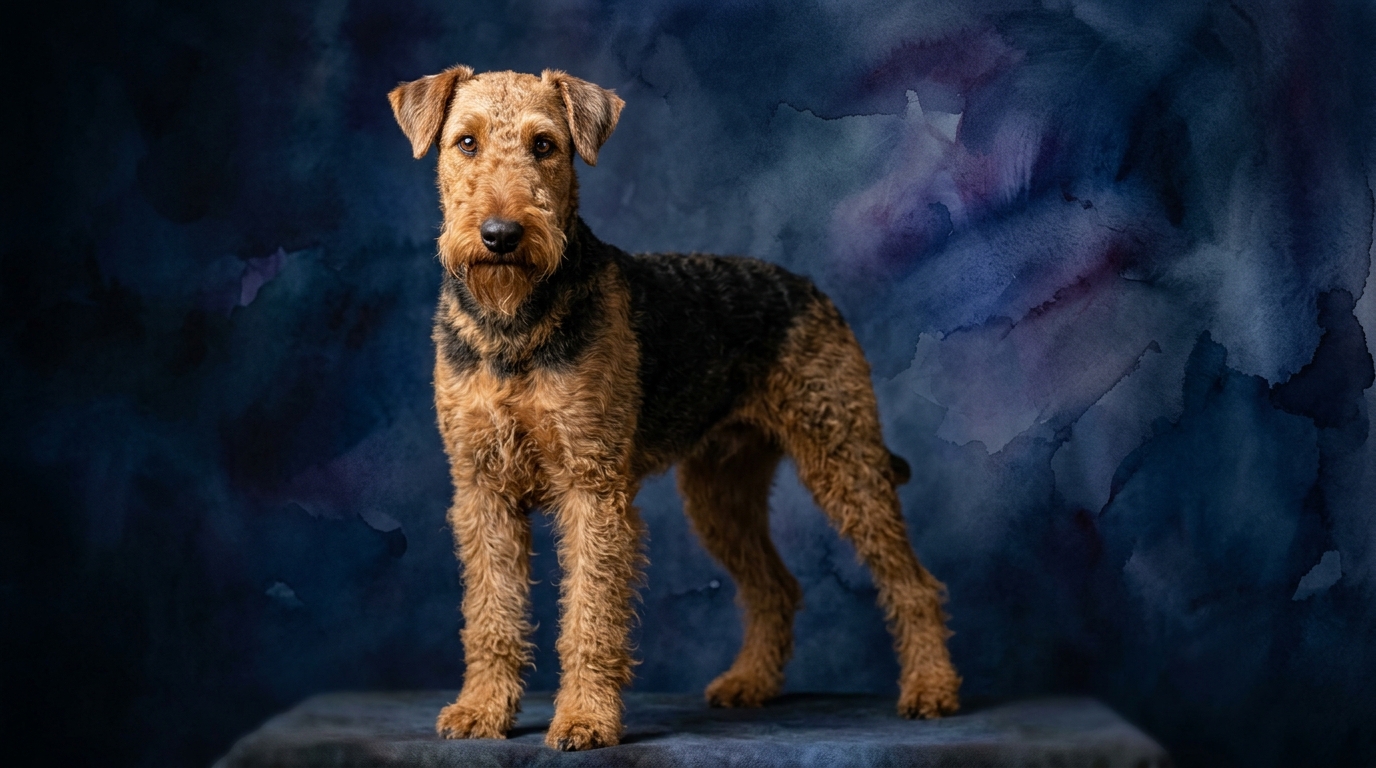
The Airedale Terrier, a breed with a history spanning hunting and policing, presents a sharper, more agile cognitive blueprint, earning a Coren rank of #29. Their Problem Solving capability is a robust 4/5, indicative of a breed that actively seeks solutions, often with an independent and resourceful flair. This translates into a quicker grasp of novel situations and creative approaches to obstacles. Training Speed also scores 4/5, meaning Airedales are generally responsive and eager to learn, quickly picking up new commands and routines when engaged effectively. Social Intelligence, at 3/5, suggests they are adaptable and capable of forming strong connections, but their terrier independence means they often balance social engagement with a self-assured demeanor. Their Instinctive Drive, rated 3/5, is channeled into their tenacious prey drive and a persistent nature, making them dedicated to tasks they perceive as valuable. Their Memory, a commendable 4/5, ensures they retain complex sequences and learned experiences with considerable accuracy, aiding in advanced training and recall.
Where Neapolitan Mastiff Wins Cognitively
The Neapolitan Mastiff's cognitive strengths truly emerge in their profound social intelligence and their deliberate, contextual problem-solving, particularly within their role as guardians. While their social intelligence is rated 3/5, it's a specific kind of understanding: a deep, intuitive grasp of their family's dynamics and a keen ability to differentiate between welcomed guests and potential threats. They excel at reading subtle human cues, not for quick obedience, but for assessing the safety and emotional state of their loved ones. This nuanced social processing allows them to act as discerning protectors, rather than simply reacting to stimuli.
Their 3/5 problem-solving isn't about speed, but about thoroughness and persistence when it comes to their core protective duties. They might take their time to “process” a situation, weighing factors with a calm, almost philosophical demeanor, before committing to an action. This deliberate cognitive pace means they are less likely to make impulsive errors when guarding and more likely to make a considered judgment based on a full assessment of their environment and the people within it. They win in sustained, low-frequency, high-stakes cognitive tasks related to their role.
Where Airedale Terrier Wins Cognitively
The Airedale Terrier's cognitive advantages shine brightly in areas requiring rapid learning, independent problem-solving, and robust memory recall. With a 4/5 in Problem Solving, Airedales are adept at figuring out puzzles, navigating complex environments, and devising their own strategies to achieve a goal, often with a mischievous ingenuity. This isn't just about following instructions; it's about active, creative thinking to overcome challenges, whether it's opening a gate or retrieving a hidden toy.
Their Training Speed, also at 4/5, means they grasp new commands and concepts with impressive alacrity, making them responsive candidates for diverse activities like agility, obedience, or even scent work. This quick uptake is supported by their 4/5 Memory, allowing them to retain vast repertoires of commands and experiences over long periods, making advanced training less about repetition and more about refinement. Where a Mastiff might deliberate, an Airedale will often innovate, demonstrating a quick-wittedness and mental agility that makes them exceptionally engaging for owners who enjoy interactive cognitive challenges.
Which is Easier to Train and Why
Based on their respective IQ profiles, the Airedale Terrier generally presents as the easier breed to train, primarily due to their superior Training Speed and Memory, both rated 4/5. An Airedale typically learns new commands and behaviors more quickly, requiring fewer repetitions to solidify a concept. Their inherent drive to engage and their problem-solving aptitude mean they often enjoy the process of learning, making them more receptive to varied training methods and mental exercises. They are often eager to participate in training sessions, viewing them as stimulating puzzles to solve.
In contrast, the Neapolitan Mastiff, with a Training Speed and Memory both at 3/5, demands a more patient and consistent approach. While capable of learning and retaining information, they tend to do so at their own, more measured pace. They are not necessarily stubborn, but rather deliberate, requiring clear, calm, and consistent communication. Repetition is key, but it must be coupled with positive reinforcement that motivates their less inherently “eager to please” disposition. Their social intelligence means they respond best to a trainer they respect and trust, often taking cues from the overall relationship rather than just the command itself. Training a Neapolitan Mastiff is a marathon of consistency and understanding their unique thought process, whereas training an Airedale can often feel like a series of rewarding sprints.
Which Suits Active Owners vs Relaxed Owners
For owners seeking an active, mentally stimulating partnership, the Airedale Terrier is often the more fitting choice. Their 4/5 problem-solving and training speed, coupled with their inherent terrier drive, means they thrive when given regular opportunities for both physical exertion and cognitive engagement. These dogs need jobs, whether it's participating in dog sports, learning complex tricks, or engaging in extensive outdoor adventures. An Airedale that is not adequately challenged mentally and physically can become bored and potentially destructive, channeling their creative problem-solving into less desirable outlets. They demand an owner who is prepared to be an active participant in their daily mental and physical enrichment, providing structured activities that tap into their robust cognitive and physical energy reserves.
Conversely, the Neapolitan Mastiff is better suited for owners who appreciate a more relaxed, yet deeply discerning companion. While they still require regular exercise to maintain their physical health, their cognitive profile (3/5 across most dimensions) suggests a preference for a calmer, more observational lifestyle rather than constant high-intensity mental tasks. They are content to be watchful protectors, absorbing their environment and family dynamics with a profound, quiet focus. Owners who value a dog that is a thoughtful presence, rather than a perpetual motion machine, will find the Neapolitan Mastiff's steady demeanor and deliberate cognitive processing a perfect match. Their need is less for frantic activity and more for a stable, secure environment where their protective instincts and social intelligence can be expressed through calm vigilance.
The Verdict
Choose the Neapolitan Mastiff if you seek a calm, deliberate guardian who excels at nuanced social observation and thoughtful protection, requiring patience in training but rewarding with profound loyalty.
Opt for the Airedale Terrier if you desire an agile, quick-witted companion eager to learn and solve problems, thriving with active owners who provide consistent mental and physical challenges.
🧠 Find Your Pet's IQ Score
Our Pet IQ Lab assessment covers 25+ tests across 5 cognitive dimensions — personalized to your breed.
Take the Full IQ Test →Frequently Asked Questions
Is the Neapolitan Mastiff difficult to train?
The Neapolitan Mastiff is not difficult, but requires patience and consistency due to their deliberate learning pace (3/5 training speed). They respond best to calm, fair leadership and positive reinforcement, taking time to internalize commands.
Do Airedale Terriers need a lot of mental stimulation?
Yes, Airedale Terriers absolutely thrive on mental stimulation, given their 4/5 problem-solving and memory scores. Without adequate cognitive challenges, they can become bored and channel their energy into less desirable behaviors, so engaging activities are crucial.
How do their social intelligences differ in a family setting?
Both breeds have 3/5 social intelligence, but express it differently. The Neapolitan Mastiff uses it for discerning protection and family bonding, while the Airedale Terrier's social intelligence is balanced with its independent terrier spirit, making it adaptable but also self-assured within the family unit.