
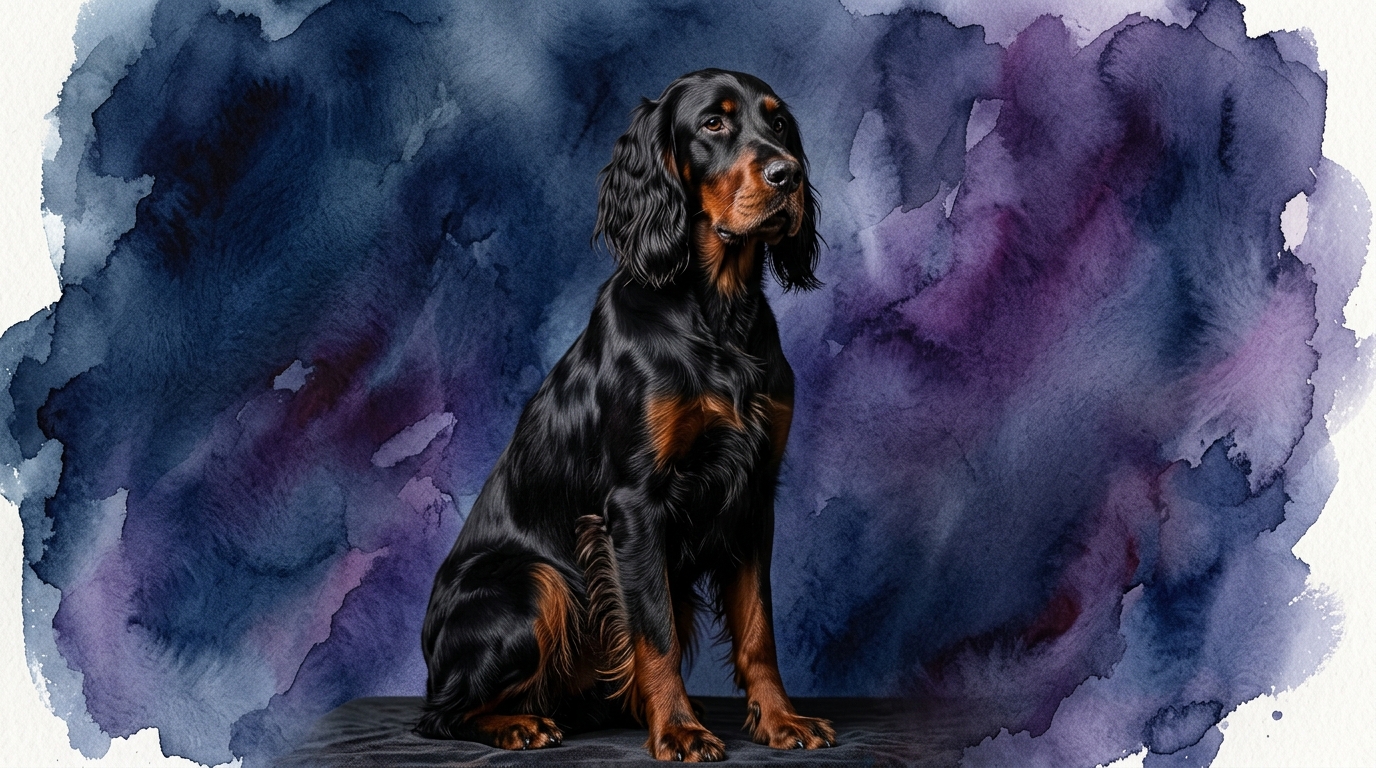
Side-by-Side IQ Profiles: Neapolitan Mastiff vs. Gordon Setter
The Cosmic Pet Pet IQ Lab employs five dimensions to evaluate canine intelligence, offering a nuanced perspective beyond simple obedience. Let's examine how the Neapolitan Mastiff, a Working breed, and the Gordon Setter, a Sporting breed ranked #39 by Coren, measure up.
**Neapolitan Mastiff (Working Breed)**: This breed showcases a practical, grounded intelligence. Its **Problem Solving (3/5)** leans towards assessing threats and navigating familiar obstacles with persistence, rather than intricate strategic thinking. **Training Speed (3/5)** indicates a moderate learning pace, requiring consistent, calm reinforcement and patience for new commands to be absorbed and generalized. **Social Intelligence (3/5)** is discerning; they are reserved with strangers but form deep bonds with their family, reading subtle cues within their immediate pack, often linked to their protective duties. Their **Instinctive Drive (3/5)** is primarily geared towards guarding and territorial vigilance, a watchful demeanor rather than a high prey drive. **Memory (3/5)** serves their long-term loyalty, allowing them to retain routines, people, and places, though complex sequences might need periodic refreshers.
**Gordon Setter (Sporting Breed, Coren Rank #39)**: The Gordon Setter's cognitive strengths are rooted in its field work. Its **Problem Solving (4/5)** demonstrates a keen aptitude for working through challenges, especially those related to hunting, adapting to changing conditions and strategically locating scent sources. **Training Speed (4/5)** is a notable asset, as they grasp new commands and complex sequences with impressive alacrity, thriving on engagement and mental stimulation. **Social Intelligence (3/5)** is balanced; they are generally amicable and capable of reading human intentions, particularly in a working partnership, forming strong family bonds while maintaining an independent spirit. Their **Instinctive Drive (3/5)** is focused on their sporting heritage – scenting, pointing, and retrieving – a purposeful work ethic. **Memory (4/5)** is excellent, allowing them to recall intricate hunting patterns, complex obedience routines, and the locations of game with impressive accuracy over extended periods.
Where the Neapolitan Mastiff Wins Cognitively
The Neapolitan Mastiff’s cognitive strengths lie in its measured, deliberate approach and its profound understanding of its protective role. While its scores are generally 3/5, this indicates a practical intelligence rather than a deficit. Its problem-solving, rated 3/5, is effective for assessing and responding to perceived threats within its territory, relying on observation and a calm, authoritative presence rather than quick, complex maneuvers. Its social intelligence, also 3/5, is deeply attuned to its immediate family, allowing it to discern subtle shifts in their emotional states and act as a steadfast, empathetic guardian. Unlike a breed driven by rapid-fire obedience, the Mastiff's memory and training speed (both 3/5) are sufficient for internalizing long-term routines and understanding its place within the family structure, fostering unwavering loyalty that doesn't demand constant reinforcement for its core duties. Its instinctive drive (3/5) is perfectly calibrated for its historical purpose: a sentinel, not a sprinter.
Where the Gordon Setter Wins Cognitively
The Gordon Setter's cognitive profile shines in areas requiring quick processing, adaptability, and sustained mental effort, reflecting its origins as a bird dog. Its problem-solving (4/5) allows it to navigate complex outdoor environments, tracking scents, and adapting strategies on the fly during a hunt, showcasing a flexible and persistent mental agility. The Setter's training speed (4/5) is a significant advantage; it grasps new commands and sequences rapidly, making it responsive to advanced obedience, field work, or dog sports. This quick uptake is supported by its superior memory (4/5), which enables it to recall intricate patterns, multiple commands, and the locations of game with impressive accuracy, even over varied terrain and extended periods. While its social intelligence and instinctive drive are rated 3/5, they are specifically geared towards a working partnership, allowing it to collaborate effectively with a handler in the field, understanding cues and maintaining focus on its task.
Which is Easier to Train and Why
Based on their profiles, the Gordon Setter is generally easier to train for a wider range of tasks, particularly those requiring responsiveness and precision. Its 4/5 rating in both training speed and problem-solving means it picks up new concepts quickly and can apply learned behaviors to novel situations with less repetition. A Gordon Setter thrives on mental stimulation and has a strong desire to work alongside its human, making it motivated to learn and execute commands. Its excellent memory (4/5) further solidifies retention of training. They respond well to positive reinforcement and enjoy the mental engagement of training sessions, often eager to please and quick to offer behaviors.
In contrast, the Neapolitan Mastiff, with 3/5 in training speed and problem-solving, requires more patience and consistency. They learn at a moderate pace and may need more time to generalize commands across different contexts. Their training often requires understanding their independent, sometimes stubborn, nature, which stems from their historical role as self-reliant guardians. While they are certainly trainable and deeply loyal, their learning style is more deliberate, requiring a handler who appreciates a slower, more methodical approach focused on clear communication and building trust, rather than rapid-fire command execution. Their loyalty is earned through consistent, fair leadership, not through a quick mastery of tricks.
Which Suits Active Owners vs. Relaxed Owners
The choice between these breeds significantly depends on an owner's lifestyle. The Gordon Setter, with its higher problem-solving and training speed, combined with its instinctive drive for field work, is an ideal match for active owners. These dogs require consistent physical exercise – brisk walks, runs, or engaging in dog sports like agility, obedience, or scent work – to satisfy their mental and physical needs. An owner who enjoys hiking, hunting, or training for competitive dog activities will find a willing and capable partner in a Gordon Setter. Neglecting their need for stimulation can lead to boredom and potentially destructive behaviors, as their minds and bodies are built for action.
Conversely, the Neapolitan Mastiff is better suited for more relaxed owners who appreciate a calm, watchful presence. While they need regular, moderate exercise to maintain health, their instinctive drive is focused more on guarding and companionship than on sustained, vigorous activity. A large, secure yard where they can patrol and observe, combined with daily leashed walks, often suffices. Owners who prefer a less demanding exercise routine and value a stoic, loyal companion who is content to lounge nearby after a short outing will find the Neapolitan Mastiff a fitting choice. Their cognitive strengths are best appreciated in a stable, predictable home environment where their protective instincts can be confidently managed through consistent, calm leadership.
The Verdict
Choose the Neapolitan Mastiff if you seek a calm, steadfast guardian who thrives on routine and deep family bonds, and you are prepared for a deliberate training journey focused on trust and clear leadership.
Opt for the Gordon Setter if you desire an energetic, responsive partner for an active outdoor lifestyle, someone who excels in learning complex tasks and enjoys collaborative engagement in sports or field activities.
🧠 Find Your Pet's IQ Score
Our Pet IQ Lab assessment covers 25+ tests across 5 cognitive dimensions — personalized to your breed.
Take the Full IQ Test →Frequently Asked Questions
Is the Neapolitan Mastiff difficult to train?
The Neapolitan Mastiff isn't "difficult" in the sense of being untrainable, but rather requires a patient, consistent approach. Their training speed (3/5) means they learn at a moderate pace, preferring clear, calm communication and positive reinforcement over harsh methods. Success comes from building a strong, trusting relationship and respecting their independent nature.
Do Gordon Setters need a lot of mental stimulation?
Yes, Gordon Setters do require significant mental stimulation. Their high problem-solving (4/5) and training speed (4/5) mean they enjoy learning and engaging their minds. Activities like advanced obedience, puzzle toys, scent work, or regular training sessions are crucial to keep them content and prevent boredom-related issues.
How do their social intelligence scores impact their family life?
Both breeds score 3/5 in social intelligence, but this manifests differently. The Neapolitan Mastiff's social intelligence is deeply family-centric, making them reserved with strangers but profoundly bonded and protective of their inner circle. The Gordon Setter's social intelligence supports a working partnership, making them generally amicable and capable of reading handler cues, while still maintaining an independent streak.