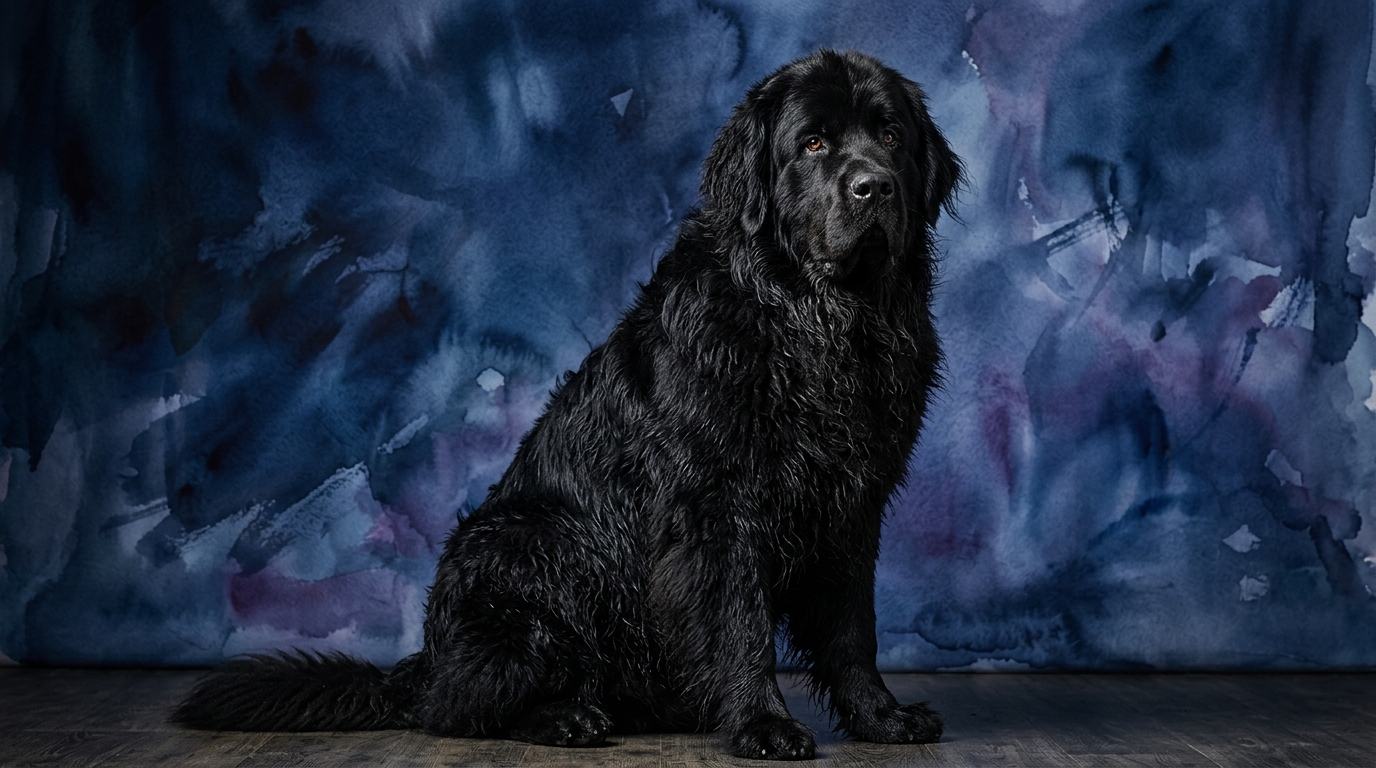

Side-by-Side IQ Profile: Newfoundland vs. Dogue de Bordeaux
At The Cosmic Pet Pet IQ Lab, we assess canine intelligence across five critical dimensions, offering a detailed look beyond simple obedience. For the Newfoundland, a breed renowned for its gentle nature and utility, we observe a Coren ranking of #34, indicating a strong capacity for obedience and working intelligence. The Dogue de Bordeaux, while a formidable presence, does not hold a specific Coren ranking, suggesting a different manifestation of its cognitive abilities.
When it comes to **Problem Solving**, both breeds register a score of 3/5. This indicates a moderate capacity for navigating novel situations and figuring out solutions, whether it’s getting to a treat or bypassing an obstacle. Their approaches might differ, but their foundational ability to tackle challenges is comparable.
In **Training Speed**, the Newfoundland shines with a 4/5, reflecting its eagerness to learn and retain new commands and behaviors quickly. The Dogue de Bordeaux, with a 3/5, requires more patience and consistent repetition, taking a bit longer to grasp and solidify new lessons.
**Social Intelligence** is where the Newfoundland truly distinguishes itself, scoring an impressive 5/5. This breed exhibits exceptional empathy, understanding of human emotions, and seamless interaction within complex social structures. The Dogue de Bordeaux, while loyal to its family, shows a more reserved social intelligence at 3/5, being discerning rather than broadly engaging with strangers.
The **Instinctive Drive** of the Newfoundland is powerful, earning a 5/5. This score reflects their innate urges for water rescue, retrieving, and nurturing, deeply embedded traits that guide their actions. The Dogue de Bordeaux has an instinctive drive of 3/5, primarily focused on guarding, protection, and territorial awareness, less diverse in its utility than the Newfoundland's drives.
Finally, for **Memory**, the Newfoundland scores 4/5, demonstrating a strong ability to recall past experiences, learned commands, and even specific individuals over time. The Dogue de Bordeaux's memory, at 3/5, is solid for routines and familiar faces but may not retain complex sequences or less frequently reinforced information as readily.
Where the Newfoundland Wins Cognitively
The Newfoundland's cognitive victories are evident in its superior capacity for rapid learning and profound social connection. Their 4/5 Training Speed means they pick up new commands and routines with relative ease, often appearing to anticipate their handler's desires, which makes them highly adaptable to various roles from therapy work to competitive obedience. This quick grasp translates into efficient training sessions and a dog that readily integrates into complex household rules.
Their exceptional 5/5 Social Intelligence allows Newfoundlands to excel in understanding nuanced human cues and emotional states. They often act as intuitive companions, offering comfort or assistance without explicit commands. This deep social acumen contributes to their historical role as 'nanny dogs' and their success in roles requiring sensitivity, such as service or therapy animals, where reading people is paramount. This isn't just about being friendly; it's about a sophisticated processing of social information.
Furthermore, the Newfoundland's 5/5 Instinctive Drive manifests as a powerful, purposeful energy, particularly in water rescue scenarios. This isn't merely a physical drive but a cognitive one, involving problem-solving under pressure, assessing situations, and executing complex, life-saving behaviors driven by an innate desire to help. Their 4/5 Memory supports this by enabling them to recall intricate tasks and the sequence of actions required for their specialized work, making their instinctive behaviors highly effective and repeatable.
Where the Dogue de Bordeaux's Unique Cognitive Strengths Shine
While the Dogue de Bordeaux's scores might appear lower in comparison across several dimensions, their cognitive profile is perfectly tailored for their historical purpose, demonstrating strengths in specific areas. Their equal 3/5 Problem Solving score with the Newfoundland, for instance, often manifests as a persistent determination. A Dogue de Bordeaux might not always find the quickest solution, but their unwavering focus means they will often see a task through, whether it's guarding their territory or figuring out how to retrieve a favorite toy from a tight spot, relying on their physical presence and sheer will.
The Dogue's 3/5 Social Intelligence, though not broadly empathetic like the Newfoundland's, is highly discerning. This specific form of intelligence allows them to accurately differentiate between familiar, welcomed individuals and potential threats. They excel at assessing situations with a calm, watchful demeanor, making calculated judgments about who to trust and when to intervene. This discerning social filter is a cognitive asset for a guardian breed, prioritizing protection and loyalty to their inner circle over generalized sociability.
Their 3/5 Instinctive Drive is singularly focused on protection and territoriality, a cognitive strength that underpins their effectiveness as watchdogs. This isn't a broad, multi-purpose drive, but a highly specialized one, meaning they are acutely aware of their surroundings and alert to changes, processing environmental cues to maintain security. Their 3/5 Memory, while not as expansive as the Newfoundland's, is strong for routines, boundaries, and the specific individuals they are bonded with, ensuring consistent guardianship and a clear understanding of their role within the family structure.
Which is Easier to Train and Why
Based on our IQ metrics, the Newfoundland is generally easier to train due to its higher Training Speed (4/5), Social Intelligence (5/5), and Memory (4/5). Newfoundlands typically possess a strong desire to please their owners, making them highly responsive to positive reinforcement. Their keen social intelligence means they quickly pick up on human body language and vocal cues, adapting their behavior to meet expectations. They retain lessons well, allowing for more advanced and complex training over time, from basic obedience to intricate rescue simulations.
The Dogue de Bordeaux, with lower scores in these areas (Training Speed 3/5, Social Intelligence 3/5, Memory 3/5), presents a different training experience. They are often more independent thinkers, less driven by a desire to please and more by their own motivations, which can make training require greater patience and consistency. While intelligent, their learning process is slower, demanding clear, concise commands and a firm, fair approach. Owners must be prepared for more repetition and to understand that the Dogue's motivation might be more food-driven or based on establishing clear boundaries, rather than an inherent eagerness to perform complex tricks for social praise, reflecting a real behavioral difference in their approach to learning.
Which Suits Active Owners vs. Relaxed Owners
The Newfoundland, while not requiring marathon running, thrives with owners who are 'active' in terms of engagement and providing mental stimulation. Their high social intelligence and instinctive drive mean they need consistent interaction, training, and opportunities to utilize their natural abilities, whether through swimming, obedience classes, or simply being a constant, involved presence in family activities. They suit owners who enjoy a highly responsive, participatory companion and are prepared to dedicate time to consistent mental challenges and social outings.
The Dogue de Bordeaux can suit owners who might be considered 'relaxed' in terms of requiring less varied mental stimulation for complex tasks, but who are nonetheless consistent, firm, and understand the need for clear structure and socialization. While physically less demanding than some breeds, their guarding instincts require dedicated training and socialization to channel appropriately. They are well-suited to owners who appreciate a watchful, steadfast presence and are prepared for a dog that learns at its own pace, valuing a predictable routine and a calm, authoritative handler over constant novelty or high-level obedience competitions. 'Relaxed' here refers to the *intensity* of varied cognitive challenges, not the absence of training or engagement.
The Verdict
Choose the Newfoundland if you seek a highly empathetic, quick-learning companion eager for diverse mental engagement, social interaction, and potentially specialized work like water rescue or therapy. Their superior social intelligence and training speed make them adaptable and responsive partners.
Opt for the Dogue de Bordeaux if you value a discerning, loyal, and steadfast guardian with a focused protective instinct, and are prepared for a training journey that prioritizes consistency, clear boundaries, and patience over rapid learning and broad social eagerness.
🧠 Find Your Pet's IQ Score
Our Pet IQ Lab assessment covers 25+ tests across 5 cognitive dimensions — personalized to your breed.
Take the Full IQ Test →Frequently Asked Questions
Are Newfoundland dogs good with children?
Yes, Newfoundlands are often called 'nanny dogs' due to their exceptional social intelligence (5/5) and nurturing instinctive drive (5/5). They are typically gentle, patient, and protective with children, making them excellent family companions who intuitively understand social dynamics.
How does the Dogue de Bordeaux's guarding instinct manifest?
The Dogue de Bordeaux's guarding instinct (Instinctive Drive 3/5) manifests as a keen awareness of their surroundings and a strong protective nature towards their family and territory. They are discerning, calmly assessing situations before acting, and will typically place themselves between their loved ones and perceived threats, relying on their imposing presence.
Do both breeds require a lot of exercise?
Both breeds are large and require regular, moderate exercise to stay healthy, but their needs differ. Newfoundlands benefit from activities like swimming or long walks, while Dogues prefer consistent, shorter walks and playtime, often being less inclined towards strenuous, prolonged physical activity, though mental engagement remains crucial for both.