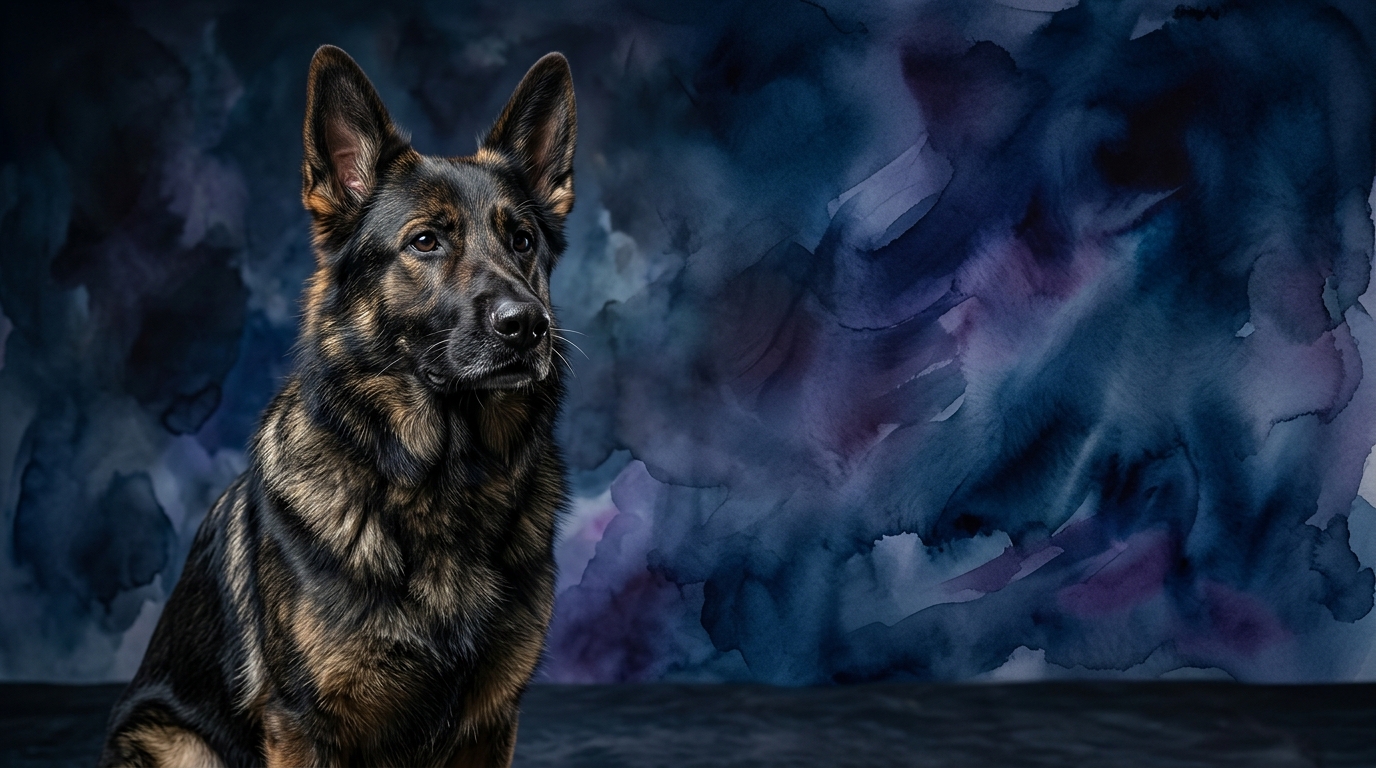
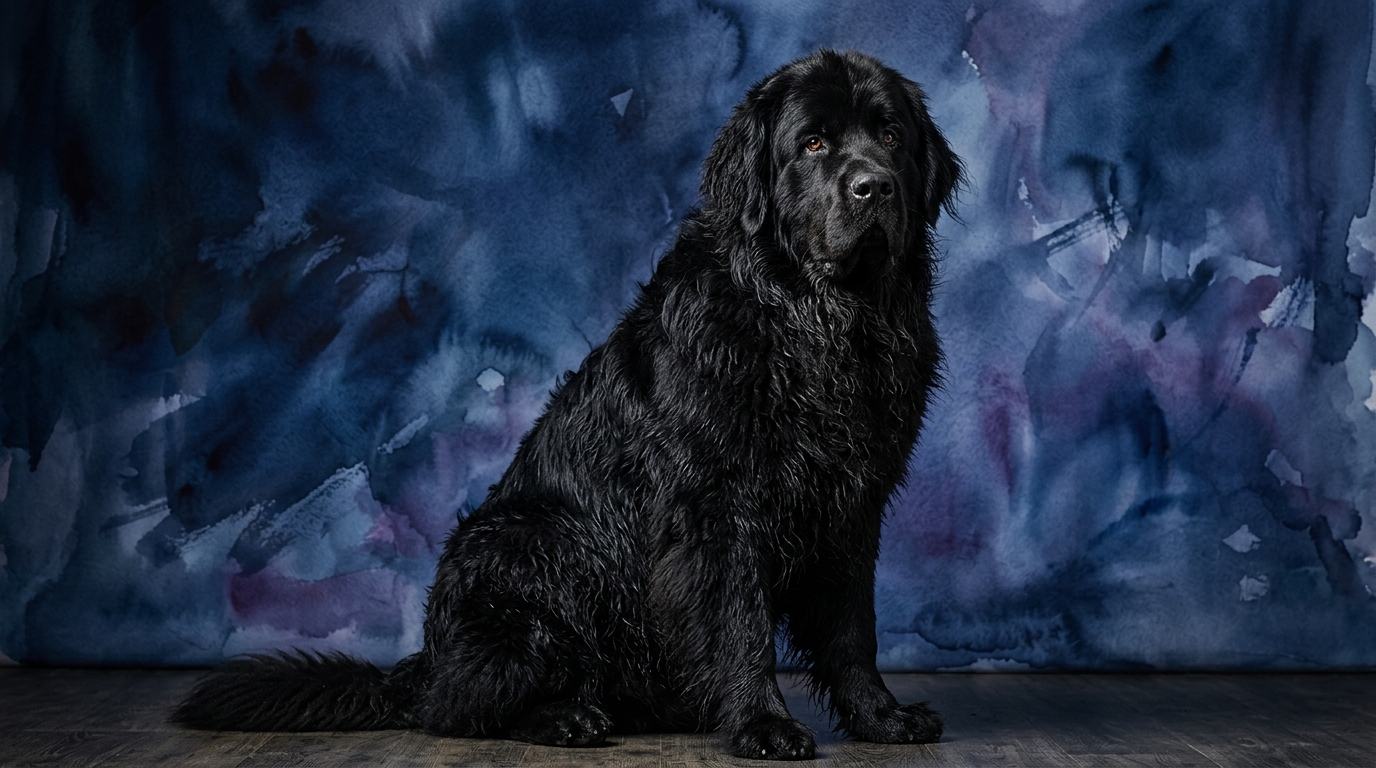
Side-by-Side IQ Profile: German Shepherd vs. Newfoundland
The Cosmic Pet Pet IQ Lab categorizes canine intelligence across five key dimensions, offering a nuanced view beyond simple obedience. Let's delve into how the German Shepherd and Newfoundland stack up.
German Shepherd (Coren Rank #3): This breed presents an almost unparalleled cognitive profile, reflecting centuries of selective breeding for demanding roles. Their Problem Solving is rated 5/5, indicating an exceptional capacity to analyze novel situations, devise strategies, and adapt learned behaviors to new challenges with impressive speed and accuracy. Training Speed also stands at a perfect 5/5, meaning they grasp new commands and complex sequences with minimal repetitions, often anticipating their handler's next instruction. Social Intelligence is 5/5; they are acutely attuned to human emotions, body language, and vocal cues, forming deep, responsive bonds crucial for their protective and service roles. Their Instinctive Drive, also 5/5, is a powerful engine for their work, manifesting as a profound desire for purpose, whether herding, guarding, or performing complex tasks. Finally, their Memory is 5/5, enabling robust retention of commands, experiences, and spatial information over extended periods, vital for consistency in their demanding occupations.
Newfoundland (Coren Rank #34): The Newfoundland's cognitive strengths lie in a different, yet equally profound, sphere. Their Problem Solving is rated 3/5, suggesting they excel at practical, known solutions rather than abstract problem-solving; they are capable of learning but might not spontaneously innovate complex strategies for entirely new puzzles. Training Speed is 4/5, indicating a good capacity for learning, though they may require more patience and positive reinforcement compared to the rapid uptake of the German Shepherd. Their Social Intelligence is a standout 5/5, characterized by an extraordinary empathy, gentleness, and an almost intuitive understanding of human emotional states, making them exceptional family companions and therapy dogs. The Newfoundland's Instinctive Drive is also 5/5, but it manifests predominantly in their legendary water rescue abilities and a strong protective, nurturing instinct, guiding their actions with a profound sense of responsibility. Their Memory is 4/5, solid and reliable for retaining commands and routines, though perhaps less geared towards the intricate, multi-layered recall required of a top-tier working dog in high-stress environments.
Where the German Shepherd Excels Cognitively
The German Shepherd's cognitive supremacy shines brightest in areas demanding swift analytical processing, abstract reasoning, and the efficient application of learned skills to dynamic environments. Their 5/5 Problem Solving isn't just about figuring things out; it's about doing so under pressure, adapting a known solution to a slightly altered scenario, or even creating a new one on the fly. For instance, a German Shepherd tasked with a complex scent detection exercise can quickly learn to differentiate between subtle odor variations and adjust its search pattern based on environmental feedback, demonstrating superior cognitive flexibility. Their perfect 5/5 Training Speed means they don't just learn commands; they internalize concepts, allowing them to generalize behaviors across different contexts with minimal prompting. This breed remembers intricate sequences of commands and specific targets with remarkable accuracy (Memory 5/5), making them unparalleled in fields requiring precision and consistency, such as police work, search and rescue, or competitive obedience. This cognitive agility allows them to excel in roles where split-second decisions and accurate recalls are paramount.
Where the Newfoundland Excels Cognitively
While the German Shepherd excels in rapid, analytical tasks, the Newfoundland's cognitive strengths are rooted in profound social intuition and a deeply ingrained, specialized instinctive drive. Their 5/5 Social Intelligence is not merely about understanding basic human cues; it's about an almost uncanny empathy, an ability to sense distress, sadness, or vulnerability in humans and respond with appropriate, gentle comfort. A Newfoundland might instinctively position itself between a child and a perceived threat, not through aggressive training, but through an innate protective impulse guided by its profound understanding of family dynamics. Their 5/5 Instinctive Drive is most famously manifested in their water rescue capabilities. This isn't just about swimming; it involves an intrinsic understanding of water currents, the mechanics of pulling a person to safety, and an unwavering commitment to the task, often acting independently and decisively in crisis situations. This drive is so powerful that many Newfoundlands will attempt to “rescue” anyone struggling in water, even if they are merely playing. Their cognitive profile, therefore, points to a deep, nurturing intelligence, one that prioritizes safety, companionship, and gentle interaction over complex problem-solving for its own sake.
Trainability: Which Breed Learns Faster?
In the realm of trainability, the German Shepherd generally presents a more straightforward path for handlers due to its exceptional cognitive attributes. With a 5/5 Training Speed, they absorb new commands and behaviors with remarkable alacrity, often requiring only a handful of repetitions to solidify a concept. This swift learning is bolstered by their 5/5 Problem Solving, which allows them to quickly understand the “why” behind an action and generalize it, making them less prone to simply rote memorizing. Their strong Instinctive Drive (5/5) translates into a profound desire to work and please, making them highly motivated partners in training, especially when given a clear purpose. They thrive on structure and mental challenges, often eager to learn and execute complex tasks.
The Newfoundland, while possessing a respectable 4/5 Training Speed, approaches learning with a different temperament. They are capable learners but typically require more patience, positive reinforcement, and a gentle approach. Their Problem Solving (3/5) means they might take longer to grasp abstract concepts or adapt to entirely novel situations, preferring to stick to known, successful strategies. Newfoundlands can sometimes display a “stubborn” streak if they don't perceive the value or comfort in a task, or if the training method is too harsh. Their training benefits immensely from consistency, short, engaging sessions, and leveraging their innate desire to be a gentle companion. They are less driven by a need for constant “work” and more by the desire for connection, meaning motivation often comes from praise and affection rather than the inherent challenge of a task.
Matching Breeds to Owner Lifestyles: Active vs. Relaxed
The German Shepherd is undeniably suited for active owners who are prepared to invest significantly in both physical and mental stimulation. Their 5/5 Instinctive Drive and 5/5 Problem Solving demand an outlet; without consistent engagement, they can become bored, frustrated, and potentially destructive. These dogs thrive with structured routines that include vigorous exercise, advanced obedience training, agility, protection work, or scent detection. They need a “job” to do, whether it's competitive sport or simply being a vigilant family guardian, and an owner who can consistently provide that purpose. An owner who enjoys hiking, running, or dog sports will find an eager and capable partner in a German Shepherd.
In contrast, the Newfoundland, while a large breed requiring regular exercise, is generally a better fit for owners who appreciate a more relaxed pace, though “relaxed” should not be confused with inactive. Their exercise needs are moderate but consistent, including daily walks and, ideally, opportunities to swim, which taps into their strong instinctive drive. Their cognitive profile, particularly their high Social Intelligence (5/5) and less intense drive for complex problem-solving, makes them content with being a devoted family companion. They are less prone to demanding constant mental challenges in the way a German Shepherd is, preferring to be close to their people. Owners seeking a gentle giant to share quiet evenings and leisurely strolls, perhaps with occasional trips to the water, will find a Newfoundland to be a perfect, affectionate match. They still need consistent training, but the intensity and purpose behind that training differ significantly.
The Verdict
If you are an experienced, active owner seeking a versatile, highly trainable partner for demanding tasks, protection, or competitive dog sports, and you are committed to providing rigorous mental and physical engagement, the German Shepherd is the ideal choice.
If you desire a gentle, empathetic, devoted family companion with a calm demeanor and a natural affinity for water, and you can provide patient, consistent training and a loving, less intensely demanding home environment, the Newfoundland will be a wonderful addition.
🧠 Find Your Pet's IQ Score
Our Pet IQ Lab assessment covers 25+ tests across 5 cognitive dimensions — personalized to your breed.
Take the Full IQ Test →Frequently Asked Questions
Are German Shepherds better for first-time dog owners?
German Shepherds are generally not recommended for first-time dog owners due to their intense training needs, strong drives, and requirement for consistent, experienced handling. Their cognitive capabilities demand a knowledgeable owner who can channel their energy and intelligence effectively from an early age.
Do Newfoundlands require less mental stimulation than German Shepherds?
Newfoundlands typically require a different type of mental stimulation rather than less overall. While they don't demand complex problem-solving tasks like German Shepherds, they thrive on social interaction, consistent training reinforcement, and activities that engage their natural instincts, such as swimming or "helping" with family tasks.
How do their instinctive drives manifest differently in daily life?
A German Shepherd's instinctive drive (5/5) often manifests as a strong desire to herd, guard, or work, leading to vigilance, protective behaviors, and a need for purpose-driven activities. A Newfoundland's instinctive drive (5/5) typically appears as an innate desire to nurture, protect family members gently, and an irresistible urge to "rescue" anyone in water, reflecting their history as water rescue dogs.