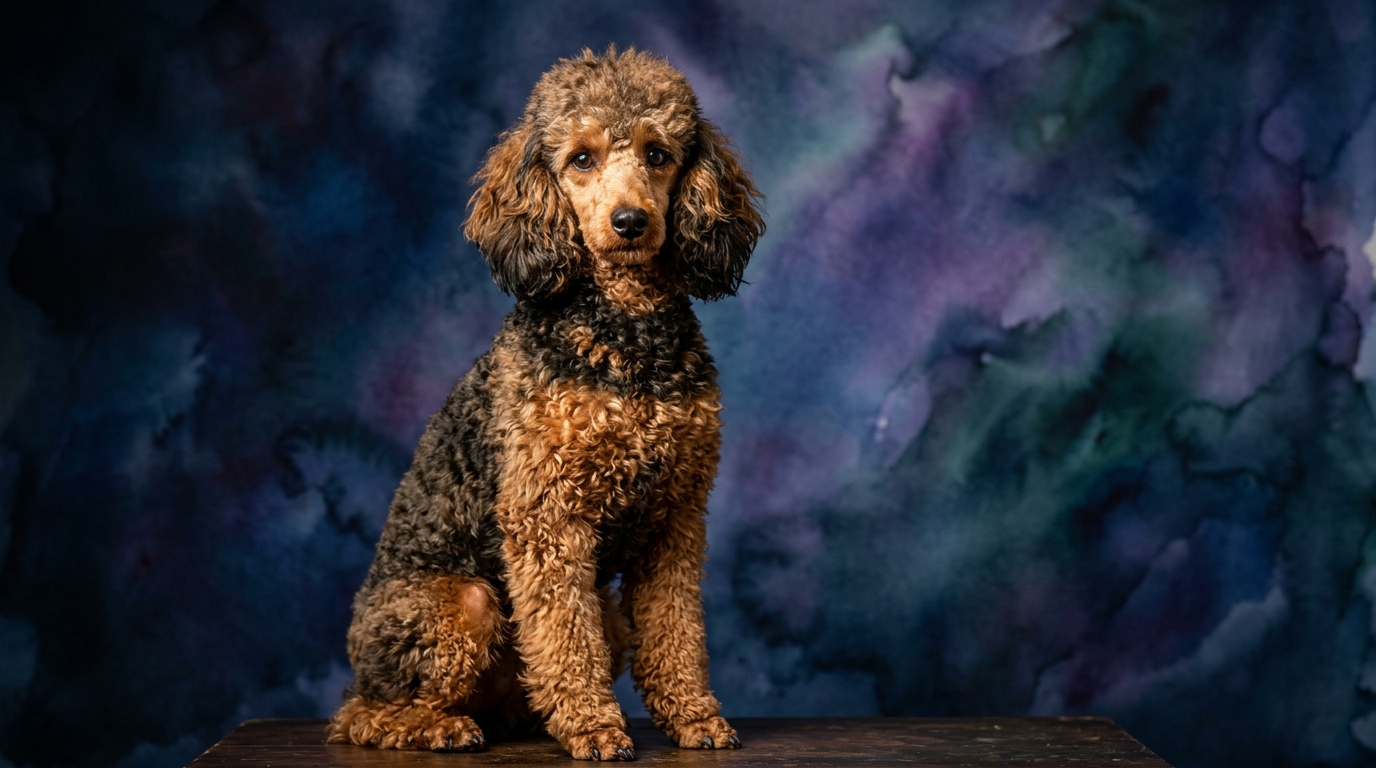
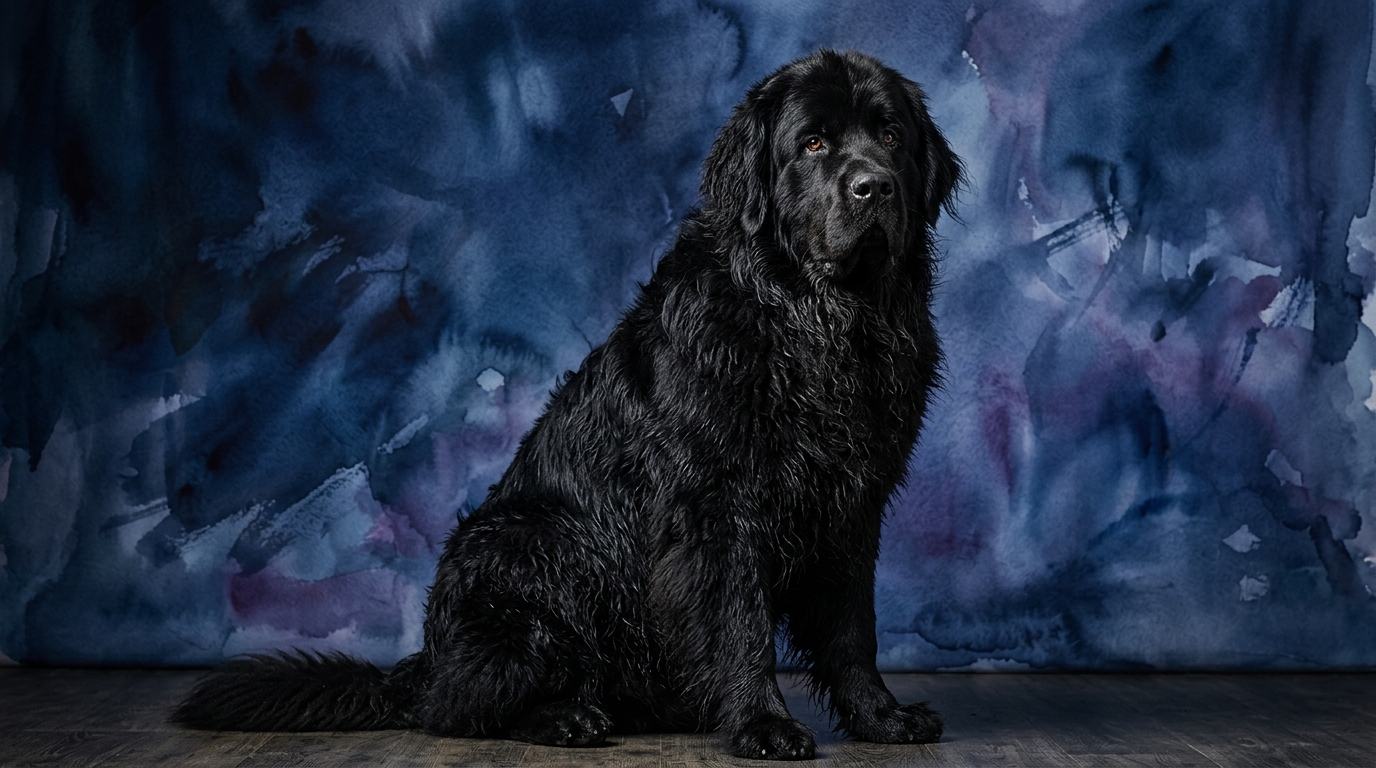
Side-by-Side IQ Profile: Poodle (Standard) vs. Newfoundland
At The Cosmic Pet Pet IQ Lab, we evaluate canine intelligence across five key dimensions, offering a nuanced perspective beyond general rankings. The Standard Poodle, often associated with agility and showmanship, and the Newfoundland, revered for its strength and gentle nature, present intriguing contrasts in their cognitive makeup.
For the **Standard Poodle**, Problem Solving registers a perfect 5/5. This indicates an exceptional capacity to analyze novel situations, devise multi-step solutions, and adapt strategies when initial attempts fail. Training Speed also scores 5/5, reflecting their rapid acquisition of new commands and complex sequences with minimal repetition. Social Intelligence is rated 5/5, showcasing a profound understanding of human cues, emotions, and intricate social dynamics within a household. Their Instinctive Drive stands at 4/5, suggesting a strong but adaptable inherent motivation, often channeled into retrieving or companion roles rather than singular, intense tasks. Memory, too, is a standout at 5/5, enabling them to retain vast repertoires of commands, routines, and experiences over extended periods.
The **Newfoundland** offers a different cognitive blueprint. Its Problem Solving is rated 3/5, indicating a practical, straightforward approach to challenges, often relying on learned patterns or seeking human assistance rather than intricate independent strategizing. Training Speed scores 4/5, signifying a solid ability to learn new behaviors, though perhaps requiring more consistent reinforcement and repetition than a Poodle. Social Intelligence matches the Poodle at 5/5, highlighting their empathetic nature, sensitivity to human moods, and strong desire for companionship. Crucially, their Instinctive Drive is a robust 5/5, deeply rooted in their heritage of water rescue and heavy hauling, demonstrating an unwavering, powerful impulse for specific, purposeful tasks. Memory for the Newfoundland is 4/5, meaning they possess a reliable capacity for recalling commands and past interactions, though perhaps not with the same expansive detail or long-term precision as a Poodle.
Where the Standard Poodle Wins Cognitively
The Standard Poodle's cognitive strengths lie in their unparalleled mental agility and processing speed. Their 5/5 Problem Solving and Training Speed scores translate into a dog that not only learns new concepts with remarkable alacrity but also readily applies those concepts to novel scenarios. This means a Poodle can quickly generalize a command learned in one environment to another, or spontaneously combine known behaviors to solve an unforeseen puzzle. Their exceptional Memory (5/5) further enhances this, allowing them to build an extensive mental database of experiences and skills, making them adept at advanced obedience, complex trick training, or service roles requiring numerous nuanced responses. They excel in environments demanding cognitive flexibility and constant intellectual engagement, often seeming to anticipate human intentions before a command is even fully uttered.
Where the Newfoundland Wins Cognitively
The Newfoundland's cognitive advantage is rooted in their profound instinctive drive and social attunement, which combine to create an exceptionally reliable and empathetic partner. Their 5/5 Instinctive Drive isn't just about raw power; it's about a deep-seated, unwavering commitment to a purpose, particularly tasks involving protection, rescue, or companionship. This drive, coupled with their 5/5 Social Intelligence, means they are profoundly motivated by connection and service to their human family. While their Problem Solving (3/5) might be more direct, their strength lies in consistent, dedicated application of learned behaviors within their instinctive framework. They excel in roles requiring steady nerves, patient endurance, and an innate understanding of distress signals, making them superb therapy dogs, water rescue companions, or steadfast guardians, where steadfastness and empathy often outweigh rapid-fire cognitive problem-solving.
Which is Easier to Train and Why
Considering the specific IQ profiles, the Standard Poodle generally proves easier to train due to their superior Training Speed (5/5) and Problem Solving (5/5). They grasp new commands and concepts almost immediately, often requiring only a few repetitions before demonstrating proficiency. Their cognitive flexibility allows them to understand abstract cues and complex sequences quickly, making them ideal candidates for advanced obedience, agility, or competitive canine sports. They tend to be highly responsive to positive reinforcement and often find the process of learning itself inherently rewarding, eager to engage in new mental challenges.
The Newfoundland, with a Training Speed of 4/5, is certainly trainable and willing to please, but their learning process typically requires more consistent repetition and a focus on practical, purpose-driven outcomes. While they learn reliably, they may not generalize commands as rapidly or spontaneously combine behaviors in novel ways compared to a Poodle. Their training benefits from patience and leveraging their strong Instinctive Drive (5/5) by incorporating tasks that align with their natural tendencies, such as pulling a cart or simulated rescue work. While they might take a bit longer to perfect a new skill, once learned, their reliable Memory (4/5) ensures it sticks, especially if reinforced within a consistent routine.
Which Suits Active Owners vs. Relaxed Owners
The **Standard Poodle** is an ideal match for active owners who thrive on engaging their canine companions in diverse activities. Their 5/5 Problem Solving and Training Speed mean they require substantial mental stimulation beyond simple walks. Owners who enjoy dog sports like agility, obedience trials, flyball, or even advanced trick training will find a Poodle a highly enthusiastic and capable partner. They benefit from consistent opportunities to learn new skills and solve puzzles, preventing boredom and channeling their considerable mental energy constructively. These dogs flourish with owners who can dedicate time to varied physical exercise combined with daily cognitive challenges.
The **Newfoundland**, while needing regular exercise to maintain their physical condition, generally suits owners with a more relaxed, yet purposeful, lifestyle. Their robust 5/5 Instinctive Drive means they thrive on having a 'job,' even if that job is simply being a watchful, gentle companion or participating in therapy visits. While they enjoy walks and outdoor adventures, their mental stimulation often comes from consistent routines and tasks that leverage their empathetic nature and strength, rather than constant novelty or complex abstract problem-solving. Owners who appreciate a steadfast presence, enjoy consistent outdoor activities like swimming or long, steady walks, and perhaps engage in community service with their dog, will find a Newfoundland a deeply rewarding companion.
The Verdict: When to Choose Each Breed
The Verdict
Choose a Standard Poodle if you seek a highly adaptable, mentally agile companion eager for complex training, dog sports, and constant intellectual engagement, thriving on varied challenges and rapid learning.
Opt for a Newfoundland if you desire a steadfast, empathetic partner with a powerful, purpose-driven instinct, valuing consistent routines, deep social bonds, and roles that leverage their inherent dedication and gentle strength.
🧠 Find Your Pet's IQ Score
Our Pet IQ Lab assessment covers 25+ tests across 5 cognitive dimensions — personalized to your breed.
Take the Full IQ Test →Frequently Asked Questions
Do Standard Poodles require extensive grooming due to their coat type?
Yes, Standard Poodles possess a dense, curly, non-shedding coat that requires regular professional grooming every 4-6 weeks to prevent matting and maintain skin health. Daily brushing at home is also essential to manage their coat.
Are Newfoundlands suitable for living in apartments or smaller homes?
While Newfoundlands are generally calm indoors, their large size and need for space to stretch out means they are typically better suited for homes with ample room and access to a securely fenced yard. Regular outdoor exercise is crucial for their well-being.
How does a dog's Coren rank relate to the Cosmic Pet IQ Lab's specific dimensions?
Coren's rank provides a general indication of a breed's 'working and obedience intelligence,' primarily reflecting training speed and obedience. Our IQ Lab's five dimensions offer a more granular view, dissecting specific aspects like problem-solving, social intelligence, and instinctive drive, providing a comprehensive cognitive profile beyond a single numerical ranking.