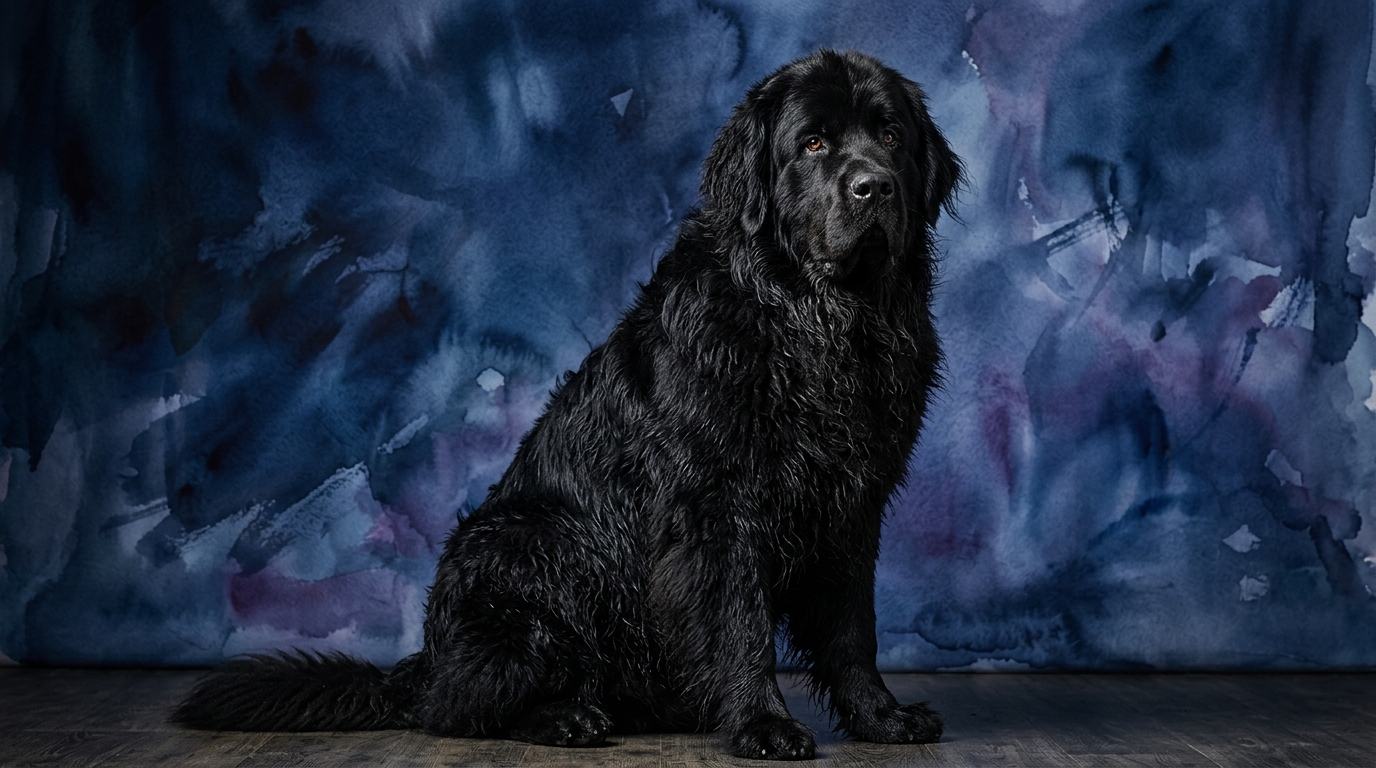
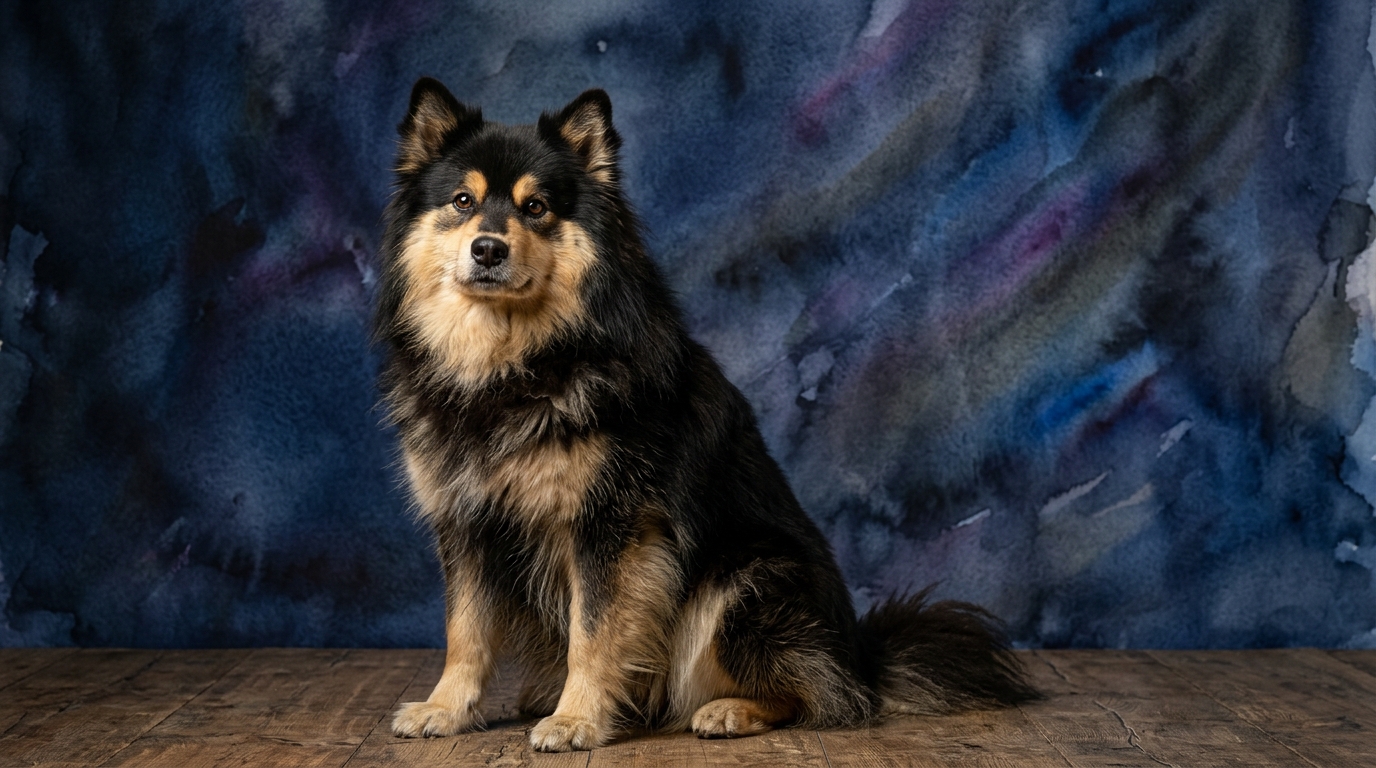
Side-by-Side IQ Profile: Newfoundland vs. Finnish Lapphund
The Cosmic Pet Pet IQ Lab employs a multi-faceted approach to assess canine intelligence, moving beyond simple obedience to encompass problem-solving, training speed, social intelligence, instinctive drive, and memory. For the Newfoundland, a Working breed, its Coren rank of #34 reflects a generally responsive and capable mind. Its problem-solving ability scores 3 out of 5, indicating a moderate capacity for independent thought in novel situations. Training speed is a notable strength at 4 out of 5, suggesting a readiness to absorb and execute commands efficiently. Where Newfoundlands truly shine are in social intelligence (5/5) and instinctive drive (5/5), reflecting their deep empathy and powerful drive for water rescue. Their memory is also robust, scoring 4 out of 5, enabling them to retain complex information and experiences.
In contrast, the Finnish Lapphund, a Herding breed, does not have a Coren rank, but its cognitive profile offers a different set of strengths. Across all five dimensions – problem-solving, training speed, social intelligence, instinctive drive, and memory – the Finnish Lapphund consistently scores 3 out of 5. This indicates a balanced and functional intelligence, perfectly suited to its original role. While not excelling in any single category to the same degree as the Newfoundland, the Lapphund's consistent '3' suggests a reliable and adaptable cognitive foundation, capable of handling the varied demands of herding work and interacting effectively within its environment.
Where Newfoundland Wins Cognitively
The Newfoundland's cognitive profile distinctly outperforms the Finnish Lapphund's in areas crucial for its historical role as a water rescue and working companion. Its social intelligence, rated at a perfect 5 out of 5, is unparalleled. This signifies an extraordinary capacity to understand human emotions, intentions, and non-verbal cues, making them exceptionally attuned to their human counterparts. This acute social awareness is not merely about bonding; it's a critical component of their rescue work, allowing them to assess distressed individuals and respond appropriately in high-stakes situations. This depth of empathy and connection is a hallmark of the breed's cognitive prowess.
Furthermore, the Newfoundland's instinctive drive, also scoring 5 out of 5, is a powerful cognitive advantage. This isn't just about physical strength; it represents an innate, complex understanding of rescue protocols and a persistent motivation to act. Whether it's the drive to retrieve from water or to assist in other working capacities, this instinctive intelligence guides their actions with purpose and efficiency. Coupled with a superior training speed (4/5) and strong memory (4/5), Newfoundlands demonstrate a cognitive architecture built for reliable, empathetic, and effective partnership in demanding environments, allowing them to quickly learn and retain the intricate sequences required for their tasks.
Where Finnish Lapphund Wins Cognitively
While the Finnish Lapphund's individual scores are consistently 3 out of 5, its cognitive strengths lie in the cohesive balance and independent application of these traits, particularly within its herding context. The Lapphund’s problem-solving (3/5) and instinctive drive (3/5) are not about overt power, but about nuanced environmental awareness and strategic decision-making in often isolated circumstances. A Lapphund's herding drive manifests as a persistent, adaptive approach to managing livestock, often requiring them to work far from their shepherd, assessing changing flock dynamics and terrain independently. This requires a self-reliant form of problem-solving, where quick, practical judgments are made without constant human direction.
The Finnish Lapphund's balanced cognitive profile also lends itself to a robust environmental awareness and adaptability. Their moderate social intelligence (3/5) allows for effective communication with their handler while maintaining a degree of independence crucial for covering vast, challenging landscapes. Their memory (3/5) supports recalling complex grazing patterns and herd behaviors. This breed's intelligence is geared towards sustained, adaptable work in variable conditions, prioritizing resilience and self-sufficiency over a more human-dependent partnership, making them masters of their specific working niche.
Which is Easier to Train and Why
When considering ease of training, the Newfoundland holds a distinct advantage over the Finnish Lapphund, primarily due to its higher scores in training speed and social intelligence. The Newfoundland's training speed of 4 out of 5 indicates a keen willingness and ability to grasp new commands and routines quickly. This is further amplified by its exceptional social intelligence (5/5), which means Newfoundlands are highly attuned to their owners' cues, eager to please, and deeply motivated by positive human interaction. Behavioral differences manifest in their responsiveness; Newfoundlands typically seek out human approval and collaboration, making them highly receptive to instruction and less prone to independent decision-making that might conflict with a command.
The Finnish Lapphund, with a training speed of 3 out of 5 and social intelligence of 3 out of 5, presents a different training dynamic. While capable of learning, they may require more repetition and patience. Their herding background fosters a degree of independence and self-reliance, meaning they are less inherently driven to constantly defer to human commands, especially if they perceive a situation requires their own judgment. This isn't a lack of intelligence, but a difference in motivational structure; they are more task-oriented and less people-pleasing in their core drive. Training a Lapphund often necessitates making the learning process intrinsically rewarding or clearly linking it to their natural drives, rather than solely relying on social motivation.
Which Suits Active Owners vs. Relaxed Owners
The choice between a Newfoundland and a Finnish Lapphund depends significantly on an owner's lifestyle and their capacity for engaging with a dog's specific needs. A Newfoundland, with its 5/5 instinctive drive and social intelligence, thrives with owners who are active in a specific, purposeful way. While they are not necessarily high-energy in a frantic sense, their immense desire to engage in 'work' – be it water activities, carting, or simply being an integral, interactive family member – means they need owners who are prepared for consistent, empathetic engagement and often structured activities. They are best suited for owners who enjoy a deeply bonded, communicative relationship and can provide outlets for their powerful rescue instincts, even if it's just 'rescuing' a toy from the pool. They are relaxed in their demeanor but demand significant social and purposeful interaction.
The Finnish Lapphund, while scoring 3/5 in instinctive drive and social intelligence, is generally better suited for owners who can provide a different kind of activity: consistent, varied exercise that satisfies their herding energy and moderate independence. They are not as inherently driven by constant human social interaction as Newfoundlands, making them potentially more suitable for owners who appreciate a dog with a bit more self-possession, yet still desire an active companion. Their moderate drive means they need regular physical and mental stimulation to prevent boredom, but their cognitive profile suggests they can be content with a balance of independent exploration and owner-led activities, making them a good fit for active, outdoorsy owners who may not desire the intense social 'work' of a Newfoundland.
The Verdict: When to Choose Each
The Verdict
Choose a Newfoundland if you seek a deeply empathetic, highly trainable partner eager for purposeful work and intense social bonding, thriving on being an integrated, vital part of family life.
Opt for a Finnish Lapphund if you prefer an adaptable, somewhat independent companion who excels with consistent, engaging activity and whose intelligence is geared towards self-reliant problem-solving in varied environments.
🧠 Find Your Pet's IQ Score
Our Pet IQ Lab assessment covers 25+ tests across 5 cognitive dimensions — personalized to your breed.
Take the Full IQ Test →Frequently Asked Questions
Are Newfoundlands easy to train for beginners?
Yes, Newfoundlands are generally considered easier to train for beginners due to their high social intelligence and strong desire to please. Their quick training speed (4/5) means they pick up commands readily, making them rewarding partners for novice owners willing to invest in consistent positive reinforcement.
Do Finnish Lapphunds require a lot of mental stimulation?
Finnish Lapphunds do require a moderate amount of mental stimulation to keep their balanced intelligence engaged. Their herding background means they appreciate activities that involve problem-solving and focus, benefiting from training, puzzles, and structured play that taps into their instinctive drives.
Which breed is better with children based on their IQ profile?
Based purely on IQ profile, the Newfoundland's superior social intelligence (5/5) suggests a natural aptitude for understanding and interacting gently with children. Their empathetic nature and strong desire to be part of the family make them exceptionally tolerant and attuned companions for young ones, though supervision is always essential.