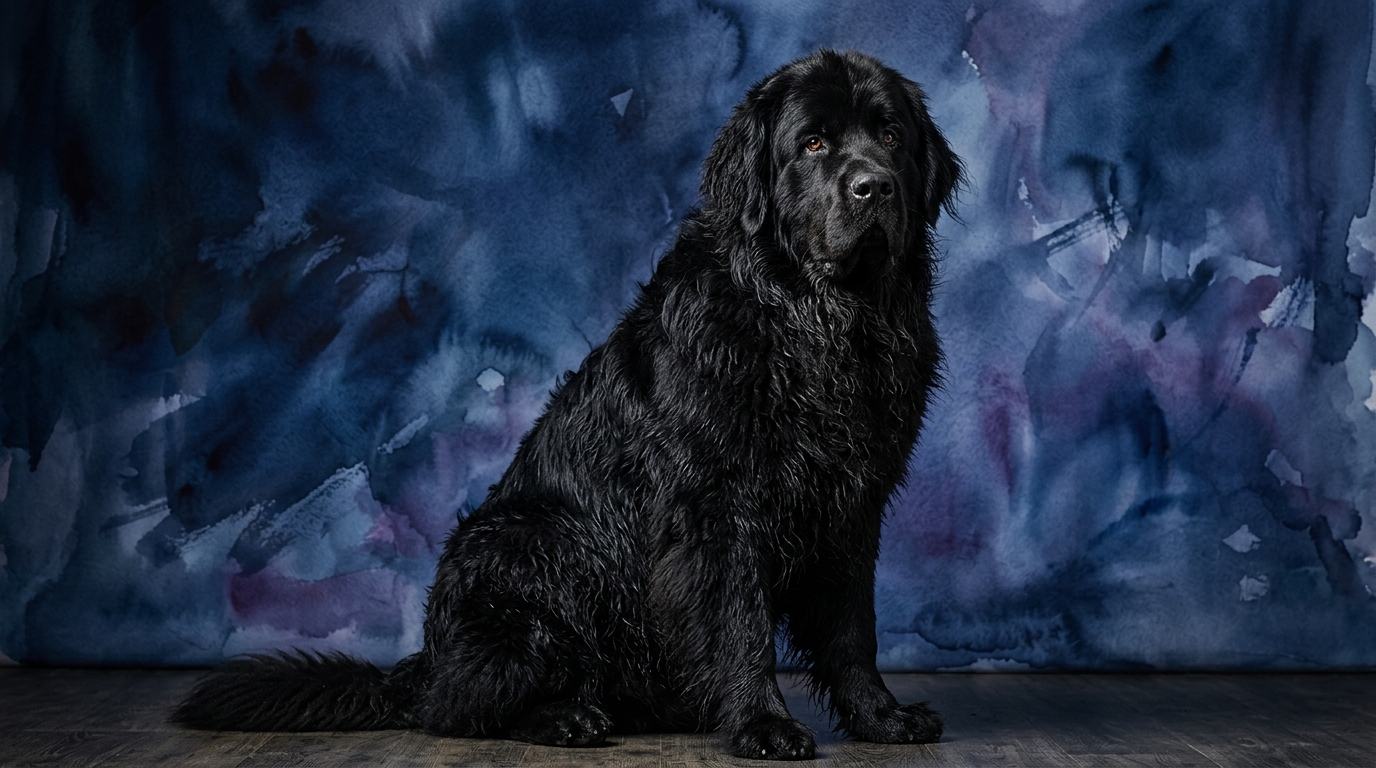

Side-by-Side IQ Profile: Newfoundland vs. Redbone Coonhound
The Cosmic Pet Pet IQ Lab employs a multi-dimensional assessment, moving beyond single-score rankings to reveal the nuanced cognitive architecture of each breed. For the magnificent Newfoundland, a Working Group dog, their Coren rank of #34 provides a starting point, but our deeper metrics paint a more comprehensive picture. Their Problem Solving is rated at 3/5, indicating practical intelligence in navigating their environment and responding to novel situations, particularly those involving their human companions. Training Speed shines at 4/5, suggesting a relatively quick grasp of new commands and routines. Social Intelligence is an exceptional 5/5, reflecting their profound attunement to human emotion and cooperative spirit. Their Instinctive Drive, also 5/5, is powerfully channeled into guardianship, water rescue, and companionship, not predatory pursuits. Finally, Memory stands strong at 4/5, enabling them to retain complex sequences and social cues over time.
In contrast, the Redbone Coonhound, a member of the Hound Group, does not appear on the Coren ranking, signaling a different cognitive focus shaped by generations of independent hunting. Their Problem Solving is also 3/5, but this manifests differently, often in deciphering complex scent trails and navigating challenging terrains autonomously. Their Training Speed is 3/5, implying they learn at a moderate pace, often requiring more patience and consistent motivation, especially when commands conflict with their primary drive. Social Intelligence is rated 3/5, indicating they form bonds but often exhibit a more independent and less overtly people-focused demeanor than a Newfoundland. Instinctive Drive, also 3/5, is intensely focused on scent-tracking and prey pursuit, a deep-seated impulse that dictates much of their behavior. Their Memory, at 3/5, is robust for recalling specific scents, trails, and hunting territories, but perhaps less so for an extensive repertoire of human-centric commands.
Where the Newfoundland Wins Cognitively
The Newfoundland's cognitive strengths are deeply rooted in their history as cooperative working dogs. Their 5/5 Social Intelligence gives them a distinct advantage in understanding human intentions and emotional states, making them exceptionally intuitive companions. This translates into a dog that not only comprehends commands but also anticipates needs, often reacting proactively to situations like a child wandering too close to water, a testament to their innate caregiving. Their 4/5 Training Speed, coupled with this social acuity, means they typically absorb and execute new commands with greater willingness and fewer repetitions compared to the more independent Coonhound.
Furthermore, the Newfoundland's 5/5 Instinctive Drive, specifically directed towards cooperative work and protection, means their problem-solving (3/5) is often applied to human-directed tasks. They excel at figuring out how to retrieve a dropped item for their owner or navigating a path to 'rescue' a family member, demonstrating practical, context-aware intelligence. Their 4/5 Memory supports this, allowing them to recall a wide array of learned behaviors, social protocols, and the layout of their home environment, contributing to their reputation as reliable and consistent family members.
Where the Redbone Coonhound Wins Cognitively
While the Redbone Coonhound's scores might appear lower across the board, their cognitive wins are highly specialized and perfectly adapted to their heritage. Their 3/5 Problem Solving, for instance, is not about pleasing a human but about independently deconstructing complex scent puzzles in the wilderness. They are masters of environmental navigation, capable of processing myriad olfactory data and making swift, tactical decisions to follow a trail, often over challenging and varied terrain, a skill far removed from a Newf's cooperative tasks. This particular application of problem-solving is a testament to their focused, independent intelligence.
The Redbone's 3/5 Instinctive Drive, while numerically lower than a Newf's, is an incredibly powerful and sustained cognitive force focused on the hunt. This drive fuels an unparalleled persistence and singular focus on a scent, allowing them to ignore distractions that would derail many other breeds. Their Memory (3/5) is exceptional for recalling specific scent profiles and intricate routes, essential for their work. While their Social Intelligence (3/5) might mean they are less overtly affectionate or 'tuned in' to human nuances, it allows them to operate effectively as solitary hunters, relying on their own judgment rather than constant human direction.
Which is Easier to Train and Why
Based on our IQ Lab metrics, the Newfoundland is generally easier to train for typical companion dog behaviors. Their 4/5 Training Speed, combined with a stellar 5/5 Social Intelligence and 5/5 Instinctive Drive geared towards cooperation, means they are often eager to please and quick to form associations between commands and actions. They thrive on positive reinforcement and will actively seek to understand and comply with human directives, often viewing training as a shared activity. For example, teaching a Newfoundland to 'stay' or 'come' typically involves fewer repetitions and a stronger intrinsic motivation to comply due to their strong bond and desire for cooperative interaction.
The Redbone Coonhound, with a 3/5 Training Speed and 3/5 Social Intelligence, presents a different training challenge. Their powerful 3/5 Instinctive Drive for scent work often overrides human commands, making them prone to 'selective hearing' when a compelling scent is present. While they can learn, their independent nature means they require more consistent, patient, and engaging training methods, often needing commands to be broken down into smaller steps. For instance, teaching a Redbone to 'come' in an open field might be a protracted effort, as their nose and innate drive to explore scents can be far more persuasive than a human voice, requiring significant proofing and high-value rewards to maintain their focus.
Which Suits Active Owners vs. Relaxed Owners
The Newfoundland, despite its large size, often suits a more relaxed owner, or at least one whose activity preferences align with their nature. While they require regular exercise, including walks and mental engagement, their 5/5 Social Intelligence means they are content to be close companions, often preferring quiet time with their family over intense, sustained physical exertion. They are excellent candidates for owners who enjoy leisurely strolls, calm family activities, and plenty of interactive, low-impact play, thriving on companionship and gentle interaction.
The Redbone Coonhound is decidedly suited for active owners who understand and appreciate their strong drive for activity and exploration. Their inherent need to follow a scent and cover ground means they require significant daily exercise, often including off-leash opportunities in secure areas or participation in scent work, tracking, or hunting. A relaxed owner might find themselves overwhelmed by a Redbone's energy and persistent desire to engage their powerful nose. They are ideal for individuals or families who embrace outdoor adventures, long hikes, and can provide consistent outlets for their formidable physical and mental energy.
The Verdict
Choose a Newfoundland if you seek a highly cooperative, socially attuned companion who thrives on human interaction and gentle, consistent engagement, and you appreciate their practical problem-solving in a family context.
Opt for a Redbone Coonhound if you are an active individual or family prepared to provide extensive mental and physical stimulation for a dog with an independent spirit and an unyielding passion for scent-driven exploration.
🧠 Find Your Pet's IQ Score
Our Pet IQ Lab assessment covers 25+ tests across 5 cognitive dimensions — personalized to your breed.
Take the Full IQ Test →Frequently Asked Questions
Do Newfoundlands and Redbone Coonhounds learn at the same pace?
No, Newfoundlands generally learn human-centric commands more quickly due to their 4/5 Training Speed and high Social Intelligence. Redbone Coonhounds, with a 3/5 Training Speed, require more patience and consistency, as their independent nature and powerful scent drive can make them less immediately responsive to traditional obedience cues.
How does 'problem-solving' differ between these two breeds?
For Newfoundlands (3/5), problem-solving often involves practical, human-directed tasks like retrieving specific items or navigating obstacles to assist. For Redbone Coonhounds (3/5), it's more about independently deciphering complex environmental puzzles, such as tracking a faint scent over varied terrain, relying on their instincts and sensory input.
Which breed is more likely to wander off if not on a leash?
The Redbone Coonhound is significantly more prone to wandering off due to their intense 3/5 Instinctive Drive for scent-tracking. A compelling scent can quickly override any recall command, leading them to follow a trail with singular focus, whereas a Newfoundland's cooperative drive makes them more likely to remain close to their human companions.