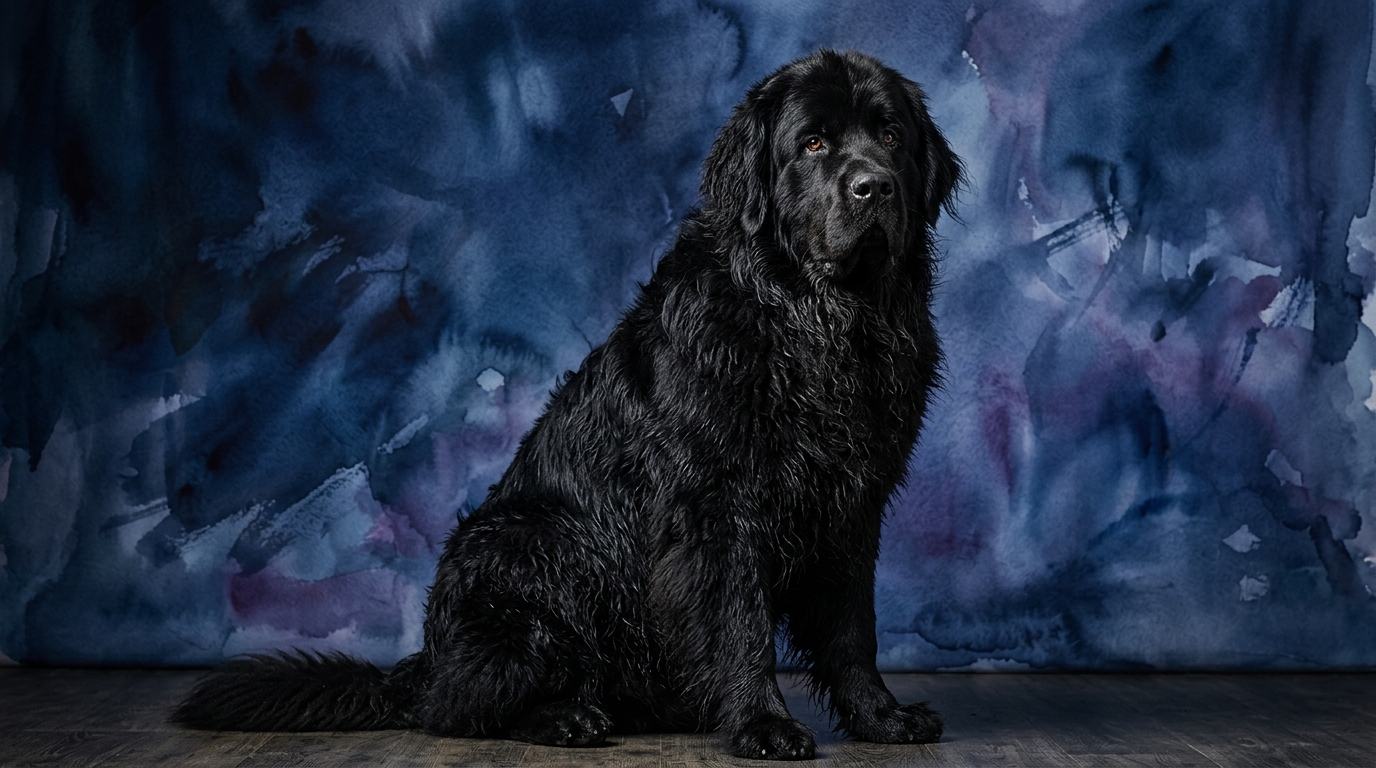

Side-by-Side Cognitive Profiles: Newfoundland vs. Toy Fox Terrier
At The Cosmic Pet Pet IQ Lab, we evaluate canine cognition across five crucial dimensions, offering a nuanced view of each breed's mental strengths. For the majestic Newfoundland, a dog from the Working Group, we observe a balanced yet profoundly cooperative intellect. Their problem-solving ability scores a respectable 3/5, indicating competence in navigating complex situations, often in service to humans. Training speed is noted at 4/5, reflecting their eagerness and capacity to grasp new commands efficiently. Social intelligence is a standout at 5/5, underscoring their exceptional empathy and understanding of social cues. Their instinctive drive, rated 5/5, speaks to their powerful, innate desire to rescue and assist, particularly in water. Finally, memory clocks in at 4/5, demonstrating a strong recall for learned behaviors and experiences.
The Toy Fox Terrier, a member of the Toy Group, presents a different cognitive landscape, characterized by agility and a spirited independence. Their problem-solving ability matches the Newfoundland at 3/5, but often manifests in more self-directed, quick-witted scenarios. Training speed is a solid 3/5, indicating they learn at a steady pace, though perhaps with a more independent streak. Social intelligence is rated 3/5, suggesting they form deep bonds but might be more selective in their social circles compared to the broadly amicable Newfoundland. Their instinctive drive, at 3/5, is focused and precise, often geared towards traditional terrier tasks. Memory for the Toy Fox Terrier is also rated 3/5, allowing them to retain information relevant to their daily routines and interactions.
Where the Newfoundland's Cognition Shines
The Newfoundland's cognitive strengths are deeply rooted in its history as a water rescue and working dog, making it a champion of cooperative intelligence. Its perfect 5/5 social intelligence score means it possesses an extraordinary capacity to read and respond to human emotions and intentions, often anticipating needs even before they are expressed. This translates into unparalleled empathy and a strong desire to be a comforting presence, making them exceptional therapy or assistance animals. Their 5/5 instinctive drive is another significant win, manifesting as an inherent, powerful urge to aid and protect. This drive isn't just a general willingness; it's a specific, deep-seated programming for life-saving actions, particularly in aquatic environments, showcasing a complex interplay of environmental awareness and selfless action.
Furthermore, the Newfoundland's 4/5 training speed and 4/5 memory work in tandem to create a highly trainable and reliable companion. They not only absorb commands quickly but also retain them over long periods, making them consistent performers in tasks ranging from obedience to specialized rescue work. This combination of strong recall and rapid learning, coupled with their immense social awareness, allows them to excel in roles requiring sustained focus, collaboration, and a deep understanding of their human partners.
Cognitive Advantages of the Toy Fox Terrier
While the Toy Fox Terrier’s overall cognitive scores may not reach the Newfoundland’s cooperative heights, their specific application of intelligence presents distinct advantages. Their problem-solving, rated 3/5 like the Newfoundland, is often characterized by a quick, independent thought process, perfectly suited for tasks requiring agility and cunning. This isn't about cooperative heavy lifting; it's about navigating small spaces, outsmarting nimble pests, or figuring out how to retrieve a hidden toy with cleverness and speed. Their cognitive focus is on independent action and swift decision-making, reflecting their terrier heritage.
The Toy Fox Terrier's instinctive drive, at 3/5, is a highly refined and specific form of intelligence. It's not the broad, life-saving instinct of a Newfie, but rather a sharp, focused drive for pursuit and investigation. This translates into an acute awareness of their immediate environment, making them excellent watchdogs with a keen ability to detect novel stimuli. Their social intelligence, also 3/5, means they form intensely loyal and perceptive bonds with their chosen humans, often reading subtle cues from their primary caregivers with precision, even if they aren't as universally gregarious. Their memory and training speed, both 3/5, contribute to their ability to quickly adapt to routines and learn tricks that highlight their spirited personality and quick movements.
Training Dynamics: Newfoundland vs. Toy Fox Terrier
When it comes to ease of training, the Newfoundland generally presents a more straightforward experience due to its higher training speed (4/5) and exceptional social intelligence (5/5). Their strong desire to please, coupled with their innate understanding of human intent, means they are typically highly biddable. They absorb new commands rapidly and are motivated by positive reinforcement and the opportunity to work alongside their people. Their cooperative nature means they often seek guidance and respond well to consistent, gentle instruction, making them a rewarding breed for both novice and experienced trainers.
The Toy Fox Terrier, with a training speed of 3/5 and a social intelligence of 3/5, can be a different training proposition. While they are certainly capable of learning, their terrier independence and spirited nature mean they may require more patience and creative motivation. They are quick-witted and can pick up on routines swiftly, but their focus might waver if they perceive a task as uninteresting or if there's a more exciting distraction. Their training often benefits from short, engaging sessions that tap into their natural curiosity and prey drive, rather than relying solely on their desire to please. Consistency and making training feel like a game are key to unlocking their learning potential.
Matching Canine Cognition to Owner Lifestyles
The cognitive profiles of these two breeds offer clear guidance for matching them with suitable owner lifestyles. The Newfoundland, with its profound social intelligence (5/5), powerful instinctive drive (5/5), and high training speed (4/5), is an ideal companion for owners who seek a deeply engaged, collaborative relationship. They thrive with active owners who can provide ample opportunities for cooperative activities, such as water work, carting, or simply being an integral, empathetic part of family life. Their cognitive makeup means they need mental stimulation that involves working alongside their humans, fostering their natural desire to assist and protect.
Conversely, the Toy Fox Terrier, with its balanced problem-solving (3/5), instinctive drive (3/5), and independent nature, is well-suited for owners who appreciate a spirited, self-reliant companion. While they benefit from engagement, their cognitive needs lean towards owners who enjoy interactive play, trick training, and providing outlets for their keen observational skills and focused terrier drives. They can adapt well to more relaxed home environments but still require mental challenges that allow them to exercise their quick wits and independent decision-making, making them a delightful choice for owners who enjoy a playful, attentive, and sometimes cheeky companion.
The Verdict
Choose the Newfoundland if you seek a deeply empathetic, cooperative companion eager to work alongside you, particularly in roles requiring social awareness and a powerful drive to assist.
Opt for the Toy Fox Terrier if you appreciate a spirited, quick-witted companion whose intelligence shines in independent problem-solving, focused tasks, and lively interaction.
🧠 Find Your Pet's IQ Score
Our Pet IQ Lab assessment covers 25+ tests across 5 cognitive dimensions — personalized to your breed.
Take the Full IQ Test →Frequently Asked Questions
Do Newfoundlands and Toy Fox Terriers approach problem-solving differently?
Yes, while both score 3/5 in problem-solving, Newfoundlands often apply their intellect to cooperative, large-scale tasks like navigating complex rescue scenarios. Toy Fox Terriers typically utilize their problem-solving in more independent, agile ways, such as figuring out how to access a hidden toy or navigating their immediate environment with cleverness.
Which breed is more socially adept with strangers?
The Newfoundland, with its 5/5 social intelligence, tends to be more universally amicable and empathetic towards a wide range of people, often seeking to connect and comfort. The Toy Fox Terrier, at 3/5 social intelligence, forms strong bonds with its chosen family but can be more reserved or selective with strangers, focusing its social energy on its inner circle.
How do their instinctive drives impact their daily behavior?
The Newfoundland's 5/5 instinctive drive manifests as a powerful, general desire to help and protect, especially in water, leading to a calm, watchful demeanor. The Toy Fox Terrier's 3/5 instinctive drive is more focused, often expressed as a keen prey drive and alertness to small movements, making them excellent, albeit sometimes vocal, watchdogs for their immediate surroundings.