
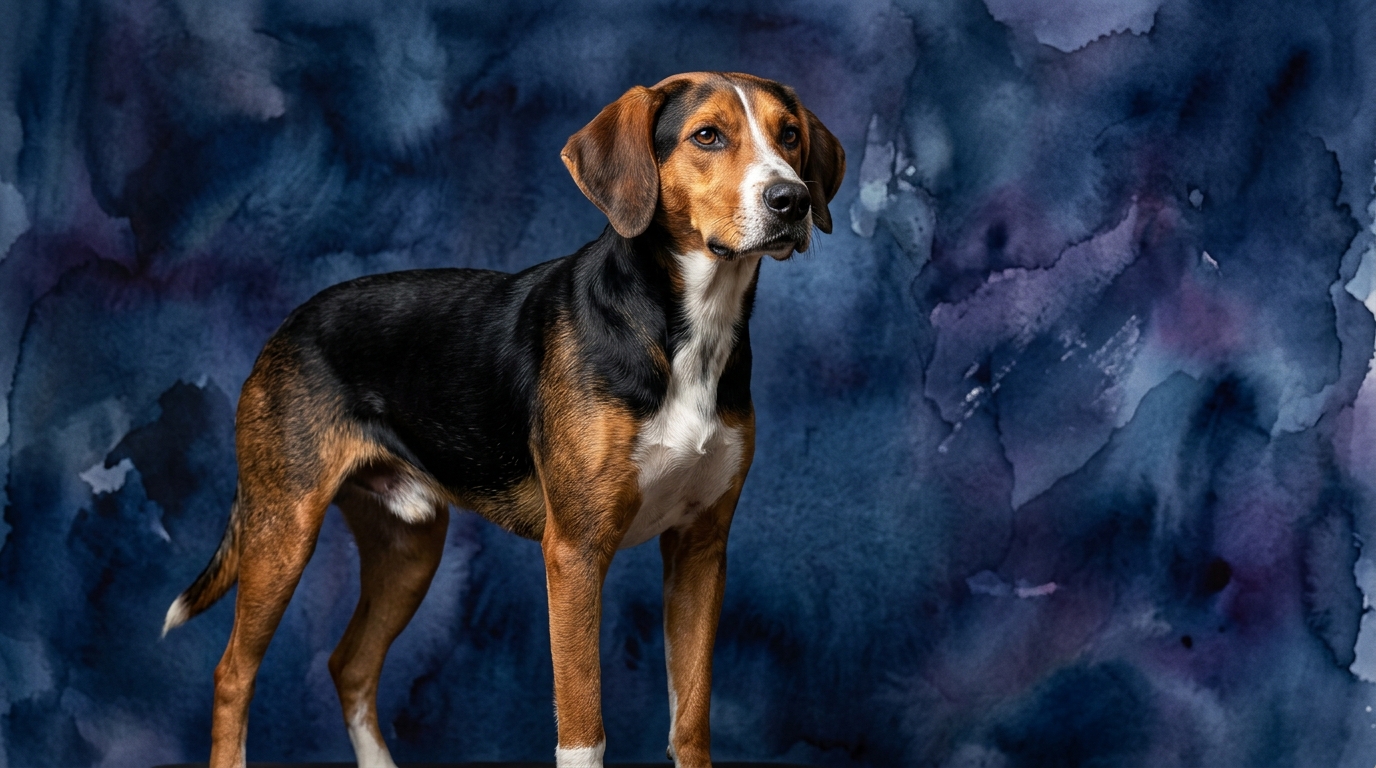
Side-by-Side IQ Profile: A Deeper Dive into Similar Scores
At first glance, the identical 3/5 scores across all five intelligence dimensions for both the Norfolk Terrier and the American Foxhound might suggest a cognitive stalemate. However, The Cosmic Pet's framework encourages us to look beyond raw numbers, understanding that these scores represent capacities expressed through each breed's unique lens of instinct and purpose. While both demonstrate moderate aptitude, the manifestation of that aptitude is where their paths diverge significantly.
The Norfolk Terrier, a small but robust member of the Terrier group, approaches problem-solving (3/5) with a characteristic tenacity and ingenuity. Their cognitive efforts are often directed at tasks involving manipulation of objects, figuring out how to access a desired item, or navigating physical obstacles. This isn't just brute force; it's a clever persistence, often involving trial and error and a certain amount of independent thought that allows them to creatively tackle challenges.
Their training speed (3/5) reflects an ability to grasp commands and routines, yet it's tempered by their independent spirit. A Norfolk will learn, but they often require engaging, varied training methods to maintain their interest, choosing to comply when it aligns with their own perceived benefit or desire for interaction. Social intelligence (3/5) in a Norfolk often centers on their family unit; they are adept at reading their humans' moods and intentions, seeking interaction and comfort within their established social circle, though they can be discerning with strangers.
Instinctive drive (3/5) for the Norfolk Terrier is rooted in their vermin-hunting heritage. They possess a keen desire to chase, dig, and explore, driven by scent and movement, though this drive typically operates on a smaller, more localized scale than that of a scent hound. Finally, their memory (3/5) allows them to recall specific locations, routines, and experiences, aiding their persistent approach to tasks and their ability to navigate their home environment effectively, remembering where the treats are hidden or which toy is their favorite.
The American Foxhound, a quintessential member of the Hound group, interprets the same 3/5 cognitive scores through an entirely different evolutionary lens. Their problem-solving (3/5) is overwhelmingly olfactory-driven. For a Foxhound, 'solving a problem' means meticulously deciphering a complex scent trail, following it through varied terrain, and isolating its source. Their cognitive processing is geared towards sensory input from their nose, not manipulating a puzzle toy, demonstrating a specialized form of environmental analysis.
Training speed (3/5) for a Foxhound is often a battle against their primary directive: scent. They can learn commands, but their ability to focus on human instruction when a compelling scent is present is severely tested. Consistency and extremely high-value rewards are essential to break through their innate fixation, which can be a significant hurdle for an owner. Their social intelligence (3/5) is deeply ingrained in pack dynamics; they thrive in the company of other dogs and are generally amiable with people, understanding social hierarchies and group cooperation, a trait honed by generations of working alongside other hounds.
The instinctive drive (3/5) of an American Foxhound is their defining characteristic: an unparalleled urge to track and run, fueled by an extraordinary sense of smell. This drive is not merely a preference; it is a profound biological imperative that dictates much of their behavior and cognitive focus, leading them to pursue trails with unwavering determination. Their memory (3/5) is exceptional for scent pathways and geographical recall related to tracking. They can remember intricate routes and the specific nuances of a scent trail over long distances and periods, a specialized form of memory that serves their hunting purpose.
Where the Norfolk Terrier Wins Cognitively
While both breeds score a 3/5 in problem-solving, the Norfolk Terrier's cognitive strengths shine in environments requiring adaptability to varied human-centric scenarios. Their terrier wit and independent thought allow them to quickly assess and react to novel situations in a home or urban setting, such as figuring out how to open a cupboard or retrieve a dropped item from an awkward space. This manifestation of problem-solving is often more about understanding cause and effect in a domestic context, rather than a natural landscape.
Furthermore, the Norfolk's social intelligence (3/5) and memory (3/5) contribute to their engagement in interactive games and learning complex tricks that involve object manipulation or sequential commands. They often demonstrate a keen interest in pleasing their primary human, making them responsive to training that builds on this bond. Their cognitive efforts are more readily directed towards human-initiated activities, making them seem more 'involved' in a typical household's daily mental challenges, especially those involving playful interaction.
Where the American Foxhound Wins Cognitively
The American Foxhound's cognitive prowess, though also rated at 3/5 for problem-solving and instinctive drive, is uniquely superior in tasks requiring sustained focus on a single, long-term objective driven by olfactory input. Their ability to follow a faint scent trail for miles, filtering out countless environmental distractions, represents a highly specialized form of problem-solving that few other breeds can match. This isn't just instinct; it's a complex cognitive process of detection, discrimination, and relentless pursuit, demanding significant mental endurance.
Their social intelligence (3/5) gives them an edge in collaborative work with other dogs, a trait deeply embedded from their pack-hunting heritage. A Foxhound understands canine communication and pack dynamics on a nuanced level, making them excellent partners in multi-dog households or activities where dogs work together towards a common goal. This specialized social cognition differs significantly from a Terrier's more human-centric social interactions, highlighting a different kind of cognitive strength geared towards inter-canine cooperation.
Which is Easier to Train and Why
When considering ease of training, the distinction between these two breeds becomes clearer, despite their identical 3/5 training speed scores. The Norfolk Terrier, with its desire to engage with its human and its adaptability, is generally perceived as easier to train for general obedience within a domestic setting. Their problem-solving (3/5) can be harnessed to teach a variety of commands and tricks, and while they possess an independent streak, a consistent, positive reinforcement approach often yields good results because they are generally motivated by human interaction and rewards.
The American Foxhound, conversely, presents a greater challenge for the average owner, particularly when it comes to off-leash reliability. Their profound instinctive drive (3/5) to follow a scent is an overwhelming internal motivator that often supersedes human commands. Once a Foxhound is 'on scent,' their cognitive focus narrows almost entirely on that trail, making it incredibly difficult to redirect their attention. Training a Foxhound requires immense patience, understanding of their drives, and often specialized techniques to make human commands more compelling than the call of the wild, which is a significant behavioral difference impacting perceived 'ease'.
Which Suits Active Owners vs. Relaxed Owners
For owners seeking a companion that aligns with a more relaxed lifestyle, or at least one that doesn't demand marathon-level physical output, the Norfolk Terrier is often the more suitable choice. While they are energetic and require regular walks, play, and mental stimulation to prevent boredom, their needs are generally manageable within a typical active household. They thrive on engaging with their family through games and short training sessions, making them a good fit for owners who enjoy consistent, moderate activity but also appreciate downtime.
The American Foxhound, however, is unequivocally suited for highly active owners. Their intrinsic drive (3/5) to run and track means they possess incredible endurance and a deep-seated need for extensive physical exercise daily. A relaxed owner would find it incredibly challenging to meet a Foxhound's profound requirements for activity, which often includes long runs, hikes, or dedicated scent work. They are ideal for runners, hikers, or individuals involved in field sports, as their cognitive and physical makeup thrives on environments where they can fully express their ancestral purpose.
The Verdict
If you seek a resilient, engaging companion who thrives on interactive play, enjoys learning tricks, and adapts well to various home environments, the Norfolk Terrier might be your match. They offer a lively presence and a curious mind, well-suited for owners who appreciate a dog with a distinct personality and a willingness to engage in diverse activities.
If your lifestyle involves extensive outdoor activity, a love for long runs or hikes, and an appreciation for a dog driven by ancient instincts, the American Foxhound could be an ideal partner. They excel in environments where their powerful scent drive and endurance can be fully expressed, making them perfect for dedicated, active individuals or families who understand their profound need for exploration.
🧠 Find Your Pet's IQ Score
Our Pet IQ Lab assessment covers 25+ tests across 5 cognitive dimensions — personalized to your breed.
Take the Full IQ Test →Frequently Asked Questions
Do American Foxhounds or Norfolk Terriers make better apartment dogs?
The Norfolk Terrier's adaptability and smaller size generally make them more suitable for apartment living, provided they receive adequate daily exercise and mental stimulation. The American Foxhound's strong need to run and track makes apartment life challenging for them without significant dedicated outdoor time.
Which breed is more vocal?
American Foxhounds are known for their distinctive baying, a deep, melodious sound used when on a trail or alerting. Norfolk Terriers can be vocal, barking at new sights or sounds, but their vocalizations are typically less sustained and less characteristic than a Foxhound's bay.
How do their grooming needs compare?
Both breeds have relatively low-maintenance coats. The Norfolk Terrier requires regular brushing and occasional hand-stripping to maintain its wiry coat. The American Foxhound has a short, dense coat that needs minimal brushing, primarily to remove loose hair.