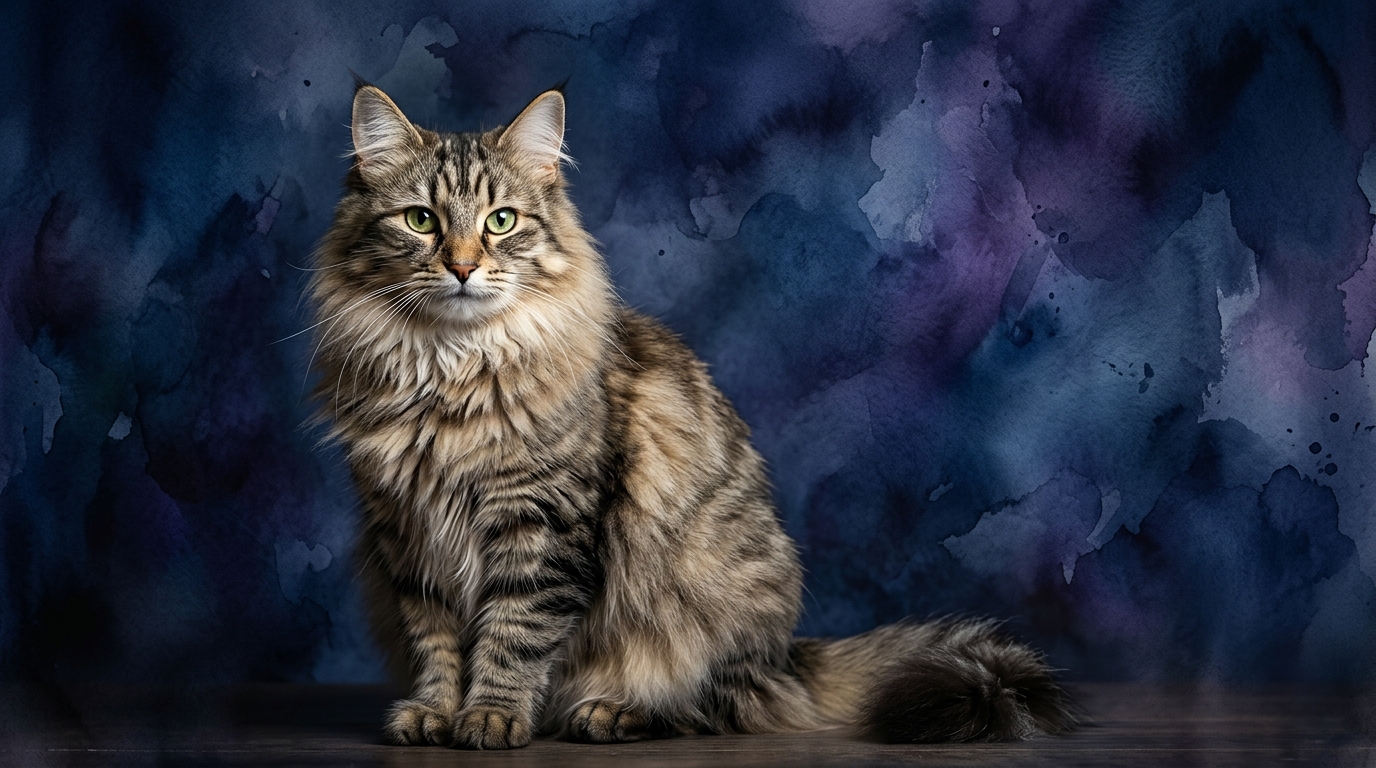
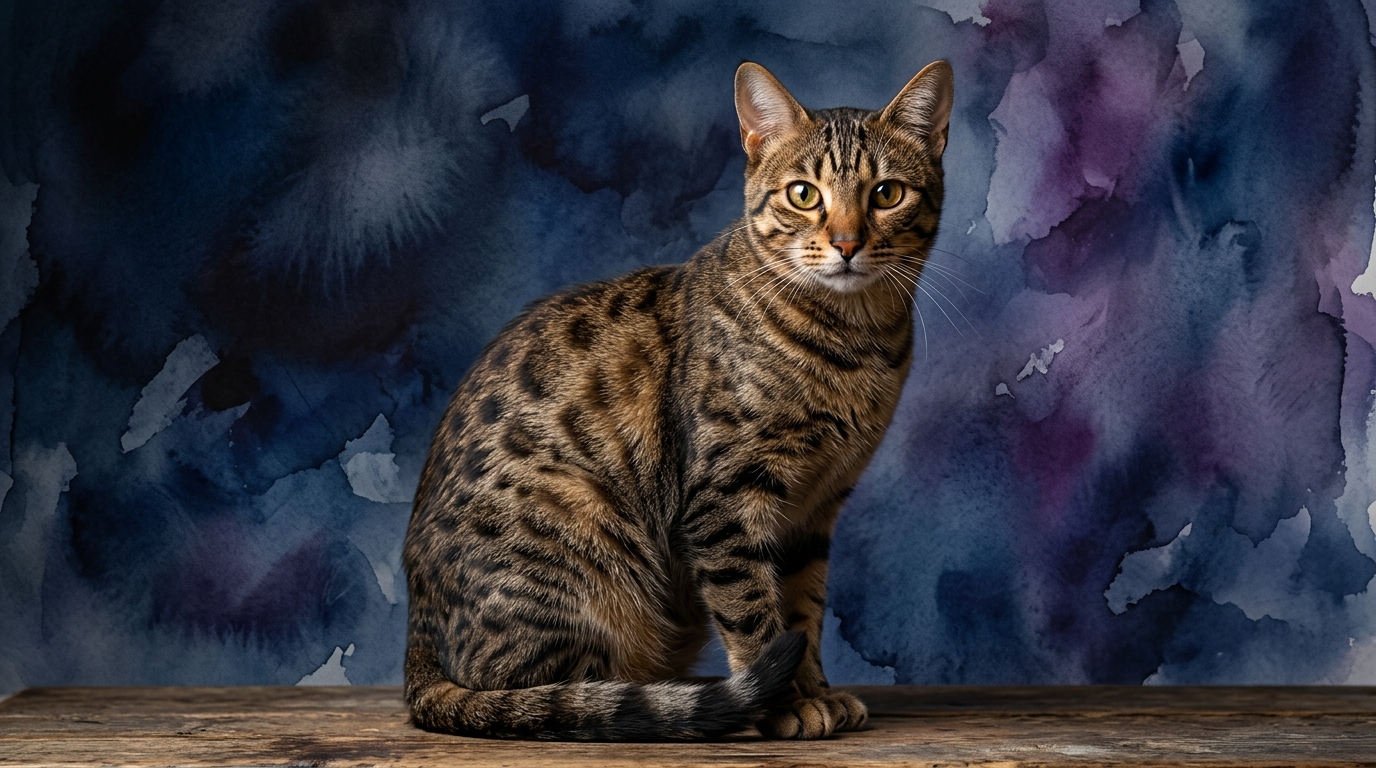
Side-by-Side Cognitive Profiles: A Deep Dive
The Norwegian Forest Cat (NFC), a robust feline, exhibits a Problem Solving score of 4/5, indicating a keen ability to navigate complex situations and strategize. They are adept at figuring out how to access desired objects, open latches, or manipulate their environment to achieve goals, often displaying persistence. Their Training Speed is 3/5, suggesting they learn new commands and routines at a steady, moderate pace, requiring consistent reinforcement. Social Intelligence also stands at 3/5, meaning they are capable of understanding human cues and engaging appropriately within a social structure, though perhaps not with the extreme emotional depth of some other species. A standout feature is their Instinctive Drive, rated at a formidable 5/5; these cats possess a powerful innate urge to hunt, climb, and explore, reflective of their wild heritage. Finally, their Memory is strong at 4/5, allowing them to recall complex sequences, preferred routes, and past interactions with notable accuracy.
The elegant Egyptian Mau (EM) presents a somewhat different cognitive blueprint. Their Problem Solving is rated 3/5, signifying a competent ability to deal with everyday challenges but perhaps less inclination towards complex strategic thinking compared to the NFC. They can certainly learn and adapt, but might not actively seek out elaborate puzzles. Similar to the NFC, their Training Speed is 3/5, suggesting a moderate learning curve for new behaviors and commands, benefiting from clear, positive reinforcement. Their Social Intelligence also matches at 3/5, demonstrating a capacity for social interaction and understanding of their human companions' moods and routines, though they can be discerning about their affections. The Mau’s Instinctive Drive is 3/5, a moderate level that still encourages play and exploration but without the intense, relentless pursuit seen in the NFC. Their Memory is rated 3/5, indicating a solid ability to remember routines, favored spots, and familiar faces, though perhaps with less detail or retention over long periods than the NFC.
Where the Norwegian Forest Cat's Mind Shines
The Norwegian Forest Cat truly distinguishes itself through its exceptional Instinctive Drive (5/5) and advanced Problem Solving (4/5). These cats are not merely content; they are actively engaged with their surroundings. Their high instinctive drive means they possess a deep-seated desire to explore, climb, and "hunt," even within a domestic setting. This isn't just about chasing toys; it translates into a proactive engagement with their environment, often involving complex maneuvers to reach high vantage points or investigate new spaces. This drive fuels their problem-solving prowess; they will methodically work to open cabinets, figure out puzzle feeders, or devise strategies to access forbidden areas. An NFC might repeatedly attempt different methods to open a door, demonstrating a persistent, analytical approach to obstacles. Their superior Memory (4/5) further enhances this, as they can recall successful past strategies and apply them to new, similar challenges, or remember the exact location of a toy they hid days ago. This combination results in a mentally robust cat that thrives on challenge and interaction, making them fascinating companions for those who appreciate a feline with a strong internal compass and a drive to understand its world.
Unique Strengths in the Egyptian Mau's Cognitive Profile
While the Egyptian Mau's individual cognitive scores might not reach the peaks of the Norwegian Forest Cat in certain areas, its balanced profile offers a distinct set of advantages, particularly for owners seeking a graceful yet less intensely demanding companion. The Mau’s moderate Instinctive Drive (3/5) means they are playful and enjoy interaction, but their hunting behaviors are typically less relentless and consuming than those of the NFC. This can translate to a more manageable level of daily enrichment needs, reducing the likelihood of boredom-driven destructive behaviors that can sometimes arise from an unfulfilled high drive. Their Problem Solving at 3/5, coupled with a 3/5 in Training Speed and Social Intelligence, creates a highly adaptable and responsive cat. They are perfectly capable of navigating their home, learning routines, and engaging meaningfully with their human family without constantly seeking to outsmart or challenge their environment in complex ways. This balanced cognitive makeup means the Egyptian Mau is often a consistent and predictable companion, offering a delightful blend of playful engagement and calm companionship. They are discerning in their affections but attentive to their chosen humans, making them excellent observers of household dynamics without needing to be the central, constantly active problem-solver.
Training Potential: Norwegian Forest Cat vs. Egyptian Mau
When it comes to training, both the Norwegian Forest Cat and the Egyptian Mau share a Training Speed score of 3/5, suggesting they learn at a similar, moderate pace. Neither breed is exceptionally quick to pick up new commands, implying that patience, consistency, and positive reinforcement are crucial for success with both. However, the Norwegian Forest Cat's higher Problem Solving (4/5) and superior Memory (4/5) can subtly influence the training experience. An NFC might engage more deeply with complex training tasks that involve sequences or puzzle-solving, often finding the process itself rewarding due to their innate curiosity and drive to figure things out. Their strong memory helps them retain learned behaviors over longer periods and apply them in varied contexts. For instance, an NFC might quickly generalize the command "fetch" to different objects, or remember an entire agility course after a few repetitions. The Egyptian Mau, while equally trainable for basic commands, might thrive more on simpler, repetitive training sessions. Their 3/5 Problem Solving means they will learn to perform tasks, but might not show the same strategic engagement or derive as much intrinsic satisfaction from complex cognitive challenges within training. Both breeds are capable of learning tricks and routines, but the NFC might be a more enthusiastic participant in advanced, mentally stimulating training games, while the Mau excels at reliable execution of established cues.
Ideal Lifestyles: Active Explorers vs. Graceful Companions
Understanding their cognitive profiles allows us to discern which lifestyle best suits each breed. The Norwegian Forest Cat, with its powerful Instinctive Drive (5/5), high Problem Solving (4/5), and excellent Memory (4/5), is an ideal match for active owners who relish providing extensive mental and physical enrichment. These cats thrive in environments where they can climb, explore, and "hunt," whether through interactive toys, supervised outdoor excursions, or complex puzzle feeders. Owners who enjoy engaging in active play sessions, teaching tricks, or even harness training for walks will find the NFC an eager and capable partner. They need ample vertical space, challenging toys, and consistent mental stimulation to prevent boredom, which can manifest as destructive behaviors. In contrast, the Egyptian Mau, with its more moderate Instinctive Drive (3/5) and Problem Solving (3/5), is well-suited for owners seeking a graceful, responsive companion that still enjoys play but doesn't demand constant, intense engagement. While still active and curious, a Mau might be perfectly content with regular interactive play sessions, a good selection of toys, and ample opportunities for social interaction without needing to constantly scale the highest shelves or dismantle complex puzzles. They adapt well to a more relaxed home environment, appreciating consistent routines and affectionate attention, making them excellent companions for those who value a balanced, amiable feline presence.
The Verdict
Choose the Norwegian Forest Cat if you are an active owner prepared to provide extensive mental and physical stimulation for a curious, problem-solving feline with a strong drive to explore and interact.
Opt for the Egyptian Mau if you desire a graceful, moderately active companion that is responsive to training, enjoys social interaction, and thrives in a balanced, less intensely demanding home environment.
🧠 Find Your Pet's IQ Score
Our Pet IQ Lab assessment covers 25+ tests across 5 cognitive dimensions — personalized to your breed.
Take the Full IQ Test →Frequently Asked Questions
Do Norwegian Forest Cats require outdoor access due to their high instinctive drive?
While their 5/5 instinctive drive means they benefit greatly from exploring, they can live happily indoors if provided with ample vertical climbing structures, regular interactive play, and puzzle toys to satisfy their natural curiosity and hunting instincts. Supervised outdoor time on a harness can also be a wonderful enrichment.
Are Egyptian Maus prone to separation anxiety given their social intelligence score?
With a social intelligence score of 3/5, Egyptian Maus are certainly capable of forming deep bonds with their humans and appreciate companionship. While they might miss their owners, they are generally adaptable and not typically prone to extreme separation anxiety, especially if their environment is enriched and they have a consistent routine.
How does the memory difference impact daily interactions with these breeds?
The Norwegian Forest Cat's 4/5 memory means they might remember complex routines, specific hiding spots for toys, or past training cues with greater detail and over longer periods. The Egyptian Mau's 3/5 memory is still good for daily routines and recognizing people, but they might not retain intricate details or complex sequences with the same fidelity, requiring slightly more reinforcement for less frequent tasks.