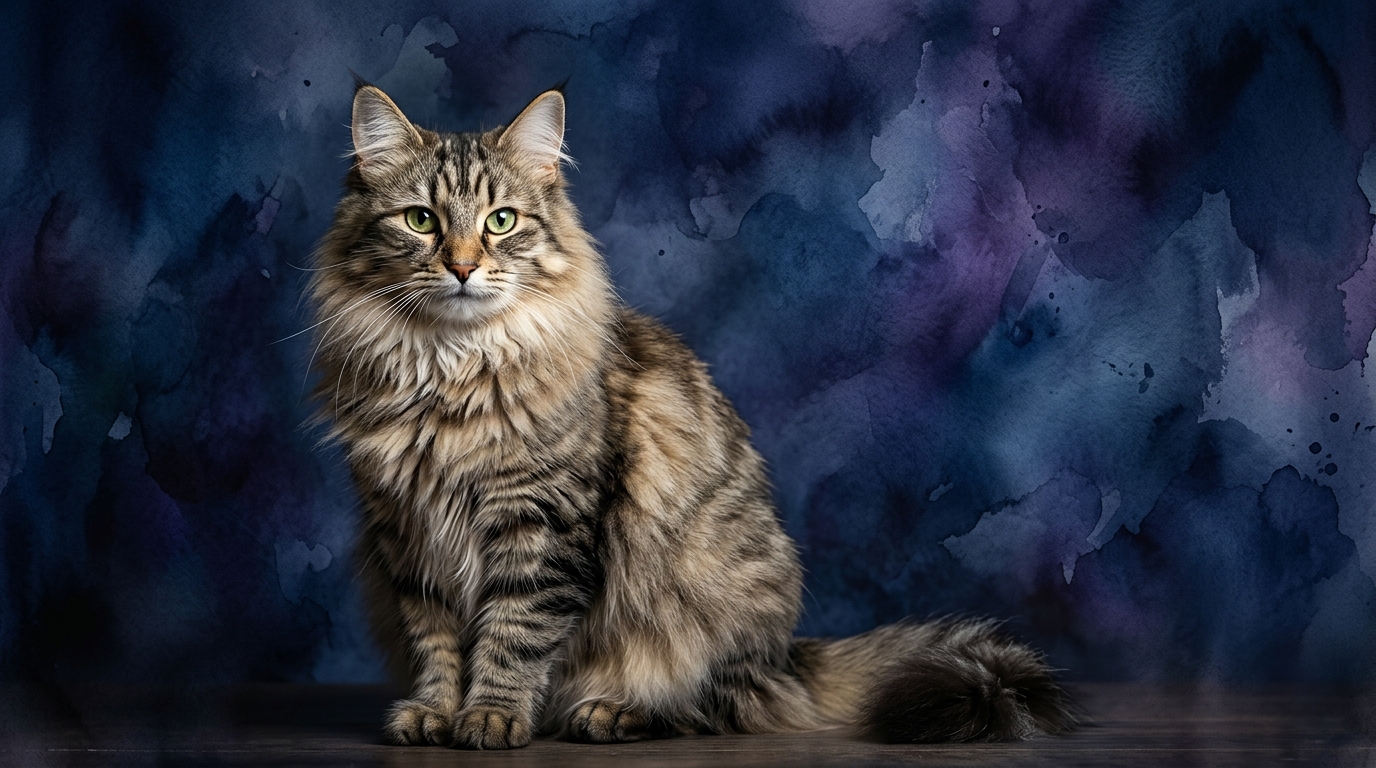
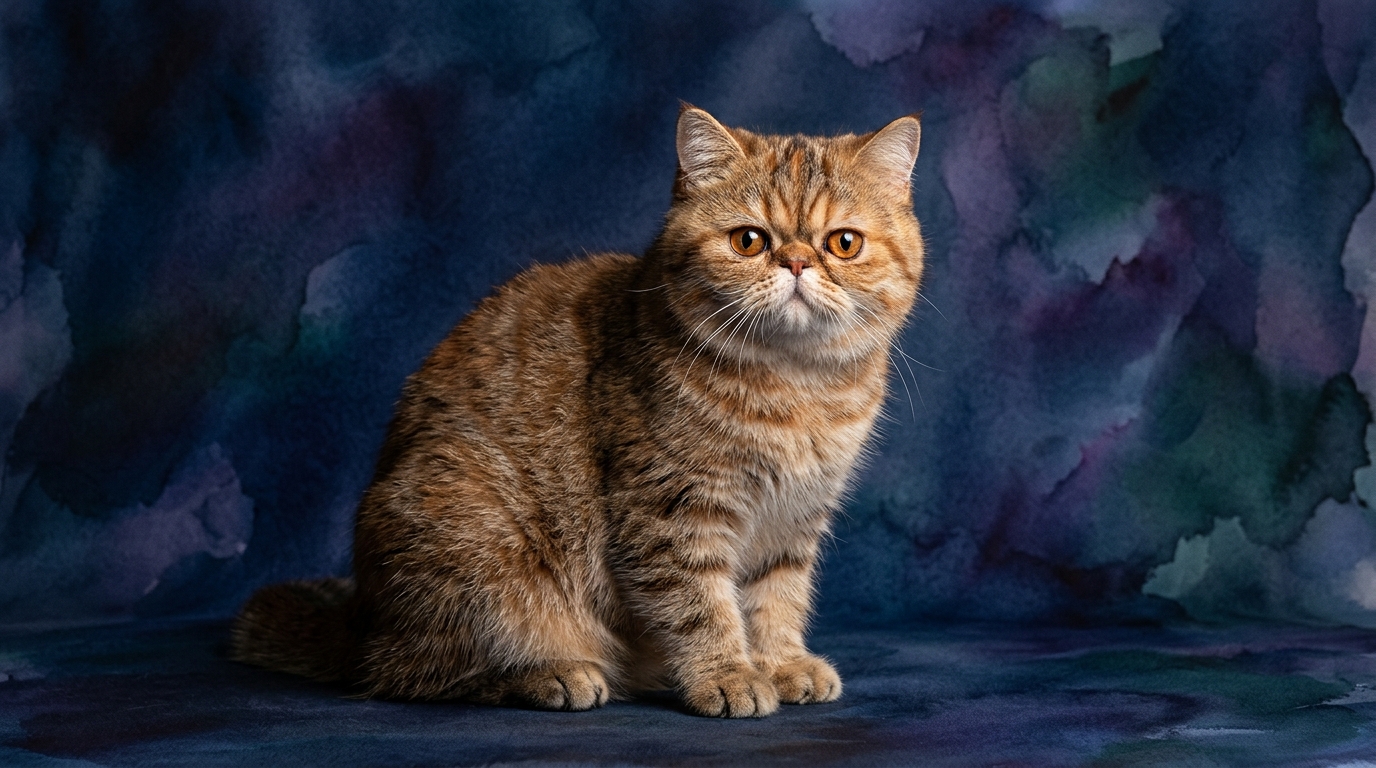
Side-by-Side Cognitive Profiles: Norwegian Forest Cat vs. Exotic Shorthair
The Cosmic Pet Pet IQ Lab employs five key dimensions to evaluate feline intelligence, offering a nuanced view beyond simplistic labels. Let's explore how the Norwegian Forest Cat (NFC) and the Exotic Shorthair (ESH) stack up in each area.
For the Norwegian Forest Cat, our assessment reveals a robust cognitive toolkit. Their Problem Solving is rated 4/5, indicating a strong capacity for navigating complex situations and devising strategies to overcome obstacles. Training Speed stands at 3/5, suggesting a steady learning pace that requires consistent reinforcement. Social Intelligence is also 3/5, reflecting a balanced ability to interact with humans and adapt to household dynamics. A standout feature is their Instinctive Drive, scoring a perfect 5/5, which underscores their profound connection to natural predatory behaviors. Finally, their Memory is rated 4/5, allowing them to retain information about their environment and routines effectively.
In contrast, the Exotic Shorthair presents a profile geared more towards tranquility and comfort. Their Problem Solving is rated 3/5, indicating a moderate ability to tackle environmental challenges, often preferring simpler solutions. Training Speed matches the NFC at 3/5, demonstrating a similar steady, if not rapid, learning curve for basic behaviors. Social Intelligence is also 3/5, highlighting their capacity for forming affectionate bonds and recognizing familiar faces. Their Instinctive Drive is rated 3/5, which is notably lower than the NFC, suggesting a more subdued interest in hunting and vigorous play. Lastly, their Memory is 3/5, allowing them to recall routines and comfort zones adequately, contributing to their generally contented disposition.
Where the Norwegian Forest Cat Wins Cognitively
The Norwegian Forest Cat truly distinguishes itself in domains requiring active engagement with its surroundings and a robust sense of self-reliance. Their 4/5 rating in Problem Solving reflects a breed that doesn't just observe but actively seeks to manipulate its environment. For instance, an NFC might methodically experiment with door handles, learning the precise motion needed to open a latch, or figure out how to dislodge a treat from a complex puzzle toy through trial and error, rather than giving up quickly. This isn't merely about curiosity; it's a persistent application of cognitive resources to achieve a goal. Furthermore, their superior Instinctive Drive (5/5) means they possess an exceptionally refined ability to track movement, anticipate prey behavior even in play, and execute complex pouncing sequences. This manifests as a deep focus during interactive play, where they might stalk a feather wand with the intensity of a predator, demonstrating a sophisticated internal map of their 'hunting ground' and an innate understanding of physics related to motion and trajectory. Their 4/5 Memory also supports these strengths, allowing them to recall successful problem-solving strategies and the locations of intriguing objects or potential 'prey' long after the initial encounter.
Where the Exotic Shorthair Wins Cognitively
While the Exotic Shorthair might not excel in the same 'active' cognitive challenges as the NFC, their strengths lie in a different, equally valuable dimension: their serene adaptability and low-stress processing. With a 3/5 in Instinctive Drive, they are less consumed by the primal urges of hunting and territorial defense, which translates into a generally calmer mental state. This lower drive means they spend less cognitive energy on vigilance and more on enjoying their immediate, comfortable environment. Their moderate Problem Solving (3/5) and Memory (3/5) ratings, combined with their placid nature, suggest a feline that is content with predictability and less prone to overthinking or seeking out complex environmental challenges. An ESH is less likely to become frustrated by an unopened door or an inaccessible treat, often preferring to simply wait for human intervention or find an alternative, more accessible comfort. Their cognitive 'win' is often in their ability to maintain a relaxed disposition, effortlessly integrating into quiet household routines without the constant need for mental stimulation that breeds with higher drives might demand. This makes them masters of contentment, requiring less cognitive effort to achieve a state of peace.
Trainability: Nuances in Learning Styles
Both the Norwegian Forest Cat and the Exotic Shorthair share a Training Speed rating of 3/5, suggesting neither is inherently 'easier' in the conventional sense of rapid command acquisition. However, the *nature* of their trainability differs significantly due to their underlying cognitive profiles and instinctive drives. The Norwegian Forest Cat, with its high Instinctive Drive (5/5) and strong Problem Solving (4/5), can be highly motivated by challenge and reward, particularly if training taps into their natural hunting behaviors. They might learn to fetch or navigate obstacle courses because it satisfies their innate drive for activity and mental engagement. However, their independent streak and problem-solving prowess mean they might also 'solve' the training scenario in ways not intended, or prioritize their own interests over compliance if not sufficiently motivated. For instance, an NFC might learn to open a cupboard for treats, but then apply that skill to any cupboard, regardless of whether it's 'allowed.'
The Exotic Shorthair, on the other hand, with its lower Instinctive Drive (3/5) and more placid temperament, responds well to gentle, consistent training focused on routine and comfort. They are less likely to challenge boundaries or invent alternative solutions, making them more amenable to learning basic household manners and simple cues through positive reinforcement, especially when it leads to petting or a quiet treat. Their motivation often stems from a desire for companionship and comfort rather than a drive for accomplishment or problem-solving. Therefore, while both require patience, the NFC might present more 'creative' training challenges demanding ingenuity from the owner, whereas the ESH will likely be more straightforward, seeking to please and maintain a harmonious environment.
Matching Feline Intellect to Owner Lifestyle
The distinction between these two breeds becomes particularly clear when considering owner lifestyles. The Norwegian Forest Cat, with its robust Problem Solving (4/5), high Instinctive Drive (5/5), and commendable Memory (4/5), thrives with active owners who can provide ample mental and physical stimulation. These cats need opportunities to 'hunt' through interactive play, explore safe outdoor environments (perhaps on a leash or in a catio), and engage with puzzle toys that challenge their cognitive abilities. An owner who enjoys teaching tricks, providing varied enrichment, and can appreciate a feline companion that might occasionally outsmart them will find the NFC a rewarding match. They are not content to simply observe; they want to participate and investigate.
Conversely, the Exotic Shorthair is an ideal companion for relaxed owners seeking a calm, affectionate presence. Their lower Instinctive Drive (3/5) and moderate cognitive scores across the board mean they are generally content with a more sedentary lifestyle, enjoying quiet companionship, short play sessions, and plenty of comfortable napping spots. Owners who prefer a lap cat, appreciate a predictable routine, and don't necessarily want a pet that constantly seeks out new challenges will find the ESH perfectly suited to their pace of life. Their contentment often comes from peace and stability rather than vigorous activity or complex problem-solving.
The Verdict
Choose the Norwegian Forest Cat if you're an active owner who enjoys engaging with a cognitively sharp, independent feline that thrives on exploration, problem-solving, and vigorous play, appreciating their strong natural drives.
Opt for the Exotic Shorthair if you seek a tranquil, affectionate companion content with a relaxed home environment, valuing their calm demeanor, predictable routines, and gentle presence over constant mental or physical stimulation.
🧠 Find Your Pet's IQ Score
Our Pet IQ Lab assessment covers 25+ tests across 5 cognitive dimensions — personalized to your breed.
Take the Full IQ Test →Frequently Asked Questions
Do Norwegian Forest Cats need more mental stimulation than Exotic Shorthairs?
Yes, Norwegian Forest Cats, with their higher Problem Solving (4/5) and Instinctive Drive (5/5), generally require more mental stimulation. They benefit from puzzle toys, interactive play that mimics hunting, and opportunities to explore, whereas Exotic Shorthairs are content with less intense engagement.
Are Exotic Shorthairs prone to destructive behavior if not mentally stimulated?
Exotic Shorthairs are less prone to destructive behaviors stemming from lack of mental stimulation compared to breeds with higher drives. Their lower Instinctive Drive (3/5) means they are generally more placid and less likely to seek out disruptive activities when bored, often preferring to nap.
Can Norwegian Forest Cats be trained to walk on a leash?
Yes, Norwegian Forest Cats can often be trained to walk on a leash, especially given their moderate Training Speed (3/5) and strong desire for exploration. Their problem-solving skills and curiosity can make them receptive to such activities, provided training is consistent and positive.