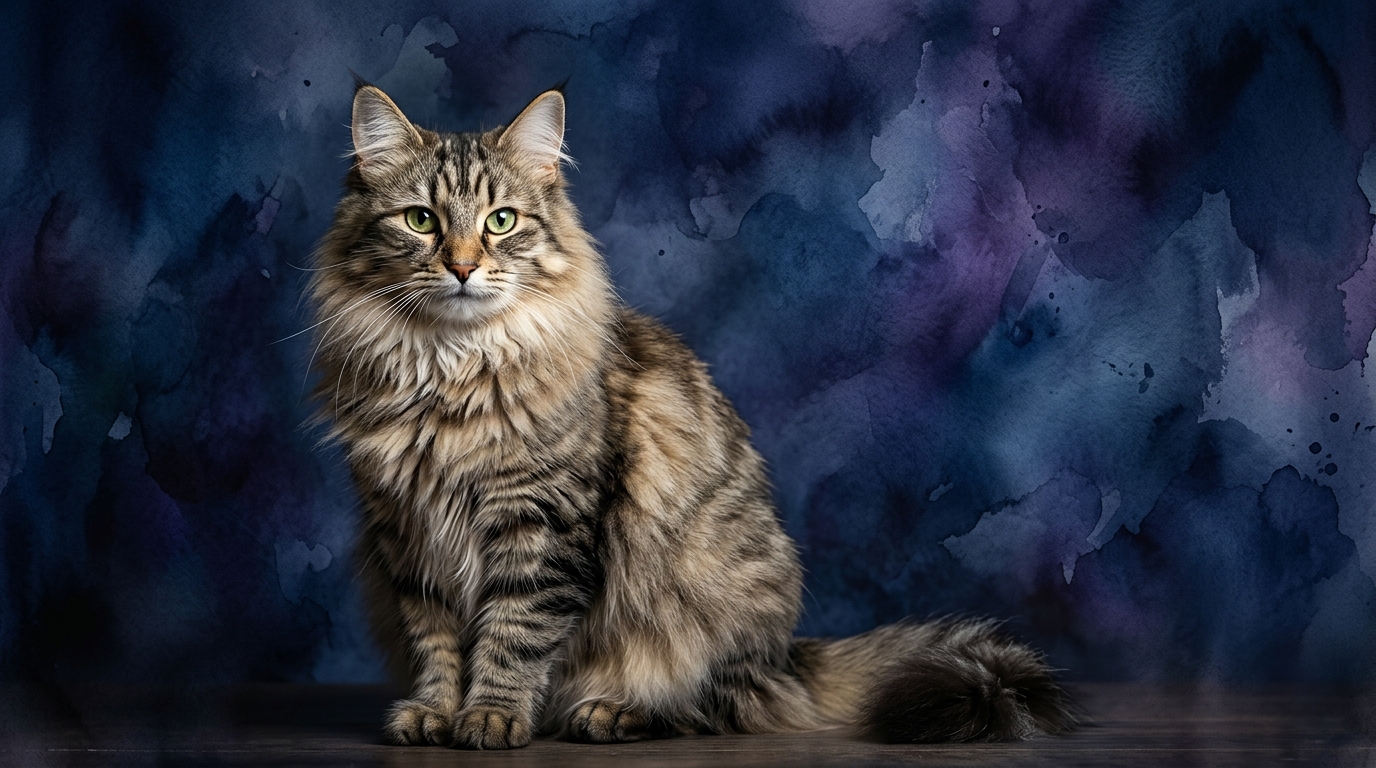
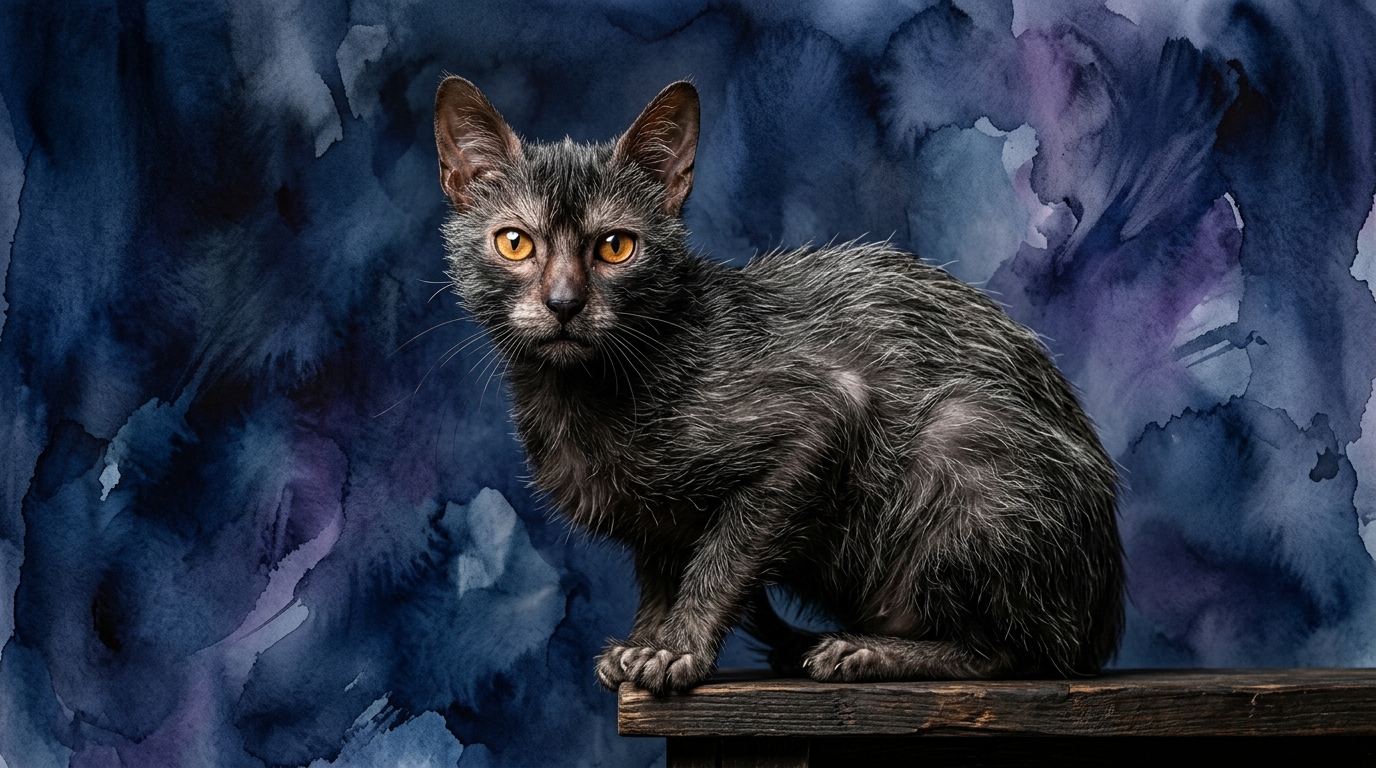
Side-by-Side Cognitive Profiles: Norwegian Forest Cat vs. Lykoi
The Cosmic Pet Pet IQ Lab's framework allows us to dissect the cognitive strengths and nuances of these two breeds. The Norwegian Forest Cat presents a profile indicative of a robust, independent thinker with strong natural drives, while the Lykoi showcases a more uniformly moderate but adaptable cognitive array.
For Problem Solving, the Norwegian Forest Cat scores a solid 4/5, suggesting a cat adept at navigating complex environments, figuring out puzzle toys, or devising strategies to access desired objects. This cat is likely to exhibit persistence in overcoming obstacles. The Lykoi, with a 3/5 in Problem Solving, demonstrates a capable but perhaps less intensely driven approach to cognitive challenges, still able to learn and adapt but potentially less inclined to complex strategizing.
Training Speed is identical for both breeds, each earning a 3/5. This indicates that both the Norwegian Forest Cat and the Lykoi possess a moderate capacity for learning new commands and routines, neither exceptionally quick nor particularly slow to pick up cues. Success in training for both will likely hinge on consistent, positive reinforcement and engaging methods.
Social Intelligence also registers at 3/5 for both, pointing to felines that are generally capable of understanding and responding to human cues, developing bonds, and interacting appropriately within a household. They are neither overly aloof nor excessively dependent, striking a balanced social engagement.
A significant divergence appears in Instinctive Drive, where the Norwegian Forest Cat boasts a perfect 5/5. This score highlights a deeply ingrained set of natural behaviors related to hunting, exploration, and territoriality, suggesting a cat that thrives on opportunities to express these innate tendencies. The Lykoi, however, scores a 3/5, indicating a moderate level of instinctive drive, likely resulting in less intense predatory play or a reduced need for extensive outdoor exploration compared to its Norse counterpart.
Finally, Memory shows the Norwegian Forest Cat at 4/5, implying a strong capacity to recall past experiences, learned behaviors, and spatial information over extended periods. This contributes to their problem-solving abilities and adaptability. The Lykoi's 3/5 in Memory suggests a functional recall ability, sufficient for daily routines and recognizing familiar faces, but perhaps not as acute in retaining intricate details or complex sequences over time.
Where the Norwegian Forest Cat Excels Cognitively
The Norwegian Forest Cat's cognitive profile positions it as a master of its domain, particularly in areas demanding intricate thought and robust instinct. Its 4/5 in Problem Solving means this cat is not easily deterred by challenges; expect them to methodically work through puzzle feeders, open cupboards, or find innovative ways to reach high perches. This cognitive tenacity makes them intellectually engaging companions for those who enjoy observing a cat's strategic thinking.
Their exceptional 5/5 Instinctive Drive is a cornerstone of their cognitive strength, manifesting in a profound connection to their ancestral hunting behaviors. This isn't merely about chasing toys; it's about a deep, intrinsic motivation to stalk, pounce, and explore, which sharpens their senses and hones their physical and mental coordination. Owners will observe a keen awareness of their surroundings and a drive to interact with their environment in a purposeful, exploratory manner.
Furthermore, the Norwegian Forest Cat's 4/5 Memory supports both their problem-solving and instinctive endeavors. They are likely to remember successful hunting strategies, the layout of their territory, and the routines that lead to desired outcomes. This strong recall allows them to build upon past experiences, making them efficient learners in environments that reward their natural inclinations. Their memory contributes to a perceived wisdom and consistent interaction style.
Lykoi's Distinct Cognitive Profile: A Different Appeal
While the Lykoi does not outscore the Norwegian Forest Cat in any specific cognitive dimension, its uniformly moderate profile offers a different, equally appealing set of attributes. The Lykoi's 3/5 in Problem Solving, coupled with its 3/5 in Instinctive Drive, suggests a cat that is curious and capable without the intense, demanding cognitive energy of some breeds. This means they are intelligent enough to engage in play and learn routines but might be less inclined to persistently test boundaries or require constant, complex mental challenges.
The Lykoi's balanced cognitive scores, including a 3/5 in Social Intelligence, contribute to its reputation as an adaptable and companionable feline. They are responsive to their human families, capable of forming strong bonds, and generally agreeable to household dynamics without displaying overly dominant or excessively independent tendencies. This moderation across the board can be a significant 'win' for owners seeking a cat that integrates smoothly into a variety of lifestyles without requiring constant vigilance over their cognitive escapades.
Their moderate Instinctive Drive (3/5) means they still enjoy play and exploration, but perhaps with less intensity than a Norwegian Forest Cat. This can translate to a calmer indoor demeanor, potentially fewer attempts at 'hunting' household items, and a generally less demanding need for simulated predatory activities. For owners preferring a cat with a strong social presence but a more relaxed approach to its innate drives, the Lykoi's cognitive blend is particularly well-suited.
Training Dynamics: Which is Easier to Guide?
Both the Norwegian Forest Cat and the Lykoi share a Training Speed score of 3/5, indicating that neither breed holds a distinct advantage in how quickly they grasp new commands. However, the overall cognitive profile of each cat significantly influences the training experience and the types of behaviors an owner might encounter. The Norwegian Forest Cat's higher Problem Solving (4/5) and Instinctive Drive (5/5) suggest a cat that, while not necessarily faster to learn a specific trick, might be more motivated to engage with complex training tasks that tap into its natural abilities. They might excel at agility courses or scent work, finding intrinsic reward in 'solving' the training challenge or fulfilling their drive.
Training a Norwegian Forest Cat often involves channeling their considerable energy and sharp intellect. Their robust memory (4/5) means once they learn something, they tend to retain it well. The challenge lies in keeping them engaged and ensuring their problem-solving skills don't lead them to outsmart the training setup or find alternative, undesirable solutions. Their strong instinctive drive means training might be most effective when it mimics hunting or exploration, making it a natural extension of their innate behaviors.
The Lykoi, with its moderate scores across the board (3/5 for Problem Solving, Training Speed, Social Intelligence, Instinctive Drive, and Memory), offers a different training dynamic. While not as intensely driven by instinct, their social intelligence and moderate problem-solving make them amenable to positive reinforcement. They are less likely to be distracted by an overwhelming urge to hunt or explore, potentially making them more focused on the task at hand during training sessions, provided the sessions are kept engaging and positive.
In essence, neither is inherently 'easier' to train in terms of raw speed. The Norwegian Forest Cat might be more capable of complex tasks if motivated by instinct, but their intensity requires a dedicated approach. The Lykoi's balanced nature might make them more consistently compliant and less prone to intense, instinct-driven diversions, making them a steady and agreeable student for basic obedience and household manners. The 'easier' choice depends on the owner's training goals and preferred engagement style.
Matching Feline Intelligence to Lifestyles: Active vs. Relaxed Owners
The distinct cognitive profiles of the Norwegian Forest Cat and the Lykoi naturally align with different owner lifestyles. For active owners who thrive on engaging with a pet's intellect and providing outlets for robust natural behaviors, the Norwegian Forest Cat is an ideal match. Their 5/5 Instinctive Drive demands ample opportunities for exploration, climbing, and simulated hunting play. These cats benefit immensely from puzzle toys that challenge their 4/5 Problem Solving, regular interactive play sessions, and even supervised outdoor access or secure 'catios' to satisfy their exploratory urges. An owner who enjoys teaching complex tricks or engaging in cat agility will find a willing and capable partner in the Norwegian Forest Cat, who will remember these activities well due to their 4/5 Memory. They are not content to merely observe; they wish to participate actively in their environment.
Conversely, the Lykoi's more moderate cognitive profile makes it well-suited for relaxed owners who appreciate an intelligent companion without the intense demands for constant mental and physical stimulation. While still playful and curious, their 3/5 Instinctive Drive means they might be content with shorter play sessions and a less elaborate array of environmental enrichment. Their 3/5 Problem Solving and Memory suggest they are perfectly capable of learning household routines and engaging with standard cat toys, but they may not consistently seek out complex challenges or exhibit the same persistent drive to 'figure things out.' They are intelligent and responsive companions, but their intelligence manifests in a more understated, adaptable manner, fitting comfortably into a calmer home environment without feeling under-stimulated.
Ultimately, the choice between these two breeds depends on the owner's capacity and desire to meet their cat's cognitive needs. An active owner will find fulfillment in channeling the Norwegian Forest Cat's formidable intellect and drive, while a more relaxed owner will appreciate the Lykoi's balanced cognitive approach, which fosters a harmonious and engaging companionship without constant high-level cognitive demands.
The Verdict
Choose the Norwegian Forest Cat if you are an active owner seeking a highly engaged, intellectually driven companion who thrives on problem-solving, exploration, and vigorous play, and you are prepared to meet their profound instinctive needs.
Opt for the Lykoi if you prefer a balanced, adaptable feline whose intelligence manifests in a sociable, moderately playful manner, fitting well into a more relaxed household without requiring intense, constant cognitive stimulation.
🧠 Find Your Pet's IQ Score
Our Pet IQ Lab assessment covers 25+ tests across 5 cognitive dimensions — personalized to your breed.
Take the Full IQ Test →Frequently Asked Questions
Do Norwegian Forest Cats need outdoor access?
Due to their 5/5 Instinctive Drive, Norwegian Forest Cats benefit greatly from opportunities to express their natural behaviors like climbing and exploring. While supervised outdoor access or a secure catio can be ideal, indoor environments must provide ample vertical space, interactive toys, and puzzle feeders to satisfy their cognitive and physical needs.
Are Lykoi good with children and other pets?
With a Social Intelligence score of 3/5, Lykoi cats are generally adaptable and capable of forming bonds within a family, including with children and other pets. Their moderate Instinctive Drive also means they are typically less prone to intense predatory play that might overwhelm smaller companions, making them suitable for multi-pet households with proper introductions.
How can I mentally stimulate a Lykoi cat?
Despite their moderate Problem Solving and Instinctive Drive (both 3/5), Lykoi cats still require mental enrichment. Engaging them with interactive toys, regular play sessions, and simple puzzle feeders will keep them stimulated. They also appreciate social interaction, so spending quality time with them through petting and gentle play is a key component of their well-being.