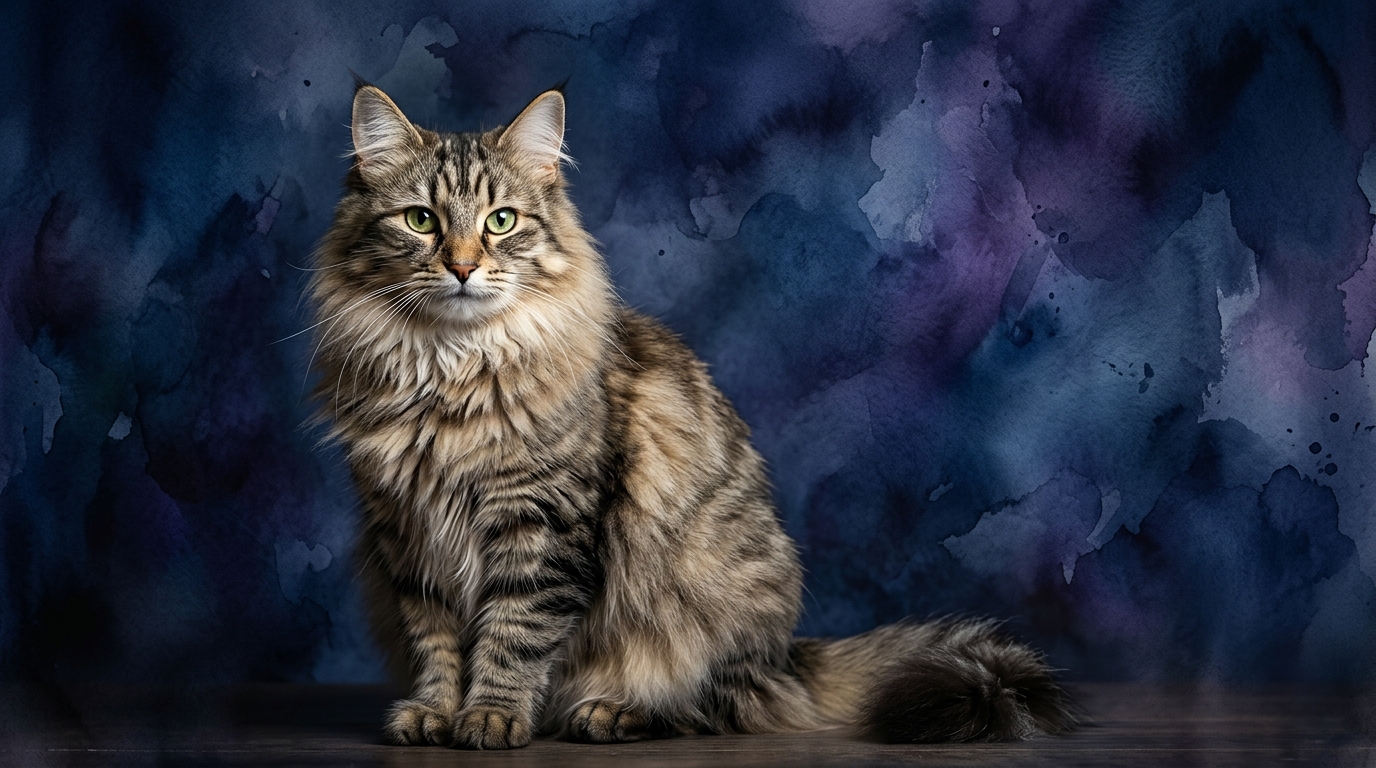
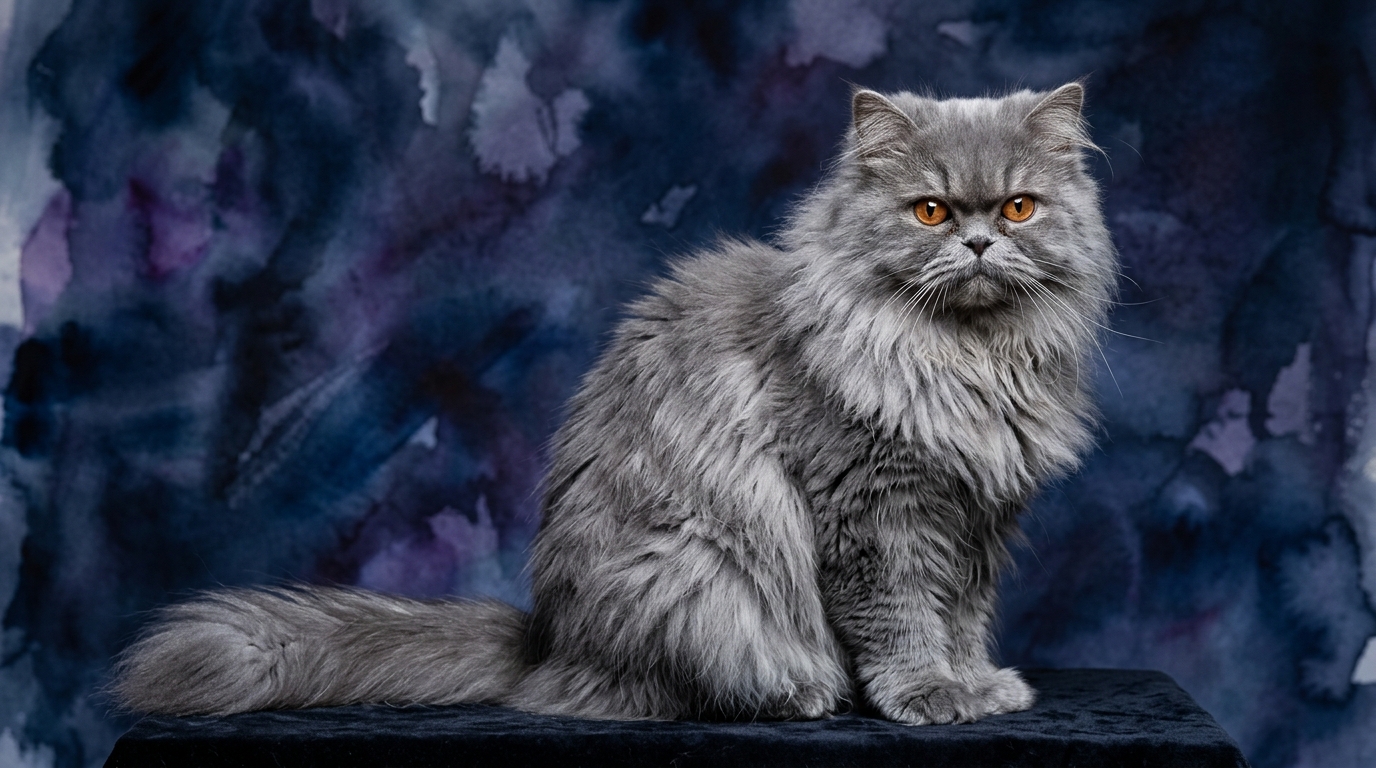
Side-by-Side IQ Profile
The Cosmic Pet Pet IQ Lab employs five key dimensions to map feline intelligence, offering a nuanced understanding beyond simple “smart or not smart” labels. For the Norwegian Forest Cat, these scores sketch a picture of an inquisitive and capable mind, while the Persian’s profile suggests a different, equally valid, approach to navigating its world.
Problem Solving: The Norwegian Forest Cat scores an impressive 4/5, indicating a strong capacity for figuring out novel situations, manipulating objects, and overcoming physical obstacles. This often manifests as opening cabinets or mastering complex puzzle feeders. The Persian, in contrast, registers a 2/5, suggesting a less pronounced inclination towards active manipulation of its environment or persistent experimentation to solve puzzles.
Training Speed: With a 3/5, the Norwegian Forest Cat demonstrates a moderate aptitude for learning new commands or routines, responding well to consistent, engaging training methods. Their curiosity can be a powerful motivator. The Persian’s 2/5 in this dimension suggests that while capable of learning, they typically require more repetition, shorter sessions, and a patient approach to internalize new behaviors.
Social Intelligence: Both breeds share a 3/5 in Social Intelligence, indicating a comparable ability to understand human cues, form bonds, and communicate their needs and desires effectively within their social groups. This suggests both breeds are capable of deep companionship, though their expression of it may differ.
Instinctive Drive: Here, the Norwegian Forest Cat stands out with a 5/5, reflecting a powerful innate drive for hunting, exploring, and engaging with its environment. This high score points to a cat that actively seeks out opportunities for physical and mental stimulation rooted in its ancestral behaviors. The Persian’s 2/5 signifies a much lower instinctive drive, suggesting less compulsion to hunt, climb, or explore extensively, making them generally more content with a placid indoor existence.
Memory: The Norwegian Forest Cat earns a 4/5 for Memory, indicating a robust ability to recall past events, learn from experiences, remember people, places, and routines over extended periods. The Persian’s 3/5 suggests a solid memory for familiar individuals and environments, but perhaps less capacity for retaining complex sequences of events or intricate navigational paths.
Where Norwegian Forest Cat Wins Cognitively
The Norwegian Forest Cat’s cognitive strengths are particularly evident in its superior problem-solving abilities and powerful instinctive drive, which together foster a highly interactive and engaged feline. Their 4/5 in Problem Solving means they are more apt to demonstrate ingenuity in their daily lives, perhaps figuring out how to open child-proof latches on cabinets to investigate their contents or strategically planning routes to reach the highest shelves. This active mental approach makes them adept at navigating challenging environments and mastering puzzle toys designed to dispense treats, providing both mental and physical exercise.
Furthermore, their 5/5 Instinctive Drive fuels a profound curiosity and a desire to interact vigorously with their surroundings, often mimicking hunting behaviors even in a domestic setting. This isn't just about chasing toys; it's about the cognitive engagement involved in stalking, pouncing, and “capturing” prey, which provides significant mental stimulation. This strong drive also contributes to their remarkable adaptability in diverse environments, allowing them to quickly assess and utilize new spaces. Their 4/5 Memory supports these behaviors, enabling them to remember successful hunting strategies, the location of favored hiding spots, or the specific routines of their human companions, making them reliable and predictable in their learned interactions while remaining keenly observant.
Where Persian Wins Cognitively
While the Persian’s IQ scores may not feature the high numbers seen in the Norwegian Forest Cat, their profile offers distinct advantages for specific owner preferences, representing a different kind of cognitive “win.” Their lower Instinctive Drive of 2/5, for instance, translates into a significant benefit for owners seeking a less intensely driven companion. This means a Persian is less likely to exhibit strong prey-driven behaviors that demand constant interactive play or extensive environmental enrichment to prevent boredom.
This reduced drive also means they are less prone to climbing curtains, scaling bookshelves, or attempting to “hunt” household items with the same persistent intensity as a cat with a higher score, which can be a relief for maintaining household order. Their 2/5 in Problem Solving, while lower, means they are less likely to actively seek out and manipulate objects in ways that could lead to mischief or require owners to constantly “cat-proof” their environment from an overly curious mind. Instead, they might prefer to observe their surroundings from a comfortable perch. Their shared 3/5 in Social Intelligence ensures they are equally capable of forming deep, affectionate bonds, often expressing their companionship through calm presence and gentle interactions rather than demanding energetic engagement, making them an ideal choice for a serene household.
Which is Easier to Train and Why
When considering ease of training, the Norwegian Forest Cat (Training Speed 3/5) generally offers a more responsive and engaging experience, particularly for owners interested in teaching beyond basic manners. Their higher Problem Solving (4/5) and Instinctive Drive (5/5) mean they often grasp cause-and-effect relationships quickly and are motivated by activities that mimic hunting or exploration. For example, they might learn to fetch a toy or walk on a leash with relative ease, as these activities align with their natural inclinations for movement and interaction. Positive reinforcement, especially when paired with puzzle-solving elements or chasing games, works exceptionally well to harness their innate curiosity.
The Persian (Training Speed 2/5), on the other hand, typically requires more patience and a different training approach. While they can certainly be trained to use a litter box, scratch appropriate surfaces, and respond to their name, the process may take longer due to their lower learning speed. Their reduced instinctive drive means they are less likely to be motivated by vigorous play or complex challenges during training sessions. Instead, short, consistent sessions focused on gentle positive reinforcement, such as quiet praise or a favored treat, are more effective. Real behavioral differences include the Norwegian Forest Cat's tendency to actively participate in training, often initiating interactions, whereas the Persian might prefer to observe and respond on their own timeline, needing a calm, low-distraction environment to focus effectively.
Which Suits Active Owners vs Relaxed Owners
For active owners who relish interactive engagement and a mentally stimulating companion, the Norwegian Forest Cat is an exceptional match. Their high Instinctive Drive (5/5) means they thrive on opportunities for vigorous play, climbing, and exploring, mirroring their natural inclination for an adventurous outdoor life even indoors. These cats benefit immensely from puzzle feeders that challenge their 4/5 Problem Solving skills, tall cat trees that satisfy their desire to perch and survey, and interactive toys that simulate hunting. An owner who enjoys teaching tricks, leash walking, or engaging in prolonged play sessions will find the Norwegian Forest Cat to be a willing and enthusiastic participant, constantly seeking new mental and physical challenges.
Conversely, for relaxed owners seeking a more serene and low-key companion, the Persian is often the preferred choice. Their lower Instinctive Drive (2/5) and Problem Solving (2/5) mean they are perfectly content with a less demanding daily routine, preferring comfort and gentle companionship over strenuous activity. These cats appreciate a calm home environment, soft beds, and predictable interactions. While they enjoy affection, their need for active play is much lower, often satisfied with short, gentle play sessions or simply lounging nearby. A Persian will thrive in a household that values tranquility and offers a consistent, peaceful presence, making them an ideal lap cat that provides quiet, steadfast companionship without requiring extensive mental or physical stimulation.
The Verdict
If you desire an active, inquisitive feline companion eager to engage in interactive play, solve puzzles, and explore its surroundings with boundless curiosity, the Norwegian Forest Cat is an excellent choice.
If your lifestyle leans towards tranquility and you seek a calm, affectionate cat that finds contentment in a serene home environment and gentle companionship, the Persian will be a perfect fit.
🧠 Find Your Pet's IQ Score
Our Pet IQ Lab assessment covers 25+ tests across 5 cognitive dimensions — personalized to your breed.
Take the Full IQ Test →Frequently Asked Questions
Does a lower IQ score mean a cat is 'dumb'?
Not at all; IQ scores in the Pet IQ Lab reflect specific cognitive aptitudes, not overall worth or capacity for affection. A lower score in one area simply indicates a different cognitive profile, which can be perfectly suited to certain lifestyles and owner preferences. It signifies a unique way of interacting with the world.
Can I increase my cat's IQ through training?
While you can't fundamentally change a breed's inherent cognitive profile, consistent positive reinforcement, engaging play, and environmental enrichment can certainly enhance a cat's learned behaviors and problem-solving skills. Providing mental stimulation helps any cat reach its full potential within its natural aptitudes.
How reliable are these cat IQ scores?
The Pet IQ Lab scores are derived from observed behavioral patterns across large populations of each breed, offering a generalized insight into their cognitive tendencies. Individual cats may vary, but these scores provide a useful framework for understanding breed-specific intellectual predispositions and matching them to owner expectations.