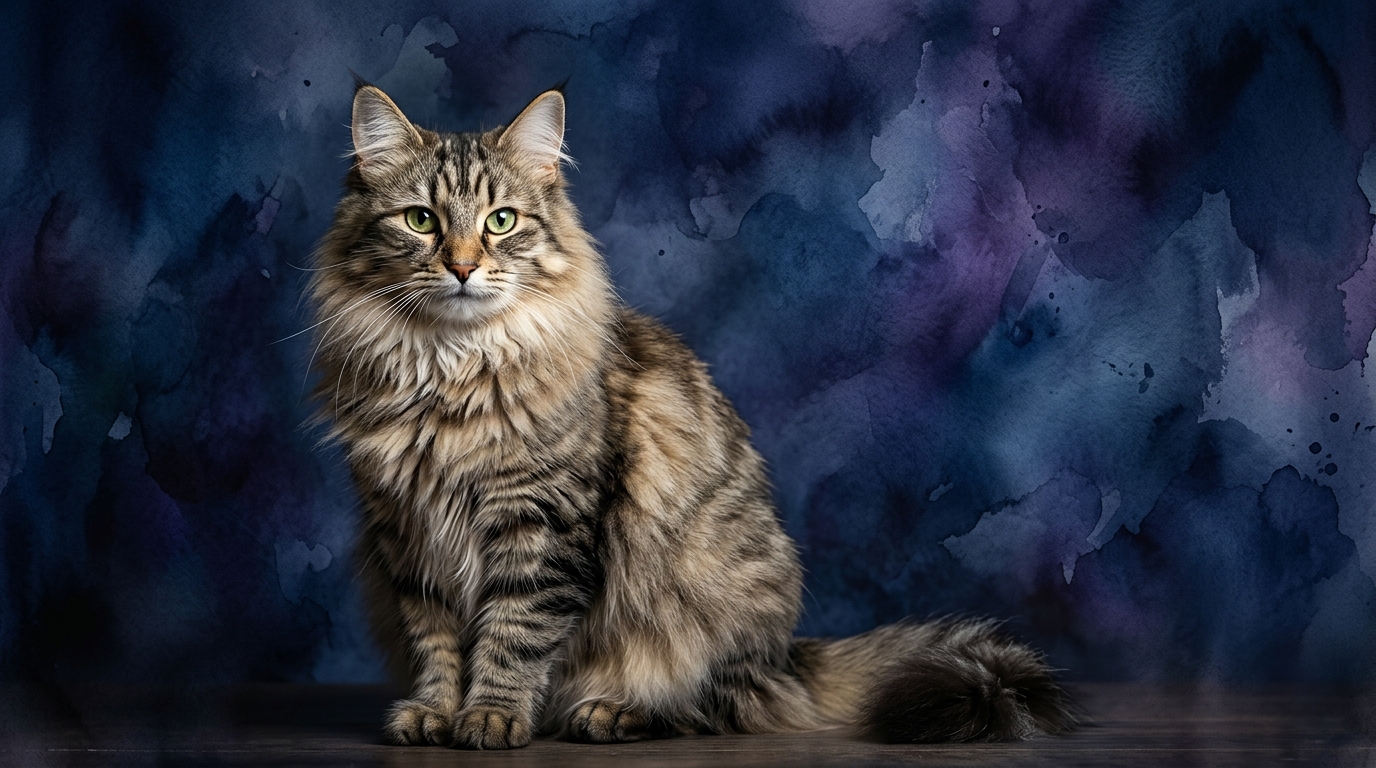
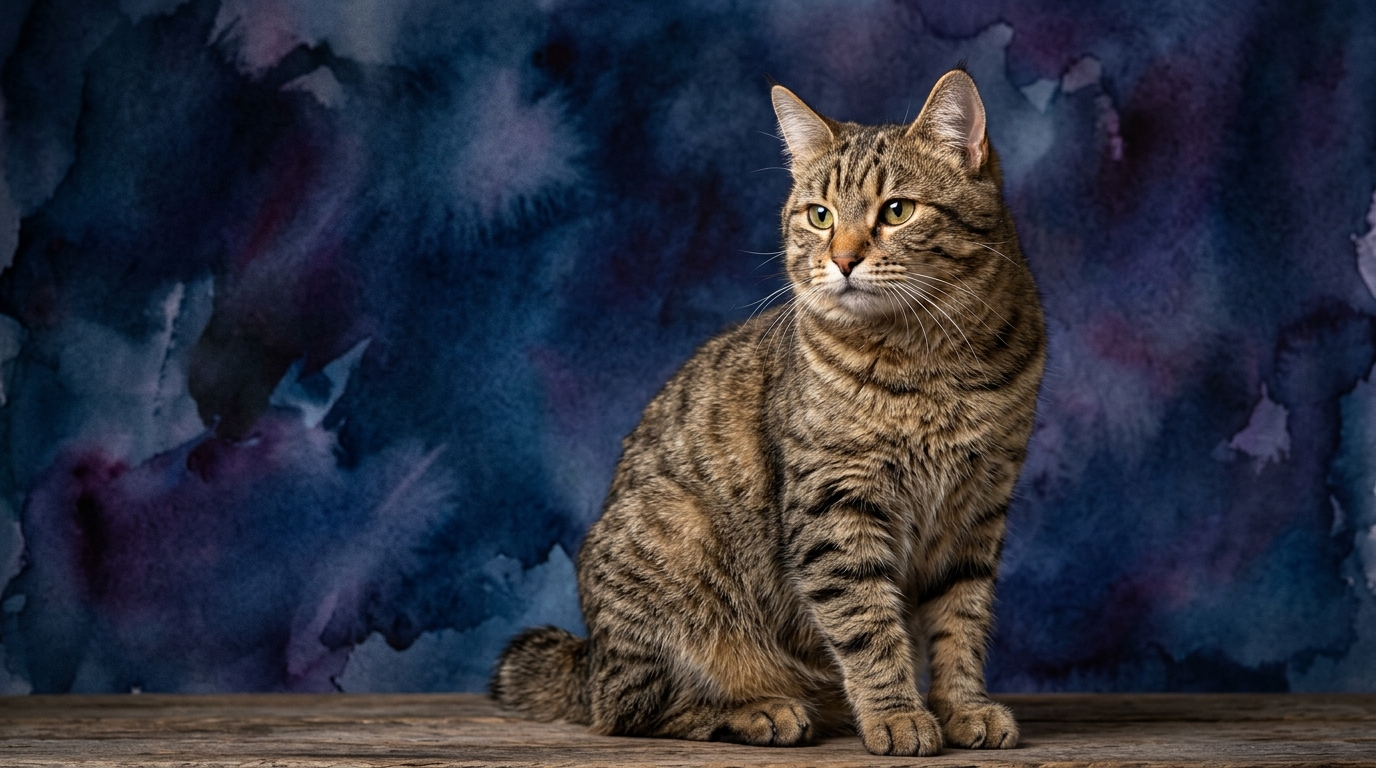
Side-by-Side IQ Profile: Norwegian Forest Cat vs. Pixiebob
The Cosmic Pet Pet IQ Lab provides a detailed breakdown of five key cognitive dimensions, offering a unique lens through which to understand these two captivating breeds. For the Norwegian Forest Cat, its profile highlights a robust and active intellect, while the Pixiebob presents a consistent and balanced cognitive approach.
Norwegian Forest Cat Profile:
Problem Solving (4/5): These cats demonstrate a strong aptitude for figuring out complex situations, such as navigating intricate environments or opening tricky latches. Their minds are geared towards understanding cause and effect, making them adept at puzzle toys and finding creative solutions to obstacles.
Training Speed (3/5): While not the quickest learners, Norwegian Forest Cats possess a respectable capacity for acquiring new commands and routines. Their progress in training is steady, requiring consistent effort and positive reinforcement to solidify new behaviors.
Social Intelligence (3/5): Their understanding of human cues and social dynamics is moderate, allowing them to form strong bonds and respond to emotional states, though they might not always initiate complex social interactions. They are attuned to their family's presence and generally enjoy companionship.
Instinctive Drive (5/5): A dominant trait, their instinctive drive is exceptionally high, manifesting as a powerful urge to hunt, explore, and engage in natural feline behaviors. This intrinsic motivation fuels their active lifestyle and keen senses, requiring ample outlets for their innate predatory instincts.
Memory (4/5): Norwegian Forest Cats exhibit a robust memory, retaining information about locations, routines, and experiences for extended periods. This strong recall contributes to their ability to learn complex sequences and navigate familiar territories with ease.
Pixiebob Profile:
Problem Solving (3/5): Pixiebobs show a moderate ability to tackle new challenges and understand environmental complexities. They can learn to solve basic puzzles and adapt to changes, but might require more guidance than breeds with higher scores in this area.
Training Speed (3/5): Similar to the Norwegian Forest Cat, Pixiebobs have a moderate training speed, meaning they are capable of learning tricks and commands with patience and consistent training methods. They respond well to positive reinforcement and clear communication.
Social Intelligence (3/5): Their social intelligence is also moderate, allowing them to connect well with their human families and understand social cues. They are affectionate and enjoy interaction, but may not display the most nuanced understanding of complex emotional states.
Instinctive Drive (3/5): Pixiebobs possess a moderate instinctive drive, meaning their natural hunting and exploratory urges are present but less intense than some other breeds. They enjoy play and investigation but are generally content with a balanced indoor lifestyle that includes regular enrichment.
Memory (3/5): Their memory capacity is moderate, enabling them to remember routines, familiar faces, and learned behaviors. While they retain important information, their recall might not be as sharp or long-lasting as breeds with higher memory scores.
Where the Norwegian Forest Cat Wins Cognitively
The Norwegian Forest Cat truly distinguishes itself in several key cognitive domains. Their Problem Solving score of 4/5 indicates a superior capacity for abstract thought and practical application. Owners often observe them methodically figuring out how to open cabinets, navigate complex multi-level cat trees, or even manipulate simple latches to access desired areas. This makes them highly engaging companions who thrive on mental challenges, often inventing their own games or finding ingenious ways to reach high perches.
Furthermore, their Instinctive Drive, rated at a robust 5/5, is a significant cognitive advantage for tasks requiring sustained focus and motivation. This isn't just about hunting; it translates to an intense curiosity and a relentless drive to explore their environment, investigate new smells, and engage in vigorous play sessions that mimic natural predatory behaviors. They are driven by an innate desire to interact with their surroundings, making them highly responsive to wand toys and chase games.
Finally, their 4/5 Memory score means they retain complex information about their territory, routines, and even the nuances of human behavior for extended periods. This strong recall allows them to quickly learn intricate multi-step commands or remember where a favorite toy was hidden days ago, contributing to a deeper understanding of their world and making them adept at adapting to learned environments.
Where the Pixiebob's Balanced Profile Shines Cognitively
While the Pixiebob doesn't outscore the Norwegian Forest Cat in any specific cognitive dimension, its consistent 3/5 rating across all five categories presents a unique cognitive advantage: balance and adaptability. This moderate instinctive drive (3/5 vs. NFC's 5/5) means Pixiebobs are generally less intensely driven by raw predatory urges, making them potentially calmer and more manageable companions in an indoor setting. They still enjoy play and exploration, but their demands for constant high-intensity stimulation are typically lower, leading to a more relaxed household dynamic.
Their moderate Problem Solving and Memory scores, while not exceptional, signify a practical intelligence that allows them to adapt well to routines and new situations without becoming overly frustrated by complex challenges or bored by simplicity. This balanced cognitive toolkit suggests a feline companion that is generally amenable, capable of learning and engaging, yet not overwhelmingly demanding in its intellectual needs. They possess a steady, reliable intelligence that integrates seamlessly into a variety of home environments, making them consistently responsive and pleasant without the peaks and valleys of more specialized cognitive profiles.
Which is Easier to Train and Why
Both Norwegian Forest Cats and Pixiebobs share a Training Speed score of 3/5, suggesting they learn at a similar, moderate pace for basic commands. However, the Norwegian Forest Cat’s higher Problem Solving (4/5) and Instinctive Drive (5/5) scores give it a subtle edge in certain training scenarios. While a Pixiebob will learn basic commands like "sit" or "come" with consistent, positive reinforcement, a Norwegian Forest Cat might grasp the underlying *concept* behind a trick more quickly or be more persistent in figuring out a puzzle feeder.
Their strong problem-solving skills mean they might understand the "why" of a command faster, leading to quicker generalization of learned behaviors across different contexts. The Norwegian Forest Cat's intense instinctive drive, while requiring careful management, can also be a powerful motivator in training. They might be more readily engaged by prey-drive toys or activities that tap into their natural hunting instincts, making training sessions feel more like a stimulating game and fostering greater enthusiasm.
In contrast, the Pixiebob's moderate instinctive drive means they might be slightly less prone to distraction by environmental stimuli, which can be an advantage in focused training, but also potentially less driven by high-energy play during sessions. Ultimately, both breeds are trainable, but the Norwegian Forest Cat’s cognitive profile lends itself to more complex or self-initiated learning, while the Pixiebob's training will likely be more straightforward and consistently rewarding for basic obedience and manners.
Which Suits Active Owners vs. Relaxed Owners
For owners who thrive on activity and mental engagement, the Norwegian Forest Cat is often the ideal match. Their 5/5 Instinctive Drive mandates regular, vigorous play sessions and opportunities for exploration, whether that's through supervised outdoor adventures or complex indoor environments with climbing structures and puzzle toys. Their 4/5 Problem Solving and Memory scores mean they enjoy and benefit from consistent mental stimulation, such as learning new tricks or engaging with interactive games that challenge their intellect.
These cats are not content to merely lounge; they actively seek out engagement and interaction, making them perfect companions for individuals or families who enjoy dedicating time to enriching their pet's life with stimulating activities and varied experiences. Their robust cognitive needs mean they thrive in dynamic households where their curiosity can be constantly satisfied.
Conversely, the Pixiebob, with its consistent 3/5 scores across the board, is better suited for owners seeking a more balanced and generally relaxed feline companion. While they appreciate play and interaction, their moderate instinctive drive means they don't demand constant, high-intensity engagement. They are adaptable and can be perfectly content with regular, but not overwhelming, play sessions and a comfortable, predictable routine. Their moderate cognitive needs make them a good fit for individuals or families who appreciate a cat's companionship but may not have the time or inclination for extensive daily training or elaborate environmental enrichment. They are affectionate and present but generally less insistent on constant mental and physical challenges, making them an excellent choice for a harmonious, lower-demand household.
The Verdict
Opt for a Norwegian Forest Cat if you are an active owner who can provide ample mental and physical stimulation, embracing their strong problem-solving skills and intense instinctive drive. They thrive with consistent engagement and complex environments, offering a deeply interactive and intelligent companionship.
Select a Pixiebob if you seek a balanced, adaptable feline companion with moderate cognitive demands, perfect for a relaxed household that still values affectionate interaction and predictable routines. Their consistent temperament makes them a harmonious addition without requiring constant high-intensity engagement.
🧠 Find Your Pet's IQ Score
Our Pet IQ Lab assessment covers 25+ tests across 5 cognitive dimensions — personalized to your breed.
Take the Full IQ Test →Frequently Asked Questions
Are Norwegian Forest Cats good at learning tricks?
Yes, with a Problem Solving score of 4/5 and a Training Speed of 3/5, Norwegian Forest Cats are quite capable of learning tricks. Their strong memory and natural curiosity mean they can grasp and retain complex commands and enjoy the mental challenge of new behaviors.
Do Pixiebobs need a lot of playtime?
Pixiebobs have a moderate Instinctive Drive (3/5), so while they definitely enjoy playtime and benefit from regular engagement, they don't typically demand the same intensity or frequency of play as breeds with higher drives. Consistent daily sessions are usually sufficient to keep them content and stimulated.
Which breed is more independent?
Both breeds have a Social Intelligence score of 3/5, suggesting a moderate level of social engagement. The Norwegian Forest Cat's higher Instinctive Drive and Problem Solving might lead them to be more self-directed in their exploration and activities, while the Pixiebob's balanced profile often results in a more consistently amenable and present companion without being overly clingy or demanding.