Side-by-Side Cognitive Profile
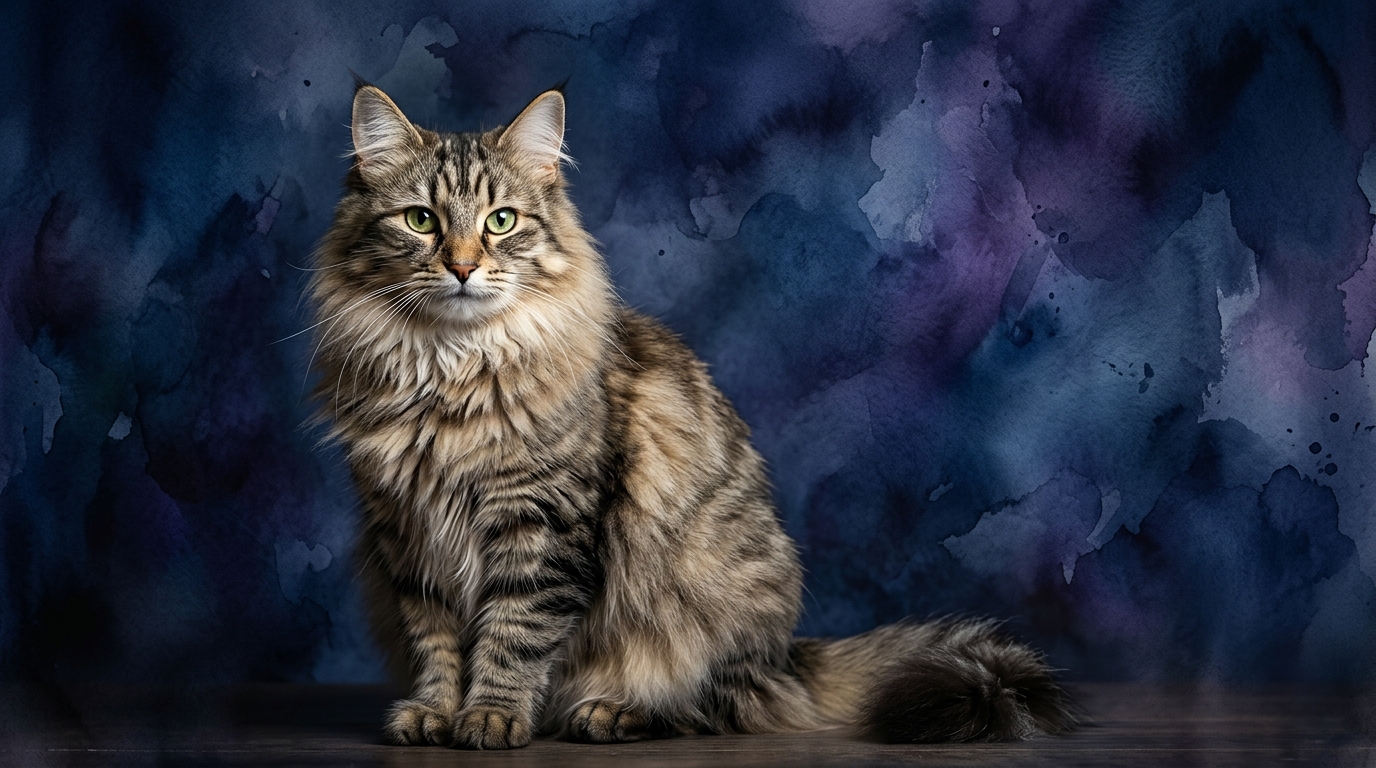
The Norwegian Forest Cat presents a cognitive profile indicating a robust engagement with its environment and a keen natural drive. Its Problem Solving is rated at 4/5, suggesting a strong capacity for navigating complex situations and understanding cause-and-effect. Training Speed stands at 3/5, indicating a moderate pace of learning requiring consistent methods. Social Intelligence is also 3/5, meaning it engages with its human family and other pets but isn't overly demanding of constant interaction. A standout characteristic is its Instinctive Drive at 5/5, reflecting powerful natural hunting and exploratory urges. Finally, its Memory is strong at 4/5, allowing it to retain detailed information about its surroundings and routines.
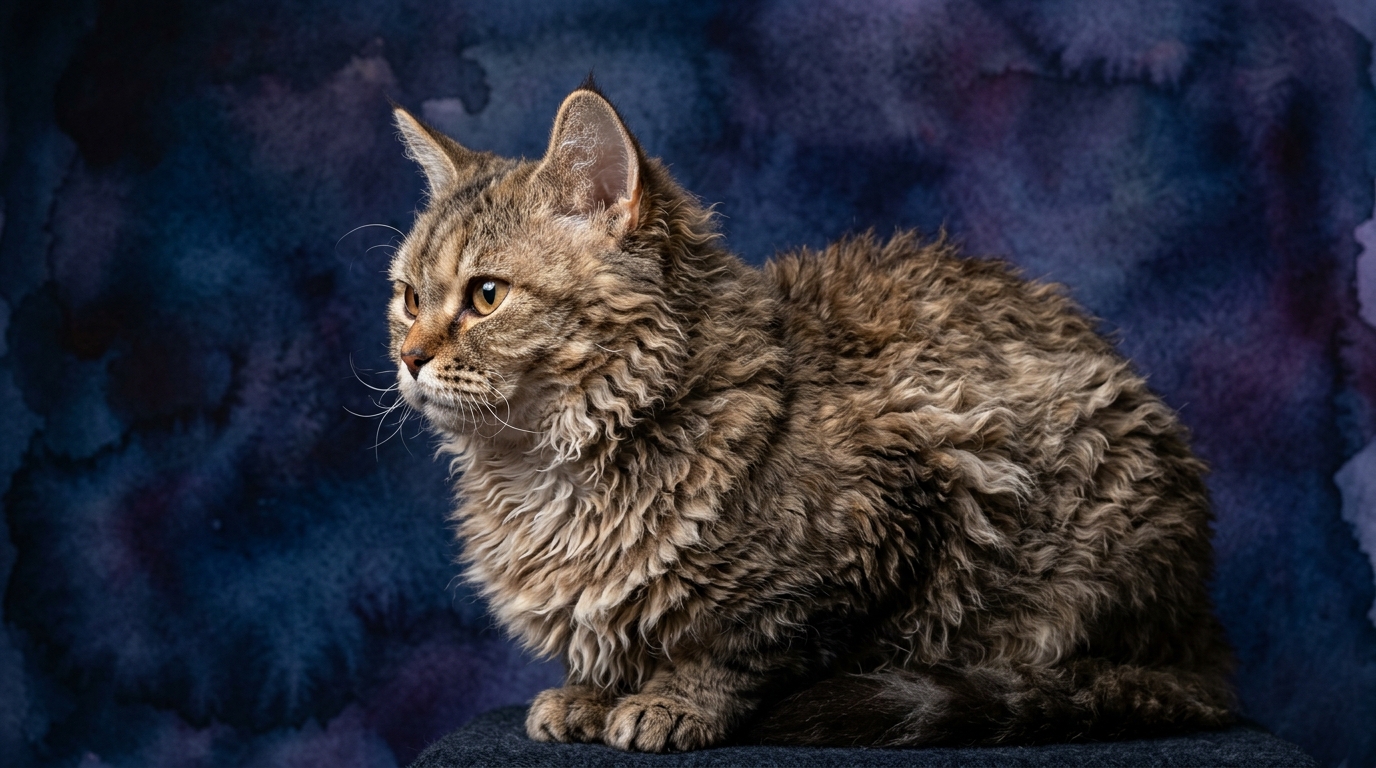
In contrast, the Selkirk Rex exhibits a generally more moderate cognitive approach. Its Problem Solving is 3/5, indicating it can handle straightforward puzzles but might be less inclined towards complex intellectual challenges. Training Speed matches the Norwegian Forest Cat at 3/5, suggesting a similar learning curve that benefits from patience and positive reinforcement. Social Intelligence is also 3/5, showing it enjoys companionship and adapts well to household dynamics without being overly clingy. The Selkirk Rex's Instinctive Drive is 3/5, a moderate level that means its predatory urges are present but less intense than some breeds. Its Memory is rated at 3/5, allowing it to remember key individuals and routines, though perhaps with less detail or persistence than a breed with a higher score.
Where the Norwegian Forest Cat's Cognitive Profile Shines
The Norwegian Forest Cat's higher Problem Solving score (4/5) means it excels at environmental mastery. These cats are more likely to figure out how to open latches, retrieve hidden items, or navigate intricate spaces, showcasing a persistent curiosity and an ability to understand their surroundings. This translates into a cat that actively engages with its environment, often exploring every nook and cranny and finding novel ways to interact with toys and household objects, making for a truly dynamic companion.
Its powerful Instinctive Drive (5/5) is another significant cognitive strength, reflecting a profound connection to its primal urges. This means a Norwegian Forest Cat is exceptionally motivated by activities that mimic hunting, such as chasing, pouncing, and climbing. Owners who can channel this drive into interactive play, puzzle feeders, or secure outdoor exploration will find their cat thrives, demonstrating remarkable agility and strategic thinking during these engagements. Coupled with a strong Memory (4/5), they retain complex sequences and locations, making them masters of their personal domain and adept at remembering intricate routines or the hiding spots of favored toys.
Where the Selkirk Rex's Cognitive Profile Shines
While not about outperforming, the Selkirk Rex's cognitive profile offers distinct advantages for specific home environments. Its more moderate Instinctive Drive (3/5) translates into a less intense need for predatory outlets. This can be a distinct benefit for owners who prefer a calmer household, with fewer instances of intense 'hunting' of household items or relentless pursuit of moving objects. This breed is often content with gentler play and less demanding in terms of requiring constant, high-energy interaction to satisfy primal urges, making for a more serene companion.
The Selkirk Rex's Problem Solving score of 3/5 means it's less prone to the kind of 'ingenious mischief' that can sometimes accompany higher scores. Owners might find their Selkirk Rex less inclined to systematically figure out how to open childproof cabinets, scale precarious shelves for forbidden treats, or devise elaborate escape plans. This translates to a more predictable and perhaps less challenging living situation for those who prefer a cat less inclined to test boundaries with its wits. Furthermore, its Memory (3/5), while not as extensive as the Norwegian Forest Cat's, contributes to its generally easygoing nature, potentially making it more adaptable to minor changes without dwelling on past disruptions.
Which Is Easier to Train and Why?
Both the Norwegian Forest Cat and the Selkirk Rex share a Training Speed of 3/5, indicating they can learn at a comparable pace through consistent, positive reinforcement. However, the *type* of training and the owner's approach might differ. The Norwegian Forest Cat's higher Problem Solving (4/5) and Memory (4/5) mean it might grasp more complex commands or sequences more readily and retain them longer, especially if linked to its high Instinctive Drive. This breed can excel at trick training or even agility if motivated by prey-like toys or treats, leveraging its natural prowess and recall.
The Selkirk Rex, with its 3/5 in Problem Solving and Memory, might require more repetitions for complex tasks, but its more moderate Instinctive Drive (3/5) can be an advantage. It might be less prone to distraction by environmental stimuli during training sessions, allowing for a more focused learner. While it might not devise its own solutions as quickly, a Selkirk Rex is often very attentive and eager to please, making it highly responsive to patient, reward-based training for basic commands and household manners. It might be less likely to 'outsmart' its owner during a training session, leading to more consistent compliance.
Which Suits Active Owners vs. Relaxed Owners?
The Norwegian Forest Cat is an ideal match for active owners who relish a highly interactive and intellectually engaged companion. Its high Instinctive Drive (5/5) and Problem Solving (4/5) demand engaging play, puzzle toys, and potentially secure outdoor access or a catio to satisfy its natural exploratory and hunting urges. These cats thrive on mental stimulation and physical activity, often initiating play or seeking out challenges. Owners who enjoy dedicating time to interactive play sessions, providing a stimulating environment, and perhaps even engaging in leash training will find the Norwegian Forest Cat a rewarding and fulfilling companion.
Conversely, the Selkirk Rex is generally better suited for relaxed owners seeking a more placid and affectionate feline presence. Its moderate Instinctive Drive (3/5) and Problem Solving (3/5) mean it is content with less intense play sessions and a more predictable, calmer home life. While still playful and curious, a Selkirk Rex is typically satisfied with moderate interaction and enjoys lounging alongside its human companions. Owners seeking a gentle, adaptable, and less demanding cat that is content with a slower pace of life will find the Selkirk Rex a wonderfully compatible and comforting addition to their household.
The Verdict
Choose the Norwegian Forest Cat if you desire a highly interactive, intellectually engaged companion that thrives on challenge and has a powerful connection to its primal instincts, requiring consistent mental and physical outlets.
Opt for the Selkirk Rex if you are seeking a more placid, affectionate cat that is less prone to ingenious mischief and generally content with a gentler pace of life, offering predictable companionship.
🧠 Find Your Pet's IQ Score
Our Pet IQ Lab assessment covers 25+ tests across 5 cognitive dimensions — personalized to your breed.
Take the Full IQ Test →Frequently Asked Questions
Are Norwegian Forest Cats good with puzzle toys?
Yes, with a Problem Solving score of 4/5, Norwegian Forest Cats are adept at figuring out puzzle toys and other mental challenges. They genuinely enjoy the engagement and thrive on opportunities to use their cognitive abilities to retrieve treats or overcome obstacles, making these toys essential for their enrichment.
How does the Selkirk Rex's lower instinctive drive impact its behavior indoors?
A Selkirk Rex's Instinctive Drive of 3/5 means it generally exhibits less intense hunting behavior compared to some breeds. While they still enjoy play, they are less likely to relentlessly stalk household members or require constant, vigorous predatory games, contributing to a calmer and less demanding indoor presence.
Can both breeds be clicker trained?
Absolutely. Both breeds have a Training Speed of 3/5, indicating they can learn through consistent positive reinforcement methods like clicker training. The Norwegian Forest Cat's strong memory might help it retain more complex sequences, while the Selkirk Rex's more moderate drive can make it very attentive to training sessions.