
Side-by-Side IQ Profile
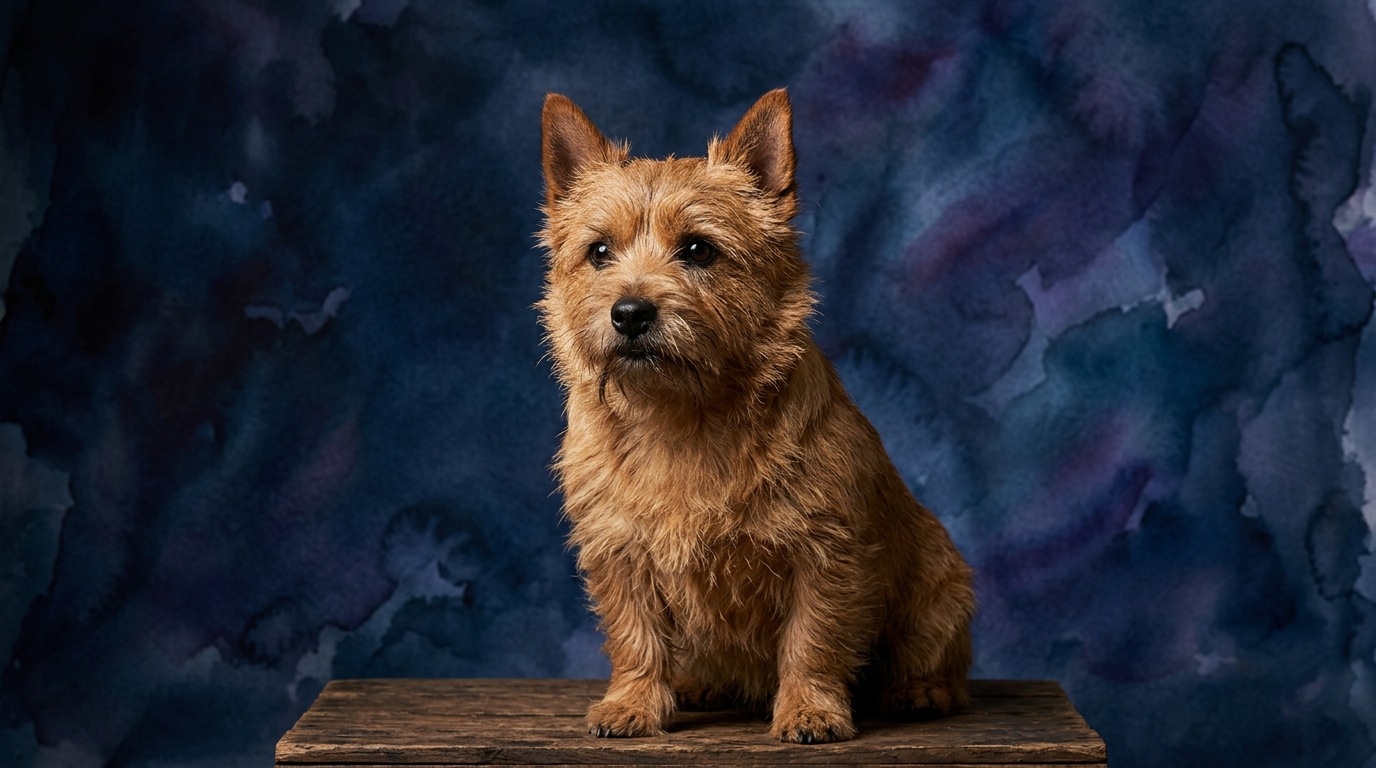
The Norwich Terrier, a small but sturdy earthdog, showcases a balanced cognitive profile, each dimension rated 3 out of 5, reflecting a capable yet distinct intelligence rooted in its working heritage. Their Problem Solving at 3/5 often manifests as a determined and persistent approach to environmental challenges, such as figuring out how to retrieve a favorite toy from an inaccessible spot or systematically investigating new scents during a walk, driven by their inherent curiosity and historical purpose. Training Speed, also 3/5, indicates they learn new commands and routines with moderate repetition, yet their independent spirit means that consistent, engaging methods and a clear understanding of their motivations are crucial to maintaining their focus and compliance. Social Intelligence at 3/5 means they are generally adept at reading human cues and interacting appropriately within their established pack, though they can be discerning and sometimes reserved with new people or unfamiliar dogs until trust is built. Their Instinctive Drive, a robust 3/5, is a defining characteristic, evident in their enthusiastic pursuit of small critters, their digging tendencies, or their keen interest in scent work, a clear echo of their original role as vermin hunters. Finally, their Memory at 3/5 allows them to effectively retain a repertoire of commands, remember specific routes, and recall past experiences, making them reliable in established routines and capable of learning from previous interactions.
The Chinese Crested, a breed celebrated for its unique appearance and profoundly affectionate nature, also presents a balanced cognitive score of 3 out of 5 across all dimensions, pointing to a different but equally capable form of intelligence. Their Problem Solving at 3/5 typically shines in tasks requiring dexterity and observation rather than brute force, such as delicately extracting treats from complex puzzle toys or mastering intricate agility sequences with grace, often demonstrating a thoughtful, almost deliberate, approach to challenges. Training Speed, at 3/5, suggests they pick up new skills at a moderate pace, thriving on positive reinforcement, gentle guidance, and a strong emotional connection with their trainer, as their sensitive nature can make them easily discouraged by harsh or inconsistent methods. Social Intelligence, also 3/5, is a hallmark of the breed, as they are exceptionally attuned to their owner's emotions and body language, often forming deep, almost empathetic bonds that allow them to anticipate needs, though some individuals can be quite reserved or shy with strangers. Their Instinctive Drive, a moderate 3/5, is less about prey pursuit and more about companionship, comfort, and a strong desire to be physically close to their people, often expressed as a constant shadow or a preference for cozy laps. Their Memory at 3/5 ensures they recall daily routines, favorite people, and past positive or negative associations, cementing their place as intelligent, responsive, and emotionally perceptive companions within their human family.
Where the Norwich Terrier Wins Cognitively
The Norwich Terrier's cognitive strengths often lie in areas demanding grit, independent action, and environmental resilience, a direct reflection of their terrier lineage and historical purpose. Their 3/5 Problem Solving, when coupled with their robust 3/5 Instinctive Drive, gives them a distinct edge in scenarios requiring sustained effort and tenacity, such as persistently working through a complex puzzle toy even when initial attempts fail, or confidently exploring and assessing novel, potentially challenging, outdoor environments. This breed demonstrates a robust, self-reliant approach to challenges, often displaying a 'can-do' attitude and less dependence on immediate human guidance once a task or objective is understood. They excel in tasks demanding physical engagement and a certain level of intrepidness, like scent work outdoors, navigating varied terrains, or participating in earthdog trials, where their natural curiosity and sturdy build perfectly complement their cognitive drive to investigate and conquer. Their memory (3/5) supports this by allowing them to recall successful strategies from past endeavors and apply them to new, similar challenges, making them effective, if sometimes stubborn, problem solvers in their own right, particularly in dynamic, unpredictable settings.
Where the Chinese Crested Wins Cognitively
In contrast, the Chinese Crested often demonstrates a cognitive advantage in areas requiring sensitivity, adaptability to human routines, and nuanced social understanding, excelling in the context of close companionship. Their 3/5 Social Intelligence stands out in its depth and subtlety, allowing them to pick up on minute changes in an owner's mood or anticipate needs with remarkable accuracy, fostering an exceptionally strong and empathetic human-animal bond. This breed truly shines in tasks that require precision, focus, and a delicate touch rather than brute force, such as learning intricate tricks, mastering complex obedience routines, or navigating agility courses with graceful control, where their thoughtful Problem Solving (3/5) is clearly evident. Their moderate Instinctive Drive (3/5) means they are generally less distracted by external stimuli like prey scents or boisterous environments, allowing them to focus more intently on human-directed tasks and subtle cues within a controlled, calm setting. This translates into a remarkable capacity for intricate learning within a companion context, where their memory (3/5) helps them establish complex daily routines, anticipate sequences of events, and respond consistently to a wide array of verbal and non-verbal signals from their primary caregiver, making them highly responsive and emotionally intelligent family members.
Which is Easier to Train and Why
Determining which breed is 'easier' to train hinges significantly on the owner's approach, their patience levels, and the specific desired outcomes, given both breeds share a 3/5 Training Speed. The Norwich Terrier, while undeniably capable of learning quickly, brings a strong sense of independence and a classic terrier stubborn streak to the training process. Their robust Instinctive Drive (3/5) means they can be easily distracted by interesting smells, the sight of small, scampering creatures, or the allure of a new digging spot, requiring highly motivating rewards, consistent, firm, but fair boundaries, and a creative approach to maintain their focus. Training a Norwich often feels like a negotiation, demanding a trainer who can channel their innate drive productively and make learning feel like an exciting game rather than a chore.
The Chinese Crested, on the other hand, possesses a comparable Training Speed (3/5) but is characterized by a high degree of sensitivity and a deep desire for connection, making their training experience quite different. They respond exceptionally well to positive reinforcement, gentle praise, and a calm, encouraging atmosphere, often becoming withdrawn, anxious, or resistant if training methods are harsh, inconsistent, or emotionally jarring. Their generally lower prey drive compared to the Norwich means fewer distractions from the external environment, allowing for more focused indoor training sessions where the bond with their owner is paramount. However, their sensitivity can also manifest as shyness or a tendency to get bored easily if drills become overly repetitive, necessitating varied and engaging approaches that prioritize their emotional well-being. For an owner seeking a dog that thrives on pleasing and close interaction, the Chinese Crested might *feel* easier to train for companion tasks and intricate tricks due to their responsiveness to positive feedback, whereas the Norwich might require more persistence and ingenuity to overcome their innate drive and independent spirit for similar tasks.
Which Suits Active Owners vs. Relaxed Owners
For owners embracing an active, outdoor-oriented lifestyle, the Norwich Terrier is generally the more fitting and enthusiastic choice. Their 3/5 Instinctive Drive and energetic nature demand regular, vigorous physical activity and ample mental stimulation to prevent boredom, mitigate destructive behaviors, and ensure their overall well-being. These dogs thrive on activities like brisk, extended walks, exploring new trails, participating in stimulating dog sports such as earthdog trials, agility, or obedience, and engaging in interactive play that strategically taps into their problem-solving skills and predatory instincts. An active owner who genuinely enjoys outdoor adventures and can consistently provide structured engagement will find the Norwich a robust, resilient, and incredibly enthusiastic partner for a wide range of excursions, ready for whatever the day brings. Their innate curiosity and sturdy build make them excellent companions for varied and unpredictable outdoor experiences.
Conversely, the Chinese Crested often aligns better with more relaxed owners who appreciate a devoted, calm, and primarily indoor companion. While they still require daily walks and consistent mental enrichment, their physical exercise needs are generally less intense and demanding than those of the Norwich. Their profound preference for comfort, warmth, and close physical proximity to their human companions makes them ideally suited for apartment living or homes where the primary activities are indoor-focused and predictable. They are highly adaptable to quiet routines and enjoy snuggling on the couch, but this doesn't negate their need for intellectual engagement. Owners should still provide puzzle toys, short, positive training sessions, and consistent social interaction to fulfill their 3/5 Problem Solving and Social Intelligence without requiring strenuous physical output. A relaxed owner who values deep emotional connection, a less physically demanding daily routine, and a constant, affectionate presence will find the Chinese Crested a perfect and devoted fit.
The Verdict
Opt for the Norwich Terrier if you seek a spirited, resilient companion with a robust, independent approach to problem-solving and a strong drive for exploration, and you are prepared to provide consistent, engaging mental and physical stimulation.
Select the Chinese Crested if you desire a sensitive, deeply bonded companion who thrives on close interaction, nuanced social cues, and a more predictable, calm home environment, and you can offer gentle, positive training.
🧠 Find Your Pet's IQ Score
Our Pet IQ Lab assessment covers 25+ tests across 5 cognitive dimensions — personalized to your breed.
Take the Full IQ Test →Frequently Asked Questions
Are Norwich Terriers good for first-time dog owners?
Norwich Terriers can be suitable for first-time owners who are committed to consistent training and socialization. Their independent nature and terrier drive require an owner who can establish clear boundaries and provide ample mental and physical engagement from the start.
Do Chinese Cresteds bark a lot?
Chinese Cresteds are not typically excessive barkers, but like any breed, they can vocalize for attention, to alert, or due to separation anxiety. Proper training and socialization from a young age can help manage their vocalizations effectively.
Which breed is better with children?
Both breeds can be good with children, but their interactions depend heavily on individual temperament and early socialization. Norwich Terriers, with their sturdy nature, can be playful, while Chinese Cresteds, being more sensitive, prefer gentle interactions; supervision is always key with any dog and child.