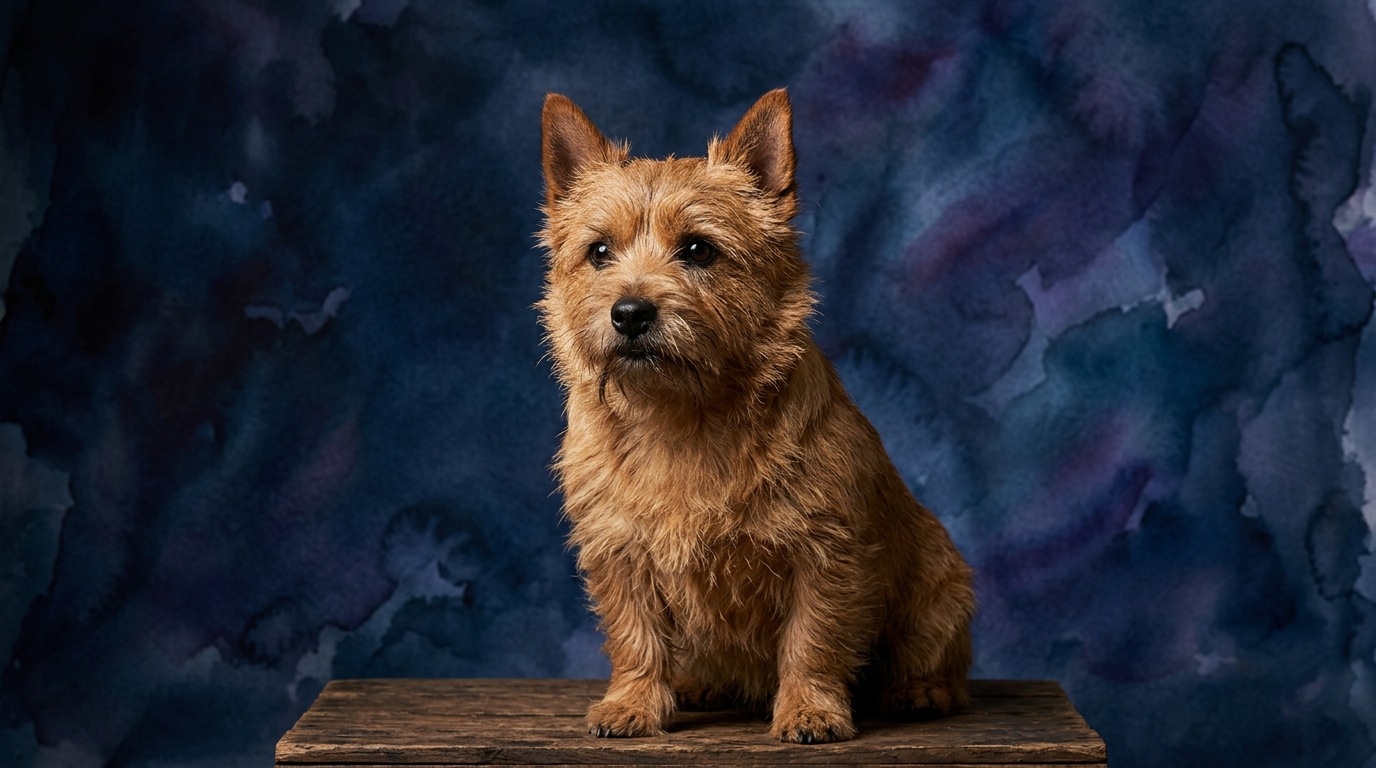

Side-by-Side Cognitive Profiles: Norwich Terrier vs. Miniature Poodle
The Cosmic Pet Pet IQ Lab employs a multi-dimensional framework to assess canine cognition, moving beyond simple 'smart or not' labels. For the Norwich Terrier, a robust member of the Terrier group, we observe a balanced set of scores across the board: Problem Solving 3/5, Training Speed 3/5, Social Intelligence 3/5, Instinctive Drive 3/5, and Memory 3/5. This suggests a dog with consistent, practical abilities, rather than extreme peaks in any single area. It's also worth noting that the Norwich Terrier is not ranked on the Coren intelligence scale, which primarily assesses obedience and working intelligence.
In contrast, the Miniature Poodle, part of the Non-Sporting group, presents a profile marked by distinct strengths. It earns top marks in Problem Solving (5/5), Training Speed (5/5), and Memory (5/5), while its Social Intelligence and Instinctive Drive are rated at 3/5, mirroring the Norwich. Crucially, the Miniature Poodle holds a distinguished position as Coren rank #2, indicating an exceptional capacity for understanding and executing commands, second only to the Border Collie in that specific metric.
Breaking down these dimensions further, Problem Solving evaluates a dog's ability to navigate novel situations or overcome obstacles to achieve a goal. Training Speed measures how quickly a dog grasps and retains new commands and behaviors. Social Intelligence reflects their capacity to read and respond appropriately to human and canine cues. Instinctive Drive quantifies their innate urges for tasks like hunting, herding, or guarding, and Memory gauges their retention of learned information and experiences.
Where the Norwich Terrier Excels Cognitively
While the Miniature Poodle boasts higher scores in several areas, the Norwich Terrier's cognitive strengths lie in its balanced, resilient, and independent approach to challenges. Its 3/5 in Problem Solving indicates a dog that can figure things out, perhaps not with the Poodle's rapid strategizing, but with a persistent, hands-on methodology characteristic of terriers. This often translates to practical ingenuity in navigating its environment, like finding a way around a garden fence or locating a hidden toy through sheer determination.
The Norwich's 3/5 in Instinctive Drive, while not as pronounced as some working breeds, still contributes to a cognitive profile that values action and purpose. This drive, combined with its moderate problem-solving, means a Norwich might independently investigate an unusual sound or scent, relying on its own senses and decision-making rather than constantly seeking human direction. This self-reliance can be a distinct advantage in situations where quick, independent action is needed, even if it's just to alert its owner to an approaching visitor. Their memory, rated at 3/5, is sufficient for retaining important routines and commands, ensuring they are reliable companions within established boundaries.
Where the Miniature Poodle Shows Cognitive Superiority
The Miniature Poodle's cognitive strengths are evident in its exceptional capacity for rapid learning and complex thought. With a 5/5 in Problem Solving, these dogs demonstrate a remarkable ability to analyze situations, devise effective strategies, and adapt quickly. This isn't just about simple tasks; it extends to understanding multi-step commands, navigating intricate puzzle toys with ease, and even anticipating human intentions based on subtle cues. Their problem-solving often involves mental manipulation of concepts rather than just trial and error.
Their 5/5 Training Speed is a testament to their ability to absorb new information with astonishing alacrity. Miniature Poodles often pick up commands after just a few repetitions, making them highly receptive to advanced obedience, agility, and even trick training. This rapid acquisition of knowledge is complemented by a 5/5 Memory score, meaning once they learn something, they retain it for extended periods. This combination makes them incredibly consistent performers once a behavior is established, allowing for a vast repertoire of learned skills. This superior cognitive agility is a primary reason for their high Coren rank, reflecting their exceptional ability to learn from human instruction.
While their Social Intelligence and Instinctive Drive match the Norwich at 3/5, it's the Poodle's capacity for abstract thought and quick information processing that truly sets them apart in the cognitive realm. They are often observed making connections between seemingly unrelated events or demonstrating an understanding of cause and effect in ways that suggest a higher level of cognitive processing.
Which is Easier to Train and Why?
When it comes to ease of training, the Miniature Poodle holds a clear advantage, primarily due to its 5/5 Training Speed and 5/5 Problem Solving scores. These dogs exhibit a keen desire to please and a rapid grasp of new concepts, making them highly responsive to instruction. They quickly learn what is expected of them and are often eager to perform, making the training process a rewarding and efficient experience for both dog and owner. Their capacity for intricate problem-solving means they can master complex sequences of commands, excelling in disciplines like competitive obedience, rally, and agility.
The Norwich Terrier, with its 3/5 Training Speed and 3/5 Problem Solving, presents a different training dynamic. While certainly capable of learning, they tend to be more independent and may require more patience and consistency. Their terrier heritage imbues them with a degree of self-sufficiency and a strong will, meaning they might question commands or choose to pursue their own interests if not adequately motivated. Training a Norwich often benefits from making sessions engaging and fun, utilizing positive reinforcement to channel their spirited nature into desired behaviors. They might not learn as quickly as a Poodle, but they are certainly trainable companions for owners who appreciate their unique personality.
Suitability for Active vs. Relaxed Owners
The choice between a Norwich Terrier and a Miniature Poodle also hinges on an owner's lifestyle and their capacity for providing mental and physical stimulation. For owners seeking a dog with an active mind that thrives on complex challenges and structured activities, the Miniature Poodle is an exceptional fit. Their high Problem Solving and Training Speed scores mean they require consistent mental engagement to prevent boredom. Owners who enjoy teaching new tricks, participating in dog sports like agility or obedience, or providing puzzle toys will find the Poodle a willing and enthusiastic partner. Their moderate Instinctive Drive (3/5) means they are generally adaptable, but their cognitive capacity demands regular intellectual exercise to truly flourish.
The Norwich Terrier, with its balanced 3/5 scores across all dimensions, including Instinctive Drive, suits owners who appreciate a dog with a spirited yet practical outlook. While they are certainly energetic and enjoy walks and playtime, their mental stimulation needs tend to be more grounded and less focused on abstract problem-solving. They thrive on engaging with their environment, exploring scents, and having a 'job' to do, even if it's just patrolling the backyard. Relaxed owners who enjoy consistent routines, moderate daily exercise, and a companion with a strong, independent personality will find the Norwich a delightful addition to their home. They are less likely to become destructive purely out of intellectual boredom, but still benefit from consistent interaction and opportunities to engage their senses.
Ultimately, both breeds require attention and care, but the nature of that engagement differs. The Poodle seeks intellectual partnership, while the Norwich appreciates a life of purposeful activity and companionship.
The Verdict: When to Choose Each Breed
The Verdict
Choose the Norwich Terrier if you appreciate a spirited, independent companion with a practical approach to life, valuing a dog that is consistently capable across various cognitive dimensions without needing constant, complex mental challenges.
Opt for the Miniature Poodle if you seek a highly trainable, cognitively agile partner eager to learn complex commands and engage in advanced activities, thriving on intellectual stimulation and excelling in structured training environments.
🧠 Find Your Pet's IQ Score
Our Pet IQ Lab assessment covers 25+ tests across 5 cognitive dimensions — personalized to your breed.
Take the Full IQ Test →Frequently Asked Questions
Do Norwich Terriers need a lot of mental stimulation?
Norwich Terriers benefit from consistent engagement and opportunities to explore, but their mental stimulation needs are generally practical. They enjoy scent work, moderate puzzle toys, and consistent routines, rather than highly abstract or complex cognitive tasks.
Are Miniature Poodles good for first-time dog owners?
Miniature Poodles can be excellent for first-time owners due to their high trainability and eagerness to learn. However, their significant need for mental engagement means new owners must be prepared to dedicate time to training and cognitive activities to prevent boredom.
How do their social intelligence scores compare?
Both the Norwich Terrier and the Miniature Poodle score 3/5 in Social Intelligence, indicating they are generally adept at reading and responding to human and canine cues. This suggests both breeds can integrate well into family life and interact appropriately with others, given proper socialization.