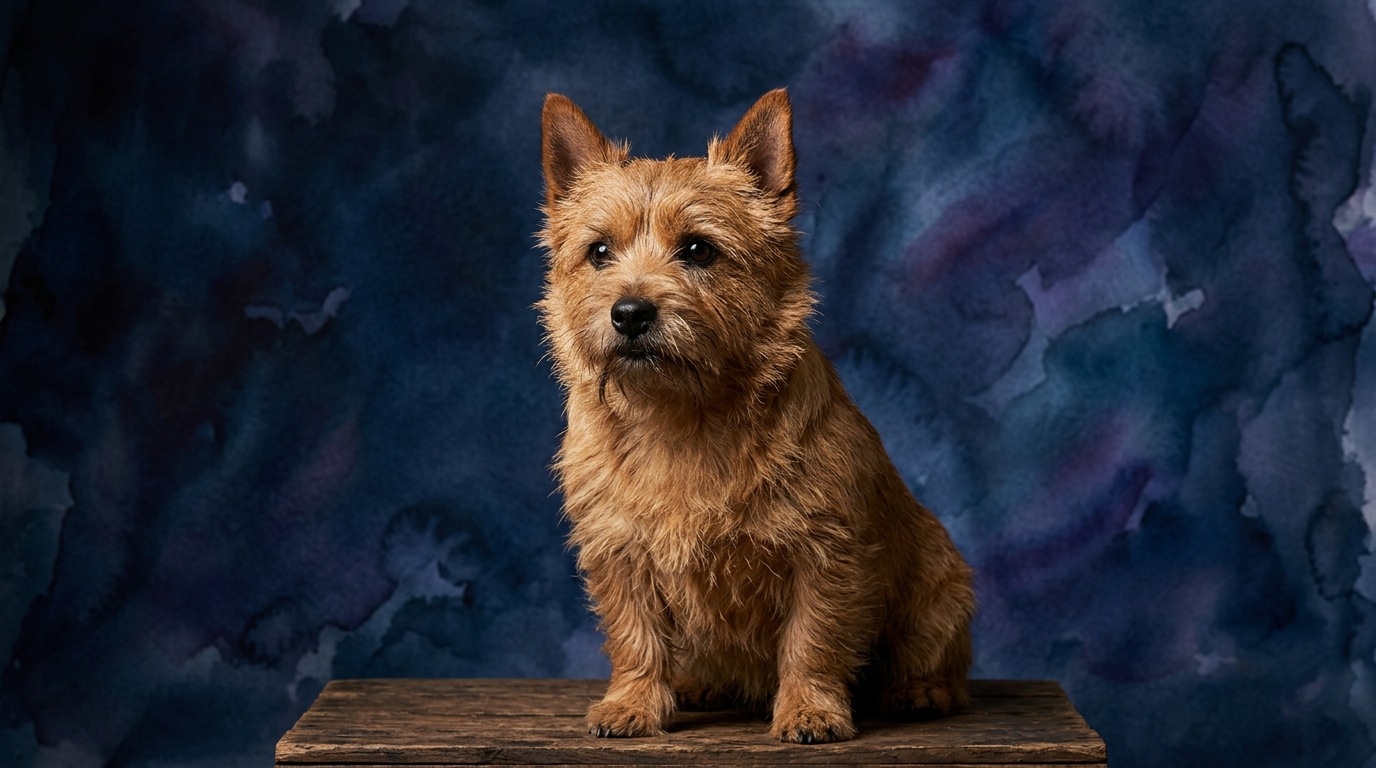
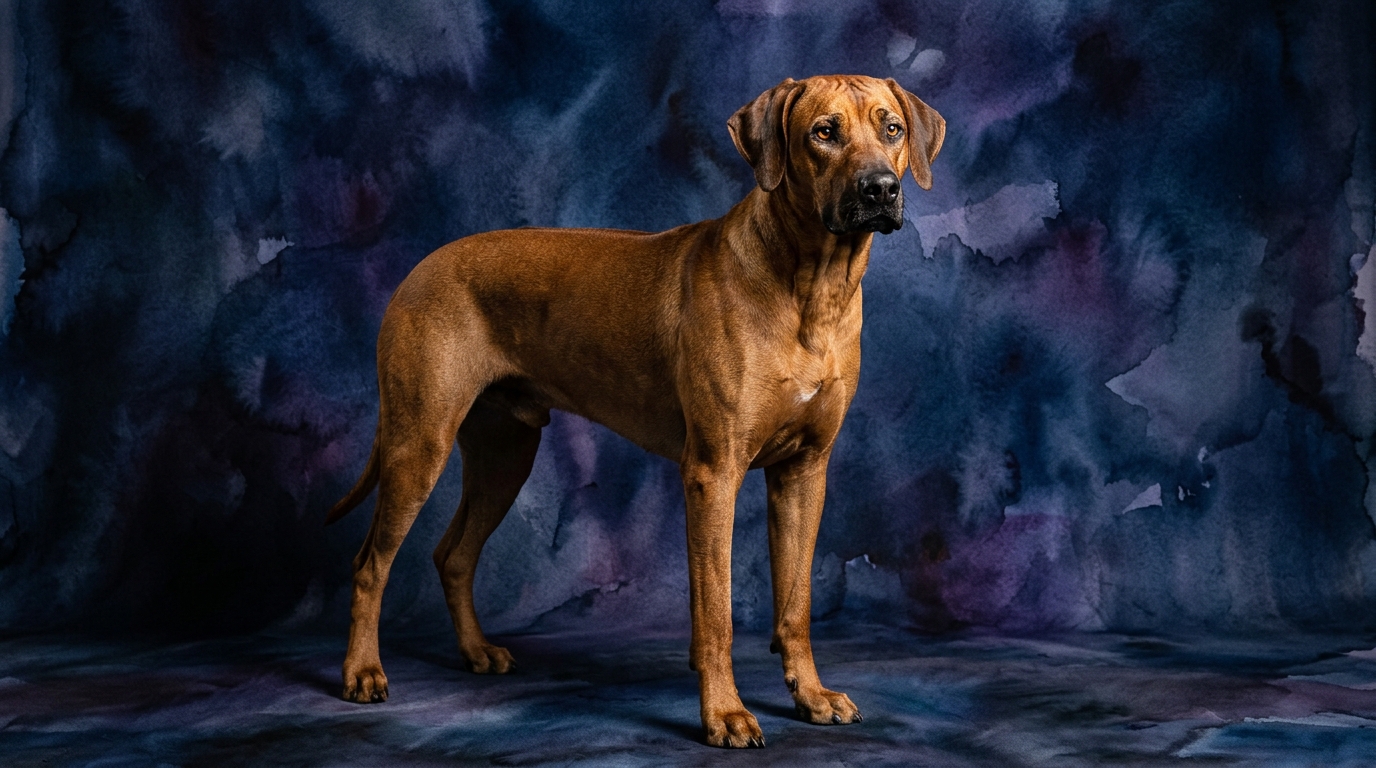
Side-by-Side Cognitive Profile
The Norwich Terrier, a lively member of the Terrier group, exhibits a Problem Solving score of 3/5. This rating reflects its innate resourcefulness in navigating complex environments, often involving finding pathways or extracting small prey from tight spaces. Its Training Speed, also 3/5, indicates a capacity for learning commands, yet often with an independent streak characteristic of terriers that can sometimes make them appear less eager to please. Social Intelligence, rated at 3/5, describes a dog that forms strong bonds within its family unit and can be discerning with strangers, offering an alert but not overly effusive welcome. An Instinctive Drive of 3/5 highlights its natural inclination for digging, chasing, and investigating, rooted in its vermin-hunting heritage. Finally, a Memory score of 3/5 suggests the Norwich retains learned behaviors and routines effectively, recalling commands and familiar faces with consistency.
The Rhodesian Ridgeback, a dignified Hound with a Coren rank of #52, also registers 3/5 across all five IQ dimensions. Its Problem Solving at 3/5 speaks to a strategic mind, capable of assessing situations and making independent decisions, particularly evident in its historical role requiring discernment and courage. A Training Speed of 3/5 means the Ridgeback can grasp concepts and commands, though its deep-seated independence and sometimes sensitive nature necessitate patient, respectful, and engaging training methods. Social Intelligence, at 3/5, reflects its profound loyalty to its family, often coupled with a reserved, watchful demeanor towards outsiders, embodying its protective instincts. Its Instinctive Drive, also 3/5, is powerfully expressed through a strong prey drive and a keen sense of smell, channeling its ancestral purpose as a hunter and guardian. A Memory score of 3/5 ensures the Ridgeback recalls training, routines, and experiences, contributing to its consistent temperament and reliability once concepts are solidified.
Where the Norwich Terrier Excels Cognitively
Despite both breeds scoring 3/5 in Problem Solving, the Norwich Terrier often demonstrates a distinct advantage in scenarios demanding agility and quick-witted navigation within confined or intricate spaces. Its compact stature allows it to access areas a larger dog cannot, presenting unique problem-solving opportunities related to retrieving objects from under furniture or squeezing through narrow gaps. This isn't just physical; it's a cognitive application of spatial reasoning and tenacity. Furthermore, its terrier instinct, while rated 3/5, translates into a hyper-focused drive for small-scale tasks. A Norwich excels at “puzzle solving” involving manipulating objects with its paws and nose to get a reward, often showing a persistent, almost obsessive dedication to the task until solved. This specialized problem-solving, coupled with a surprising resilience, allows the Norwich to excel in contexts requiring a blend of physical nimbleness and mental determination to overcome obstacles tailored to its size.
Where the Rhodesian Ridgeback Excels Cognitively
The Rhodesian Ridgeback, with its 3/5 Problem Solving score, shines in a different cognitive arena, specifically when tasks demand strategic observation, patience, and a broader scope of environmental assessment. Stemming from its history as a hunter of large game, the Ridgeback is adept at processing complex outdoor environments, discerning subtle changes in scent or movement over vast distances. This isn't about speed or confined space; it's about sustained focus and strategic planning. Their 3/5 Instinctive Drive manifests as a powerful, enduring focus on a goal, whether tracking a scent or guarding their territory, requiring a sophisticated understanding of cause and effect over time. In social intelligence (3/5), the Ridgeback often exhibits a nuanced ability to read human intentions and social dynamics within their established pack, demonstrating a discerning nature that allows them to act as watchful, protective companions. This capacity for patient, strategic engagement with their surroundings and social group often gives the Ridgeback a cognitive edge in tasks requiring sustained mental effort and environmental awareness.
Training Dynamics: Nuances of Their 3/5 Training Speed
Both the Norwich Terrier and the Rhodesian Ridgeback share a Training Speed score of 3/5, suggesting neither is a complete novice nor an effortless prodigy in learning commands. However, the approach to training and the types of behavioral challenges differ significantly. The Norwich Terrier's independent terrier spirit means it can be easily distracted by environmental stimuli, particularly small moving objects that ignite its 3/5 instinctive drive. Training requires consistent, positive reinforcement, often incorporating play to maintain its interest. They respond well to short, engaging sessions that prevent boredom, but their inherent stubbornness can make them resistant if they don't see the immediate value or if the training isn't fun.
The Rhodesian Ridgeback, while also independent and possessing a 3/5 training speed, brings a different dynamic. Their discernment and often sensitive nature mean they thrive under a calm, confident, and fair leader. Harsh methods can cause them to shut down or become resistant. Their 3/5 instinctive drive, focused on tracking and guarding, can make recall challenging if a compelling scent is present. Ridgebacks are less prone to frantic energy and more to a thoughtful, sometimes stubborn, refusal if they perceive a command as unnecessary or if they haven't bought into the process. Therefore, neither is inherently “easier,” but the Norwich requires more consistent engagement against distraction, while the Ridgeback demands a more nuanced, respectful, and relationship-focused training methodology to overcome its thoughtful independence.
Matching Breeds to Owner Lifestyles
The distinction between these two breeds regarding owner activity levels is quite pronounced. The Norwich Terrier, despite its smaller size, is not a sedentary companion. Its 3/5 instinctive drive and general terrier vivacity mean it requires regular mental and physical engagement. For active owners, a Norwich can be a fantastic partner for brisk walks, short hikes, and engaging in dog sports like agility or earthdog trials. However, its needs can often be met with vigorous play sessions in a secure yard, puzzle toys, and consistent mental stimulation indoors, making it potentially suitable for active owners who live in smaller spaces or have busy schedules but prioritize dedicated engagement.
Conversely, the Rhodesian Ridgeback is unequivocally suited for highly active owners. Its large size, powerful build, and 3/5 instinctive drive for endurance and pursuit demand substantial physical exercise daily. A Ridgeback thrives on long runs, extensive hikes, or participation in demanding dog sports such as lure coursing, tracking, or competitive obedience. A “relaxed” owner who cannot commit to significant outdoor activity and mental challenges will find a Ridgeback prone to boredom, destructive behaviors, and potential health issues from lack of exercise. Therefore, while both require engagement, the Ridgeback's needs are far more extensive and non-negotiable for its overall well-being.
The Verdict
Choose the Norwich Terrier if you seek a tenacious, adaptable companion whose cognitive strengths lie in resourceful problem-solving within smaller environments and who thrives on dedicated, engaging interaction in a compact package.
Choose the Rhodesian Ridgeback if you are an experienced, highly active individual seeking a discerning, loyal partner with impressive endurance and strategic cognitive abilities, capable of sustained focus in demanding outdoor pursuits.
🧠 Find Your Pet's IQ Score
Our Pet IQ Lab assessment covers 25+ tests across 5 cognitive dimensions — personalized to your breed.
Take the Full IQ Test →Frequently Asked Questions
Do their identical IQ scores imply the Norwich Terrier and Rhodesian Ridgeback learn at the exact same pace?
Not necessarily. While both score 3/5 in Training Speed, the context of their learning differs. The Norwich's small size and terrier curiosity mean it might pick up certain tasks quickly if they involve manipulation or exploration, while the Ridgeback's thoughtful nature might require more time to process and commit to a command, but once learned, it’s often deeply ingrained.
How does their breed group (Terrier vs. Hound) specifically influence their shared 3/5 instinctive drive?
Their breed groups dictate the manifestation of that 3/5 instinctive drive. For the Norwich Terrier, it's typically expressed as a strong prey drive for small vermin, digging, and enthusiastic exploration of confined spaces. For the Rhodesian Ridgeback, it translates into a powerful tracking instinct, a keen sense of observation for large game, and a protective vigilance over its territory and family, requiring different outlets.
Is the Rhodesian Ridgeback's Coren rank of #52 relevant when comparing intelligence with a breed not on the list, like the Norwich Terrier?
While the Coren ranking primarily assesses 'working and obedience intelligence,' it offers a general benchmark for trainable obedience. For the Norwich, being unranked doesn't mean a lack of intelligence, but rather that its specific cognitive strengths might not align with Coren's primary metrics, making direct comparison based solely on that rank less informative than comparing their detailed Pet IQ Lab scores.