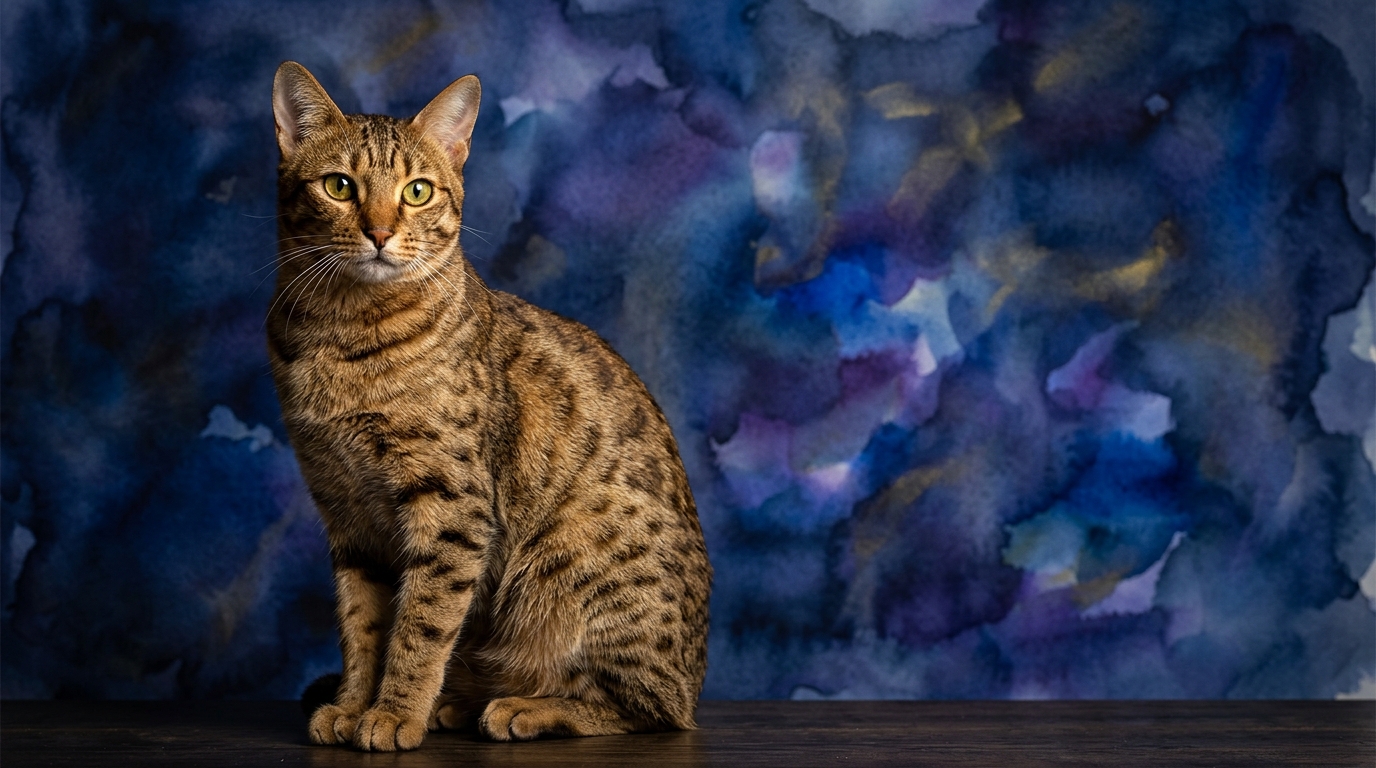
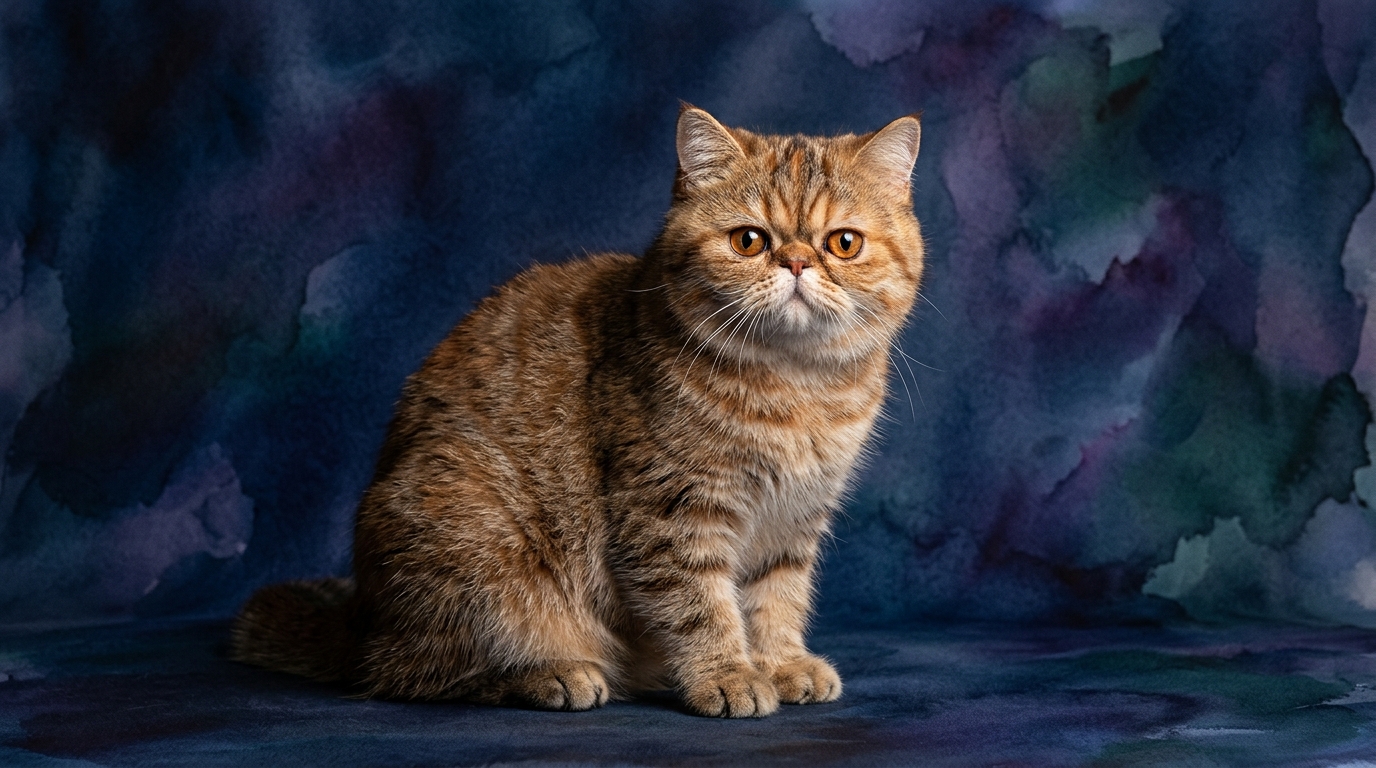
Side-by-Side IQ Profile: Ocicat vs. Exotic Shorthair
The Cosmic Pet Pet IQ Lab employs a five-dimensional framework to assess feline cognitive abilities, offering a nuanced understanding of each breed’s mental strengths. For the Ocicat, its profile paints a picture of an actively engaged and adaptable mind.
The Ocicat demonstrates exceptional **Problem Solving (4/5)**, frequently engaging with puzzle toys, figuring out how to open cabinets, or strategizing to reach an out-of-bounds treat, exhibiting a persistent and curious approach to environmental challenges. Its **Training Speed (5/5)** is remarkable; this breed absorbs new information with striking quickness, often grasping commands like 'sit' or 'stay' in very few repetitions, and can be taught complex tricks, agility courses, or even leash walking with relative ease, eager to participate in interactive learning. In **Social Intelligence (4/5)**, Ocicats form strong, discernible bonds with their human companions, often reading cues and responding to moods, actively seeking interaction and participating in family activities. Their **Instinctive Drive (4/5)** is robust, translating into keen hunting instincts whether for toys or actual prey, and a general exploratory nature. Finally, their **Memory (4/5)** is quite strong, recalling people, routines, and specific locations or object placements over extended periods, contributing to their trainability and ability to anticipate daily events.
In contrast, the Exotic Shorthair’s cognitive profile suggests a more placid and observant nature, finding contentment in a different kind of engagement.
The Exotic Shorthair approaches **Problem Solving (3/5)** with a more contemplative, less intensely driven curiosity. While capable of figuring out simple puzzles or navigating familiar environments, they are less inclined to persistently deconstruct complex challenges, often preferring to observe rather than actively manipulate. Their **Training Speed (3/5)** means learning typically requires more consistent repetition and patience; they can learn basic commands and litter box etiquette, but the process is generally slower, and they may not exhibit the same enthusiasm for complex trick training. Regarding **Social Intelligence (3/5)**, Exotic Shorthairs are affectionate and enjoy companionship, but their interactions tend to be less demanding and more understated, often content to be nearby, observing rather than initiating constant, active engagement. Their **Instinctive Drive (3/5)** is present but generally more subdued, manifesting as gentle batting at toys rather than vigorous pursuit, making them content with a calmer indoor existence. Their **Memory (3/5)** is reliable for remembering people and routines, providing a sense of comfort and predictability, sufficient for navigating daily life and recognizing familiar patterns.
Where the Ocicat Wins Cognitively
The Ocicat's cognitive strengths lie in its dynamic engagement with the world. Its superior problem-solving acumen (4/5) means it can independently navigate complex environments, opening doors or figuring out how to access desired objects, a specific advantage for owners who appreciate a cat that can entertain itself with puzzles. This translates into a feline companion that actively seeks mental challenges rather than passively accepting its surroundings.
Furthermore, the Ocicat's top-tier training speed (5/5) means it grasps new concepts and commands with remarkable efficiency. This cognitive trait allows for a broader range of interactive training, from leash walking to complex trick sequences, making it an ideal partner for owners who enjoy teaching and engaging in structured activities. Its strong memory (4/5) reinforces this, ensuring lessons learned are retained over time, leading to a consistently responsive companion.
The Ocicat's robust social intelligence (4/5) also provides a distinct cognitive win for those seeking a highly interactive pet. This breed is adept at understanding human social cues and actively participating in household dynamics, often initiating play or seeking attention in clear, communicative ways. This makes for a cat that feels like a true, responsive member of the family, deeply integrated into daily life.
Where the Exotic Shorthair Wins Cognitively
While the Ocicat's cognitive profile emphasizes active engagement, the Exotic Shorthair’s distinct mental makeup offers a different kind of advantage, particularly for owners seeking a more serene companion. Their moderate problem-solving drive (3/5) means they are less likely to obsessively investigate every potential hidden treat or access forbidden spaces, contributing to a calmer, less disruptive household environment. This cognitive trait translates to a reduced need for constant mental redirection from mischievous endeavors.
Furthermore, their more subdued instinctive drive (3/5) means the Exotic Shorthair is less prone to intense predatory play that might overwhelm some households or require extensive management. They find contentment in simpler interactions and observation, making them an ideal choice for quiet homes where a high-energy mental demand would be mismatched. This cognitive preference for less intense stimulation is a specific advantage for a peaceful home.
Their moderate social intelligence (3/5) allows them to form deep, affectionate bonds without the persistent need for interactive play or constant human attention that some more socially driven breeds exhibit. This cognitive independence means they are perfectly content to share space and offer gentle companionship, understanding their role within the family without demanding the spotlight, a specific cognitive “win” for those who cherish a placid presence.
Which is Easier to Train and Why?
Based on their cognitive profiles, the Ocicat is demonstrably easier to train than the Exotic Shorthair. The Ocicat's exceptional Training Speed (5/5) means it quickly forms associations between commands and actions, absorbing new lessons with very few repetitions. This allows for a wide range of training, from basic manners to complex tricks, often resulting in a highly responsive and eager student.
Beyond just speed, the Ocicat's superior Problem Solving (4/5) and strong Memory (4/5) contribute significantly to its trainability. An Ocicat can more readily understand the intent behind a command and remember it consistently, making activities like leash training or recall much smoother. For example, an Ocicat might quickly learn to fetch or navigate an agility course, driven by its curiosity and desire for interaction.
In contrast, the Exotic Shorthair's moderate Training Speed (3/5) and Memory (3/5) mean that training requires more patience and consistent reinforcement. While they are capable of learning, the process will typically be slower, and they may not retain complex sequences as readily. Owners should focus on basic commands, litter box habits, and appropriate scratching behavior, understanding that success will come through gentle, repetitive sessions rather than rapid acquisition of elaborate skills.
Which Suits Active Owners vs. Relaxed Owners?
The Ocicat's vibrant cognitive profile makes it an excellent match for active owners who thrive on interaction and mental stimulation. Their high problem-solving drive and eager training speed mean they require consistent engagement through puzzle toys, training sessions, and interactive play that mimics hunting. An Ocicat will thrive in a home where its human companions are keen to participate in daily games, teach new tricks, or even take them for walks on a leash, channeling their robust instinctive drive into constructive outlets.
Owners who enjoy a cat that is a proactive participant in household activities, one that seeks out engagement and can keep itself entertained with mentally stimulating tasks, will find the Ocicat a rewarding companion. This breed is not content to simply observe; it wants to be involved, making it ideal for dynamic households or individuals with ample time for focused feline interaction.
Conversely, the Exotic Shorthair is perfectly suited for relaxed owners who appreciate a calm, affectionate, and less demanding feline presence. Their moderate cognitive drives across the board mean they are content with a more placid existence, enjoying quiet companionship and gentle interactions rather than constant mental challenges or high-energy play sessions. They will happily share a couch, observe the household goings-on, and offer quiet affection.
For individuals or families seeking a cat that provides comfort without demanding relentless attention or mental gymnastics, the Exotic Shorthair's temperament is a perfect fit. They don't require elaborate training regimens or an endless supply of complex puzzle toys, finding contentment in a stable routine and the warmth of human presence. This allows relaxed owners to enjoy their pet's company without feeling the pressure to constantly entertain or stimulate a highly active mind.
The Verdict
Choose the Ocicat if you are an active owner seeking a highly interactive, trainable, and mentally agile feline companion eager to engage in games and learn new skills. Its dynamic cognitive profile thrives on consistent stimulation and participation in family life.
Opt for the Exotic Shorthair if you are a relaxed owner desiring a calm, affectionate cat that offers gentle companionship without demanding constant mental or physical exertion. Its placid cognitive nature makes it an ideal, low-maintenance presence in a serene home.
🧠 Find Your Pet's IQ Score
Our Pet IQ Lab assessment covers 25+ tests across 5 cognitive dimensions — personalized to your breed.
Take the Full IQ Test →Frequently Asked Questions
Can an Exotic Shorthair be trained to do tricks?
While an Exotic Shorthair's training speed is moderate (3/5), they can certainly learn basic commands and simple tricks with patience and consistent positive reinforcement. Complex or elaborate trick sequences may require more dedication compared to breeds with higher training scores, but their memory (3/5) is sufficient for retaining learned behaviors.
Do Ocicats get along well with children and other pets?
Ocicats, with their strong social intelligence (4/5) and adaptable nature, typically get along well with children and other pets, especially if introduced properly. Their playful and engaging temperament often makes them good family companions, thriving on interaction and becoming integrated into the household's social structure.
Which breed is more prone to destructive behavior due to boredom?
The Ocicat, with its higher problem-solving (4/5) and instinctive drive (4/5), is more likely to engage in destructive behaviors if bored or not adequately stimulated. Their active minds and curiosity can lead them to explore forbidden areas or create their own 'fun.' The Exotic Shorthair, with its more subdued drives, is generally less prone to such issues.