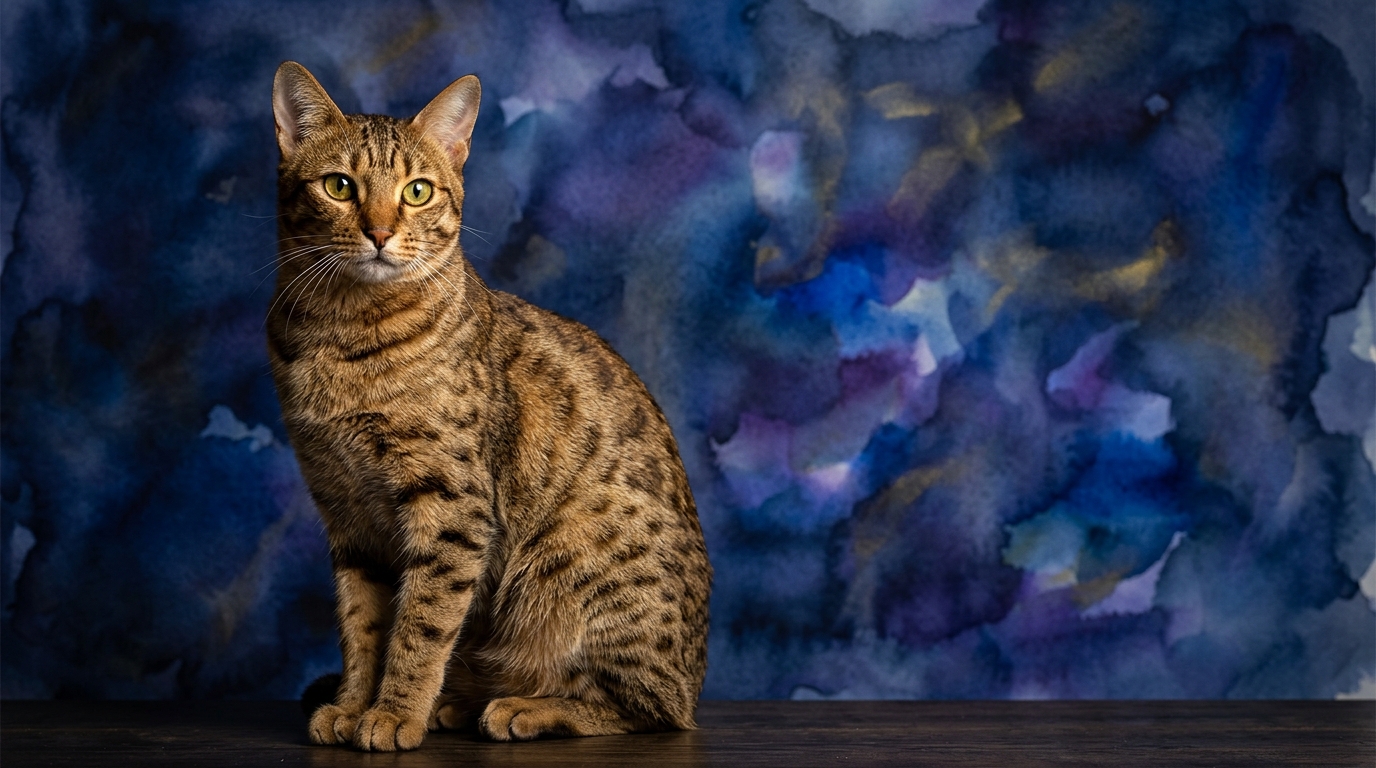
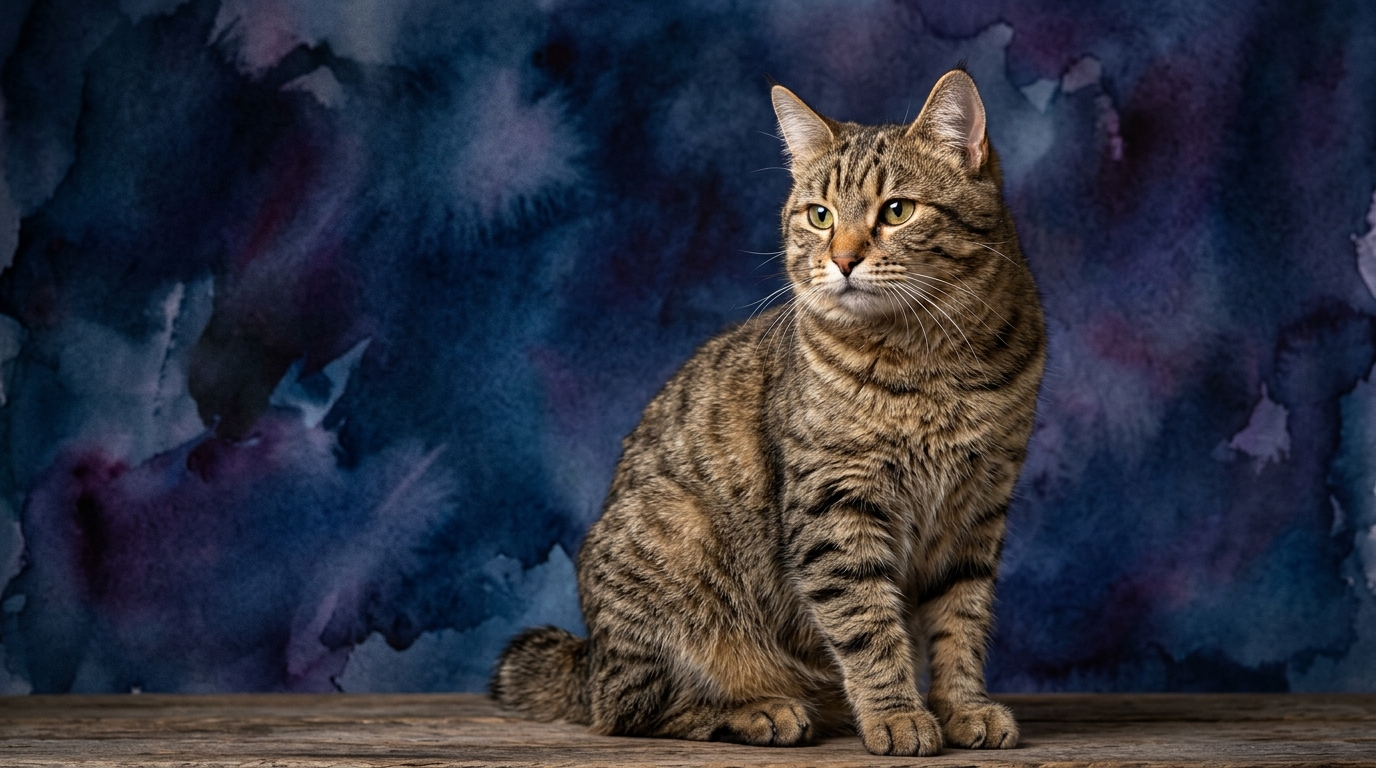
Side-by-Side Cognitive Profile
To understand the unique mental makeup of Ocicats and Pixiebobs, let's examine their scores across five key cognitive dimensions from The Cosmic Pet Pet IQ Lab.
**Ocicat:** Problem Solving (4/5): The Ocicat demonstrates a strong capacity for navigating complex situations, often devising creative solutions to reach desired outcomes like opening latches or figuring out puzzle toys. Training Speed (5/5): This breed absorbs new commands and routines with remarkable quickness, making them highly receptive to structured learning and trick training. Social Intelligence (4/5): Ocicats are adept at understanding human cues and intentions, often forming deep bonds and actively participating in household dynamics. Instinctive Drive (4/5): Their internal drive to hunt, explore, and engage with their surroundings is pronounced, requiring outlets for their energetic and curious nature. Memory (4/5): Ocicats retain information well, remembering routines, people, and learned behaviors over extended periods, contributing to their adaptability.
**Pixiebob:** Problem Solving (3/5): Pixiebobs exhibit a moderate ability to tackle new challenges, often preferring straightforward solutions or relying on learned patterns rather than complex strategizing. Training Speed (3/5): They learn at a steady pace, capable of mastering commands with consistent reinforcement, though they may require more repetition than some other breeds. Social Intelligence (3/5): Pixiebobs possess a solid understanding of social interactions, forming affectionate bonds, but might be less overtly expressive or demanding in their social engagement. Instinctive Drive (3/5): Their inherent drive for exploration and play is present but typically less intense, making them content with a balanced level of activity without constant stimulation. Memory (3/5): Pixiebobs show a good capacity for remembering key routines and familiar faces, though perhaps with a slightly shorter recall or less detailed retention compared to more cognitively intense breeds.
Where the Ocicat Wins Cognitively
The Ocicat's cognitive strengths paint a picture of a mentally agile, engaging companion. Their 4/5 Problem Solving means they actively assess situations and formulate plans, whether figuring out how to retrieve a toy from a tricky spot or manipulating objects for attention. This cognitive depth makes interactions dynamic and often surprising. Coupled with a perfect 5/5 Training Speed, Ocicats are highly adaptable learners, soaking up new commands and complex tricks with minimal repetition. Owners often find they can teach an Ocicat to walk on a leash, play fetch, or respond to verbal cues beyond basic commands. Their 4/5 Social Intelligence allows them to deeply tune into human emotions and intentions, fostering a responsive, communicative bond. They don't just coexist; they actively participate in the social fabric of the home, often initiating interactions or responding acutely to their owner's mood. Finally, a strong 4/5 Instinctive Drive fuels their curiosity and desire to engage with their environment, making them natural explorers who thrive on mental and physical challenges. This blend ensures an Ocicat is always thinking, learning, and interacting on a sophisticated level.
Where the Pixiebob Wins Cognitively
While the Pixiebob's individual cognitive scores are numerically lower, their profile presents distinct advantages for owners seeking a different kind of feline companionship. A 3/5 in Problem Solving often translates to a less mischievous and demanding nature; a Pixiebob is less likely to systematically dismantle household puzzles or persistently open forbidden cabinets, offering a more predictable domestic life. Their 3/5 Training Speed, while not lightning-fast, ensures they learn at a comfortable, steady pace, making them receptive to consistent training without quickly picking up undesirable habits. This measured learning curve benefits owners who prefer a gradual, patient approach. The 3/5 Social Intelligence suggests a companion that is affectionate and connected but perhaps less intensely demanding of constant interaction, providing a comforting presence without overwhelming personal space. This is ideal for individuals who appreciate a loyal bond but also value independence. Furthermore, a 3/5 Instinctive Drive indicates a cat that enjoys play and exploration but is generally content with moderate stimulation, making them excellent companions where extreme outdoor adventures aren't the focus. Their memory, also at 3/5, is perfectly adequate for remembering routines and family members, contributing to a stable, harmonious home environment without requiring constant novelty.
Which Is Easier to Train and Why
Without question, the Ocicat is generally easier to train, primarily due to its exceptional 5/5 Training Speed compared to the Pixiebob's 3/5. This significant difference means an Ocicat grasps new commands and behaviors with remarkable alacrity, often requiring fewer repetitions and responding more quickly to positive reinforcement. For instance, an Ocicat might learn to fetch a specific toy or navigate an agility course in a fraction of the time a Pixiebob takes. Their higher Problem Solving (4/5) also contributes, as they are more likely to understand the *concept* behind a task, rather than simply memorizing a sequence. A Pixiebob, while trainable, requires more patience and consistency; their pace is more deliberate. If an owner is seeking a cat that can quickly master an array of tricks or complex routines, the Ocicat's cognitive architecture is distinctly more aligned with that goal, making the training process feel more fluid and rewarding.
Which Suits Active Owners vs. Relaxed Owners
The Ocicat, with its robust 4/5 Problem Solving, 4/5 Instinctive Drive, and 4/5 Social Intelligence, is an ideal match for active owners who thrive on engaging with their pets. These cats require consistent mental stimulation through puzzle toys, interactive play sessions, and opportunities to explore safely. An owner who enjoys teaching tricks, leash training, or even cat agility will find the Ocicat a willing and enthusiastic participant. Their cognitive profile demands an environment rich in novelty and interaction. Conversely, the Pixiebob's more moderate scores across the board (3/5 for all dimensions) make it a superb fit for relaxed owners. While they certainly enjoy play and affection, their lower Instinctive Drive and Problem Solving mean they are less likely to become bored or destructive if not constantly entertained. They appreciate a calm routine and a comfortable home environment, offering affectionate companionship without the intense cognitive demands of an Ocicat. A relaxed owner who enjoys quiet evenings with a loyal, affectionate cat that doesn't constantly seek out new challenges will find the Pixiebob's temperament perfectly suited.
The Verdict
Choose the Ocicat if you desire a highly interactive, quick-learning cat that thrives on complex challenges and sophisticated social bonds.
Opt for the Pixiebob if you prefer a more predictable, steadily learning companion that offers affectionate loyalty without requiring constant, high-intensity mental stimulation.
🧠 Find Your Pet's IQ Score
Our Pet IQ Lab assessment covers 25+ tests across 5 cognitive dimensions — personalized to your breed.
Take the Full IQ Test →Frequently Asked Questions
Do Ocicats need more mental enrichment than Pixiebobs?
Yes, Ocicats, with their 4/5 Problem Solving and 4/5 Instinctive Drive, generally require more consistent mental stimulation and enrichment than Pixiebobs. They benefit from puzzle feeders, interactive toys, and learning new commands to keep their active minds engaged.
Are Pixiebobs difficult to train because of their 3/5 training speed?
Pixiebobs are not difficult to train, but they do learn at a more measured pace than Ocicats. Their 3/5 Training Speed means consistency, patience, and positive reinforcement are key, and owners should expect a more gradual learning curve.
How do their social intelligence scores impact household dynamics?
An Ocicat's 4/5 Social Intelligence means they often seek out interaction and are highly attuned to human emotions, actively participating in family life. A Pixiebob's 3/5 Social Intelligence suggests they are affectionate and loyal but may be less overtly demanding of attention, offering a more independent companionship.