
Side-by-Side Cognitive Profiles
The Old English Sheepdog, with a Coren rank of #44, exhibits a balanced cognitive profile. Their Problem Solving is rated 3/5, indicating a capacity for learning complex tasks when consistently motivated. Training Speed is also 3/5, meaning they respond well to positive reinforcement but may not be the fastest to pick up new commands, requiring patient repetition. Social Intelligence stands at 3/5, reflecting a generally amiable nature and an attunement to human emotions without being overly demonstrative. Their Instinctive Drive, rated 3/5, manifests as a moderate herding instinct, often seen in gentle attempts to gather family members. Notably, their Memory is rated 4/5, signifying strong recall for learned commands and routines, retaining information effectively over time.
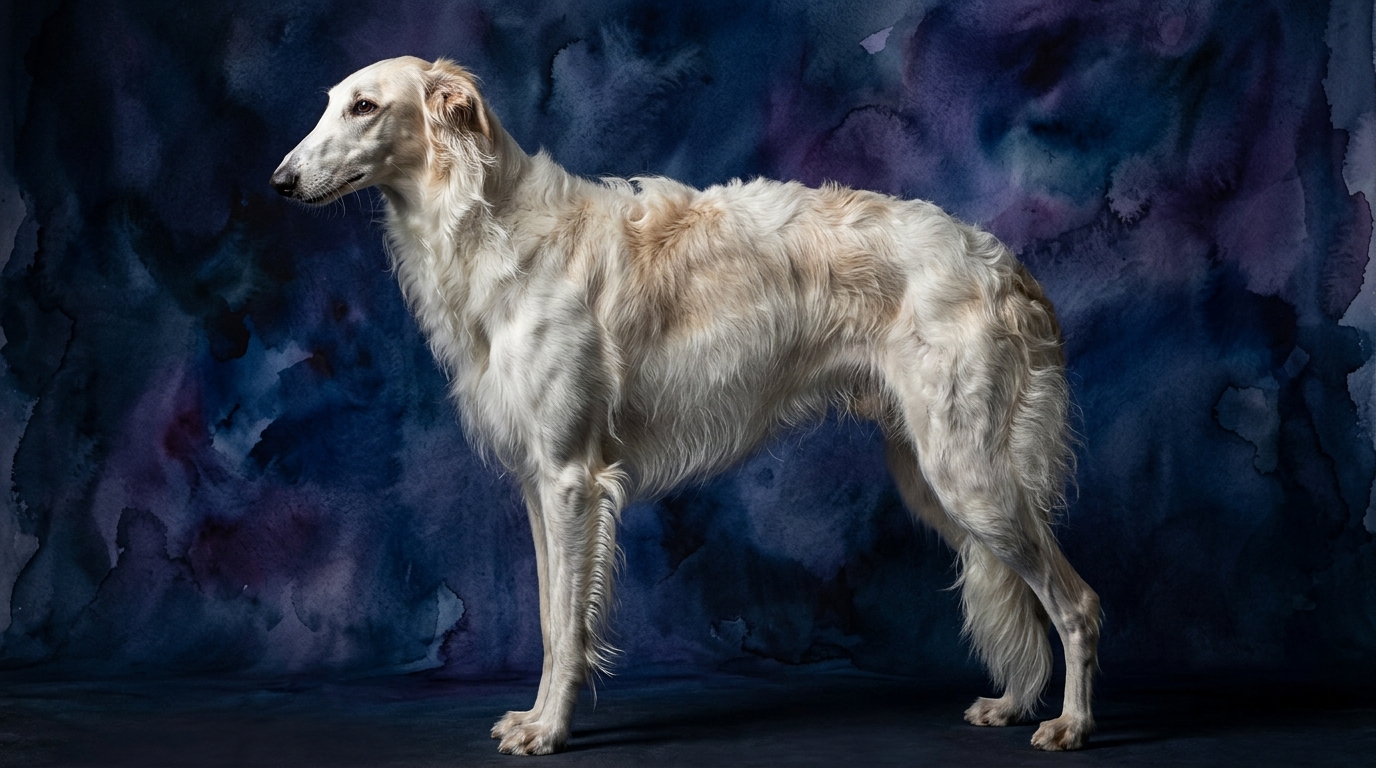
In contrast, the Borzoi, holding a Coren rank of #75, showcases a different set of cognitive strengths. Their Problem Solving is 3/5, demonstrating independent thinking, particularly in pursuit scenarios, though they may be less inclined towards human-directed puzzles. Training Speed is 3/5; they can learn quickly when motivated, but their independent nature often means compliance is conditional on their interest. Social Intelligence is 3/5, indicating affection within their trusted circle but often a reserved demeanor with strangers, less overtly expressive than many breeds. Their Instinctive Drive, also 3/5, is characterized by a powerful sighthound prey drive, dictating much of their natural behavior in spontaneous bursts of chase. Their Memory is rated 3/5, providing adequate recall for essential commands and routines, though perhaps not as robust for intricate sequences as some working breeds.
Where the Old English Sheepdog Wins Cognitively
The Old English Sheepdog distinguishes itself with a superior 4/5 rating in memory, a full point above the Borzoi. This suggests a more robust capacity for retaining learned behaviors, commands, and routines over extended periods, making them particularly adept at building upon previous lessons. For owners, this translates to a companion who maintains foundational obedience with less frequent re-training and remembers complex sequences or patterns taught earlier, making them strong candidates for cumulative learning activities.
This enhanced memory, coupled with their herding heritage, often means Old English Sheepdogs excel in structured learning environments. Their cognitive architecture appears better suited to recalling and applying sequential information consistently, allowing them to thrive in activities requiring a progression of skills, such as advanced obedience trials, rally, or multi-step agility courses. Their ability to retain and utilize past knowledge gives them a distinct advantage in these domains.
Where the Borzoi Wins Cognitively
While their Problem Solving score is 3/5, the Borzoi’s cognitive strength lies in a highly specialized form of independent decision-making crucial to their sighthound heritage. When spotting prey, a Borzoi rapidly assesses distance, speed, and terrain, formulating a precise pursuit strategy in split seconds without human intervention. This is a complex, real-time cognitive process, demanding rapid analysis and execution, distinct from the human-directed problem-solving seen in many other breeds.
Their instinctive drive, also rated 3/5, manifests as a powerful, self-directed hunting intelligence. This autonomy means a Borzoi excels at making fast, strategic judgments in dynamic, high-stakes situations, relying on keen sight and innate predatory logic rather than external cues. This unique cognitive framework allows them to operate effectively as solitary hunters, demonstrating a specialized intelligence that prioritizes independent action and swift, effective pursuit over collaborative, human-directed tasks.
Training Aptitude: Old English Sheepdog vs. Borzoi
The Old English Sheepdog, positioned at Coren rank #44, generally proves more amenable to training. Their herding lineage instilled a desire to work cooperatively with humans, making them naturally more receptive to commands and eager to understand expectations. This willingness to engage, combined with their stronger memory, contributes to a smoother and more rewarding training experience, particularly for foundational obedience and household manners. They typically thrive with consistent, positive reinforcement and clear directives.
The Borzoi, with a Coren rank of #75, presents a different training dynamic altogether. As sighthounds, they were selectively bred to hunt independently, relying on their own judgment rather than constant human direction. This manifests as a strong-willed, sometimes aloof nature, where compliance is often contingent on their own motivation or interest rather than an inherent desire to please. Training a Borzoi demands immense patience, creativity, and a deep understanding of their independent spirit; they respond best to positive reinforcement and short, engaging sessions that respect their inherent autonomy, rather than rote repetition or forceful methods.
Matching Breeds to Lifestyles: Active vs. Relaxed Owners
The Old English Sheepdog, while not a hyperactive breed, thrives with owners who can provide consistent mental and moderate physical activity. Their herding drive means they often enjoy having a 'job,' whether it's learning new tricks, participating in dog sports, or simply engaging in structured play that challenges their mind. An active owner who enjoys daily walks, regular training sessions, and opportunities for their dog to think and problem-solve will find the Old English Sheepdog a highly rewarding and engaged companion.
The Borzoi can surprisingly suit a more relaxed owner in terms of constant high-impact activity, often being calm and quiet indoors, earning them the moniker '45 mph couch potato.' However, their unique cognitive and physical needs demand specific forms of activity. They absolutely require regular opportunities for safe, off-leash running in a securely fenced area to satisfy their intense sighthound prey drive and exercise their powerful athleticism. Owners must be prepared for these essential bursts of high-speed activity, balancing their indoor serenity with critical outdoor freedom for both mental and physical well-being.
The Verdict
Choose the Old English Sheepdog if you value a companion with strong memory for training, a cooperative spirit, and a desire to engage in structured learning activities. They are well-suited for owners seeking a responsive partner in obedience or dog sports.
Opt for the Borzoi if you appreciate a dog with independent thought, a calm indoor presence, and the capacity for breathtaking bursts of speed and specialized hunting cognition. They thrive with owners who understand their sighthound nature and provide ample safe space for their innate drive.
🧠 Find Your Pet's IQ Score
Our Pet IQ Lab assessment covers 25+ tests across 5 cognitive dimensions — personalized to your breed.
Take the Full IQ Test →Frequently Asked Questions
Are Old English Sheepdogs prone to herding children?
Yes, their instinctive drive to gather and move flocks can sometimes manifest as gentle nudging or circling of family members, including children. This behavior is typically mild and can often be redirected with training and appropriate outlets for their herding instincts.
Do Borzoi require a lot of grooming despite their short-looking coat?
While their coat can appear sleek, Borzoi have a long, silken coat that requires regular grooming to prevent matting and remove loose hair. Weekly brushing is essential to maintain their coat's health and minimize shedding, particularly around their feathering.
Which breed is better for apartment living?
The Borzoi can surprisingly adapt well to apartment living due to their calm indoor demeanor, provided they receive sufficient outdoor exercise in a secure area. Old English Sheepdogs, though adaptable, generally appreciate more space and a yard to satisfy their moderate activity levels and herding tendencies.