
Side-by-Side IQ Profile: Herding Wit vs. Sighthound Instinct
The Cosmic Pet Pet IQ Lab employs a five-dimensional framework to assess canine intelligence, offering a granular view beyond general perceptions. For the Old English Sheepdog, a breed historically tasked with managing livestock, their profile reflects their working heritage. They achieve a 3/5 in Problem Solving, indicating a moderate capacity for strategic thinking, often applied to manipulating their environment or guiding animals. Their Training Speed is also 3/5, suggesting they grasp new commands at an average pace, but benefit significantly from consistent methods. Social Intelligence stands at 3/5, meaning they are generally adept at interpreting human cues and engaging cooperatively. An Instinctive Drive of 3/5 highlights their inherent desire to herd and work, a powerful motivator. Crucially, their Memory scores an impressive 4/5, enabling them to retain complex sequences and information over long periods. This breed is recognized by Stanley Coren, ranking at #44 among breeds for working and obedience intelligence.
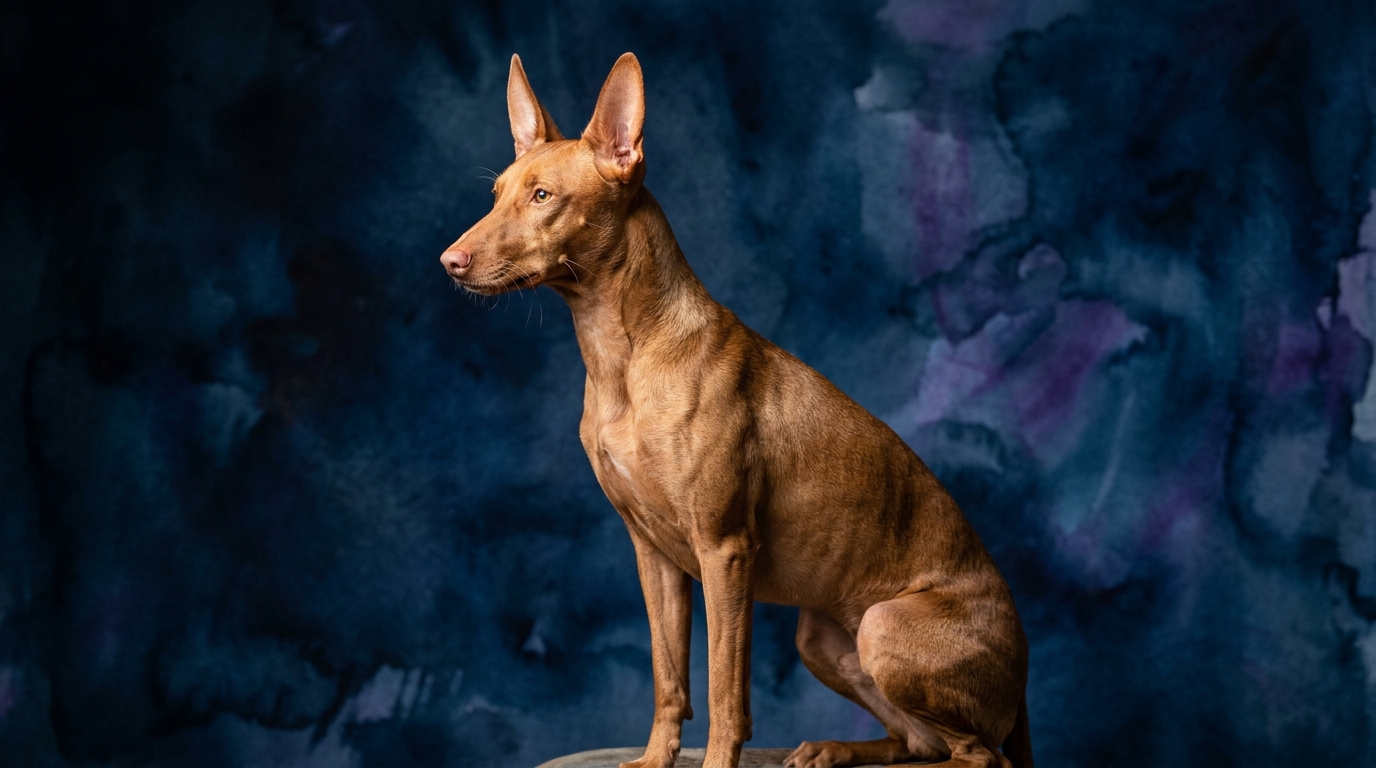
In contrast, the Pharaoh Hound, a sighthound hailing from ancient Egypt, presents an intelligence profile uniquely suited to its role as an independent hunter. Their Problem Solving capability is rated 3/5, demonstrating moderate ingenuity, particularly in navigating varied terrain or outsmarting agile prey. Training Speed for the Pharaoh Hound is also 3/5, an average pace, though their independent spirit means successful training often hinges on highly motivating rewards and understanding their unique drives. Their Social Intelligence is 3/5, indicating they form deep bonds with their chosen family but may exhibit a more reserved or selective nature with strangers. An Instinctive Drive of 3/5 underscores their powerful prey drive and natural inclination to chase and hunt by sight. Their Memory is rated 3/5, a solid capacity for recalling important information relevant to their environment and tasks. Notably, the Pharaoh Hound is not assigned a specific rank in Coren's traditional working and obedience intelligence hierarchy, a common characteristic for many sighthound breeds whose intelligence manifests differently than 'eagerness to please' or rote obedience.
Where the Old English Sheepdog Excels Cognitively
The Old English Sheepdog's most pronounced cognitive advantage lies in its superior Memory, rated at 4/5. This exceptional recall is not merely about remembering a few basic commands; it enables them to master intricate routines, recall the specific habits of individual livestock, or navigate vast, familiar territories with precision. An OES can learn and execute multi-step commands, remembering the sequence and context over extended periods, making them highly reliable in complex tasks. This capacity for detailed memory allows them to build a rich internal map of their world and the expectations within it.
Furthermore, their Instinctive Drive of 3/5, when combined with their strong memory, fosters a specialized type of applied intelligence. This drive manifests as a keen ability to anticipate and react to the movements of animals or people, not just through raw instinct, but by drawing upon past experiences and learned patterns. They demonstrate a strategic foresight in their herding work, often outmaneuvering animals by predicting their next move, a testament to their practical problem-solving informed by excellent recall. This cognitive blend makes them particularly adept at roles requiring consistent, thoughtful execution rather than spontaneous, independent action.
Where the Pharaoh Hound's Cognition Shines
The Pharaoh Hound's cognitive strengths are deeply rooted in its heritage as an independent sighthound, where self-reliance and rapid decision-making are paramount. While their Problem Solving is rated 3/5, this score is best understood in the context of their specialized hunting methods. They excel at real-time, environmental problem-solving: quickly assessing terrain, identifying the optimal path to intercept fast-moving prey, or navigating complex obstacles during a chase. Their intelligence is less about following a human's detailed instructions and more about autonomous strategizing in dynamic, high-stakes situations. This makes them quick-witted and inventive when pursuing a visual target.
Their Instinctive Drive, also 3/5, is a powerful engine for this type of problem-solving. It's a drive for the chase and the hunt, which necessitates keen observation and rapid processing of visual cues. Pharaoh Hounds demonstrate an acute awareness of their surroundings, often spotting distant movement long before a human. This specialized sensory intelligence, combined with their drive, allows them to make split-second judgments and execute precise maneuvers, showcasing a form of cognitive agility that is distinct from the cooperative, memory-driven intelligence of a herding breed. Their memory (3/5) is entirely sufficient for recalling hunting grounds, routines, and important family members, but their primary cognitive 'win' is in their immediate, reactive intelligence.
Training Dynamics: A Study in Motivation
Both the Old English Sheepdog and the Pharaoh Hound share a Training Speed rating of 3/5, suggesting an average pace for learning new commands. However, the 'why' behind this score, and the practical experience of training each breed, differs significantly due to their underlying cognitive profiles and breed purposes. For the Old English Sheepdog, their 4/5 Memory is a major asset. Once they learn a command or routine, they tend to retain it well, making training efforts cumulative and rewarding. Their herding background also imbues them with a general desire to work *with* a human, making them receptive to guidance, though they can exhibit a stubborn streak requiring consistent, patient reinforcement. Training an OES often involves clear communication, structure, and positive methods, capitalizing on their cooperative nature and excellent recall.
The Pharaoh Hound's training experience, while numerically similar in speed, is shaped by their independent hunting nature. Their 3/5 Instinctive Drive for autonomous action means they are often less motivated by a human's approval and more by their own interests or the thrill of the chase. This doesn't mean they are untrainable, but rather that training requires exceptional patience, high-value rewards, and a deep understanding of what truly motivates a sighthound. Commands might be 'selectively heard' if something more stimulating catches their eye, making consistency in distracting environments a particular challenge. Successful training for a Pharaoh Hound involves making the learning process feel like a fun game, appealing to their intelligence and self-interest rather than relying solely on traditional obedience methods. Their 3/5 memory is sufficient for retaining commands, but their independent spirit often means applying them is a matter of choice, not always obligation.
Matching Canine Cognition to Owner Lifestyles
Understanding these cognitive distinctions is crucial for prospective owners in aligning a breed with their lifestyle. The Old English Sheepdog, with its strong memory and cooperative bent, thrives with owners who can provide consistent mental engagement and structured activities. They are not suited for truly relaxed owners who prefer minimal interaction or exercise, as their herding intellect needs a 'job,' whether it's advanced obedience, agility, or even complex puzzle toys. An under-stimulated OES can become bored and channel their considerable energy into less desirable behaviors, making them a poor fit for a sedentary household. They flourish when their cognitive abilities are challenged and utilized regularly.
The Pharaoh Hound presents a different set of needs. While they might appear more 'relaxed' indoors, often choosing to lounge quietly, this is balanced by an absolute requirement for intense bursts of physical exercise in a secure environment. Their sighthound nature demands the opportunity to run at full speed, chasing perceived prey. This is non-negotiable for their physical and mental well-being. Owners must have access to a large, securely fenced yard or a safe, enclosed running space. They are not content with just leash walks, and their independent problem-solving mind is always alert for opportunities to chase. Therefore, active owners who can provide these specific exercise needs, but also appreciate a companion who isn't constantly demanding attention indoors, might find the Pharaoh Hound a suitable match. They are less about constant cooperative activity and more about fulfilling their intrinsic drives.
The Verdict
Choose the Old English Sheepdog if you seek a highly trainable companion for complex tasks, who thrives on consistent mental engagement and cooperative activities that utilize their excellent memory.
Opt for the Pharaoh Hound if you appreciate an independent, elegant companion, are committed to providing secure space for intense sprints, and can patiently motivate a sighthound's self-directed intelligence.
🧠 Find Your Pet's IQ Score
Our Pet IQ Lab assessment covers 25+ tests across 5 cognitive dimensions — personalized to your breed.
Take the Full IQ Test →Frequently Asked Questions
Do Old English Sheepdogs need mental stimulation?
Yes, their strong memory and herding background mean they thrive on mental challenges like advanced obedience, puzzle toys, or even mock herding activities. Without adequate mental engagement, they can become bored and develop undesirable behaviors, reflecting their need to use their cognitive abilities.
Are Pharaoh Hounds good with other pets?
Their strong prey drive, part of their 3/5 instinctive drive, means careful introductions and supervision are essential, especially with smaller, fast-moving pets like cats or rabbits. With proper socialization, many can coexist peacefully with dogs of similar size, but their instinct to chase remains potent.
How do their social intelligence scores of 3/5 manifest differently?
The Old English Sheepdog's social intelligence often translates to being more attuned to human cues and a desire to participate in family activities, reflecting their cooperative herding role. The Pharaoh Hound's 3/5 social intelligence typically means they form deep bonds with their family but may be more reserved or discerning with strangers, prioritizing their own comfort and boundaries rather than universal eagerness to please.