
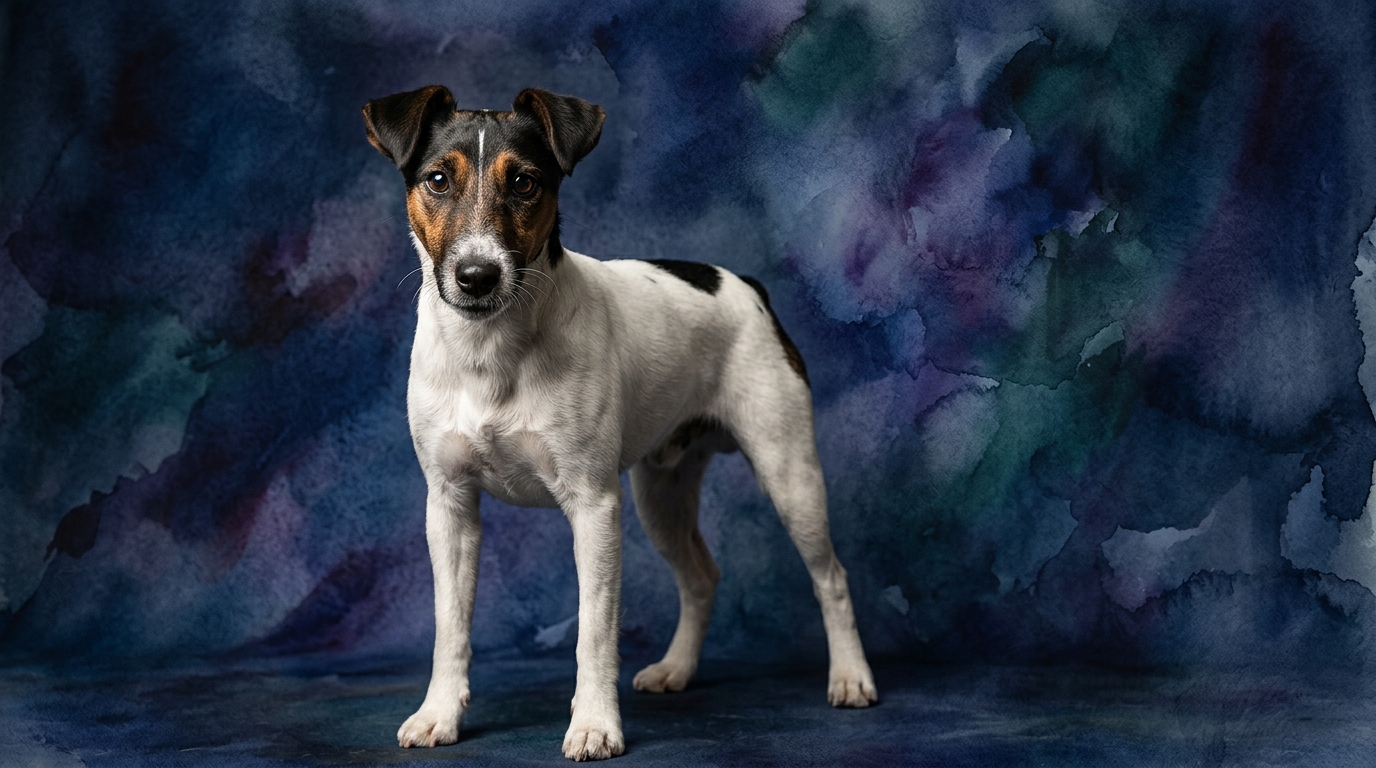
Side-by-Side Cognitive Profile
At The Cosmic Pet Pet IQ Lab, we evaluate canine intelligence across five critical dimensions. The Old English Sheepdog (OES), with its Coren rank of #44, exhibits a cognitive profile shaped by its herding legacy, emphasizing cooperation and recall. The Smooth Fox Terrier (SFT), while not Coren-ranked, presents a distinct set of mental strengths rooted in its tenacious terrier heritage.
For the Old English Sheepdog, Problem Solving scores 3/5, indicating an ability to navigate complex environmental challenges, often using observation and sequential reasoning. Training Speed is also 3/5, meaning they learn new commands and routines at a moderate pace, thriving on consistent, positive reinforcement. Social Intelligence registers 3/5, reflecting a balanced understanding of human cues and strong familial bonds. Their Instinctive Drive, at 3/5, channels herding and guarding impulses into protective and attentive behaviors. Notably, the OES excels in Memory with a score of 4/5, demonstrating a superior capacity for retaining learned information and complex sequences over extended periods.
The Smooth Fox Terrier also scores 3/5 for Problem Solving, adept at figuring out puzzles, especially those involving retrieval or overcoming obstacles, often employing trial-and-error and persistent investigation. Their Training Speed is 3/5; they gather new instructions at a moderate rate, though their independent nature can sometimes make acquisition seem slower without proper motivation. Social Intelligence is 3/5, indicating good engagement with their human family, reading emotions and intentions, though their interactions can be marked by a terrier's characteristic boldness. Instinctive Drive is 3/5, manifesting as a strong innate urge for chasing, digging, and exploring, typical of a breed bred for vermin control. Their Memory, at 3/5, retains information adequately for daily routines and learned tasks, but may not recall intricate details or complex sequences with the same precision as breeds with higher scores.
Where the Old English Sheepdog Wins Cognitively
The Old English Sheepdog's primary cognitive advantage lies in its superior memory, scoring a 4/5 compared to the Smooth Fox Terrier's 3/5. This enhanced recall means an Old English Sheepdog is more likely to remember a complex series of commands, recall specific locations of objects, or retain intricate social cues over longer durations. This foundational memory capacity underpins their ability to perform multi-step tasks and adapt to changing conditions within a familiar framework. Their Coren rank of #44 places them within the 'above average working/obedience intelligence' category, suggesting a more consistent and reliable cognitive performance in structured learning environments than a breed not listed, like the SFT. Their herding heritage also provides them with a structured problem-solving approach, often involving observation and strategic movement rather than brute force or independent action.
Where the Smooth Fox Terrier Wins Cognitively
While direct numerical 'wins' are fewer for the Smooth Fox Terrier, its cognitive profile shines in specific contexts shaped by its terrier lineage. The Smooth Fox Terrier's instinctive drive, while numerically similar (3/5), manifests as a tenacious, independent problem-solving style distinct from the OES. They excel at figuring out how to get what they want through persistent exploration, digging, and clever manipulation of objects or environments. This 'terrier grit' means they are often undeterred by initial failures, exhibiting remarkable resilience in tasks requiring sustained effort, such as finding hidden toys or navigating complex scent trails. Their problem-solving (3/5) is often characterized by ingenuity and self-reliance, making them adept at tasks that require a dog to think on its feet without constant human direction, especially when a strong reward is perceived.
Training Dynamics: OES vs. SFT
Both the Old English Sheepdog and the Smooth Fox Terrier share a 'Training Speed' score of 3/5, suggesting they learn new commands at a moderate pace. However, the *ease* of training can differ significantly due to other cognitive factors and breed temperament. The Old English Sheepdog's superior memory (4/5) gives it an edge in retaining learned behaviors and routines, making reinforcement more efficient over time. Their herding background often predisposes them to work collaboratively with humans, making them generally more inclined to follow directions and seek approval. They respond well to gentle, consistent guidance and positive reinforcement, building upon their robust recall.
In contrast, the Smooth Fox Terrier's innate independence and strong instinctive drive for chasing and exploring can present unique training challenges. While they are certainly capable of learning, their attention might be more easily diverted by environmental stimuli, and they may choose to follow their own agenda if a command doesn't align with their immediate interests. Training an SFT often requires more creativity, patience, and a deep understanding of their terrier motivations to channel their tenacity effectively. Consistency is paramount for both, but the SFT might require more engaging and varied training methods to maintain focus and enthusiasm, transforming training into a game or a puzzle for them to solve.
Matching Cognitive Profiles to Lifestyles
Understanding these cognitive nuances helps in matching a breed to an owner's lifestyle. The Old English Sheepdog, despite its substantial size, can adapt to a range of owner activity levels, though it thrives with owners who appreciate its moderate energy needs. Its social intelligence (3/5) and balanced instinctive drive (3/5) mean it enjoys companionship and structured activities, but isn't typically hyperactive. An owner who enjoys leisurely walks, consistent training sessions, and has time for grooming and companionable relaxation would find the OES a suitable fit. They are less about relentless physical exertion and more about steady engagement and affectionate interaction, making them ideal for individuals or families seeking a devoted, present companion.
The Smooth Fox Terrier, conversely, is better suited for active owners. Its inherent drive for exploration, chasing, and digging demands a lifestyle that accommodates these instincts. While its problem-solving (3/5) and social intelligence (3/5) scores are similar, the *application* of these traits is different. An SFT needs regular, vigorous exercise, mentally stimulating games, and opportunities to expend its considerable energy in a constructive manner. Relaxed owners might find the SFT's perpetual motion and inquisitive nature overwhelming, potentially leading to unwanted behaviors if its mental and physical needs aren't adequately met. They excel with owners who can provide consistent engagement, varied activities, and a firm, positive approach to channel their spirited personality into acceptable outlets, such as agility, earthdog trials, or extensive play sessions.
The Verdict
Choose an Old English Sheepdog if you value a companion with a strong memory for routines and commands, a generally cooperative demeanor, and are prepared for consistent, gentle training and moderate daily activity.
Choose a Smooth Fox Terrier if you are an active individual or family seeking a tenacious, independent, and spirited companion who thrives on challenging mental and physical engagement, and you appreciate a dog with a strong will and clever problem-solving approach.
🧠 Find Your Pet's IQ Score
Our Pet IQ Lab assessment covers 25+ tests across 5 cognitive dimensions — personalized to your breed.
Take the Full IQ Test →Frequently Asked Questions
Does the Old English Sheepdog's shaggy coat affect its cognitive abilities?
No, the Old English Sheepdog's distinctive shaggy coat is a physical trait and has no direct impact on its cognitive functions, such as memory or problem-solving skills. Its intelligence is rooted in its brain structure and breed history, not its external appearance.
Are Smooth Fox Terriers prone to being stubborn during training?
Smooth Fox Terriers can sometimes be perceived as stubborn due to their strong independent streak and innate drive to pursue their own interests. Effective training requires engaging their natural curiosity and high prey drive with positive reinforcement and varied methods to maintain their focus.
How do their social intelligence scores (3/5) translate to family life?
A social intelligence score of 3/5 for both breeds indicates a solid capacity to understand human cues and integrate into a family structure. The Old English Sheepdog typically exhibits a more placid and protective social presence, while the Smooth Fox Terrier's social interactions might be more spirited and bold, requiring consistent guidance.