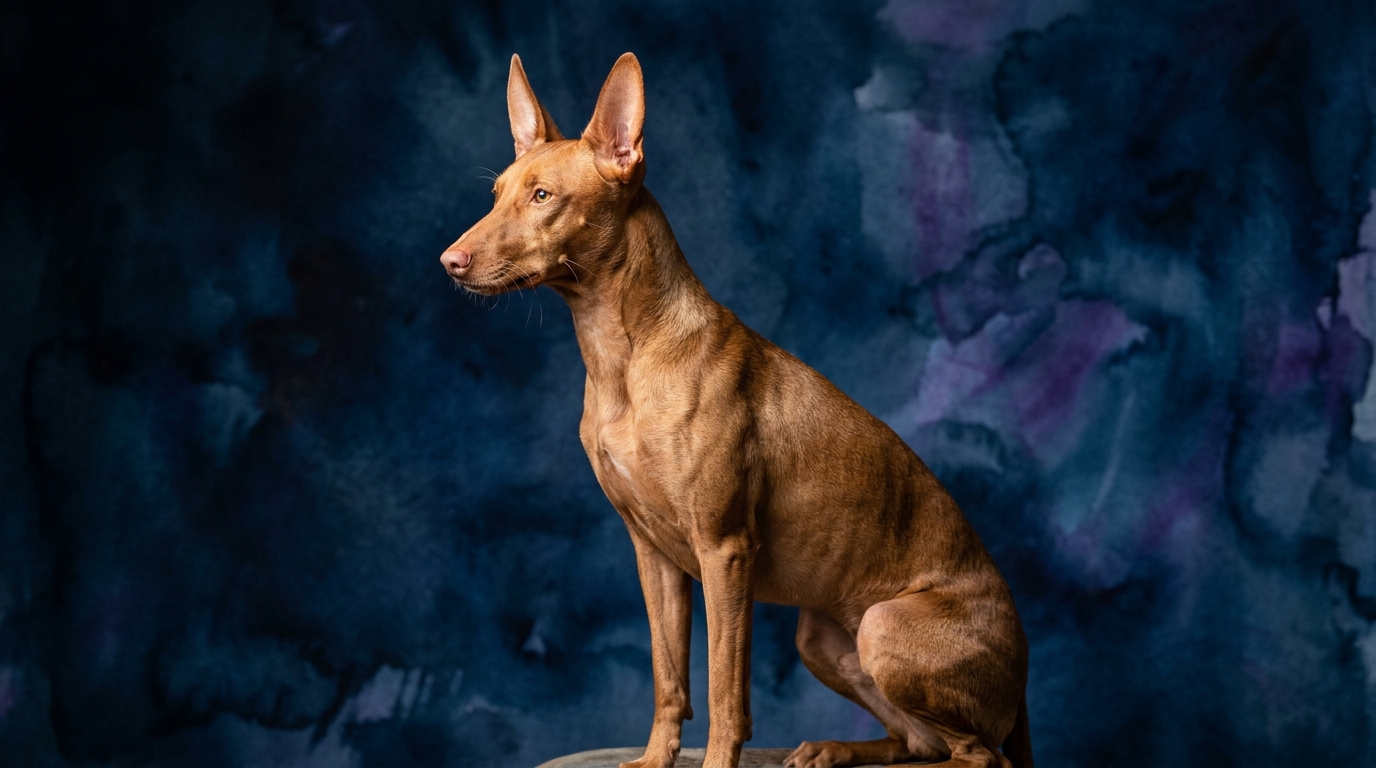
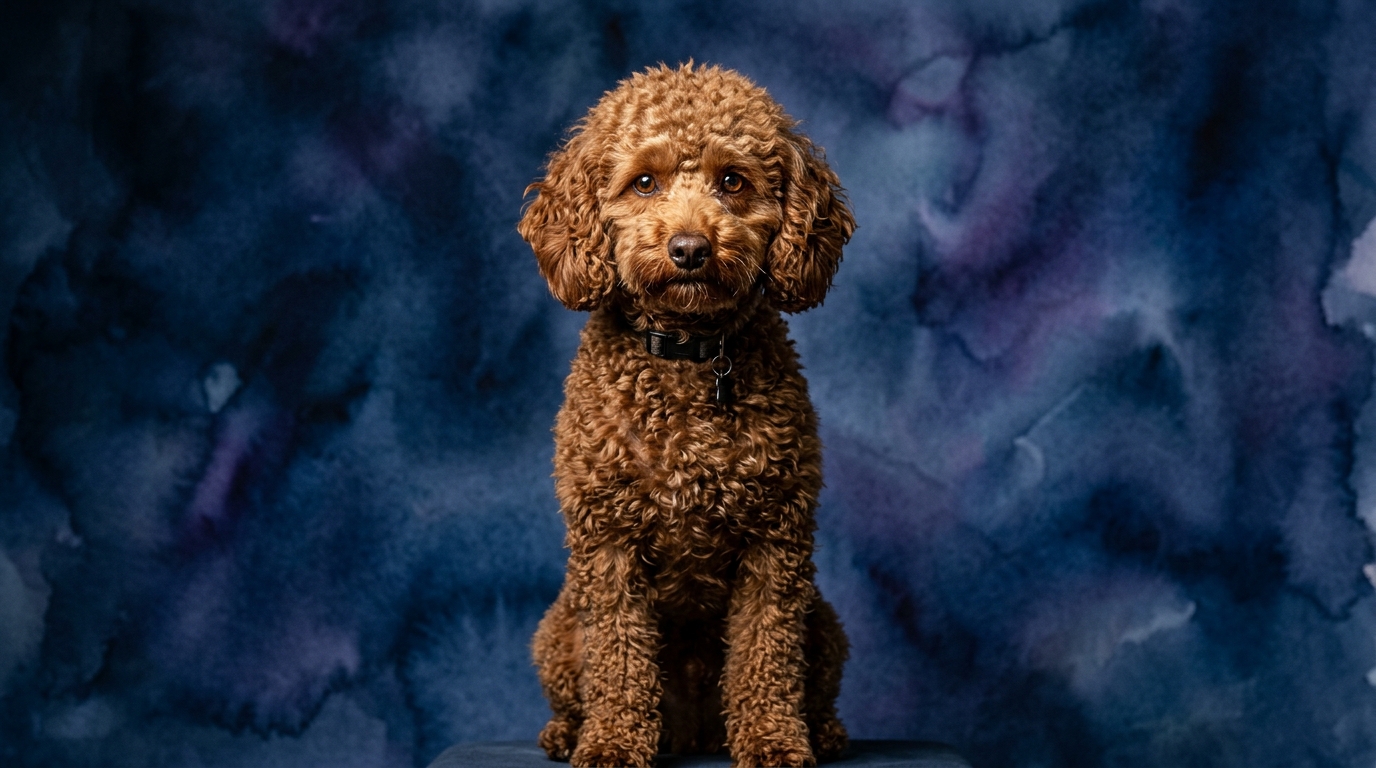
Side-by-Side IQ Profile: Pharaoh Hound vs. Miniature Poodle
At The Cosmic Pet Pet IQ Lab, we assess canine cognition across five crucial dimensions, providing a nuanced understanding of each breed's mental toolkit. The Pharaoh Hound, a breed with a rich history rooted in independent hunting, presents a balanced cognitive profile that reflects its self-reliant nature. Across the board, this sighthound registers a consistent 3/5 for Problem Solving, Training Speed, Social Intelligence, Instinctive Drive, and Memory. This uniform scoring suggests a dog capable of making independent decisions and learning at a moderate pace, with a solid, functional memory for tasks relevant to its environment and purpose. It is important to note that the Pharaoh Hound is not ranked in Stanley Coren's 'The Intelligence of Dogs,' which primarily focuses on obedience and working intelligence, a framework that doesn't fully capture the nuances of a sighthound's independent cognitive style.
In stark contrast, the Miniature Poodle, a breed celebrated for its versatility and close partnership with humans, exhibits a distinctly different cognitive blueprint. It achieves a remarkable 5/5 in Problem Solving, Training Speed, and Memory, indicating a breed that rapidly grasps new concepts, excels at complex tasks, and retains information with exceptional clarity. Its scores of 3/5 for Social Intelligence and Instinctive Drive align with many companion breeds, suggesting a capacity for connection and a moderate drive that can be channeled effectively. This impressive cognitive aptitude is further underscored by its placement as the 2nd most capable breed in Stanley Coren's rankings, a testament to its profound capacity for human-directed learning and collaboration.
Comparing these profiles directly, we observe that while both breeds share a similar score in Social Intelligence and Instinctive Drive, the Miniature Poodle significantly outperforms the Pharaoh Hound in the areas most commonly associated with 'trainability' and 'adaptability' in a domestic setting. The Pharaoh Hound's balanced 3/5s across the board, however, should not be misconstrued as a deficit, but rather as an indicator of a different kind of cognitive specialization—one geared towards independent action and environmental awareness rather than strict human adherence.
The divergence in their Problem Solving scores is particularly telling. A Miniature Poodle's 5/5 indicates an aptitude for quickly deciphering novel challenges, often in collaboration with its human companion or through logical deduction. The Pharaoh Hound's 3/5, conversely, suggests a more pragmatic, instinct-driven approach to problems, relying on its keen senses and inherent hunting strategies rather than complex abstract reasoning. Similarly, the Poodle's superior Memory (5/5 vs. 3/5) means it can recall a vast array of commands, routines, and experiences with greater precision and for longer durations.
Where the Pharaoh Hound Excels Cognitively
While the Miniature Poodle demonstrates higher scores in traditional measures of learning and problem-solving, the Pharaoh Hound possesses distinct cognitive strengths honed by millennia of selective breeding for independent hunting. Its balanced 3/5 across all categories, rather than indicating a lack, suggests a robust and self-sufficient cognitive architecture. This breed's problem-solving, while scoring 3/5, is often demonstrated through its exceptional ability to independently assess and navigate complex outdoor environments, tracking subtle scents and movements with minimal human intervention. This form of practical, environmental problem-solving is a hallmark of its sighthound lineage, requiring quick, autonomous decisions in dynamic situations.
The Pharaoh Hound's consistent 3/5 in Instinctive Drive means it possesses a powerful, yet manageable, internal motivation that is intrinsically linked to its sensory world. This drive fuels a focused awareness of its surroundings, allowing it to detect and react to stimuli that might go unnoticed by other breeds. Its memory, also 3/5, is particularly effective for remembering terrain, hunting patterns, and the location of potential prey, crucial for a breed that traditionally operates at a distance from its handler. This breed's cognitive profile emphasizes self-reliance and a nuanced understanding of its natural habitat, a different kind of operational intelligence than that of a highly cooperative companion breed.
Where the Miniature Poodle Takes the Lead Cognitively
The Miniature Poodle's cognitive strengths are undeniably prominent, particularly in areas that facilitate close human partnership and complex learning. With a top score of 5/5 in Problem Solving, these dogs display an exceptional capacity for analytical thought and adaptability. They can quickly figure out how to open latches, solve intricate puzzle toys, or even devise strategies to achieve desired outcomes, often demonstrating a clear understanding of cause and effect. This aptitude makes them adept at navigating novel situations and learning new skills with impressive speed.
Furthermore, the Miniature Poodle's 5/5 in Training Speed is a testament to its eagerness to engage and its rapid comprehension of commands and routines. This breed picks up new cues almost instantly, requiring fewer repetitions than many other breeds to solidify a behavior. Coupled with a 5/5 in Memory, the Poodle retains a vast repertoire of learned behaviors, commands, and social cues over long periods. This superior recall and retention make them highly consistent performers in various disciplines, from obedience to agility, and enable them to learn complex sequences of actions with precision. Their cognitive profile is geared towards collaboration and sophisticated interaction within a human-centric world.
Which is Easier to Train and Why
When considering ease of training, the Miniature Poodle unequivocally presents a more straightforward experience for most owners. Its 5/5 Training Speed means it grasps new commands and concepts with remarkable quickness, often requiring only a few repetitions to understand what is expected. This rapid learning is augmented by its 5/5 Memory, ensuring that once a behavior is learned, it is retained effectively. Miniature Poodles typically exhibit a strong desire to please their human companions, further motivating them to focus and comply during training sessions. Their ability to concentrate and process information quickly makes them highly responsive to positive reinforcement and capable of mastering a wide array of advanced behaviors and tricks.
The Pharaoh Hound, with its 3/5 Training Speed and 3/5 Memory, offers a different training dynamic. As a sighthound, this breed possesses an inherent independence and a strong prey drive, meaning their attention can be easily diverted by interesting sights or scents in the environment. While they are certainly capable of learning, their training often requires more patience, consistency, and a deeper understanding of hound psychology. They may not respond to commands with the same enthusiastic compliance as a Poodle, often choosing to weigh their options or follow their instincts first. Training a Pharaoh Hound involves channeling their natural drives and making training a rewarding, engaging activity that competes successfully with environmental distractions, rather than expecting immediate, eager obedience.
Real behavioral differences highlight this contrast: a Miniature Poodle might learn 'sit' and 'stay' in a single short session and reliably perform them in various environments, eager for the next instruction. A Pharaoh Hound, while understanding 'sit,' might decide that an interesting squirrel across the park is a more pressing concern, requiring the handler to have established a strong foundation of positive reinforcement and consistent engagement to maintain focus. Their training is less about 'can they learn?' and more about 'will they prioritize learning over their deeply ingrained instincts?'
Which Suits Active Owners vs. Relaxed Owners
Both the Pharaoh Hound and the Miniature Poodle are breeds that thrive with active engagement, but the *nature* of that activity differs significantly, making one a better fit for certain lifestyles than the other. The Pharaoh Hound, with its 3/5 Instinctive Drive, is fundamentally an athletic and energetic sighthound. This breed requires substantial daily exercise that allows it to stretch its long legs, ideally in a secure, fenced area where it can run freely. Beyond physical exertion, its cognitive makeup demands mental stimulation that respects its independent problem-solving and keen senses. Owners must be prepared for long walks, opportunities for safe off-leash running, and engaging activities that challenge its hunting instincts, such as lure coursing or scent work. A relaxed owner who prefers minimal daily activity would find it challenging to meet the Pharaoh Hound's inherent needs, potentially leading to boredom and undesirable behaviors.
The Miniature Poodle, while also possessing a 3/5 Instinctive Drive, typically channels its energy and mental acuity into more structured, human-directed activities. Its high scores in Problem Solving, Training Speed, and Memory mean it benefits immensely from interactive play, obedience training, agility, and puzzle toys. Miniature Poodles enjoy vigorous walks, fetch, and the opportunity to participate in dog sports, but they are generally more adaptable to varying levels of physical activity than the Pharaoh Hound, provided their mental needs are met. An active owner who enjoys engaging in training, teaching tricks, or participating in dog sports will find the Miniature Poodle an eager and capable partner. However, a relaxed owner who is willing to invest time in mental games and structured training, even if physical exercise is moderate, can also provide a fulfilling life for a Miniature Poodle, as their cognitive engagement is paramount.
The Verdict
Choose the Pharaoh Hound if you are an experienced owner who appreciates an independent, intelligent partner with keen instincts and can provide ample opportunities for safe, vigorous exercise and mental challenges that respect its sighthound nature.
Opt for the Miniature Poodle if you seek a highly trainable, adaptable companion eager to learn complex tasks and participate in a wide range of human-directed activities, and you enjoy consistent mental engagement through training and interactive play.
🧠 Find Your Pet's IQ Score
Our Pet IQ Lab assessment covers 25+ tests across 5 cognitive dimensions — personalized to your breed.
Take the Full IQ Test →Frequently Asked Questions
Are Pharaoh Hounds difficult to train?
Pharaoh Hounds are not inherently difficult to train, but their independent sighthound nature and moderate training speed (3/5) mean they require consistent, patient, and positive reinforcement-based methods. They may prioritize environmental stimuli over commands, so engagement and making training rewarding are key.
Do Miniature Poodles need a lot of mental stimulation?
Absolutely, Miniature Poodles thrive on mental stimulation due to their high problem-solving (5/5) and memory (5/5) capabilities. They need daily challenges through training, puzzle toys, and interactive games to prevent boredom and ensure a well-adjusted temperament.
Which breed is better for first-time dog owners?
For most first-time dog owners, the Miniature Poodle is generally a more suitable choice due to its exceptional trainability (5/5 Training Speed) and eagerness to please. The Pharaoh Hound's independent nature and specific exercise requirements can be more challenging for those new to dog ownership.