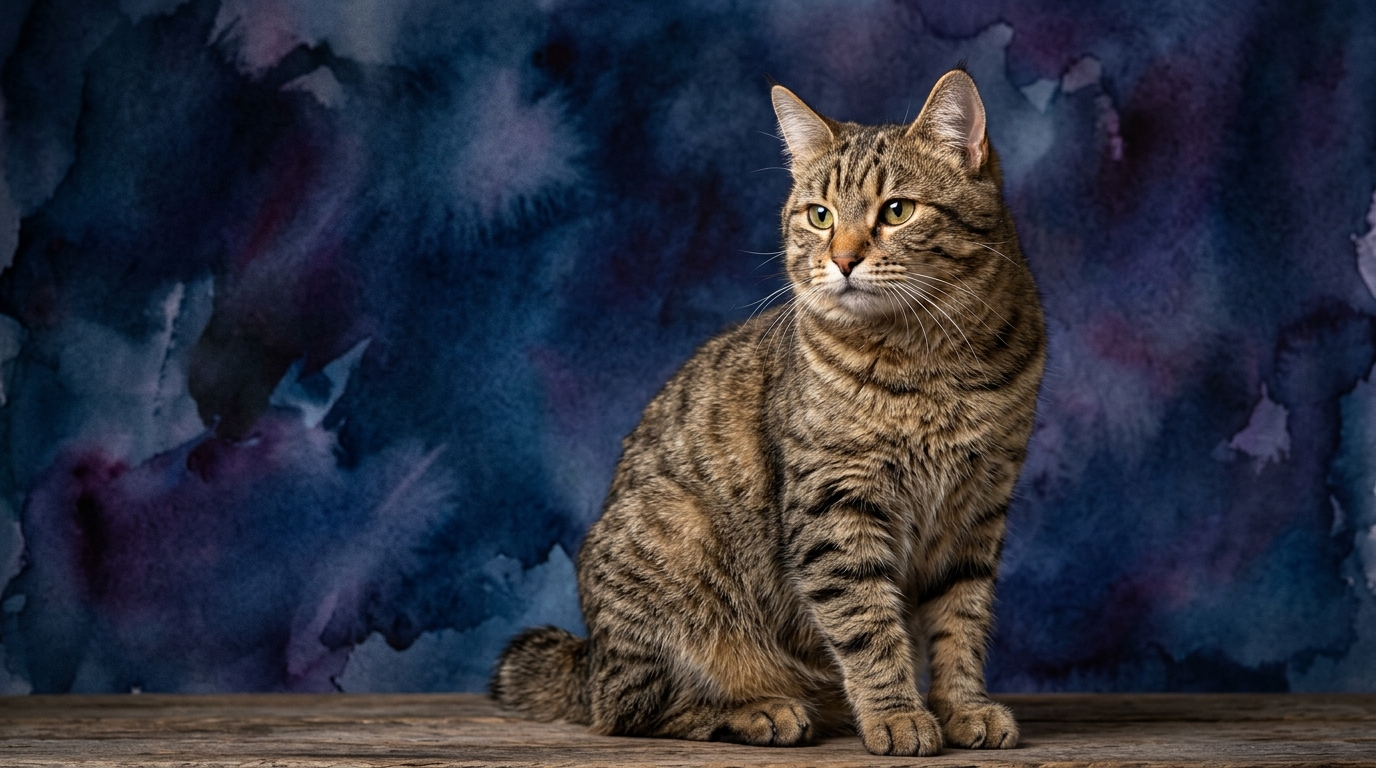
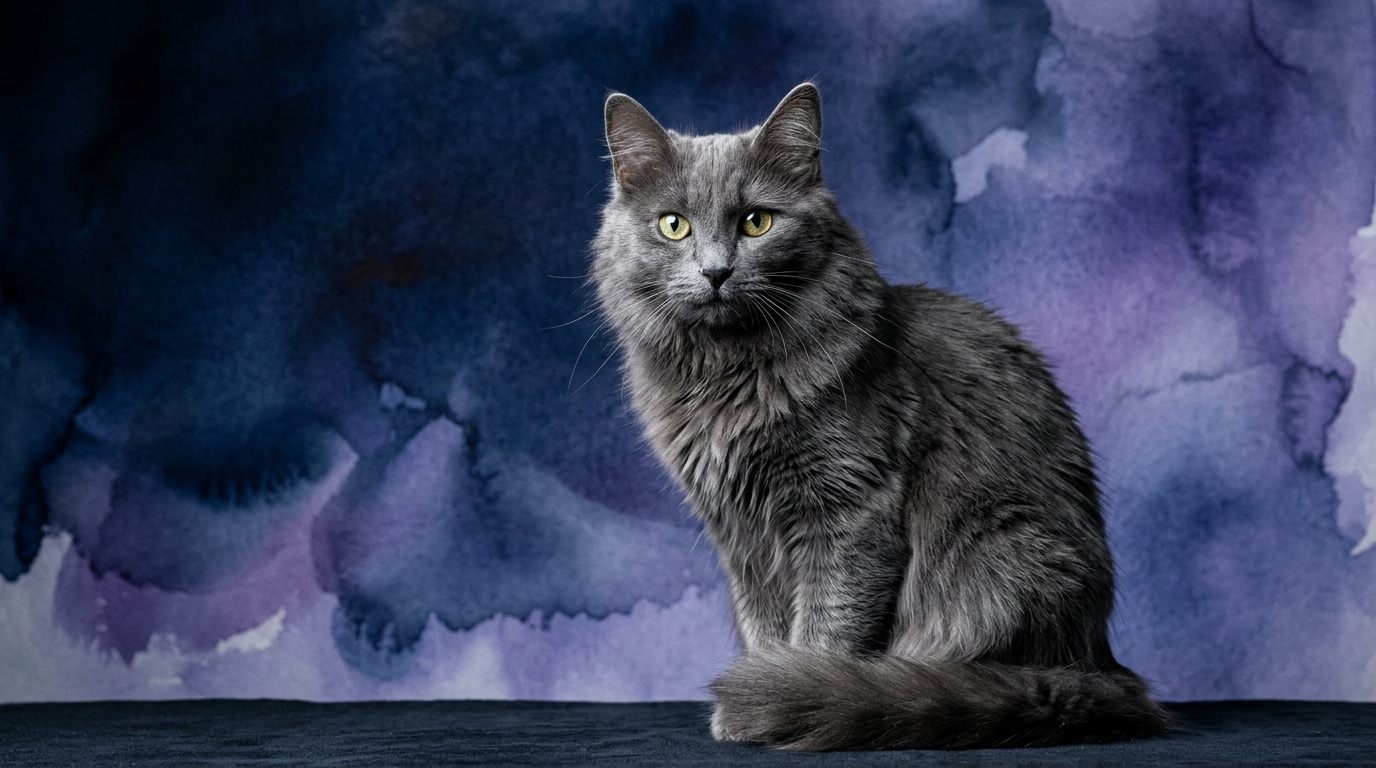
Side-by-Side IQ Profile: A Moderate Cognitive Landscape
Both the Pixiebob and the Nebelung register a consistent 3/5 across all five dimensions of our IQ assessment, indicating a moderate, balanced cognitive capacity. This uniformity means neither breed exhibits a pronounced strength or weakness in any single area when compared directly, but rather a steady, capable intellect. Understanding a '3/5' means acknowledging a cat that is neither a super-genius nor particularly challenged; they possess a practical, adaptable intelligence that serves them well in domestic environments.
For Problem Solving (3/5), both breeds demonstrate a moderate ability to navigate their world and figure out minor puzzles. A Pixiebob might methodically work to open a cabinet door or understand a complex household routine, relying on observation and trial-and-error. Similarly, a Nebelung will exhibit a thoughtful approach to challenges, perhaps figuring out how to retrieve a toy from under furniture or anticipating the timing of a favorite treat delivery. Their problem-solving isn't always instant, but it is persistent and effective.
In Training Speed (3/5), both breeds show a moderate aptitude for learning commands and routines. A Pixiebob, often described as dog-like, can learn to walk on a leash or play fetch with consistent, positive reinforcement, finding the interaction rewarding. The Nebelung, while more reserved, also responds to patient training, particularly for routines like coming when called for meals or using specific designated areas for play. Neither breed is a quick study like some highly driven breeds, but they are receptive to learning when motivated by reward and consistency.
Social Intelligence (3/5) for both breeds indicates a moderate capacity to understand and respond to human cues and social dynamics. Pixiebobs often form deep, demonstrative bonds, reading their owner's mood and offering comfort or playful engagement. Their social awareness extends to other pets, often adapting well to multi-animal households. Nebelungs, while more selective in their affections, display their social intelligence through subtle cues, forming profound connections with their chosen humans and often observing social interactions before engaging directly. They are astute observers of household dynamics.
Their Instinctive Drive (3/5) is also moderate, reflecting a balanced expression of natural feline behaviors. A Pixiebob might display a keen interest in hunting toys, stalking imaginary prey, or exploring new safe spaces with curiosity. Their moderate drive means these instincts are present but generally manageable within a home environment. The Nebelung's instincts might manifest as a strong preference for high perches for observation, meticulous grooming rituals, or a playful pounce on a feather wand, all within a contained and thoughtful manner.
Finally, Memory (3/5) for both breeds suggests a moderate ability to recall past experiences, locations, and learned behaviors. A Pixiebob will remember where a favorite toy is hidden, the schedule for feeding, or specific interactions with different people. A Nebelung will likewise recall routines, preferred sleeping spots, and the nuances of their owner's habits, often anticipating events. Their memories are sufficient to build strong associations and navigate their daily lives effectively, remembering both positive and negative experiences.
Where the Pixiebob's Cognition Shines
While their raw IQ scores are identical, the Pixiebob’s cognitive strengths often manifest in its adaptable and interactive nature. Its Problem Solving (3/5) leans towards practical application within its environment; a Pixiebob is more likely to actively manipulate objects or experiment with different approaches to achieve a goal, such as figuring out how to access a desired treat or navigating a new space. This isn't necessarily faster problem-solving, but rather a more hands-on, persistent, and exploratory method.
The Pixiebob’s Social Intelligence (3/5) often presents as a more outwardly expressive and versatile form of engagement. They tend to read human emotions and intentions with an open curiosity, often seeking to participate in household activities or offering clear comfort when sensing distress. Their moderate memory (3/5) supports this by allowing them to quickly associate specific actions or tones with outcomes, making them responsive to varied forms of communication. This blend makes them particularly adept at integrating into diverse family dynamics, remembering who is who and how to interact effectively with each member.
Where the Nebelung's Cognition Excels
The Nebelung, despite identical scores, often demonstrates its cognitive strengths through a more refined and observant approach. Its Problem Solving (3/5) is frequently characterized by a thoughtful, almost contemplative style. Instead of immediate physical experimentation, a Nebelung might first observe a situation, process information, and then execute a more calculated attempt, such as carefully planning a route to a high shelf or anticipating a door opening. This doesn't imply superior speed, but rather a more strategic, less impulsive method.
The Nebelung’s Social Intelligence (3/5) is often expressed through deep, nuanced bonds with a select few, rather than broad interaction. They are highly attuned to the subtle cues of their chosen human companions, remembering preferences and routines (Memory 3/5) with remarkable consistency. This allows them to anticipate needs or desires, creating a profound, quiet companionship. Their moderate Instinctive Drive (3/5) is often channeled into precise, elegant movements and focused play, showcasing a controlled application of their natural feline abilities, often preferring specific types of toys or play patterns they've mentally 'mastered'.
Training Dynamics: Engagement vs. Consistency
Given their identical Training Speed (3/5), neither the Pixiebob nor the Nebelung is inherently 'easier' to train, but their approaches to learning differ. The Pixiebob’s curiosity and desire for interaction often make training a more engaging, game-like experience. They respond well to varied positive reinforcement and enjoy the mental stimulation of learning new tricks or commands like 'sit' or 'stay' as part of an interactive routine. Their moderate social intelligence means they are often eager to please and will actively participate, making training feel less like a chore and more like a shared activity.
The Nebelung, conversely, often thrives on consistency and a calm training environment. While equally capable of learning, their more reserved nature means they may require a gentler, more patient approach. They respond best to established routines and positive reinforcement that builds trust, such as learning to come for a specific treat or using a designated scratching post. Their moderate memory helps them solidify these routines quickly once established, but their motivation often stems from the predictability and comfort these learned behaviors bring, rather than overt eagerness to perform. Training a Nebelung often involves more subtle cues and a focus on integrating commands into their daily life seamlessly.
Cognitive Fit: Active Companionship vs. Serene Observance
For owners seeking an active and engaging feline companion, the Pixiebob often presents a more suitable cognitive match. Its moderate problem-solving, coupled with an adaptable social intelligence and an interactive training speed, means it enjoys participating in household activities, exploring new environments, and engaging in structured play sessions. Owners who appreciate a cat that can learn to walk on a leash, play fetch, or master puzzle feeders will find the Pixiebob's cognitive profile aligns well with their lifestyle. Its moderate instinctive drive can be channeled into enriching activities, making it an ideal partner for owners who enjoy active interaction and mental stimulation for their pet.
Conversely, the Nebelung's cognitive makeup often makes it an ideal companion for more relaxed or contemplative owners. Its thoughtful problem-solving and deep, selective social intelligence mean it thrives in a stable, predictable environment where it can observe and engage on its own terms. Owners who value quiet companionship, appreciate a cat that is attuned to their moods without being overly demanding, and enjoy a pet that forms profound, subtle bonds will find the Nebelung's cognitive style a perfect fit. Its moderate instinctive drive and memory support a life of serene observation and consistent routines, making it a calm, yet deeply connected, presence in the home.
The Verdict
Choose the Pixiebob if you desire an interactive, adaptable cat that enjoys actively participating in household life and learning new behaviors through engaging, game-like training sessions.
Choose the Nebelung if you seek a serene, observant companion that thrives on predictability and forms deep, quiet bonds, appreciating a thoughtful cat whose intelligence shines through subtle cues and consistent routines.
🧠 Find Your Pet's IQ Score
Our Pet IQ Lab assessment covers 25+ tests across 5 cognitive dimensions — personalized to your breed.
Take the Full IQ Test →Frequently Asked Questions
Are Pixiebobs good at learning tricks?
Yes, Pixiebobs, with their moderate training speed and social intelligence, are generally receptive to learning tricks and commands. They respond well to positive reinforcement and enjoy the interactive nature of training, making it a rewarding experience for both cat and owner.
How do Nebelungs typically solve problems?
Nebelungs approach problem-solving with a thoughtful, often observant style. Rather than immediate action, they tend to assess a situation, process information, and then execute a more calculated solution, demonstrating persistence in achieving their goals.
Which breed is more adaptable to new environments?
While both breeds have moderate adaptability, the Pixiebob generally displays a more outwardly curious and adaptable nature, often integrating readily into new environments or family dynamics. The Nebelung prefers stability and may take longer to adjust, thriving best in predictable settings.