
Side-by-Side IQ Profile
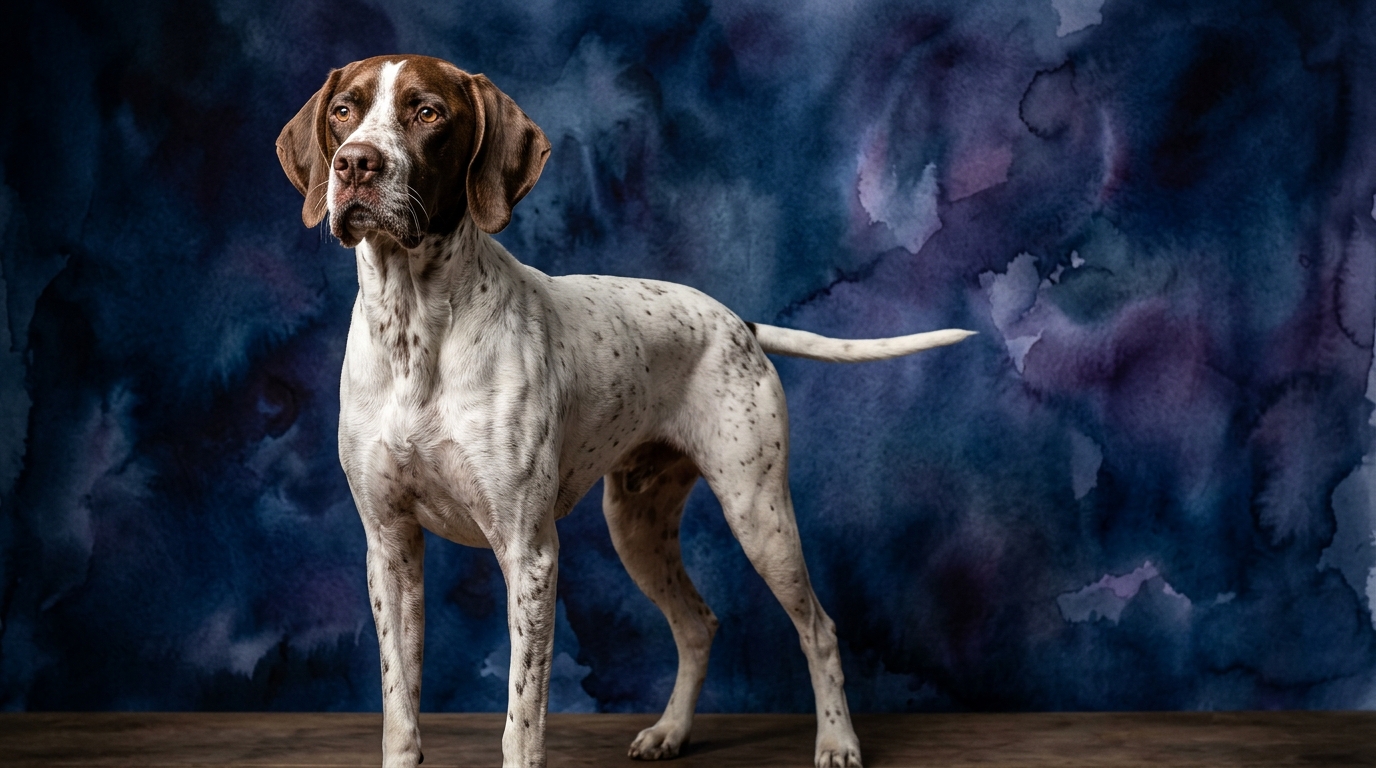
**Pointer:** This sporting breed is not Coren-ranked, yet demonstrates a consistent cognitive profile across several dimensions. Their **Problem Solving (3/5)** approach challenges directly, often relying on learned methods or keen senses; they are efficient in familiar contexts but may need more guidance with novel puzzles, less inclined to experimental solutions. Their **Training Speed (3/5)** is moderate, absorbing commands steadily with consistent positive reinforcement, where their eagerness to please ensures progress. **Social Intelligence (3/5)** for Pointers is balanced, forming strong bonds and generally coexisting peacefully while adequately reading human cues without excessive sensitivity. Their **Instinctive Drive (3/5)** is singularly focused on pointing – locating game and holding steady, a powerful drive channeled into their working role. Finally, their **Memory (3/5)** is functional for commands, routines, and familiar environments, reliably retaining learned behaviors, particularly those for hunting tasks.
**Irish Water Spaniel:** Ranked #24 by Coren, the Irish Water Spaniel presents a profile with notable strengths. Their **Problem Solving (4/5)** shows a more adaptive, experimental approach to challenges, often trying different strategies, indicating a higher capacity for flexible thinking and creative solutions in varied scenarios. With a **Training Speed (4/5)** reputation for quick uptake, they grasp new commands and concepts efficiently, as their mental agility and eagerness to learn contribute to rapid progress. **Social Intelligence (3/5)** for IWS is similar to Pointers, bonding deeply with families and often displaying a playful nature, interpreting human moods well to foster interactive relationships. Their **Instinctive Drive (3/5)** is geared towards retrieving, especially from water, and a general enthusiasm for fieldwork, making them tireless workers requiring ample engagement. Their **Memory (4/5)** is superior for intricate sequences, complex commands, and past experiences, supporting quick training and accurate performance of multi-step tasks.
Where Pointer Wins Cognitively
The Pointer excels in the purity and singular focus of its instinctive drive. Both breeds share a 3/5 rating, but the Pointer's drive is incredibly specialized: locating game and holding an unyielding point. Their cognitive energy is channeled with remarkable precision towards this specific, highly refined task. Their mental programming perfects a singular, crucial behavior rather than varied problem-solving. This specialization results in a dog whose mind is beautifully attuned to its primary function, making them exceptionally reliable and consistent in their core role. For tasks demanding intense, singular focus and a predictable response to specific stimuli, the Pointer's cognitive architecture provides an unparalleled advantage.
Where Irish Water Spaniel Wins Cognitively
The Irish Water Spaniel exhibits a clear cognitive edge in its capacity for flexible learning and retention. With 4/5 ratings in Problem Solving and Training Speed, contrasted with the Pointer's 3/5, the IWS demonstrates a more agile and adaptable mind. This breed is more inclined to experiment with solutions in novel situations, indicating greater cognitive flexibility. Their quicker uptake of commands means they process information rapidly, mastering a wider array of complex behaviors. Furthermore, their 4/5 memory suggests superior recall for intricate sequences over time, allowing for more advanced training outcomes. This profile suits roles requiring versatile skills and extensive repertoires.
Which Is Easier to Train and Why
Based on their profiles, the Irish Water Spaniel generally presents as easier to train, especially for diverse tasks. The IWS's 4/5 Training Speed and 4/5 Memory scores indicate readiness to absorb and retain new information quickly. They grasp commands with fewer repetitions and recall them reliably, leading to faster progress. Their higher Problem Solving score means they might think through new challenges, even offering solutions, rather than waiting for explicit direction. This mental agility makes them highly responsive to varied training and capable of excelling in diverse canine sports like agility or obedience.
Conversely, the Pointer, with 3/5 ratings across Problem Solving, Training Speed, and Memory, requires a more consistent and patient approach. While eager to please, their learning curve is steadier, benefiting immensely from repetition and clear instruction. A Pointer might need more focused practice to solidify a new command and might not generalize learned behaviors to new situations as readily as an IWS. Their primary cognitive strength lies in their specialized instinctive drive for pointing. For general obedience or complex multi-step tasks, the Irish Water Spaniel's superior cognitive flexibility and memory provide an advantage in training ease and speed.
Which Suits Active Owners vs Relaxed Owners
Both Pointers and Irish Water Spaniels are sporting breeds requiring active lifestyles, but their specific needs differ. A Pointer, with its focused instinctive drive (3/5) and practical problem-solving (3/5), thrives with owners dedicated to channeling its natural pointing abilities. They need extensive opportunities to run, explore, and "hunt," even through scent games. Pointers suit active owners who enjoy long hikes, running, or actual field work, providing consistent physical exertion and mental stimulation related to their purpose. A relaxed owner might find a Pointer's sustained energy challenging, potentially leading to boredom if not adequately exercised.
The Irish Water Spaniel, with its robust instinctive drive (3/5) for retrieving and higher problem-solving (4/5) and memory (4/5), also demands an active household. However, their activity needs are often more varied and mentally engaging. They excel in swimming, retrieving, and dog sports requiring both physical exertion and cognitive input, like agility or advanced obedience. Their higher cognitive capacity means they enjoy learning new things and solving puzzles, making them ideal for active owners who engage both mind and body. While neither breed suits a truly sedentary lifestyle, the IWS offers a broader spectrum of engaging activities for an active owner, whereas the Pointer's needs are more singularly focused on field-type exercise.
The Verdict
Choose a Pointer if you value a dog with a singular, unwavering focus on its primary instinctive purpose, seeking a consistent, dedicated partner for field work or long, purposeful outdoor excursions.
Opt for an Irish Water Spaniel if you desire a versatile companion with a quicker grasp of new concepts and a more flexible mind, capable of excelling in diverse activities beyond traditional hunting roles.
🧠 Find Your Pet's IQ Score
Our Pet IQ Lab assessment covers 25+ tests across 5 cognitive dimensions — personalized to your breed.
Take the Full IQ Test →Frequently Asked Questions
Are Pointers difficult to train?
Pointers are not difficult to train, but they learn at a moderate pace (3/5 Training Speed) and benefit significantly from consistent, positive reinforcement and repetition. Their focus on their handler makes them willing students, especially when training aligns with their natural instincts.
Do Irish Water Spaniels make good family pets?
Yes, Irish Water Spaniels can make wonderful family pets due to their balanced social intelligence (3/5) and playful nature. They bond deeply with their families but require plenty of mental and physical activity to prevent boredom and channel their energy constructively.
Which breed is better for dog sports?
The Irish Water Spaniel generally has an edge for a wider variety of dog sports due to its higher problem-solving (4/5), training speed (4/5), and memory (4/5). Their cognitive flexibility allows them to excel in disciplines like agility, obedience, and dock diving.