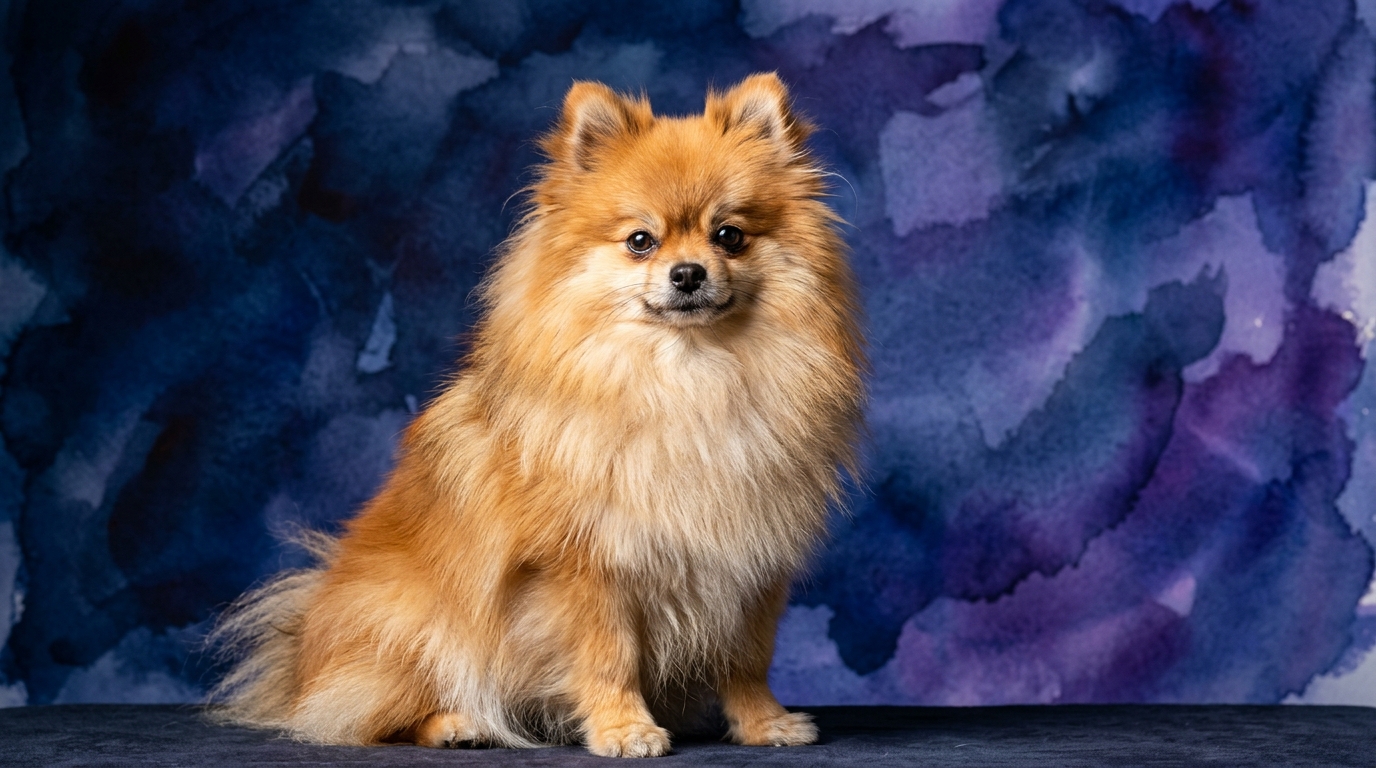
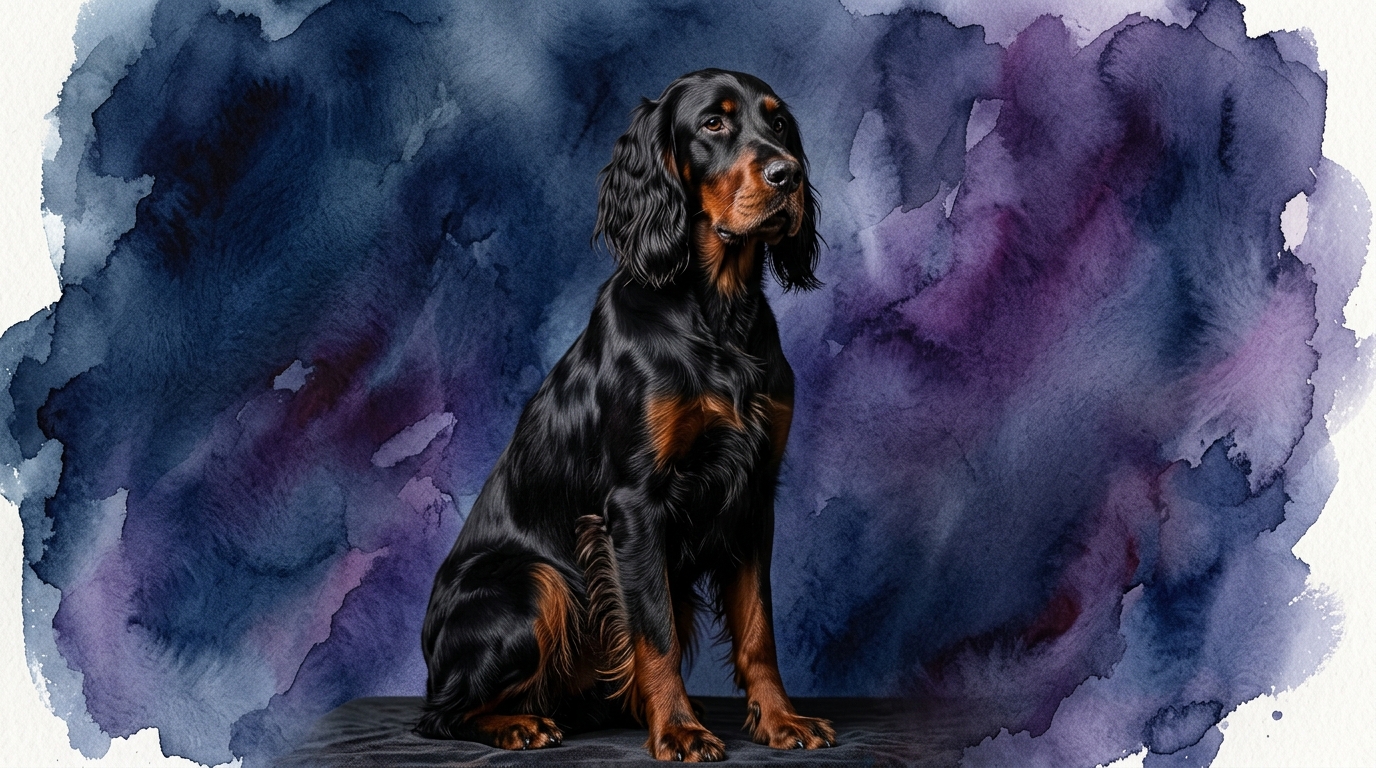
Side-by-Side Cognitive Profiles: Pomeranian vs. Gordon Setter
The Cosmic Pet Pet IQ Lab employs five key dimensions to evaluate canine intelligence, offering a granular view beyond simple rankings. For the Pomeranian, a breed Coren ranked at #23, its profile shines with a Problem Solving score of 4/5, indicating a strong capacity to navigate novel situations and figure out solutions. Its Training Speed also stands at an impressive 4/5, suggesting it grasps new commands and routines with notable alacrity. Social Intelligence, a measure of how well a dog understands and interacts with its human and animal companions, is a standout 4/5 for the Pomeranian, reflecting its companion roots. Its Instinctive Drive, while present, registers at 3/5, meaning its inherent breed-specific behaviors are moderately expressed. Finally, a Memory score of 4/5 confirms its ability to retain learned information and experiences over time.
Shifting focus to the Gordon Setter, a Coren rank #39 breed, we observe a cognitive makeup tailored for its sporting role. Like the Pomeranian, the Gordon Setter also achieves a Problem Solving score of 4/5, demonstrating an equally capable mind for overcoming challenges. Its Training Speed matches, at 4/5, signifying a similar ease in acquiring new skills and obedience cues. Where a distinct difference emerges is in Social Intelligence, where the Gordon Setter scores 3/5; while certainly capable of forming strong bonds, its primary focus may be more task-oriented than people-pleasing in all social contexts. Its Instinctive Drive, characteristic of a bird dog, is rated at 3/5, reflecting its innate desire to hunt and retrieve. Lastly, its Memory is also a strong 4/5, crucial for remembering complex scent trails and field commands.
Where the Pomeranian Cognitively Excels
The Pomeranian's primary cognitive advantage, according to our Pet IQ Lab metrics, lies squarely in its Social Intelligence, scoring a 4/5 compared to the Gordon Setter's 3/5. This translates into a heightened ability to read human cues, understand social dynamics within a household, and adapt its behavior to fit various social situations. A Pomeranian is often more attuned to the subtleties of human mood and intention, making it an exceptionally responsive and interactive companion. This superior social acumen means they often pick up on household routines and expectations without explicit training, learning through observation and interaction. For instance, they might quickly discern when a family member needs comforting or when it's playtime, responding with an appropriate nudge or bark.
This elevated social intelligence also contributes to their effectiveness in certain forms of cooperative learning. While both breeds show a high capacity for problem-solving, the Pomeranian's social awareness often means it's more inclined to seek human assistance or collaboration when faced with a challenge, rather than relying solely on independent trial and error. This cooperative spirit can make them feel like a more integrated member of the family unit, often anticipating needs and reacting with a nuanced understanding of their environment.
Where the Gordon Setter's Cognitive Strengths Shine
While the Gordon Setter shares equally high scores in problem-solving, training speed, and memory with the Pomeranian, its cognitive strengths are often expressed through a different lens, one deeply rooted in its heritage as a methodical hunting dog. Its 4/5 Problem Solving and 4/5 Memory, combined with its 3/5 Instinctive Drive, equip it for sustained, focused tasks requiring endurance and precision. Unlike a companion breed that might solve problems through social engagement, the Gordon Setter applies its problem-solving skills with a steady, independent focus, particularly when tracking or navigating complex terrains to locate game.
This breed's cognitive profile excels in scenarios demanding sustained application of learned skills and memory over extended periods and distances. For example, a Gordon Setter's ability to remember a scent trail, recall complex sequences of commands in a distracting outdoor environment, and persist until a task is complete showcases a robust mental stamina. Its slightly lower social intelligence doesn't imply a lack of affection but rather a cognitive wiring that prioritizes the task at hand during work, demonstrating a focused determination that is invaluable in its traditional role and in demanding dog sports.
Training Dynamics: Which is Easier to Train?
Both the Pomeranian and the Gordon Setter boast an impressive Training Speed of 4/5, suggesting that neither breed presents significant challenges in learning new commands. They are both quick to grasp concepts and commit them to memory. However, the *application* of this training speed can differ due to their other cognitive traits. The Pomeranian's higher Social Intelligence (4/5) often translates to a strong desire to please its owner, making it highly motivated by positive reinforcement and social praise. This inherent eagerness to cooperate can make initial obedience training feel exceptionally smooth, as they are often keen observers of human expectations and quick to offer desired behaviors.
The Gordon Setter, with its equally high Training Speed (4/5) but slightly lower Social Intelligence (3/5) and a 3/5 Instinctive Drive, might require a different motivational approach. While they learn quickly, their motivation might stem more from the satisfaction of performing a task well or engaging their innate drives, rather than solely from social approval. Training a Gordon Setter might involve harnessing its instinctive drive, making activities like scent work or retrieving incredibly rewarding. Both breeds respond well to consistent, positive training methods, but the Pomeranian might be more forgiving of slight inconsistencies due to its strong social bond, while the Gordon Setter might thrive on more structured, task-oriented sessions that engage its working intellect.
Matching Breeds to Lifestyles: Active vs. Relaxed Owners
When considering which breed aligns with an active versus a relaxed owner, their cognitive profiles offer clear guidance. The Pomeranian, despite its small stature, possesses a problem-solving mind (4/5) and excellent memory (4/5) that thrives on mental engagement. While its exercise needs are moderate, its social intelligence (4/5) means it craves interaction and involvement in daily family life. A relaxed owner who enjoys teaching tricks, engaging in puzzle toys, and providing ample social interaction will find the Pomeranian a delightful and mentally stimulated companion. They are adaptable to apartment living but need regular, stimulating outings and consistent mental challenges to prevent boredom.
The Gordon Setter, with its equally strong problem-solving and memory, combined with its 3/5 instinctive drive, is undeniably suited for more active owners. Its heritage as a bird dog means it possesses the mental and physical stamina for long walks, runs, hiking, and engaging in dog sports like agility, obedience, or field trials. An active owner who can provide consistent, vigorous exercise and mental challenges that tap into its natural instincts will see a Gordon Setter truly flourish. While affectionate, its contentment is often tied to having its cognitive and physical energy channeled into purposeful activities, making it less ideal for a purely sedentary lifestyle.
The Verdict
Choose the Pomeranian if you seek a highly socially intelligent companion who thrives on close interaction and mental games within a more relaxed, yet mentally stimulating, home environment.
Opt for the Gordon Setter if you lead an active lifestyle and desire a dedicated, methodical partner for outdoor adventures and structured activities that engage its robust problem-solving and instinctive drives.
🧠 Find Your Pet's IQ Score
Our Pet IQ Lab assessment covers 25+ tests across 5 cognitive dimensions — personalized to your breed.
Take the Full IQ Test →Frequently Asked Questions
Are Pomeranians truly as quick to learn as Gordon Setters?
Yes, according to our Pet IQ Lab, both breeds score 4/5 in Training Speed, indicating they are equally adept at grasping new commands and routines. Their motivations for learning, however, might differ, with Pomeranians often driven by social engagement and Gordon Setters by task completion.
How does social intelligence impact daily life for these breeds?
A Pomeranian's higher social intelligence means it's often more attuned to human emotions and household dynamics, making it a highly responsive and interactive companion. The Gordon Setter, while affectionate, may exhibit more independence, focusing its attention more on tasks or engaging its environment rather than constantly seeking human interaction.
Does instinctive drive mean one is harder to manage off-leash?
Both breeds have a 3/5 Instinctive Drive, meaning they possess inherent behaviors that can be strong. For the Gordon Setter, this often translates to a strong prey drive and desire to roam, requiring diligent recall training and secure environments off-leash. While Pomeranians also have instincts, their smaller size and typically less intense prey drive might make them slightly easier to manage in varied off-leash settings, though caution is always advised.