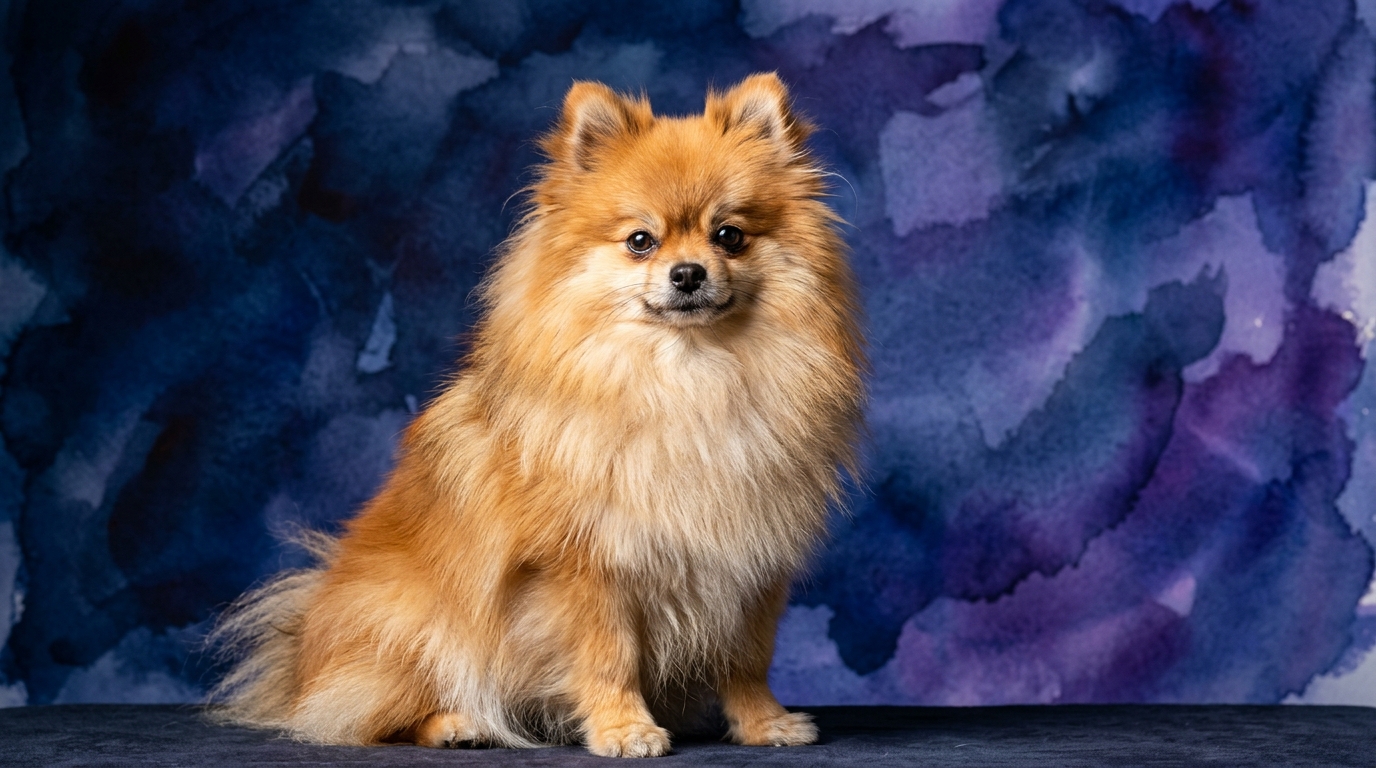

Side-by-Side Cognitive Profiles: Pomeranian vs. Neapolitan Mastiff
At The Cosmic Pet Pet IQ Lab, we analyze canine cognition across five critical dimensions to provide a comprehensive understanding of each breed’s unique mental aptitudes. Comparing the Pomeranian, a lively Toy group member ranked #23 by Coren, with the majestic Working group Neapolitan Mastiff, which is not Coren-ranked, reveals fascinating differences in their intellectual strengths.
The **Pomeranian** exhibits a robust cognitive profile, scoring 4/5 in Problem Solving, indicating a strong capacity for navigating complex scenarios and devising creative solutions to achieve goals. Their Training Speed also stands at an impressive 4/5, reflecting their quick grasp of new commands and routines, often driven by an eagerness to engage. Social Intelligence, at 4/5, highlights their keen attunement to human emotions and social cues, fostering deep interactive bonds. Their Instinctive Drive is a moderate 3/5, stemming from their Spitz heritage, which provides a balanced curiosity and independence. Finally, a Memory score of 4/5 means Pomeranians retain learned behaviors and experiences with considerable clarity and duration, recalling past lessons and specific interactions with ease.
In contrast, the **Neapolitan Mastiff** presents a more deliberate, yet equally profound, cognitive makeup. Their Problem Solving is rated 3/5, demonstrating practical intelligence, particularly when it pertains to their protective role or navigating familiar environments, though they may be less inclined towards abstract puzzles. Training Speed is 3/5, suggesting a steady learning pace that benefits from consistency and patience, as they tend to process information thoughtfully. Social Intelligence, also 3/5, signifies a deep, discerning connection with their immediate family, understanding their moods and intentions, while often maintaining a reserved demeanor with strangers. Their Instinctive Drive, rated 3/5, is strongly rooted in their historical role as guardians, shaping much of their cognitive output towards territorial awareness and family protection. Their Memory, at 3/5, is solid for important experiences and established routines, particularly those vital to their role and family interactions.
Where the Pomeranian Excels Cognitively
The Pomeranian's cognitive strengths lie in its agility and adaptability, particularly evident in its 4/5 scores for Problem Solving and Training Speed. This combination allows them to not only quickly grasp new concepts but also apply them effectively in novel situations, making them adept at puzzle toys or navigating new environments. They often connect cause and effect with remarkable speed, leading to rapid learning and behavioral adjustment.
Their superior Social Intelligence (4/5) means Pomeranians are highly responsive to subtle human cues, often anticipating desires or reacting to changes in emotional tone. This makes them exceptionally pliable in social settings, able to integrate seamlessly into diverse family dynamics and respond to varied forms of communication. Furthermore, a 4/5 Memory score empowers them to retain longer sequences of commands or multi-step tasks, making them prime candidates for advanced obedience, trick training, or even competitive canine sports. Their exploratory learning style, fueled by their problem-solving ability and memory, allows them to experiment with different approaches to achieve desired outcomes more effectively than many other breeds.
Where the Neapolitan Mastiff Shows Unique Cognitive Strengths
While the Neapolitan Mastiff’s cognitive profile might appear less agile than the Pomeranian’s in certain aspects, its strengths are rooted in depth, purpose, and discernment. Their 3/5 Problem Solving, though not about abstract puzzles, shines brightest in purpose-driven scenarios, particularly those related to their innate guarding instincts. They excel at assessing potential threats or identifying unusual elements within their territory, a cognitive task directly tied to their 3/5 Instinctive Drive.
The Neapolitan Mastiff’s 3/5 Training Speed reflects a more deliberate processing style. This isn't a lack of capacity, but rather a thoughtful approach where once a concept is understood and accepted, it is deeply ingrained and reliably executed. They are less prone to impulsive actions and more likely to consider a command before responding. Their 3/5 Social Intelligence, while appearing lower than the Pomeranian's, is characterized by a profound discernment; they can sharply distinguish between familiar and unfamiliar, friend and potential threat, which is a critical aspect of their protective role. This allows them to form deep, trusting bonds with their family while maintaining a watchful reserve towards outsiders. Similarly, their 3/5 Memory is particularly robust for significant experiences and established boundaries, reinforcing their guardian duties and ensuring consistent behavior in familiar contexts.
Ease of Training: Behavioral Differences
When it comes to ease of training, the **Pomeranian** generally presents a more straightforward experience. Their 4/5 Training Speed means they pick up new commands and routines with remarkable alacrity, often finding the process itself stimulating. This is amplified by their 4/5 Social Intelligence, which makes them highly attuned to owner feedback and eager to engage in cooperative learning. They thrive on positive reinforcement and mental challenges, making them suitable for a wide array of activities from basic obedience to intricate trick training or even agility courses. However, their moderate 3/5 Instinctive Drive can sometimes lead to momentary distractions by interesting scents or sounds, requiring consistent focus from the trainer to maintain engagement.
The **Neapolitan Mastiff**, conversely, requires a different approach to training. Their 3/5 Training Speed indicates they learn steadily but not with the rapid-fire responsiveness of a Pomeranian. They are not as inherently driven by an overt desire to please in a demonstrative fashion; instead, they often process commands with a thoughtful pause. Their 3/5 Social Intelligence means they form deep, trusting bonds with their immediate family, but may be less inclined to perform for strangers or in high-distraction environments. Training must be built on patience, consistency, and mutual respect, leveraging their 3/5 Instinctive Drive for protection by channeling it appropriately through clear, calm guidance. They respond best to a confident, consistent leader and often prefer calm, structured sessions over high-energy, playful training.
Matching Breeds to Lifestyles: Active vs. Relaxed Owners
For owners with an **active lifestyle**, or those who enjoy consistent mental engagement with their pets, the **Pomeranian** is often a more fitting choice. Despite their small stature, their 3/5 Instinctive Drive and 4/5 Problem Solving mean they require regular mental stimulation and opportunities to explore. They benefit from short, engaging walks, puzzle toys, and consistent training sessions that challenge their cognitive abilities. Pomeranians enjoy being central to family activities and can adapt to various lifestyles, but truly thrive when their sharp minds are kept busy, preventing boredom and potential behavioral quirks. They are ideal for individuals or families who appreciate a companion eager to learn new things and participate in varied daily routines.
The **Neapolitan Mastiff** is better suited for **relaxed owners** who appreciate a calm, watchful presence and are prepared for the commitment required by a large, powerful dog. While they do need regular, moderate exercise to maintain their physical health and prevent joint issues, their cognitive profile doesn't demand constant high-energy engagement or extensive mental gymnastics. Their 3/5 Instinctive Drive is largely focused on guarding and observing their environment, meaning much of their mental stimulation comes from fulfilling their natural role as a protector within their home. They are content with a predictable routine, quiet companionship within their family unit, and typically prefer serene evenings at home over extensive, high-adventure outings. Owners must be prepared for their size and strength, and provide a secure, stable environment where their protective instincts can be managed responsibly.
The Verdict
Opt for a Pomeranian if you seek a cognitively agile companion eager to learn, participate in mental games, and adapt readily to diverse social situations, thriving on consistent engagement and varied activities.
Select a Neapolitan Mastiff if you value a stoic, loyal guardian with a deliberate learning style, whose social intelligence centers on deep family bonds and a calm, protective presence, requiring patient, trust-based training.
🧠 Find Your Pet's IQ Score
Our Pet IQ Lab assessment covers 25+ tests across 5 cognitive dimensions — personalized to your breed.
Take the Full IQ Test →Frequently Asked Questions
Do Pomeranians bark excessively due to their intelligence?
Pomeranians' 4/5 social intelligence and moderate instinctive drive (3/5) can lead to alert barking as they perceive changes in their environment or communicate needs. This isn't solely about their mental capacity but their keen awareness and desire to interact, which can be managed with consistent training and proper socialization.
Are Neapolitan Mastiffs difficult to train because they are not Coren-ranked?
The absence of a Coren rank for Neapolitan Mastiffs doesn't mean they are untrainable; rather, their 3/5 training speed suggests they learn at a more deliberate pace. Their 3/5 problem-solving and instinctive drive mean training requires patience, consistency, and a focus on building trust, rather than expecting rapid responses or complex trick learning.
How does memory differ between these two breeds?
The Pomeranian's 4/5 memory allows for robust recall of complex sequences and a broad range of experiences, making them quick learners for varied commands. The Neapolitan Mastiff's 3/5 memory is strong for significant events and established routines, particularly those tied to their protective role, emphasizing deep, purposeful retention.