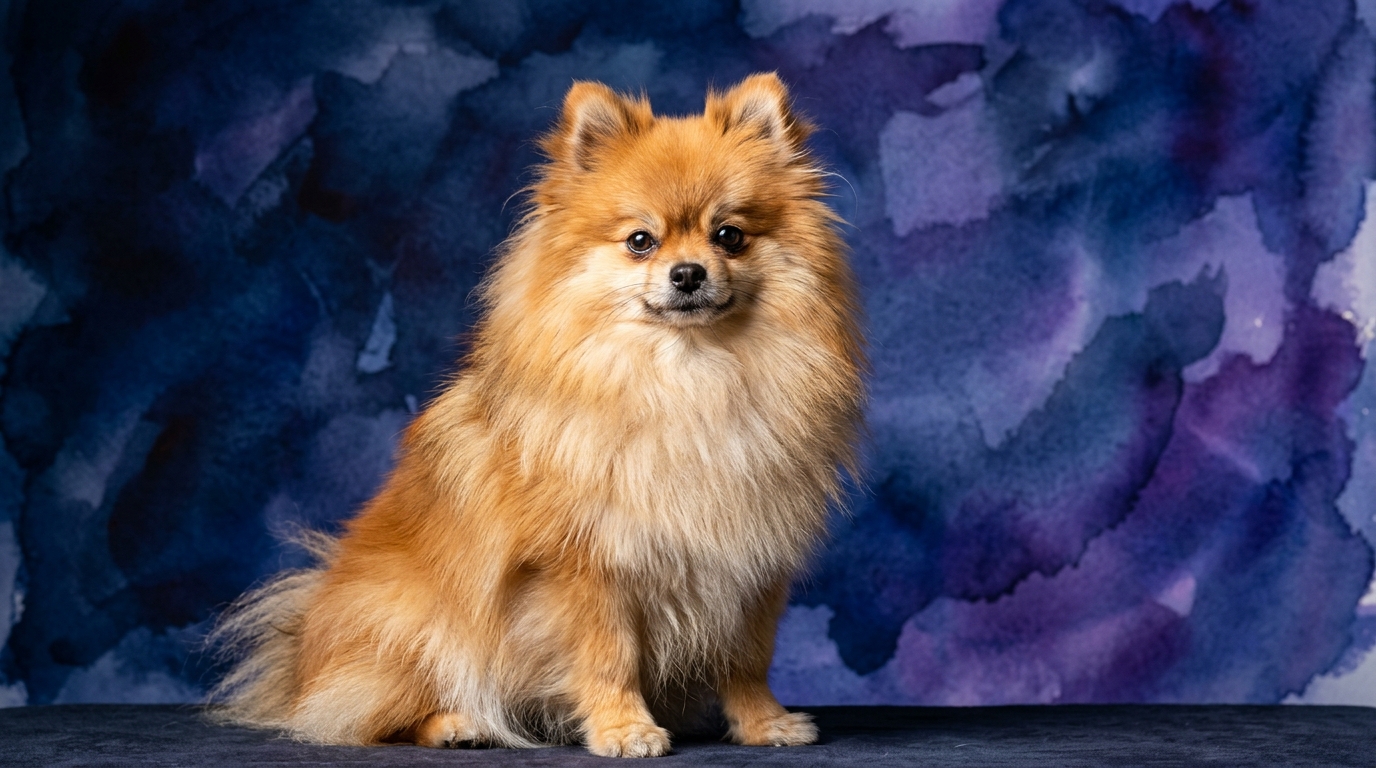
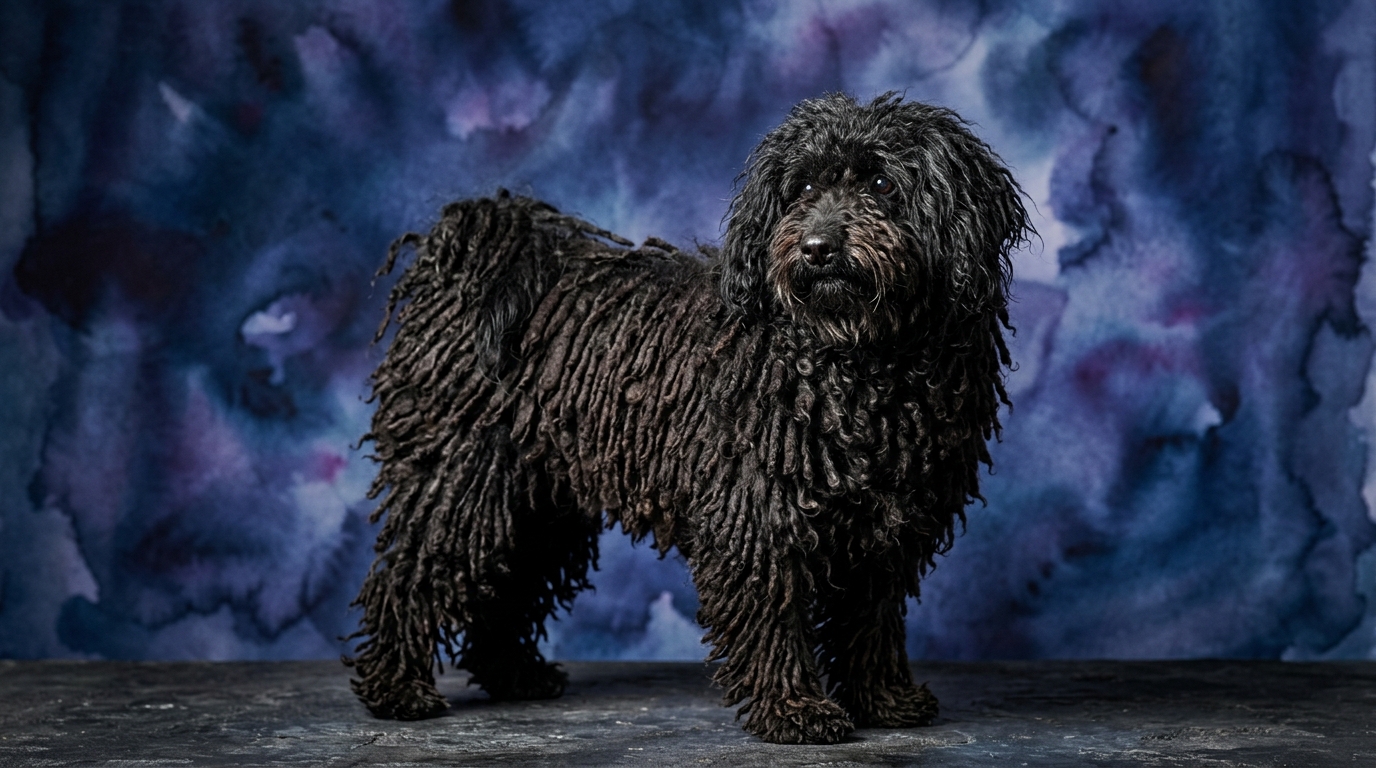
Side-by-Side IQ Profile: Pomeranian vs. Puli
The Cosmic Pet Pet IQ Lab employs a comprehensive five-dimensional framework to assess canine intelligence, moving beyond simple obedience scores to capture a fuller picture of a breed's cognitive landscape. Here’s how the Pomeranian and Puli stack up across these specific metrics.
**Pomeranian (Toy Group, Coren Rank #23)**: This diminutive breed often surprises with its sharp mind. Their **Problem Solving** is rated at 4/5, indicating a cleverness in navigating their environment, devising strategies to achieve goals, and mastering complex puzzle toys. **Training Speed** also scores 4/5; Pomeranians typically grasp new commands swiftly, motivated by interaction and positive reinforcement, making them quick learners in obedience and trick training. Their **Social Intelligence** is a notable 4/5, reflecting a keen ability to read human cues, understand household dynamics, and form perceptive, often manipulative, bonds with their families. The **Instinctive Drive** is 3/5, manifesting as alertness and occasional chasing of small objects, but primarily focused on companionship rather than complex working tasks. Finally, their **Memory** is strong at 4/5, allowing them to retain learned behaviors, routines, and recognition of individuals over extended periods.
**Puli (Herding Group, Coren Rank #25)**: The Puli, known for its distinctive cords, exhibits a different kind of working intelligence. Their **Problem Solving** also stands at 4/5, showcasing an ability to independently assess situations and strategize, particularly in scenarios that mimic their ancestral herding duties. **Training Speed** is rated 4/5, meaning Pulis absorb new information and commands efficiently, though their independent nature requires consistent and engaging methods. Their **Social Intelligence** is 3/5; while intensely loyal to their families, they can be more reserved with strangers and less overtly focused on broad human emotional cues, expressing social bonds through protection and close family ties. The **Instinctive Drive** is 3/5, but significantly channeled into herding behaviors like gathering and controlling, which can translate into trying to 'herd' family members. Their **Memory** is excellent at 4/5, vital for recalling complex sequences of commands and environmental layouts necessary for effective herding and advanced canine sports.
Where the Pomeranian Wins Cognitively
The Pomeranian’s cognitive strengths often shine brightest in social adaptability and nuanced interaction. With a 4/5 social intelligence rating, they generally possess a more refined capacity to interpret subtle human emotional states and adjust their behavior accordingly. This makes them exceptionally attuned companions who can seamlessly integrate into various family dynamics and social gatherings, often using their charm and perception to their advantage in a domestic setting. While both breeds share a 4/5 in problem-solving, the Pomeranian's application of this skill frequently manifests in clever household maneuvers, such as figuring out how to access desired treats or garner attention through learned, specific actions, demonstrating a unique form of situational awareness within a human-centric environment.
Where the Puli Wins Cognitively
The Puli's cognitive advantage lies in its specialized application of problem-solving and training speed within a purposeful, often independent, context. Their herding legacy imbues them with a distinct type of autonomous decision-making, where they must assess dynamic situations and act decisively to manage livestock, requiring a specific blend of cognitive flexibility and initiative. While both breeds score 3/5 in instinctive drive, the Puli’s drive is typically more directed and task-oriented, channeled into activities like herding, agility, or canine sports. This means their problem-solving often involves sophisticated spatial reasoning, strategic planning, and a more robust capacity for independent action in expansive or complex environments.
Training Dynamics: Pomeranian vs. Puli
Both the Pomeranian and Puli share an impressive 4/5 rating for training speed, indicating they are quick to learn. However, the *experience* of training can differ significantly due to their inherent behavioral predispositions. The Pomeranian’s 4/5 social intelligence means they are often highly responsive to human feedback, eager to please, and generally motivated by praise and interaction. Their natural inclination towards cooperation and their smaller, more manageable size can make initial obedience training feel more straightforward and less challenging for many owners, as they readily follow cues and adapt to new commands.
In contrast, while the Puli learns just as quickly, its herding background fosters a stronger independent streak. Their 3/5 social intelligence suggests they might be less driven by constant human approval and more inclined to make their own assessments of a situation. This can translate into a need for more consistent, firm, and engaging training methods to maintain their focus and prevent them from opting for self-directed actions. A Puli might test boundaries more frequently, requiring an owner who understands how to channel their strong will and inherent instinctive drives effectively. For a novice owner seeking a dog that readily complies, the Pomeranian often presents a smoother training path due to its overt desire to cooperate and its innate social perceptiveness.
Lifestyle Match: Active vs. Relaxed Owners
The Pomeranian, despite its small stature, is not a purely sedentary companion, but its activity requirements are generally moderate. Its 3/5 instinctive drive is largely satisfied with daily walks, interactive play sessions, and mental enrichment through puzzle toys or engaging trick training. They are well-suited for owners who enjoy consistent daily engagement and indoor or backyard play, but do not necessarily seek extensive outdoor adventures or high-impact sports. A relaxed owner who prioritizes companionship and can provide regular mental stimulation and affection will find a Pomeranian to be a fitting and thriving household member.
The Puli, stemming from its heritage as a working herding dog, demands a substantially more active lifestyle and dedicated engagement. Its 3/5 instinctive drive, while numerically similar to the Pomeranian's, manifests as a powerful and persistent need for purposeful activity. These dogs flourish with owners who are committed to providing regular, vigorous exercise, whether through long hikes, participation in agility courses, or even actual herding work. They require consistent mental challenges that fully engage their problem-solving skills to prevent boredom, which can lead to undesirable behaviors. Consequently, Pulis are best suited for active owners who can consistently provide ample outlets for their considerable physical and mental energy, making them less ideal for genuinely relaxed or low-activity households.
The Verdict
Choose a Pomeranian if you seek a highly socially intelligent companion who quickly adapts to family life and thrives on close interaction, eager to learn tricks and participate in moderate daily activities.
Opt for a Puli if you are an active, experienced owner prepared to channel their independent problem-solving and strong herding instincts into consistent training and vigorous daily exercise.
🧠 Find Your Pet's IQ Score
Our Pet IQ Lab assessment covers 25+ tests across 5 cognitive dimensions — personalized to your breed.
Take the Full IQ Test →Frequently Asked Questions
Are Pomeranians good with children?
Pomeranians can be good with older, respectful children who understand how to interact gently with a small dog, leveraging their high social intelligence to form bonds. However, due to their delicate size, supervision is crucial with very young children to prevent accidental injury.
Do Pulis require professional grooming?
Yes, Pulis typically require specialized grooming to maintain their distinctive corded coat, which involves careful separation and cleaning of the cords to prevent matting and ensure skin health. This is a significant commitment that often benefits from professional guidance or services.
Can a Puli live in an apartment?
A Puli *can* live in an apartment if their extensive exercise and mental stimulation needs are consistently met through daily outings and dedicated training sessions. Without ample activity, an apartment environment can quickly lead to boredom and behavioral issues for this active herding breed.