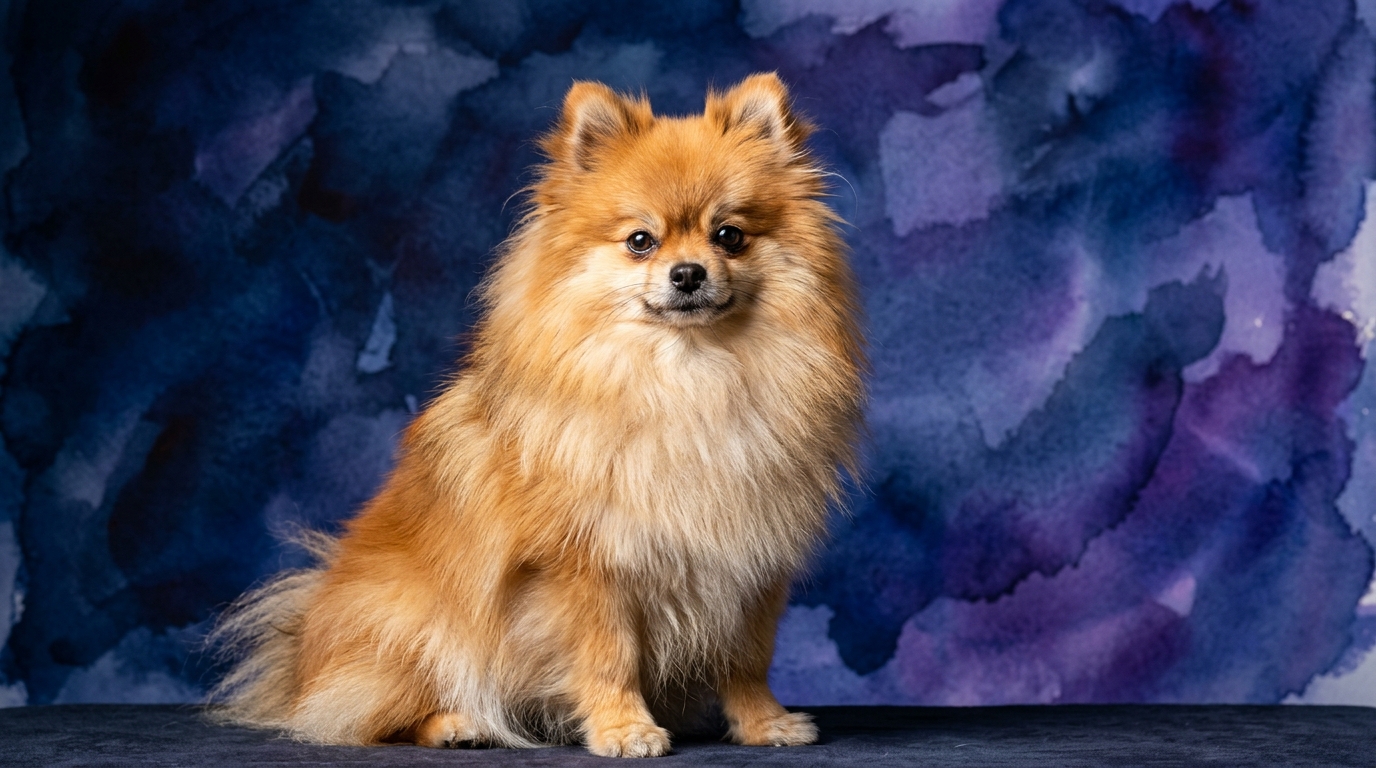
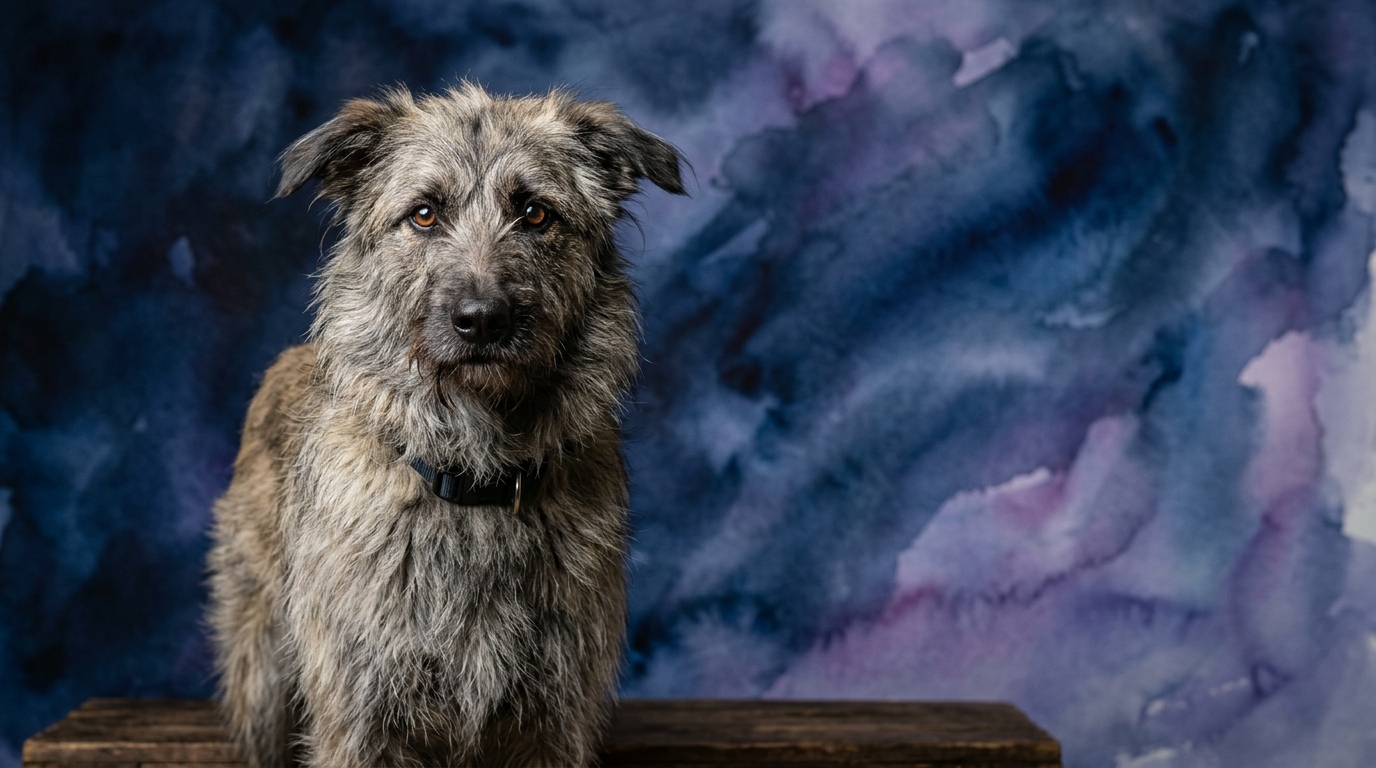
Side-by-Side Cognitive Profile: Pomeranian vs. Pyrenean Shepherd
The Cosmic Pet Pet IQ Lab employs a five-dimensional framework to assess canine intelligence, offering a nuanced view beyond simple rankings. For the Pomeranian, a Toy breed, we observe a robust cognitive makeup: Problem Solving 4/5, Training Speed 4/5, Social Intelligence 4/5, Instinctive Drive 3/5, and Memory 4/5. This breed also holds a respectable Coren rank of #23, signifying their general aptitude in obedience-related tasks. Their profile suggests a dog that is not only quick to learn but also adept at understanding and engaging with their human environment, coupled with a strong capacity for recall.
In contrast, the Pyrenean Shepherd, a Herding breed, presents a different cognitive signature, though not included in Coren’s widely published rankings. Their scores across the board are Problem Solving 3/5, Training Speed 3/5, Social Intelligence 3/5, Instinctive Drive 3/5, and Memory 3/5. These consistent scores reflect a breed whose intelligence is geared towards practical application and independent decision-making within their traditional working role. While their numerical scores appear lower than the Pomeranian’s in some areas, it is crucial to understand that these scores represent a functional intelligence honed for specific, demanding tasks, rather than a deficit in overall cognitive capacity. Their instinctive drive, though rated the same as the Pomeranian’s, manifests very differently, being intensely focused on herding behaviors.
Where the Pomeranian Wins Cognitively
The Pomeranian's cognitive profile showcases a remarkable aptitude for abstract thought and rapid learning, distinct advantages over many breeds. Their 4/5 rating in Problem Solving reflects a capacity to strategically navigate complex situations, whether it’s figuring out how to retrieve a toy from under furniture or manipulating a puzzle feeder. This isn't just about persistence; it's about applying learned concepts to new scenarios. Their superior Training Speed, also at 4/5, means they often pick up new commands with fewer repetitions, making them highly responsive to positive reinforcement methods. This agility in learning extends beyond basic obedience, enabling them to excel in trick training or even canine sports that demand quick comprehension. Furthermore, a 4/5 in Social Intelligence allows Pomeranians to keenly interpret human body language and vocal tones, fostering a deep, intuitive bond with their families. They often anticipate their owner's moods and desires, adapting their behavior accordingly. Coupled with a 4/5 Memory, these dogs retain a vast lexicon of commands, routines, and past experiences, making them consistent and reliable once a behavior is established. This combination of quick learning, social perceptiveness, and strong recall positions the Pomeranian as a highly adaptable companion, capable of thriving in varied domestic environments where mental engagement is valued.
Where the Pyrenean Shepherd Wins Cognitively
While the Pyrenean Shepherd's cognitive scores are consistently rated at 3/5 across all dimensions, these ratings reflect a different, yet equally valuable, form of intelligence honed by centuries of working alongside shepherds in challenging environments. Their Problem Solving, though rated 3/5, is acutely focused on practical, real-world challenges rather than abstract puzzles. This manifests as an exceptional ability to assess livestock movements, anticipate environmental hazards, and independently make decisions to protect their flock, often without direct human command. Their Instinctive Drive, also a 3/5, is precisely channeled into a powerful herding impulse, a cognitive strength that allows them to organize and manage animals with precision and persistence. This isn't a general drive; it's a specialized cognitive program for a specific task. In terms of Social Intelligence (3/5), the Pyrenean Shepherd forms deep, discerning bonds, often exhibiting a keen observational capacity for their handler's subtle cues within a working context. They may not be as overtly demonstrative as some breeds, but their understanding of their human partners in a task-oriented relationship is profound. Their Memory (3/5) is robust for routines and learned working patterns, allowing them to perform complex tasks repeatedly and reliably. Essentially, the Pyrenean Shepherd wins in the domain of functional, applied intelligence – a cognitive framework built for independent, critical thinking in dynamic, real-world scenarios, making them exceptional at their specialized tasks.
Training Ease: Pomeranian vs. Pyrenean Shepherd
When assessing ease of training, the Pomeranian generally presents a more straightforward path for the average owner. Their 4/5 Training Speed means they grasp new concepts and commands quickly, often thriving on the mental stimulation of learning. They respond well to positive reinforcement, eager to engage with their human companions, a trait bolstered by their 4/5 Social Intelligence. This allows them to readily tune into human intentions and desires, making communication during training more fluid. Behavioral differences such as their inherent desire to please and their lower instinctive drive (3/5) compared to a working breed contribute to their adaptability in various training scenarios, from basic obedience to intricate tricks. Their strong memory (4/5) ensures that once a concept is learned, it tends to stick, making them consistent performers.
In contrast, the Pyrenean Shepherd, with a 3/5 Training Speed, requires a more experienced and patient hand. While capable of learning, they may not show the same immediate eagerness or rapid acquisition of commands. Their 3/5 Social Intelligence often translates to a more independent nature; they are observant and discerning, forming strong bonds but not necessarily driven by the same 'people-pleasing' motivation. A key behavioral difference is their pronounced herding Instinctive Drive (3/5), which, while valuable in their traditional role, can manifest as chasing, nipping, or attempting to 'herd' family members or other pets in a domestic setting. Channeling this drive requires consistent, structured training and appropriate outlets, such as herding classes or agility sports. Without this, their independence and drive can make them seem more challenging to train for those unfamiliar with working breeds. Therefore, while both breeds are trainable, the Pomeranian's cognitive makeup aligns more closely with what many consider 'easy' training: rapid learning, high responsiveness, and a general eagerness to comply.
Lifestyle Match: Active vs. Relaxed Owners
For owners with a relaxed lifestyle, the Pomeranian often proves to be a more fitting companion. While they certainly enjoy activity and mental engagement, their smaller size and moderate Instinctive Drive (3/5) mean their exercise requirements are generally manageable. They are content with daily walks, indoor play, and cuddling on the couch, provided they receive consistent mental stimulation through training and interactive toys. Their high Social Intelligence (4/5) and adaptability allow them to integrate seamlessly into a quieter home life, thriving on companionship and close proximity to their family. They appreciate consistent routines but are not typically disruptive if a day is less active.
Conversely, the Pyrenean Shepherd is unequivocally suited for active owners. Their heritage as a working herding dog means they possess a robust physical and mental constitution that demands significant engagement. Their Instinctive Drive (3/5), though rated the same as the Pomeranian, manifests as an intense need for a 'job' or purposeful activity. Daily, vigorous exercise is crucial, not just a casual stroll. Activities like hiking, running, dog sports (agility, flyball, actual herding), or extensive training sessions are essential to satisfy their cognitive and physical needs. A Pyrenean Shepherd in a relaxed, sedentary home is likely to become bored, anxious, or destructive, utilizing their problem-solving skills (3/5) to create their own 'work' in undesirable ways. Their social intelligence (3/5) means they thrive on a partnership where they have a role, not just passive companionship. Therefore, an active owner who can provide consistent, stimulating outlets for their energy and intellect will find the Pyrenean Shepherd a rewarding partner, while a relaxed owner will find the Pomeranian a delightful, adaptable companion.
The Verdict
Choose the Pomeranian if you seek a highly adaptable, quick-learning companion eager for mental games and close social interaction, fitting well into moderately active or relaxed households.
Opt for the Pyrenean Shepherd if you are an experienced, active owner prepared to channel a powerful working drive into consistent training, demanding physical activity, and a shared purpose.
🧠 Find Your Pet's IQ Score
Our Pet IQ Lab assessment covers 25+ tests across 5 cognitive dimensions — personalized to your breed.
Take the Full IQ Test →Frequently Asked Questions
Does Coren's ranking apply to Pyrenean Shepherds?
No, Stanley Coren's intelligence ranking primarily focuses on obedience and working intelligence, often based on surveys of obedience judges. The Pyrenean Shepherd is not included in his widely referenced list, which doesn't diminish their specialized cognitive abilities but rather reflects their less common presence in mainstream obedience competitions.
Are Pyrenean Shepherds difficult to live with due to their drive?
Not necessarily difficult, but they require appropriate outlets for their inherent herding drive and high energy. Without sufficient physical and mental stimulation, they can become bored or exhibit undesirable behaviors, making them best suited for owners committed to an active lifestyle and consistent training.
Can a Pomeranian do agility or dog sports?
Absolutely. With their 4/5 problem-solving and training speed, Pomeranians excel in various dog sports like agility, obedience, and rally. Their small size makes them nimble, and their eagerness to learn makes them enthusiastic participants, often surprising observers with their capabilities.