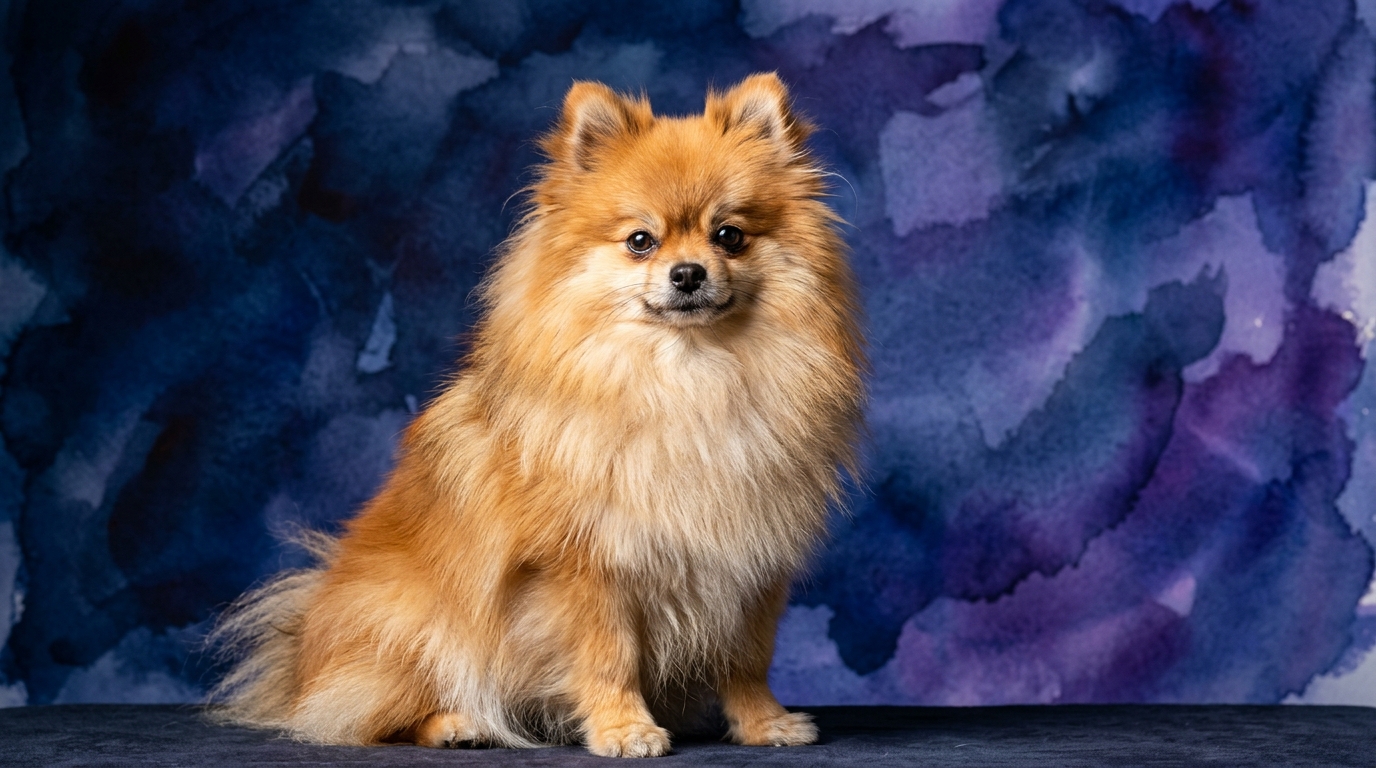

Side-by-Side IQ Profile: Pomeranian vs. Russian Toy
The Cosmic Pet Pet IQ Lab employs a five-dimensional framework to assess canine intelligence, providing a detailed understanding of each breed’s cognitive landscape. Here’s how the Pomeranian and Russian Toy measure up:
**Pomeranian IQ Profile:**
**Problem Solving (4/5):** Pomeranians notably excel at figuring out novel situations, such as manipulating puzzle toys or navigating new environments to achieve a goal. This suggests they can independently strategize and adapt when faced with challenges, rather than relying solely on learned responses.
**Training Speed (4/5):** Their quick uptake of new commands and routines indicates a rapid learning curve, often grasping concepts in fewer repetitions than many breeds. This efficiency makes them highly responsive to consistent training, enabling them to master a wide repertoire of behaviors.
**Social Intelligence (4/5):** Pomeranians demonstrate a keen awareness of human cues and social dynamics, often accurately interpreting moods and intentions. This allows for strong bonds and sophisticated interactions, making them adept at fitting into family structures and reading their human companions.
**Instinctive Drive (3/5):** While retaining some ancestral urges like alert barking or a moderate prey drive, their instinctive behaviors are generally well-integrated and manageable domestically. This score indicates a balanced level of innate predispositions, not overly dominated by primal instincts.
**Memory (4/5):** Their strong memory allows them to retain learned behaviors, routes, and associations over extended periods. This means accurate recall of commands even after a break, contributing to consistent performance and adaptability.
**Russian Toy IQ Profile:**
**Problem Solving (3/5):** Russian Toys show a moderate ability to solve problems, often preferring familiar routines and direct instruction over independent strategizing. They can learn to navigate simple obstacles but may require more guidance for complex or unfamiliar challenges.
**Training Speed (3/5):** Their learning pace is steady and consistent, requiring a reasonable number of repetitions to solidify new commands. While not as rapid, they are certainly trainable, responding well to patient and positive reinforcement.
**Social Intelligence (3/5):** Russian Toys possess a good understanding of social cues and form affectionate bonds with primary caregivers. They are responsive to human interaction but might be less nuanced in interpreting subtle signals, preferring clear and consistent communication.
**Instinctive Drive (3/5):** Similar to Pomeranians, Russian Toys exhibit moderate instinctive behaviors like alertness or a mild chase instinct. These drives are typically manageable and do not overwhelmingly dominate their domestic life, making them adaptable house companions.
**Memory (3/5):** They have a reliable memory for learned commands and routines, retaining information effectively with consistent reinforcement. They reliably remember core behaviors and familiar people, contributing to their predictable presence.
Where the Pomeranian Wins Cognitively
The Pomeranian's cognitive edge is evident across several dimensions, making them a more intellectually agile companion. Their Problem Solving score of 4/5 means they are often quicker to figure out how to access a treat from a new dispenser or navigate an unfamiliar house layout, showing proactive engagement with environmental challenges. This contrasts with the Russian Toy’s 3/5, which suggests a preference for more straightforward solutions. Furthermore, the Pomeranian's 4/5 in Training Speed and Memory means they can learn and retain a broader array of complex tricks or multi-step commands more efficiently, often picking up new behaviors in fewer sessions. Their superior Social Intelligence (4/5) also allows them to more readily interpret subtle shifts in human mood or body language, fostering a more nuanced and responsive interaction compared to the Russian Toy's 3/5.
Where the Russian Toy Wins Cognitively
While the Pomeranian excels in cognitive agility, the Russian Toy’s cognitive profile offers distinct advantages for owners seeking a more straightforward and less demanding intellectual engagement. Their consistent 3/5 across most IQ dimensions translates into a predictable and generally uncomplicated companion. This steady cognitive pace means they are less likely to overthink situations or become bored easily if not constantly stimulated with complex tasks. For owners who prefer a dog that thrives on routine and clear direction, the Russian Toy's moderate problem-solving and training speed can be a benefit, as they are less prone to developing 'clever' undesirable behaviors out of excessive ingenuity. Their balanced instinctive drive and social intelligence foster a calm and uncomplicated relationship, where expectations are easily met and understood.
Which is Easier to Train and Why
Based on their IQ profiles, the Pomeranian is generally easier to train, especially for owners aiming for advanced obedience or trick training. The Pomeranian's 4/5 in Training Speed means they typically grasp new commands and concepts with remarkable swiftness, often requiring fewer repetitions to achieve proficiency. This efficiency stems from their higher Problem Solving score (4/5), allowing them to understand the 'why' behind a command more quickly and generalize learned behaviors to new contexts. The Russian Toy, with a 3/5 in Training Speed and Problem Solving, requires a more patient and consistent approach. They will certainly learn, but the process may take longer, with more repetitions needed to solidify behaviors. This difference in learning style makes the Russian Toy more suited to owners who enjoy a steady, methodical training journey rather than rapid progression.
Suitability for Active vs. Relaxed Owners
Cognitive differences directly influence suitability for various owner lifestyles. Active owners who enjoy engaging their pet in mental challenges, advanced training, or dog sports will find the Pomeranian a more suitable match. Their higher Problem Solving and Training Speed scores mean they thrive on intellectual stimulation and can become restless if not given outlets for their mental energy, enjoying varied routines. Conversely, the Russian Toy is an excellent companion for more relaxed owners who appreciate predictable routines and a less cognitively demanding pet. While benefiting from regular walks and basic training, their moderate scores mean they are content with simpler forms of engagement, less likely to invent their own 'entertainment' if under-stimulated, and generally prefer a calm, consistent environment.
The Verdict
Choose a Pomeranian if you seek a cognitively agile companion eager for advanced training, puzzle-solving, and nuanced social interaction, thriving on mental engagement and varied activities.
Opt for a Russian Toy if you prefer a predictable, affectionate partner content with consistent routines and simpler forms of engagement, offering a calm and uncomplicated presence.
🧠 Find Your Pet's IQ Score
Our Pet IQ Lab assessment covers 25+ tests across 5 cognitive dimensions — personalized to your breed.
Take the Full IQ Test →Frequently Asked Questions
Does the Pomeranian's higher IQ make it more prone to behavioral issues?
A Pomeranian's higher cognitive capacity means they can learn both desired and undesired behaviors quickly. If not provided with sufficient mental stimulation and consistent training, their problem-solving abilities might be directed towards inventive mischief, necessitating active engagement to channel their intellect constructively.
Is the Russian Toy difficult to train because of its lower IQ scores?
No, the Russian Toy is not difficult to train; it simply has a different learning pace. Its moderate scores mean training requires more patience and consistent repetition, but they are perfectly capable of learning all necessary commands and routines, making them responsive companions for dedicated owners.
How do their social intelligence scores impact their interactions with strangers or other pets?
The Pomeranian's higher social intelligence (4/5) often translates to a more nuanced ability to read social cues from strangers or other pets, potentially leading to quicker adaptation or more sophisticated interactions. The Russian Toy's 3/5 means they are generally friendly but might require clearer introductions and a bit more time to assess new social situations, preferring familiar company.