Side-by-Side IQ Profile: Deconstructing the 3/5 Scores
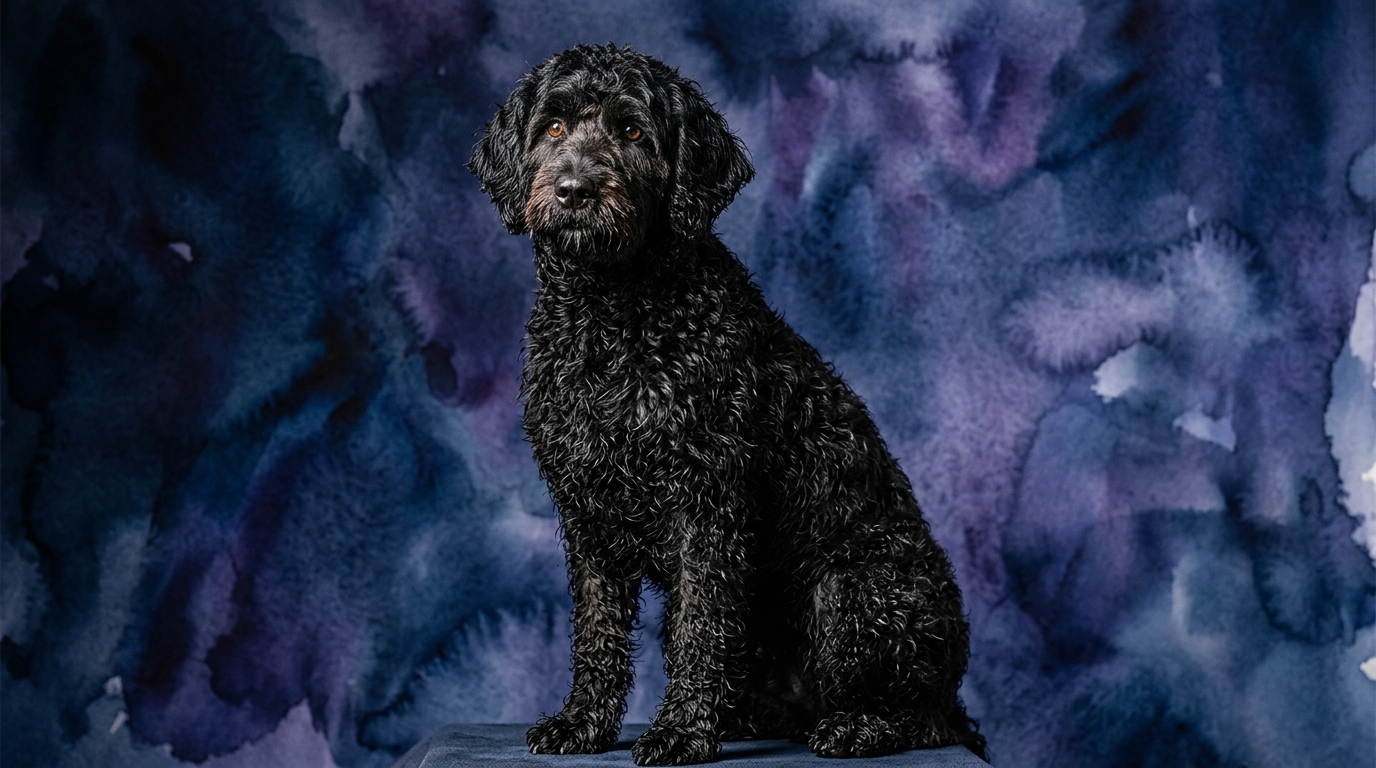
Both the Portuguese Water Dog (PWD) and the American Foxhound register a consistent 3 out of 5 across all five cognitive dimensions in The Cosmic Pet Pet IQ Lab. This uniformity might suggest little difference, but understanding how a '3' manifests for each breed requires looking beyond the number to their inherent drives and historical purposes. For the PWD, a working breed, this score reflects a capacity for engaging with complex, human-directed tasks, often involving retrieval and problem-solving in varied environments. Their intelligence is geared towards active collaboration and understanding sequential commands.
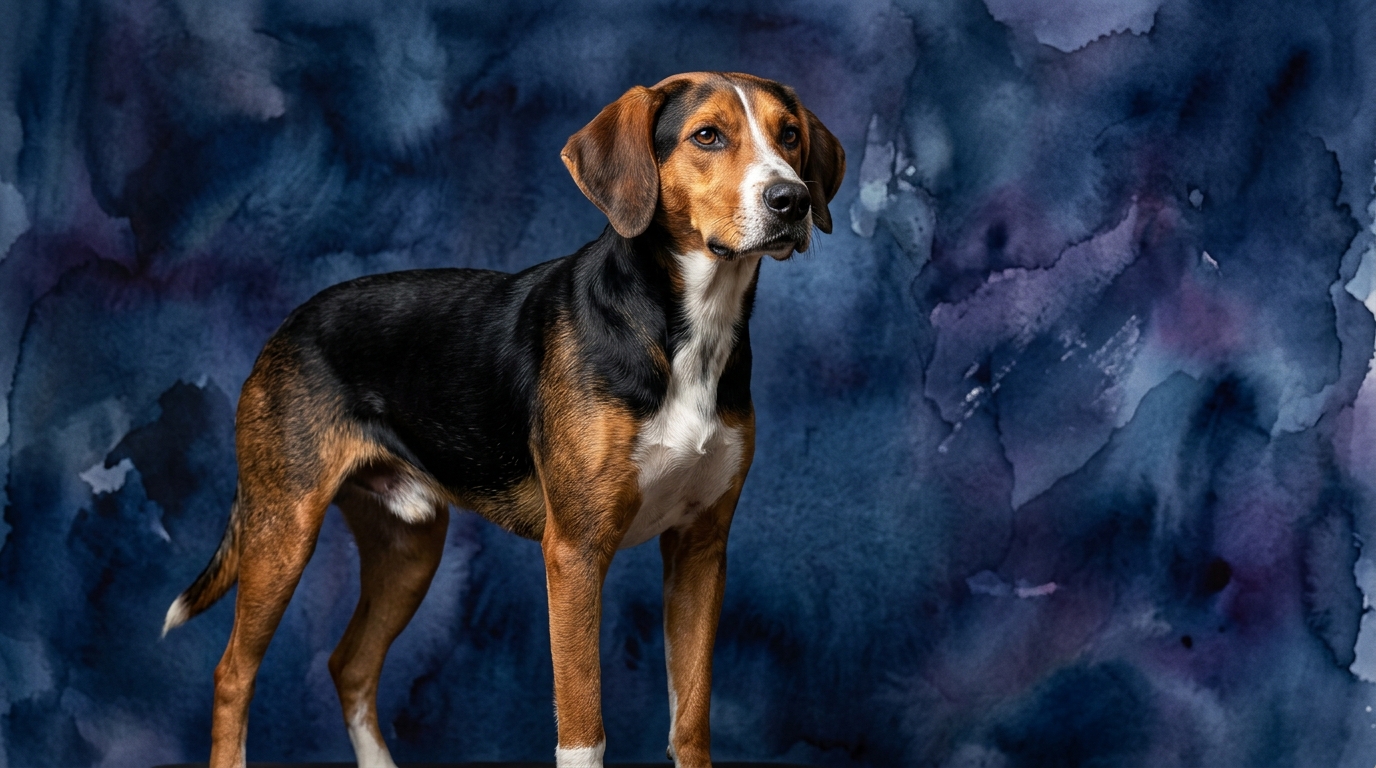
The American Foxhound, a hound breed, also scores 3/5, but its cognitive operations are fundamentally different. Their intelligence is specialized for sustained, independent pursuit, driven by an acute sense of smell. A Foxhound's '3' in problem-solving is about navigating terrain, maintaining a scent trail over long distances, and making autonomous decisions in the field rather than executing human-initiated tasks. Their social intelligence is rooted in pack dynamics, prioritizing cooperative hunting over nuanced human emotional cues. This identical numerical score, therefore, masks a profound divergence in cognitive application and focus.
Where the Portuguese Water Dog Wins Cognitively
The Portuguese Water Dog excels in cognitive areas that demand adaptability to human instruction and a desire for structured engagement. Their problem-solving at a 3/5 level is often demonstrated in figuring out how to manipulate objects, operate simple latches, or learn intricate tricks that require a sequence of actions. This breed's working heritage means they are adept at learning specific commands and applying them in diverse situations, from retrieving items from water to navigating agility courses. Their cognitive strengths lie in their capacity for focused attention on a handler and a willingness to learn novel routines.
Furthermore, their 3/5 social intelligence translates into a keen awareness of their human family's moods and intentions. PWDs are often described as sensitive to their owner's emotional state, making them highly responsive companions within a domestic setting. This allows them to integrate smoothly into family life, often anticipating needs and responding to subtle cues. Their memory, also a 3/5, is particularly effective for retaining a wide repertoire of commands and remembering specific interactions or training sessions over time, contributing to their reputation as capable learners.
Where the American Foxhound Wins Cognitively
The American Foxhound's cognitive strengths, while scoring identically at 3/5, are profoundly specialized for their original purpose: hunting by scent. Their problem-solving ability is unparalleled in the domain of tracking, where they must interpret complex scent information, differentiate trails, and strategize the most efficient path through varied terrain, often independent of direct human guidance. This isn't about solving puzzles for a treat; it's about persistent, long-duration, sensory-driven cognitive work that requires immense focus and endurance.
Their 3/5 instinctive drive is the engine of their intelligence, manifesting as an almost unwavering commitment to a scent. This drive is a cognitive asset in its own right, enabling them to ignore distractions and remain fixated on their primary task. The Foxhound's memory, also 3/5, is particularly tuned to remembering scent patterns, hunting grounds, and the movements of prey, allowing them to build a sophisticated mental map of their environment. Their social intelligence, while less focused on human emotional subtleties than the PWD, is highly developed for pack cooperation, understanding hierarchy, and communicating effectively with other dogs during a hunt. This makes them exceptional at collaborative, dog-centric tasks.
Which is Easier to Train and Why?
When considering ease of training for typical companion dog behaviors, the Portuguese Water Dog generally presents fewer challenges for the average owner. Their 3/5 training speed is bolstered by a fundamental desire to engage with and please their human companions. PWDs tend to be more attuned to human vocalizations and body language, making them responsive to positive reinforcement methods. While they possess an independent streak, their working background means they thrive on having a 'job' and learning new skills, making them receptive to structured obedience and trick training.
The American Foxhound, despite also scoring 3/5 in training speed, often requires a different approach. Their powerful 3/5 instinctive drive, particularly their scenting ability, can be a significant 'distraction' from human-centric commands. While capable of learning basic obedience, a Foxhound's attention can be instantly diverted by an interesting scent, overriding learned behaviors. Training a Foxhound effectively means understanding and harnessing their natural drives, often through specialized scent work or activities that allow them to fulfill their innate hunting instincts. For general obedience in a busy environment, their independent, scent-driven nature can make consistent compliance more demanding than with a PWD.
Which Suits Active Owners vs. Different Activity Preferences
Neither the Portuguese Water Dog nor the American Foxhound are suited for truly relaxed owners; both demand significant engagement, but their preferred activities diverge. The PWD, with its 3/5 problem-solving and social intelligence, thrives with owners who enjoy interactive training, dog sports like agility or dock diving, and regular, varied physical activity that includes mental challenges. They are ideal for active individuals or families who want a canine partner deeply involved in their daily routines, including hiking, swimming, and learning new skills. Their need for structured mental stimulation means they enjoy puzzles and learning games.
The American Foxhound requires an owner whose definition of 'active' includes vast outdoor spaces and a deep appreciation for their hound instincts. Their 3/5 instinctive drive means they need extensive opportunities for off-leash running, ideally in secure areas where they can explore scents without immediate danger. They are best suited for owners who participate in activities like scent work, tracking, or even field trials, providing an outlet for their specialized intelligence. A Foxhound's endurance and independent nature mean they excel in long, exploratory walks or runs, often less focused on human interaction during these outings and more on their sensory environment.
The Verdict
Choose the Portuguese Water Dog if you desire a highly interactive, task-oriented canine partner eager to learn and engage in varied human-directed activities and family life.
Opt for the American Foxhound if you are an owner dedicated to providing extensive opportunities for scent work and long, independent outdoor exploration, appreciating a dog whose intelligence is deeply rooted in ancient hunting instincts.
🧠 Find Your Pet's IQ Score
Our Pet IQ Lab assessment covers 25+ tests across 5 cognitive dimensions — personalized to your breed.
Take the Full IQ Test →Frequently Asked Questions
Despite identical IQ scores, how do their problem-solving approaches differ?
The PWD's 3/5 problem-solving focuses on human-directed tasks, such as figuring out how to open a cabinet or retrieve a specific item. The American Foxhound's 3/5 problem-solving is centered on autonomous, sensory-driven challenges like interpreting complex scent trails and navigating terrain during a prolonged hunt.
How does their social intelligence manifest uniquely?
The PWD's 3/5 social intelligence is often expressed through sensitivity to human emotions and a desire for close family integration, making them responsive companions. The American Foxhound's 3/5 social intelligence is more rooted in pack dynamics, understanding canine hierarchies, and cooperative effort within a group, often with less focus on nuanced human cues.
What kind of mental stimulation is best for each breed?
For the Portuguese Water Dog, mental stimulation thrives on interactive training sessions, learning new tricks, puzzle toys, and engaging in dog sports that require problem-solving. The American Foxhound benefits most from activities that engage their powerful scent drive, such as tracking games, scent work, and extensive, exploratory walks in varied environments where they can follow their nose.