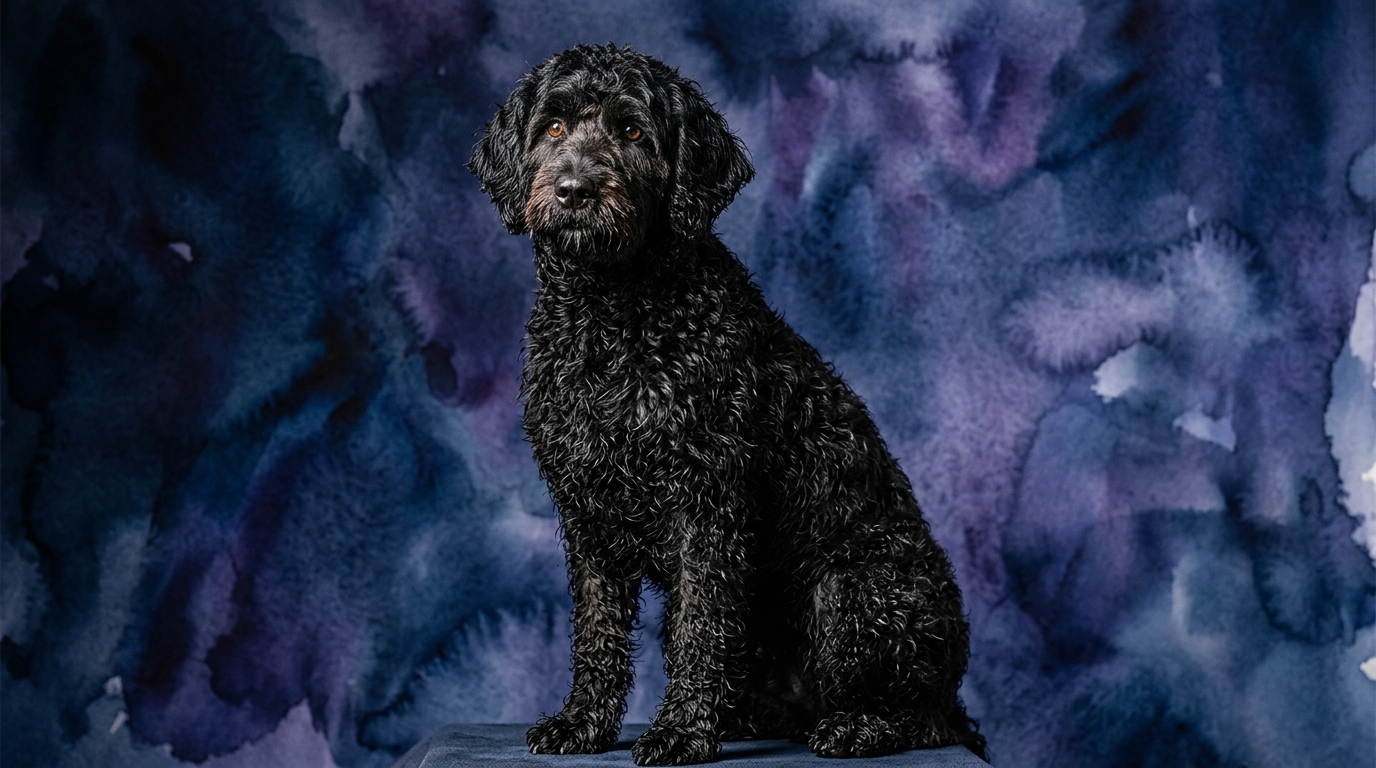
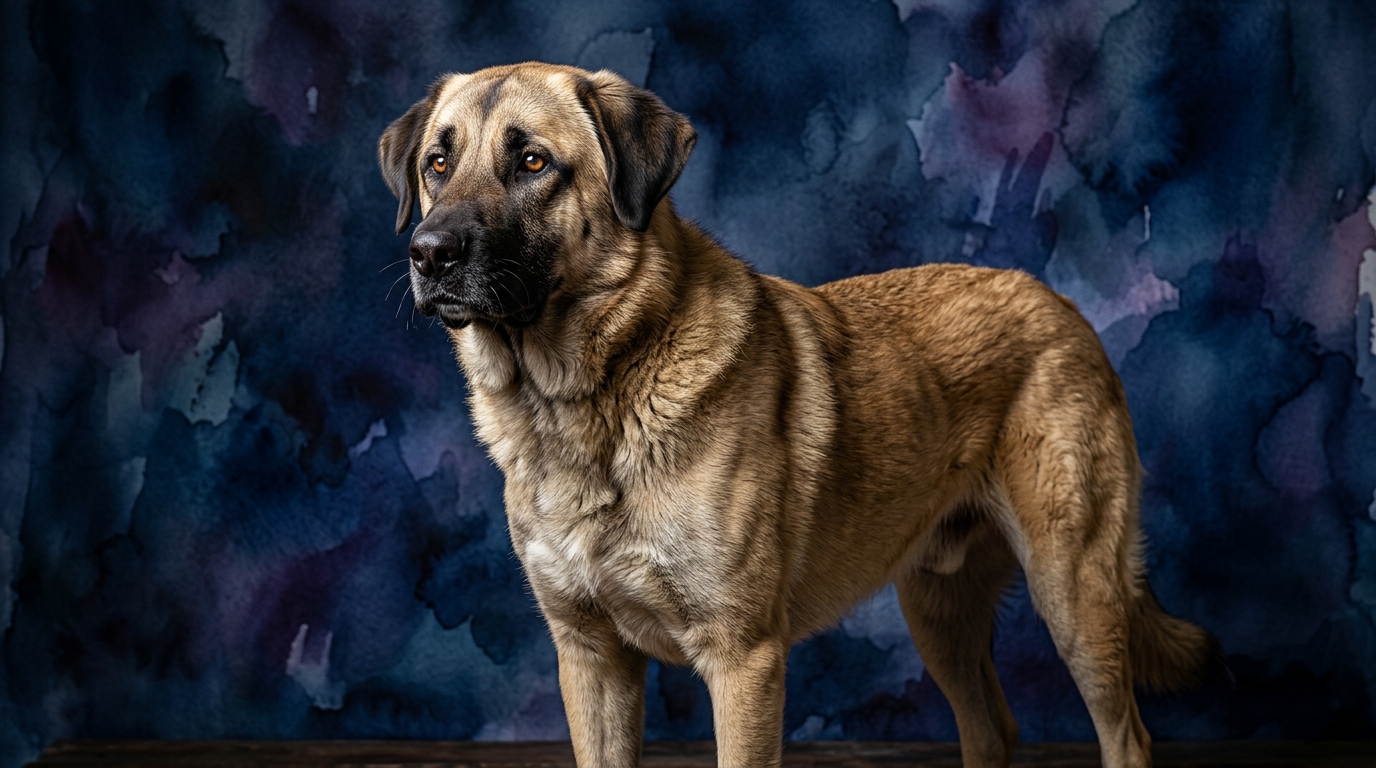
Side-by-Side IQ Profile: Interpreting the 3/5 Score
At The Cosmic Pet's Pet IQ Lab, both the Portuguese Water Dog (PWD) and the Anatolian Shepherd Dog (ASD) register a consistent 3/5 across all five measured cognitive dimensions. This identical numerical ranking doesn't imply identical mental processes, but rather reflects an average capacity that is uniquely applied within each breed's historical context and purpose. Let's delve into how these scores translate into their distinct cognitive styles.
For Problem Solving (3/5), the PWD demonstrates a capacity for figuring out multi-step tasks, such as retrieving specific items from water or navigating obstacles on a boat, often in collaboration with a human handler. Their problem-solving leans towards task-oriented challenges requiring sequential thought and adaptability to varied environments. The ASD's 3/5 in problem-solving, conversely, manifests as an independent judgment in dynamic, often high-stakes situations. This includes assessing potential threats to livestock, strategically positioning themselves for defense, or identifying the safest routes for their flock. Their solutions are often self-directed and rooted in vigilance and protection.
Training Speed (3/5) for the PWD signifies an average ability to learn new commands and routines, often fueled by their eagerness to engage and work alongside their human companions. They typically respond well to positive reinforcement and consistent methods, enjoying the interactive nature of training. The ASD's 3/5 in training speed indicates they are equally capable of learning commands at an average pace, but their primary drive isn't always human collaboration. Their learning often requires understanding their profound independence and primary loyalty to their flock or territory, meaning motivation might stem from a different place than a PWD's desire to please.
Social Intelligence (3/5) in the PWD is evident in their strong bond with family members, their ability to read human cues, and their adaptability within a social household. They often seek interaction and understand complex social dynamics within their immediate human group. The ASD's 3/5 in social intelligence is profoundly geared towards their livestock and family unit. They excel at understanding animal behavior, discerning friend from foe, and maintaining a watchful, often aloof, demeanor towards strangers. Their social acumen is honed for protection and assessing intentions within their perceived domain.
Instinctive Drive (3/5) for the PWD is characterized by a strong retrieving instinct, a natural affinity for water, and a drive for interactive work, sometimes displaying herding tendencies towards their family. Their instincts are channeled into active, participatory roles. The ASD's 3/5 in instinctive drive is dominated by an unwavering guarding and protective impulse. This manifests as sustained vigilance, territorial awareness, and an intrinsic need to protect their charges, whether animals or humans, from perceived threats. Their drive is less about interaction and more about unwavering presence and defense.
Finally, Memory (3/5) for the PWD enables them to recall complex sequences for tasks, remember routines, and retain a vast repertoire of commands. They can remember specific objects and locations for retrieval. The ASD's 3/5 in memory is crucial for recalling threats, distinguishing between safe and dangerous situations, remembering the individuals within their territory (both human and animal), and mapping out their patrol routes. Their memory serves their long-term vigilance and protective duties.
Where the Portuguese Water Dog Wins Cognitively
Despite identical baseline scores, the Portuguese Water Dog exhibits a cognitive 'win' in adaptability to a diverse range of human-directed activities. Their 3/5 in problem-solving is often applied to learning new dog sports, intricate obedience routines, or even service dog tasks that require precise, sequential actions and responsiveness to human instruction. This breed shines when presented with varied mental challenges that foster collaboration.
Their social intelligence (3/5) allows them to seamlessly integrate into bustling family environments, quickly understanding household rules and individual personalities. This makes them particularly adept at navigating complex human social structures and becoming highly interactive companions. Furthermore, their instinctive drive (3/5) for retrieving and active engagement makes them excel in tasks requiring fine motor skills for object manipulation and a desire to bring items back to their handler, a distinct advantage for certain types of work or play.
The PWD's overall cognitive profile is geared towards being a highly engaged, versatile partner. Their memory (3/5) for commands and routines, combined with their training speed (3/5), means they can build an extensive behavioral repertoire, making them excellent candidates for advanced training and roles that require a broad skill set and consistent performance under direction.
Where the Anatolian Shepherd Dog Wins Cognitively
The Anatolian Shepherd Dog's cognitive strengths lie in their profound independence and nuanced environmental awareness, a distinct manifestation of their 3/5 scores. Their problem-solving (3/5) is superior in situations demanding autonomous decision-making without constant human oversight, such as assessing a distant threat or strategically moving a flock. They excel at reading complex, subtle cues from their environment and the animals they guard.
Their social intelligence (3/5) is unparalleled in its specific application to livestock and territory protection. They possess an innate ability to differentiate between normal and abnormal animal behavior, recognize intruders, and understand the intricate social dynamics of their charges. This hyper-focused social acumen allows them to be highly effective, self-sufficient guardians. Their instinctive drive (3/5) for vigilance and protection is a sustained, enduring cognitive trait, enabling them to maintain focus and readiness over long periods, often in solitary conditions.
The ASD's memory (3/5) for their territory, its boundaries, and the individuals within it is exceptional. They recall past threats and safe zones, contributing to their highly effective, proactive guarding strategies. This breed's cognitive 'wins' are rooted in their capacity for thoughtful, independent action, making them masters of their specialized protective domain where human intervention is minimal.
Which is Easier to Train and Why
While both breeds score a 3/5 in training speed, the Portuguese Water Dog is generally perceived as 'easier' to train in a conventional sense due to their inherent desire to work collaboratively with a handler. Their strong social intelligence (3/5) and instinctive drive (3/5) for interactive tasks mean they often thrive on human attention and praise, making them more amenable to structured obedience lessons. They are typically eager to please and enjoy the process of learning new tricks or commands from their human companions, making positive reinforcement highly effective.
The Anatolian Shepherd Dog, conversely, presents a different training dynamic. While equally capable of learning at an average pace (3/5 training speed), their profound independence and primary loyalty to their guarding instincts often mean they require a different approach. An ASD might understand a command but choose not to execute it if it conflicts with their perceived duty or if they don't see the immediate relevance. Their problem-solving (3/5) is geared towards self-sufficiency, not necessarily human-directed tasks. Training an ASD demands patience, consistency, a deep understanding of their breed specific motivations, and a willingness to work *with* their guarding nature rather than trying to suppress it. Their 'easiness' in training is less about quick compliance and more about forging a respectful partnership based on trust and understanding their independent spirit.
Which Suits Active Owners vs. Relaxed Owners
The Portuguese Water Dog is an ideal match for active owners who relish engaging with their canine companion through various physical and mental challenges. Their 3/5 in instinctive drive means they require consistent outlets for their energy, thriving on activities like swimming, retrieving, agility, or long hikes. Owners who enjoy teaching new skills, participating in dog sports, or simply spending significant interactive time with their dog will find the PWD's cognitive profile highly rewarding. They are not suited for owners seeking a purely 'relaxed' companion in the sense of minimal engagement.
The Anatolian Shepherd Dog, while needing ample space and a sense of purpose, suits a different kind of owner. They are not a dog for the 'relaxed' owner in terms of hands-off management; rather, they suit an owner who understands and respects their independent, vigilant nature. Their activity is often self-directed patrolling and observation, rather than high-intensity, human-led play sessions. They need consistent boundaries and socialization, but their physical needs are often met through guarding their property or livestock. An owner who can provide a secure environment, consistent guidance, and appreciate a dog that operates with a degree of autonomy will be a better fit than someone expecting a highly interactive, constantly playful companion. Their 'active' is more about mental vigilance and patrolling their domain than structured exercise routines with their human.
The Verdict
Choose the Portuguese Water Dog if you seek an interactive, task-oriented companion who thrives on collaborative learning and diverse activities, eager to be deeply involved in family life. Their adaptable cognitive style makes them excellent partners for engaged, active owners.
Opt for the Anatolian Shepherd Dog if you are an experienced owner seeking a supremely independent, protective guardian with a profound sense of duty and space. Their specialized intelligence excels in autonomous vigilance and requires an owner who respects their self-directed nature.
🧠 Find Your Pet's IQ Score
Our Pet IQ Lab assessment covers 25+ tests across 5 cognitive dimensions — personalized to your breed.
Take the Full IQ Test →Frequently Asked Questions
Do Portuguese Water Dogs need a lot of mental stimulation?
Yes, Portuguese Water Dogs certainly benefit from consistent mental engagement. Their problem-solving and training speed scores of 3/5 indicate they enjoy learning and mastering new tasks, making puzzles, training sessions, and varied activities crucial for their well-being.
How does the Anatolian Shepherd Dog's independence affect training?
The Anatolian Shepherd Dog's independence, though not reflecting lower training speed, means they may evaluate commands through the lens of their guarding instincts. Training requires immense patience, clear communication, and understanding that their primary motivation is often their role as a protector, not necessarily immediate human compliance.
Are either of these breeds suitable for first-time dog owners?
Neither breed is typically recommended for first-time dog owners. Both have working backgrounds that demand experienced handling, consistent training, and an owner who understands their specific cognitive and behavioral needs to ensure a harmonious relationship.