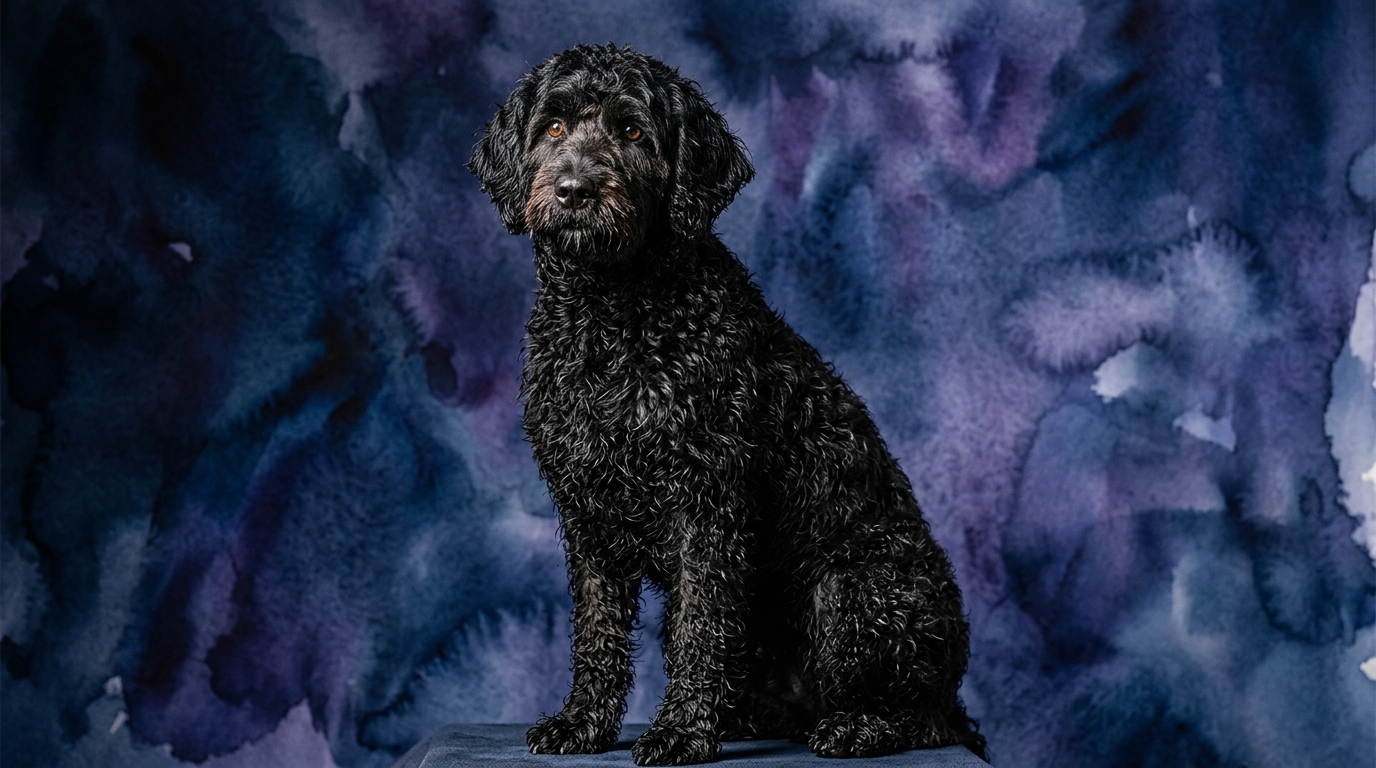
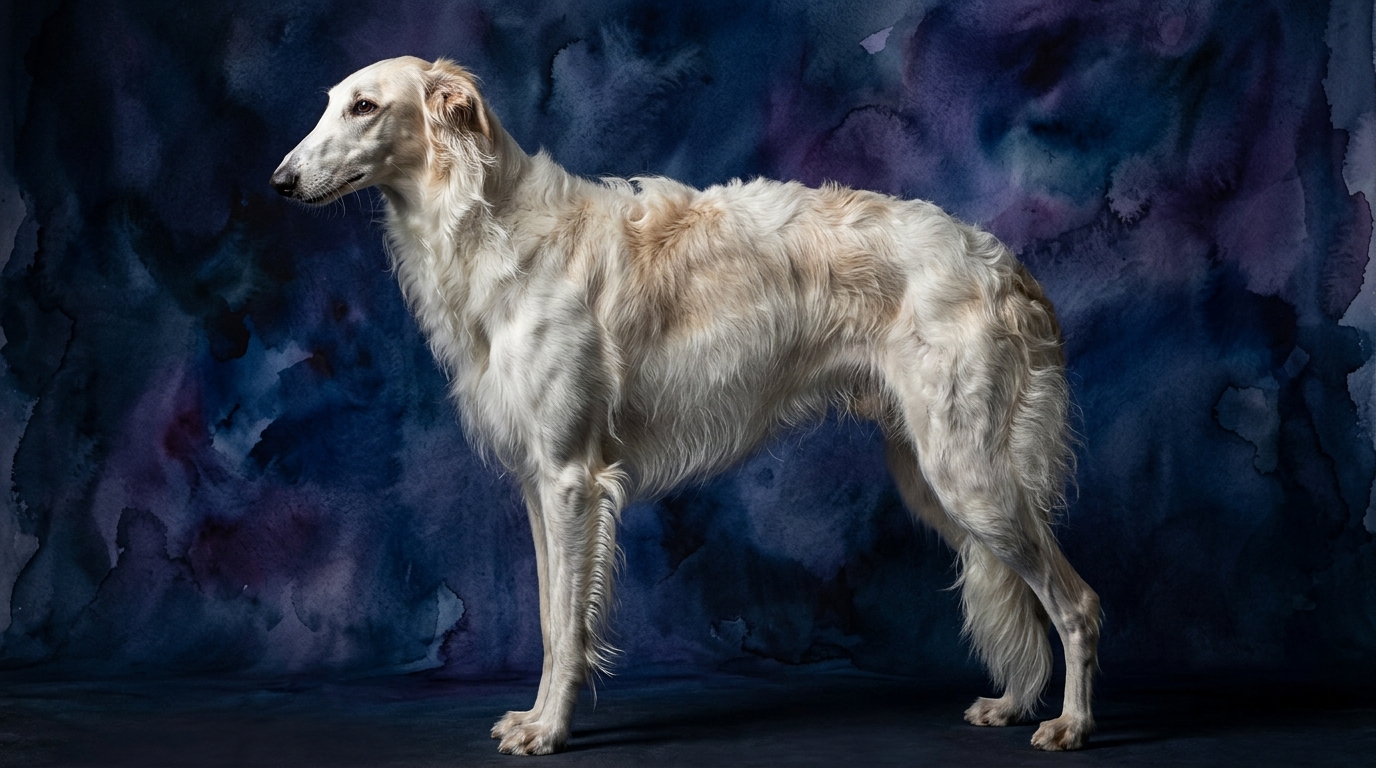
Side-by-Side Cognitive Profile: PWD vs. Borzoi
At The Cosmic Pet Pet IQ Lab, we assess canine intelligence across five key dimensions. Interestingly, both the Portuguese Water Dog (PWD) and the Borzoi register a balanced 3 out of 5 in each category, suggesting a baseline of robust cognitive function. However, the *expression* of these abilities is where their paths diverge, shaped by their distinct histories and purposes.
For **Problem Solving**, both breeds score 3/5, yet their approaches differ. The PWD, a working dog, demonstrates a practical, hands-on approach to challenges. Their problem-solving often involves manipulating objects, navigating complex environments to retrieve items, or finding clever ways to engage their human partners in play, reflecting a history of active collaboration with fishermen. The Borzoi's problem-solving, conversely, is rooted in independent assessment and strategic action, particularly when pursuing a target or navigating open terrain. This breed excels at evaluating a situation and executing a plan with minimal human input, a legacy of their sighthound role in vast, open landscapes.
**Training Speed** also stands at 3/5 for both. The PWD is generally eager to learn and quick to grasp new commands, especially when training is engaging and consistent. Their cooperative nature means they often find satisfaction in performing tasks correctly for their human companions, making the learning process relatively smooth. While the Borzoi is equally capable of learning rapidly, their training speed is often influenced by their independent streak. They absorb information efficiently but might require more motivation or a perceived personal benefit to consistently execute a command, reflecting their self-reliant hunting past.
In **Social Intelligence**, both breeds again rate 3/5. The PWD exhibits a strong attunement to human emotions and social cues within their family unit. They often seek interaction and can be quite demonstrative in their affection, adapting well to various social dynamics and driven by a desire for connection. The Borzoi, in contrast, possesses a subtle yet deep understanding of their social environment, forming profound bonds with their inner circle. They observe interactions keenly, often appearing reserved but processing social information effectively, preferring quiet companionship over boisterous engagement with strangers.
Their **Instinctive Drive** is equally strong at 3/5, but directed very differently. The PWD's instincts are channeled towards cooperative tasks like retrieving, swimming, and activities that mimic herding. This drive is oriented towards working alongside humans, making them highly motivated by interactive games and tasks that utilize their natural abilities. The Borzoi, on the other hand, features a powerful, sight-driven prey instinct, compelling them to chase anything that moves quickly. This fundamental drive is deeply ingrained, manifesting as a strong urge for independent pursuit, which dictates much of their behavior in outdoor environments.
Finally, **Memory** is a 3/5 for both. The PWD boasts a reliable memory for learned commands, routines, and the locations of favored items or people. They retain complex sequences of actions, making them proficient in activities requiring sequential understanding. The Borzoi displays excellent memory for spatial layouts, routes, and past experiences, particularly those related to hunting or exploration. They recall training, but their application of those memories can be selective, often influenced by immediate environmental stimuli or their independent nature.
Where the Portuguese Water Dog Wins Cognitively
The Portuguese Water Dog's cognitive strengths truly shine in contexts demanding cooperative engagement and a desire to please. Their background as a working dog means they are predisposed to partner with humans on tasks, translating into a proactive approach to learning and problem-solving within a structured environment. This makes them particularly adept at activities like competitive obedience, agility, or rally, where rapid, precise responses and sustained focus on human cues are paramount.
Their problem-solving aptitude often manifests in devising ways to interact and engage their human companions, such as figuring out how to retrieve a toy from an unusual spot to initiate play or strategically positioning themselves for attention. This breed thrives on mental challenges that involve collaboration, using their intellect to understand and fulfill a shared objective. The PWD's capacity for sustained mental effort and their enjoyment of complex, multi-step tasks give them an edge in scenarios requiring consistent, directed cognitive application.
Where the Borzoi Wins Cognitively
The Borzoi's cognitive prowess is most evident in situations that demand independent thought, keen observation, and swift, autonomous decision-making. As a sighthound, their problem-solving is less about pleasing a human and more about efficiency and strategy in their own pursuits. This might involve assessing the optimal path to follow a perceived 'prey' item, or navigating a complex landscape with grace and precision.
Their social intelligence, while subtle, allows them to observe and understand their human companions with a profound depth, often anticipating needs or moods without overt displays. This independent observation and processing of information allows them to operate effectively in their environment, making choices based on their own assessment rather than constant human direction. The Borzoi excels in cognitive tasks requiring quick, instinctive responses and the ability to adapt instantly to changing visual stimuli, drawing on their long history of solo hunting.
Their memory, particularly for spatial layouts and effective hunting strategies, is a testament to their self-reliant heritage. This allows them to remember specific routes or areas where they have previously found interest, demonstrating a practical application of their cognitive abilities in real-world, dynamic scenarios.
Which Is Easier to Train and Why?
When considering ease of training, the Portuguese Water Dog generally presents a more straightforward experience for the average owner. Their working dog heritage instills a fundamental desire to please and a natural inclination towards cooperative tasks. PWDs typically respond well to positive reinforcement and consistent structure, eager to engage in learning as a shared, rewarding activity. Their inherent retrieving drive also makes fetching and object-based learning intuitive, simplifying many basic obedience lessons.
The Borzoi, by contrast, can be more challenging to train due to their deeply ingrained sighthound independence and powerful prey drive. While they are capable of learning commands quickly, their motivation often stems from their own assessment of a situation or a perceived personal benefit, rather than an inherent desire to comply. Training a Borzoi requires immense patience, a profound understanding of their motivations, and the ability to make training feel like their idea. They might learn a command in one context but choose not to perform it if a stronger instinct, such as chasing a squirrel, overrides the request. This requires creative and persistent engagement from their human partners.
Which Suits Active Owners vs. Relaxed Owners?
For owners with an active lifestyle, the Portuguese Water Dog is often an ideal match. They thrive on consistent physical and mental engagement, needing daily structured exercise, advanced training, and ample opportunities for problem-solving. Owners must be prepared to integrate a PWD into an active routine, which often includes swimming, hiking, and participation in dog sports. Their energy levels and need for interaction mean they are not content to be couch potatoes.
Conversely, the Borzoi can be a better fit for more relaxed owners, provided their specific exercise needs are understood and met. While they require bursts of intense exercise, such as sprinting in a safe, securely fenced space, they are generally calm, quiet, and dignified indoors. Their exercise needs are more about quality sprints than sustained endurance, and after a good run, they are typically content to lounge gracefully. Owners who appreciate a serene home environment but are committed to providing daily opportunities for vigorous, safe running will find the Borzoi a rewarding companion, albeit one that requires vigilance regarding their prey drive in unsecured outdoor areas.
The Verdict
Choose the Portuguese Water Dog if you seek an engaged, cooperative canine partner eager for structured activities, water sports, and consistent mental challenges within a dynamic family setting.
Choose the Borzoi if you appreciate an independent, elegant companion, capable of impressive bursts of speed, and are comfortable with a dog that values personal space and quiet companionship after its exercise needs are met.
🧠 Find Your Pet's IQ Score
Our Pet IQ Lab assessment covers 25+ tests across 5 cognitive dimensions — personalized to your breed.
Take the Full IQ Test →Frequently Asked Questions
Do Portuguese Water Dogs make good family pets?
Yes, Portuguese Water Dogs often bond closely with their families and are generally good with children, provided they receive proper socialization and their high energy and mental stimulation needs are consistently met with engaging activities.
Are Borzoi difficult to manage off-leash?
Due to their powerful sighthound prey drive, Borzoi can be challenging to manage off-leash in unsecured areas, as their instinct to chase can override recall commands. Secure, enclosed spaces are essential for their exercise to ensure their safety and prevent them from pursuing perceived prey.
How much mental stimulation does a Portuguese Water Dog need?
Portuguese Water Dogs require substantial mental stimulation daily to thrive. They benefit greatly from puzzle toys, advanced obedience training, dog sports, and varied tasks to keep their active minds engaged and prevent boredom-related behaviors, which can lead to destructive tendencies.