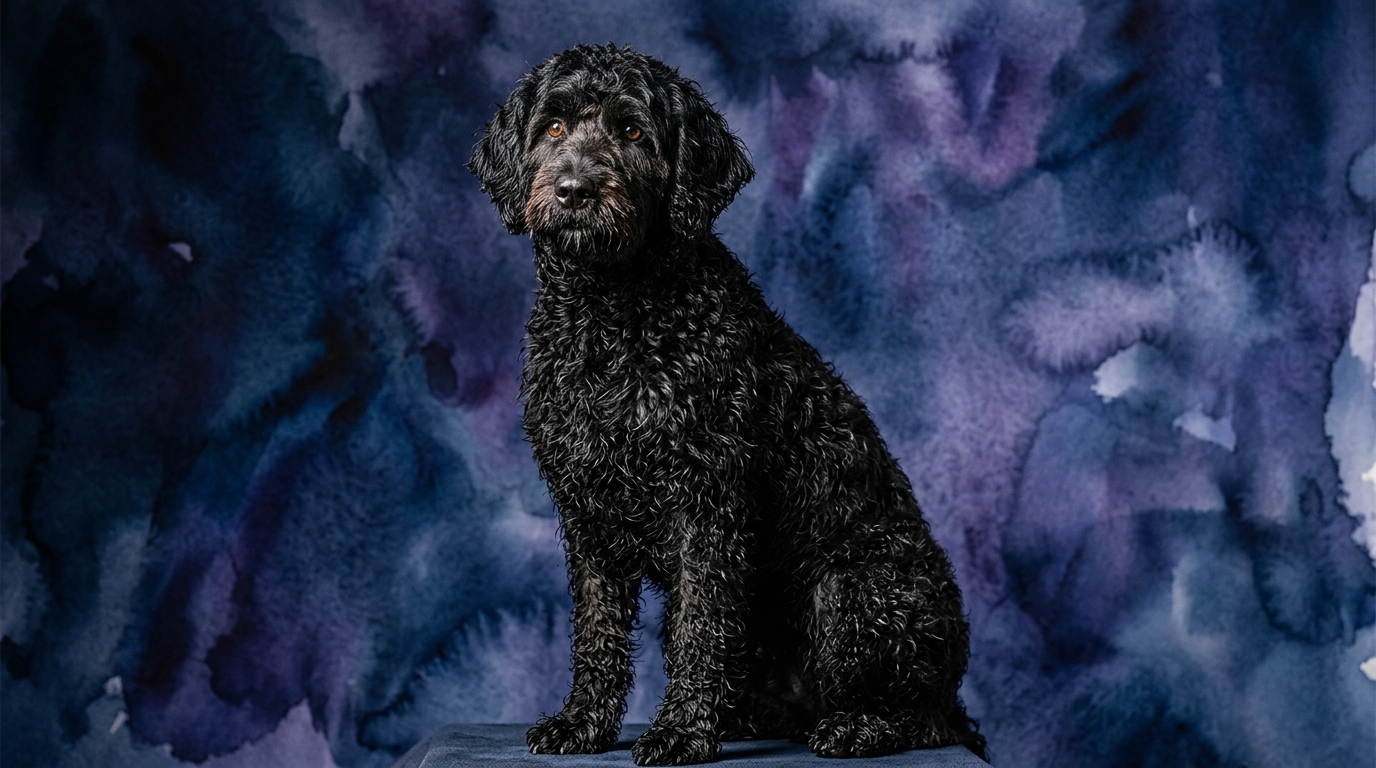
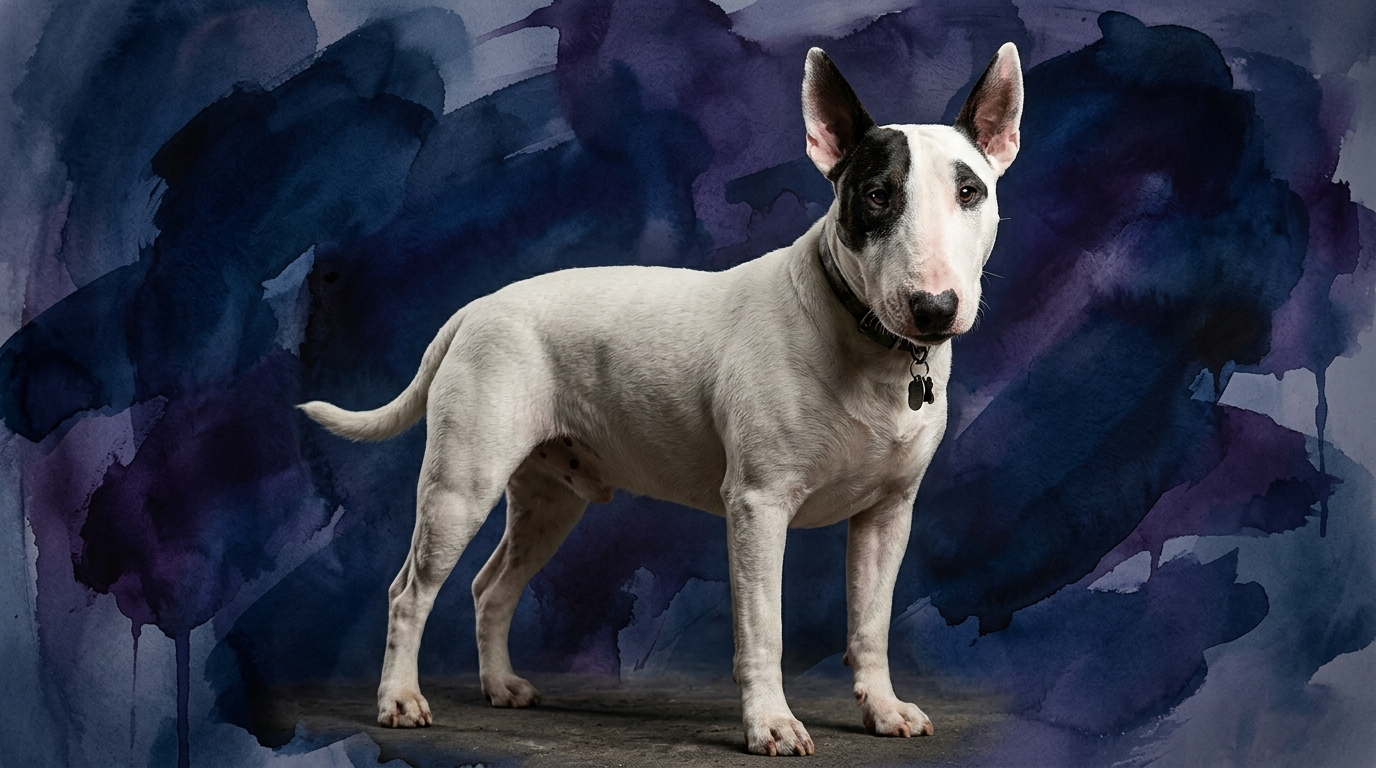
Side-by-Side IQ Profile: PWD vs. Bull Terrier
The Cosmic Pet Pet IQ Lab provides a nuanced look at canine cognition across five key dimensions. For the Portuguese Water Dog, their Problem Solving (3/5) often manifests as a methodical curiosity, using their physical abilities to manipulate objects and navigate spaces, reflecting a practical, hands-on cognitive style. Their Training Speed (3/5) indicates a moderate learning pace, requiring consistent reinforcement for solid retention. Social Intelligence (3/5) highlights their robust understanding of human cues and desire for engagement within a family unit. Instinctive Drive (3/5) is rooted in their water dog heritage, motivating them towards retrieving and purposeful activity. Finally, their Memory (3/5) supports long-term retention of commands and routines, contributing to their adaptability.
The Bull Terrier, sharing identical scores, applies these cognitive strengths with a distinct flair. Their Problem Solving (3/5) is often characterized by tenacity and a unique, sometimes stubborn, creativity in overcoming obstacles, rather than always following the most direct path. Training Speed (3/5) means they learn steadily, but their independent streak requires engaging their interest to ensure compliance. Social Intelligence (3/5) shows they form strong, often selective, attachments to their primary caregivers, understanding household dynamics well. Their Instinctive Drive (3/5) is marked by a terrier's courage and a desire for playful, sometimes boisterous, interaction. Their Memory (3/5) is reliable for experiences and routines, influencing their responses and requiring consistent handling.
Where the Portuguese Water Dog Wins Cognitively
While both breeds share identical IQ lab scores, the Portuguese Water Dog often exhibits a more direct and cooperative application of their cognitive abilities, particularly in task-oriented scenarios. Their problem-solving, rated at 3/5, frequently manifests as a focused determination to complete a given 'job,' whether it's retrieving a specific item or learning a complex agility sequence. This isn't just about figuring out a puzzle; it's about understanding the purpose behind the task and working alongside their human partner to achieve it. Their social intelligence (3/5) often translates into a keen desire to please and engage, making them highly attuned to human direction and environmental cues. This cooperative inclination can make them more adaptable to varied training methods and less prone to independent decision-making when a clear directive is provided. Their instinctive drive (3/5), rooted in their historical role as fishermen's aids, channels their energy into activities like swimming, retrieving, and guarding, providing a natural framework for their engagement and cognitive stimulation.
Where the Bull Terrier Wins Cognitively
The Bull Terrier, despite matching the PWD in raw cognitive scores, often demonstrates a unique brand of independent thought and resilient problem-solving. Their problem-solving (3/5) is less about cooperative task completion and more about individual ingenuity, often involving persistence in overcoming perceived obstacles, even if it means bending the rules. This can translate into a creative approach to opening gates or finding hidden treats, showcasing a tenacious spirit that doesn't easily give up. Their instinctive drive (3/5) is often characterized by a robust curiosity and a playful, sometimes mischievous, determination to explore and interact on their own terms. This isn't necessarily a disadvantage; it means they excel at tasks requiring self-motivation and a certain level of independent decision-making. Their social intelligence (3/5), while strong, can be more selectively applied, leading to intense loyalty to their chosen family members and a more discerning approach to new acquaintances, requiring a different nuance of understanding from their human companions.
Which is Easier to Train and Why
When comparing ease of training, the Portuguese Water Dog typically presents a more straightforward path for the average owner. Their training speed is rated 3/5, and this is significantly bolstered by their strong desire to cooperate and their attentive nature. PWDs often thrive on positive reinforcement, seeing training as a joint activity rather than a series of demands. They aim to understand what is being asked and enjoy the process of learning and working alongside their handler. Their background as working dogs means they are generally receptive to direction and derive satisfaction from performing tasks.
In contrast, the Bull Terrier, also rated 3/5 for training speed, can be more challenging due to their independent and sometimes stubborn streak. While they are capable of learning, a Bull Terrier might understand a command perfectly but choose not to execute it if they don't perceive a compelling reason or if their attention is elsewhere. Training a Bull Terrier often requires more patience, creativity, and a consistent, firm yet fair approach that taps into their playfulness and strong bond with their owner, rather than relying solely on compliance. Their problem-solving can sometimes be applied to finding ways around commands, making consistency paramount.
Which Suits Active Owners vs. Relaxed Owners
For active owners seeking a canine partner for adventures, the Portuguese Water Dog is often a natural fit. Their inherent instinctive drive (3/5) for activity, particularly water-based sports, hiking, and retrieving, aligns well with a dynamic lifestyle. They possess the physical stamina and mental engagement to participate in extended periods of exercise and enjoy learning new skills in varied environments. PWDs thrive when given a 'job' to do, whether it's agility, dock diving, or simply a long, engaging walk with plenty of mental stimulation.
In contrast, while the Bull Terrier also benefits from regular activity, their needs might be slightly different. Their instinctive drive (3/5) leans more towards playful bursts of energy, robust games, and exploring their immediate surroundings with tenacity. They can be excellent companions for owners who enjoy structured play sessions, puzzle toys, and consistent, moderate exercise. However, for genuinely relaxed owners, neither breed is a perfect match for a sedentary lifestyle. Both require significant mental and physical engagement to prevent boredom and potential behavioral issues. The Bull Terrier's independent nature and strong will mean that an under-exercised or under-stimulated individual can become disruptive, while the PWD's working heritage demands an outlet for their energy and cooperative spirit.
The Verdict
Choose the Portuguese Water Dog if you value a cooperative, task-oriented companion eager to engage in joint activities and thrive on a clear sense of purpose.
Opt for the Bull Terrier if you appreciate a tenacious, independent thinker with a playful spirit and are prepared to engage their distinct personality with patience and creative training.
🧠 Find Your Pet's IQ Score
Our Pet IQ Lab assessment covers 25+ tests across 5 cognitive dimensions — personalized to your breed.
Take the Full IQ Test →Frequently Asked Questions
Do Portuguese Water Dogs shed much?
Portuguese Water Dogs have a single coat that doesn't shed like traditional double-coated breeds. Instead, their hair continues to grow and requires regular grooming, including brushing and professional clipping every 6-8 weeks, to prevent matting.
Are Bull Terriers good with children?
Bull Terriers can be excellent family dogs, often forming strong bonds with children and displaying a protective, playful nature. However, their robust play style and strength mean they require supervision with very young children and early socialization to ensure appropriate interactions.
How much exercise does a Portuguese Water Dog need daily?
A Portuguese Water Dog typically requires at least 60 minutes of vigorous exercise daily, which can include brisk walks, running, swimming, or engaging in dog sports. Mental stimulation through training and puzzle toys is equally important to satisfy their active minds.