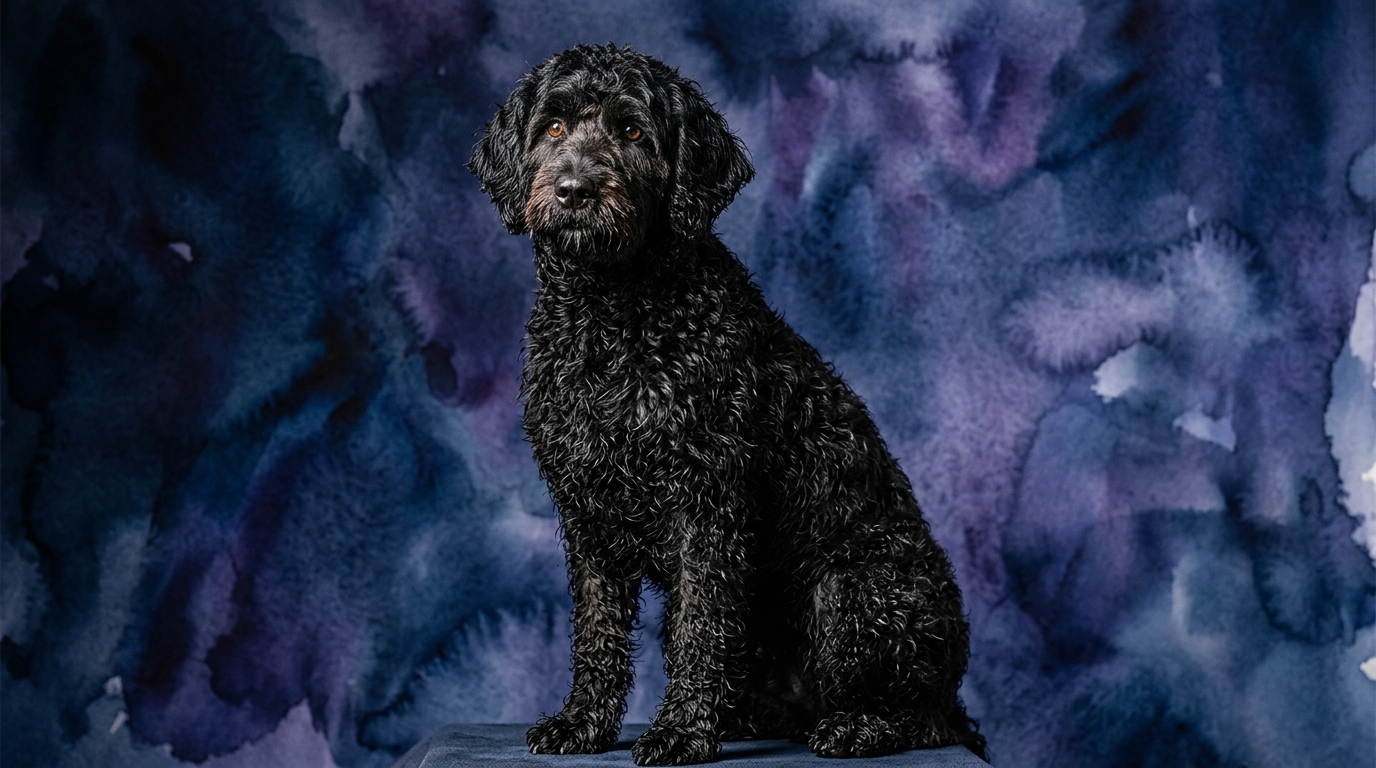

Side-by-Side IQ Profile
Delving into the Portuguese Water Dog's (PWD) cognitive makeup, we observe a Problem Solving score of 3/5, indicating a capacity for practical, task-oriented solutions. They excel at figuring out how to retrieve items from water, navigate complex environments, or manipulate objects with their mouths and paws, reflecting their working dog heritage. Their Training Speed, also 3/5, suggests they learn new commands at a moderate pace, often requiring consistent, patient repetition; their eagerness to please aids retention once a concept clicks. Social Intelligence at 3/5 means PWDs are generally attuned to human emotions and intentions, forming strong bonds within their family unit, though they might be more reserved or observant with strangers. Their Instinctive Drive, rated 3/5, is rooted in their original purpose of water retrieval and herding fish, translating into a natural inclination for retrieving, swimming, and often a desire to 'manage' their human family. Finally, a Memory score of 3/5 indicates PWDs possess a good, functional memory for commands, routines, and the locations of favored items or people, recalling complex task sequences, especially those tied to their working drive.
The Manchester Terrier (MT) also presents a Problem Solving score of 3/5, but their approach leans towards independent, often self-serving solutions, typical of a terrier. They might figure out how to access a forbidden treat, navigate tight spaces to pursue a scent, or outsmart a barrier using cleverness and persistence, demonstrating a practical, often cunning, approach. Their Training Speed, also 3/5, means they learn at a moderate pace, yet their learning curve can be influenced by an independent streak; they grasp concepts but might choose to execute them only when sufficiently motivated, requiring engaging and varied methods. Social Intelligence at 3/5 reveals MTs are perceptive, capable of understanding human moods and intentions, often using this to their advantage. They form deep attachments to their inner circle, displaying a keen awareness of family dynamics, but can be aloof or discerning with outsiders, characteristic of their self-reliant nature. Their Instinctive Drive, a 3/5, is primarily that of a ratting terrier – a strong prey drive, keen senses, and persistent determination to investigate and pursue, manifesting as a desire to chase small animals, dig, and explore. Lastly, a Memory score of 3/5 means MTs exhibit a robust memory for routines, learned boundaries, and particularly for locations of intriguing scents or hidden treasures; they recall past training, but their independent nature means they might 'remember' and choose not to comply if a more interesting distraction arises.
Where Portuguese Water Dog Wins Cognitively
Despite identical 3/5 scores, the Portuguese Water Dog's cognitive strengths shine in contexts requiring collaborative problem-solving and sustained focus on directed tasks. Their historical role fostered a capacity for understanding and executing complex, multi-step commands in a team-oriented fashion. A PWD might readily learn to retrieve specific items on command from cluttered environments, demonstrating a directed application of their moderate cognitive ability. Their instinctive drive, geared towards partnership and purpose, allows them to channel memory and problem-solving into fulfilling human-given objectives with less self-interest than a terrier. This makes them adept at competitive obedience, agility, or scent work, where intricate sequences and handler cues are paramount, leveraging their moderate training speed and memory within a cooperative framework. Their social intelligence often translates into a deeper desire to please, a powerful motivator for cognitive engagement in structured tasks.
Where Manchester Terrier Wins Cognitively
The Manchester Terrier demonstrates cognitive prowess in areas demanding independent thought, quick decision-making, and keen environmental awareness. Their terrier heritage cultivates a problem-solving approach centered on self-sufficiency and resourcefulness. An MT might excel at bypassing a gate or locating a hidden toy using scent and spatial reasoning, showcasing a more self-directed and cunning application of their moderate cognitive abilities. Their instinctive drive, intensely focused on prey and exploration, makes them exceptional at tasks requiring independent tracking, vigilance, and rapid assessment of environmental changes. This translates into aptitude for earthdog trials or barn hunt, where their memory for scent trails and autonomous work are highly valued. Their social intelligence manifests as sharp awareness of their environment and family dynamics, allowing quick adaptation and subtle manipulation of interactions.
Which is Easier to Train and Why
Given both share 3/5 training speed, ease of training hinges on inherent temperamental differences and motivational drivers. The Portuguese Water Dog, as a working breed, generally brings an inherent desire to collaborate and please its human partner. While requiring consistent repetition, their focus is typically on the task and handler's cues. This 'team player' mentality, with moderate instinctive drive channeled towards cooperative tasks, often makes their training process feel more straightforward. They respond well to positive reinforcement and value shared activity.
In contrast, the Manchester Terrier's training, though equally capable, requires a nuanced approach due to their independent, strong-willed terrier nature. Their 3/5 training speed is coupled with a tendency to evaluate whether a command is worth their effort. While grasping concepts quickly, their strong instinctive drive (3/5 for hunting/chase) means easy distraction. Successful MT training demands engaging, varied sessions, high-value rewards, and a handler who consistently demonstrates leadership without harsh methods. It's not harder, but requires more creativity and understanding of terrier psychology to maintain engagement.
Which Suits Active Owners vs Relaxed Owners
For owners embracing an active lifestyle and desiring a canine partner deeply involved in adventures, the Portuguese Water Dog is often more fitting. Their 3/5 instinctive drive translates into a need for purposeful activity like swimming, hiking, or dog sports. They thrive with a 'job,' and their moderate problem-solving and memory benefit from consistent mental and physical stimulation. A PWD happily accompanies owners on long excursions, their social intelligence making them eager participants. They require regular engagement to prevent boredom.
The Manchester Terrier, while energetic, adapts more readily to a slightly less demanding exercise routine, suiting owners preferring focused bursts of activity. Their 3/5 instinctive drive is satisfied with vigorous play, brisk walks, and opportunities to engage senses through scent games or exploring a secure yard. While enjoying activity, their independent streak means they are often content to entertain themselves or relax after needs are met. They don't possess the relentless drive of some working breeds, fitting owners who appreciate a dog switching between high-energy play and quiet companionship, provided quality interaction.
The Verdict
Choose the Portuguese Water Dog if you seek a cooperative, engaged partner for active, structured tasks and enjoy a dog that thrives on shared purpose. They excel when their moderate cognitive abilities are channeled into teamwork and consistent activity.
Opt for the Manchester Terrier if you appreciate an independent, clever companion who brings bursts of energy, vigilance, and self-sufficiency, thriving with varied mental challenges and a secure environment to explore. Their moderate intelligence is best engaged through cunning games and individual pursuits.
🧠 Find Your Pet's IQ Score
Our Pet IQ Lab assessment covers 25+ tests across 5 cognitive dimensions — personalized to your breed.
Take the Full IQ Test →Frequently Asked Questions
Are Portuguese Water Dogs good for first-time owners?
PWDs can be suitable for first-time owners who are committed to consistent training, providing ample exercise, and engaging their dog in purposeful activities. Their cooperative nature makes them responsive, but their needs for stimulation are significant.
Do Manchester Terriers require a lot of grooming?
Manchester Terriers are relatively low-maintenance when it comes to grooming. Their short, smooth coat requires minimal brushing, perhaps once a week, and occasional baths to keep them clean.
How do both breeds compare in terms of vocalization?
Portuguese Water Dogs are generally moderate vocalizers, often using barks to communicate or alert, but can be trained to temper it. Manchester Terriers tend to be more vocal, prone to barking at perceived threats or during play, reflecting their alert terrier nature.