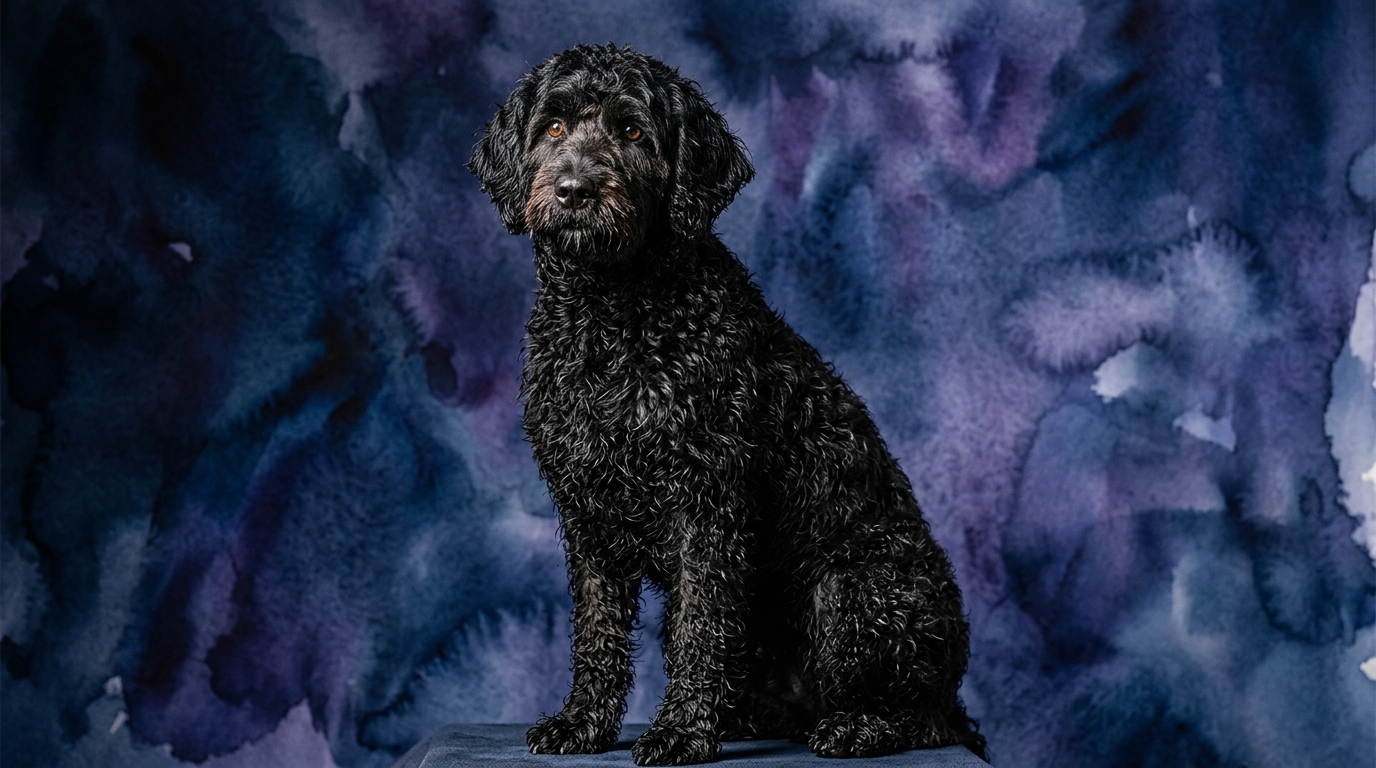

Side-by-Side IQ Profile
The Portuguese Water Dog presents a balanced cognitive profile, scoring 3 out of 5 across all five dimensions. Their problem-solving ability, rated at 3/5, suggests a practical approach to challenges, preferring straightforward solutions rather than abstract reasoning. Training speed also sits at 3/5, indicating they learn new commands and tasks with consistent effort and repetition. In social intelligence, a 3/5 score means they are attuned to human cues and family dynamics but may not display the extreme sensitivity or independent social reasoning seen in some other breeds. Their instinctive drive, also 3/5, points to a moderate inclination for natural behaviors like retrieving and swimming, which are key to their working heritage. Finally, a memory score of 3/5 implies they retain learned behaviors and associations, though perhaps requiring more reinforcement than breeds with higher scores to solidify long-term recall.
In stark contrast, the Miniature Poodle showcases a cognitive profile marked by exceptional strengths in specific areas. Their problem-solving ability is a remarkable 5/5, indicating a capacity for complex reasoning, abstract thought, and devising novel solutions to challenges. This pairs with an equally impressive 5/5 in training speed, meaning they absorb new commands and concepts with astonishing rapidity, often requiring minimal repetitions. Social intelligence is rated 3/5, similar to the PWD, suggesting they are responsive to human interaction and capable of forming strong bonds, but their cognitive prowess is more focused on individual learning and task completion. An instinctive drive of 3/5 highlights their moderate inclination for natural behaviors, often channeled into activities like retrieving or agility sports. Crucially, their memory is also rated 5/5, signifying superior retention of learned information, commands, and experiences, making them adept at recalling intricate sequences and routines over extended periods.
Where Portuguese Water Dog Wins Cognitively
While the Miniature Poodle excels in raw processing speed and abstract thought, the Portuguese Water Dog's balanced 3/5 across all categories points to a different kind of cognitive strength: a robust, resilient, and practical intelligence. Their moderate problem-solving means they are less likely to overthink or become flustered by ambiguity, instead focusing on tangible, repeatable solutions. This steady, consistent learning style, coupled with their moderate instinctive drive, makes them exceptionally good at cooperative, repetitive tasks that require stamina and focus rather than rapid, complex deductions. A PWD's cognitive advantage lies in its unwavering application of learned skills in real-world, often physically demanding, scenarios, demonstrating a steadfastness that can be invaluable in working roles, particularly those involving water or retrieving over varied terrain. They may not learn a new trick in two repetitions, but once a task is mastered, their recall and execution are reliable and enduring, forged through consistent application.
Where Miniature Poodle Wins Cognitively
The Miniature Poodle's cognitive superiority shines most brightly in its exceptional problem-solving, training speed, and memory, all rated at 5/5. This breed possesses an extraordinary capacity for abstract reasoning, allowing them to grasp complex concepts, understand multi-step commands, and adapt to novel situations with remarkable ease. Their rapid training speed means they can learn and execute an extensive repertoire of behaviors quickly, making them standouts in obedience, agility, and other performance sports where precision and speed of learning are paramount. Furthermore, their superior memory ensures that once a lesson is learned, it is retained with minimal need for constant reinforcement, allowing them to build upon previous knowledge efficiently. This combination of cognitive strengths makes the Miniature Poodle highly adaptable, capable of sophisticated learning, and able to perform intricate sequences with impressive accuracy and independence, often appearing to anticipate their handler's next move.
Which Is Easier to Train and Why
Based on their IQ profiles, the Miniature Poodle is demonstrably easier to train due to its 5/5 scores in both training speed and memory. This means a Miniature Poodle will typically pick up new commands, cues, and routines in significantly fewer repetitions compared to a Portuguese Water Dog. For instance, a Poodle might master 'stay' after just a handful of dedicated sessions, quickly forming the association between the command and the desired behavior, and retaining that knowledge over time. The PWD, with its 3/5 in training speed and memory, requires a more patient, consistent, and repetitive approach. While capable of learning any command, a PWD will need more frequent reinforcement and practice to solidify behaviors, as their recall of newly acquired information isn't as immediate or long-lasting as the Poodle's. This difference translates into Poodle owners often experiencing faster progress in training, potentially moving onto more advanced behaviors sooner, whereas PWD owners will find success through steady, methodical instruction and consistent practice.
Which Suits Active Owners vs. Relaxed Owners
The choice between these two breeds depends significantly on an owner's lifestyle and energy levels. The Portuguese Water Dog, with its working heritage and balanced instinctive drive (3/5), thrives with active owners. These dogs require substantial physical exercise, such as long walks, runs, swimming, or engaging in dog sports like agility or dock diving. Their cognitive profile, though not as rapid as the Poodle's, benefits from regular, task-oriented mental stimulation that ties into their working instincts, making them ideal companions for those who enjoy consistent outdoor adventures and cooperative activities. A PWD might become restless or destructive if under-exercised both physically and mentally. The Miniature Poodle, while certainly capable of high-energy activities and excelling in dog sports due to its agility and quick learning, can also suit moderately active or even more relaxed owners, provided their considerable mental needs are met. Their 5/5 problem-solving and memory mean they require significant intellectual engagement through puzzle toys, complex training sessions, and interactive games. A relaxed owner who enjoys consistent training, teaching new tricks, and providing brain games will find the Miniature Poodle a fulfilling companion, even if daily physical exercise is moderate. The key distinction lies in the PWD's need for both physical and mental exertion rooted in its working drive, versus the Poodle's paramount need for mental challenge, which can be delivered through various means.
The Verdict
Choose a Portuguese Water Dog if you are an active individual or family seeking a robust, cooperative companion for outdoor adventures and water-related activities, valuing a steady, practical learner who thrives on consistent engagement and a clear working purpose.
Opt for a Miniature Poodle if you are an owner who delights in rapid learning, complex training, and providing ample mental stimulation, appreciating a dog that can master intricate tasks and adapt quickly to diverse intellectual challenges.
🧠 Find Your Pet's IQ Score
Our Pet IQ Lab assessment covers 25+ tests across 5 cognitive dimensions — personalized to your breed.
Take the Full IQ Test →Frequently Asked Questions
Is a Portuguese Water Dog difficult to train?
While not difficult, Portuguese Water Dogs require consistent, patient training due to their 3/5 training speed and memory. They benefit from clear instructions and regular reinforcement to solidify learned behaviors, making steady progress over time rather than rapid acquisition.
Do Miniature Poodles need a lot of exercise?
Miniature Poodles are energetic and benefit from regular physical activity, but their primary need is for mental stimulation. Their high problem-solving and memory scores mean they thrive on complex training, puzzle toys, and interactive games, which are crucial for their well-being.
Which breed is better for first-time dog owners?
The Miniature Poodle might be a more forgiving choice for first-time owners due to its exceptional training speed and memory, allowing for quicker progress in basic obedience. However, both breeds require dedicated owners committed to meeting their specific physical and mental needs.