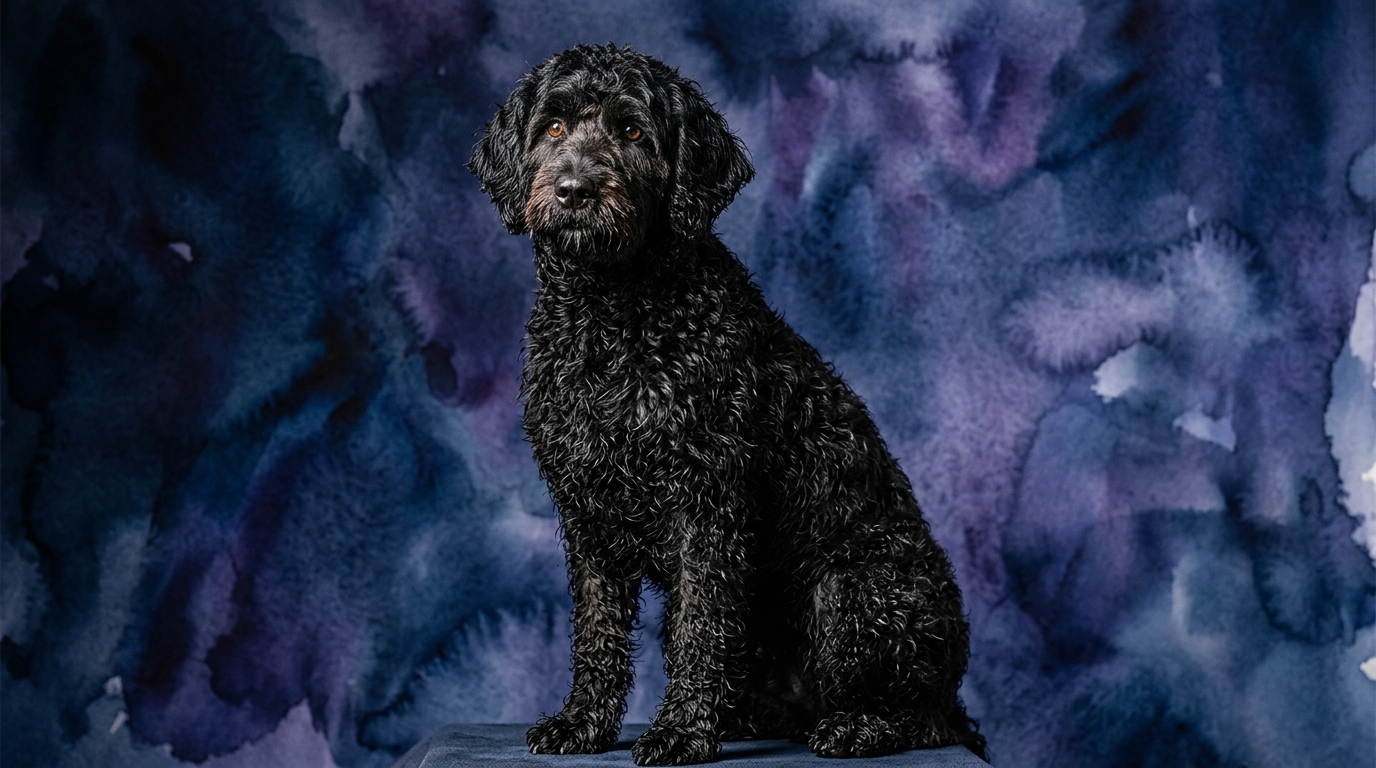

Side-by-Side IQ Profile: Portuguese Water Dog vs. Rhodesian Ridgeback
The Cosmic Pet Pet IQ Lab assesses five crucial cognitive dimensions, rating each on a scale of 1 to 5. Interestingly, both the Portuguese Water Dog and the Rhodesian Ridgeback land at a consistent 3/5 across all categories, indicating a solid, adaptable cognitive baseline. However, the *expression* of these scores is profoundly shaped by their breed-specific histories and inherent drives.
For the Portuguese Water Dog, a member of the Working Group, its cognitive traits are honed by centuries of assisting fishermen on the Iberian coast, retrieving lost gear, herding fish into nets, and carrying messages between boats and shore. This heritage emphasizes partnership and task-oriented problem-solving.
Conversely, the Rhodesian Ridgeback, a Hound Group member, developed its intellect in the demanding African bush, tracking and baying large game, including lions, with minimal human intervention. This background fostered a more independent, discerning, and environmentally aware cognitive style.
Here’s how their 3/5 scores manifest specifically for each breed:
**Portuguese Water Dog (Working Group)**
**Problem Solving (3/5):** PWDs exhibit a practical, adaptable approach to challenges, often focused on manipulating their environment or understanding complex tasks to achieve a desired outcome. This might manifest as figuring out how to retrieve a toy from a tricky spot in the water, untangling a leash, or quickly adapting to new agility course layouts. Their working heritage fosters a mindset geared towards tasks and collaboration.
**Training Speed (3/5):** These dogs learn new commands and routines at a moderate pace, often driven by a desire to engage with their handler and a keen interest in structured activities. While not instant learners, their focus and willingness to participate make them responsive to consistent, positive reinforcement methods.
**Social Intelligence (3/5):** PWDs generally display a balanced understanding of social cues, both from humans and other animals. They can read intentions and moods, often responding with an eager-to-please demeanor, though some can be reserved initially. Their social interactions are typically cooperative and engaged.
**Instinctive Drive (3/5):** The PWD's drives are deeply rooted in its heritage as a fisherman's assistant. This includes a strong inclination to retrieve, particularly from water, a moderate herding instinct, and a general enthusiasm for interactive work. These drives provide a natural motivation for many training activities.
**Memory (3/5):** PWDs possess a solid capacity for remembering commands, routines, and the identities of people and places. They can retain complex sequences of behaviors and recall past experiences, aiding in consistent performance and adaptation to familiar environments.
**Rhodesian Ridgeback (Hound Group)**
**Problem Solving (3/5):** Ridgebacks approach problems with a blend of independence and determination. Their problem-solving often involves navigating complex environments, such as tracking a scent through varied terrain, or assessing potential threats with a discerning eye. They are capable of making decisions autonomously, a trait honed by their hunting background.
**Training Speed (3/5):** Ridgebacks also learn at a moderate pace, but their training often requires a nuanced approach due to their independent nature. They absorb information steadily, yet their responses can be influenced by their strong will and occasional disinterest if they don't perceive a clear purpose or reward.
**Social Intelligence (3/5):** Ridgebacks demonstrate a discerning social intelligence. They are observant of their surroundings and can read social cues, but often maintain a reserved and somewhat aloof stance, especially with strangers. Their social interactions are typically respectful and measured, displaying a quiet confidence rather than overt eagerness.
**Instinctive Drive (3/5):** The Ridgeback's core drives stem from its history as a hunter of large game. This includes a powerful prey drive for tracking and chasing, a territorial instinct, and a protective nature. These drives, while strong, are typically balanced, allowing them to be calm companions when their needs are met.
**Memory (3/5):** Ridgebacks exhibit a reliable memory for commands, spatial layouts, and the individuals they trust. They can recall scent trails and past experiences, contributing to their effectiveness in tracking and their consistent behavior within their established routines and relationships.
Where the Portuguese Water Dog Wins Cognitively
Despite identical numerical scores, the PWD often demonstrates a cognitive advantage in tasks requiring close handler collaboration and a sustained eagerness to please. Their working heritage, centered on assisting fishermen, has fostered an inherent drive to understand and execute human instructions, often with joyful enthusiasm. This manifests in a greater natural aptitude for complex obedience routines, competitive dog sports like agility or dock diving, and multi-step tasks where the dog must anticipate the next human cue. Their problem-solving, while rated 3/5, frequently involves deciphering human expectations and adapting their actions accordingly, making them particularly adept at learning intricate sequences that rely on human-dog teamwork. The PWD’s drive to retrieve, especially from water, also provides a consistent, self-reinforcing motivation for engagement in specific, task-oriented play.
Where the Rhodesian Ridgeback Wins Cognitively
The Rhodesian Ridgeback, while also scoring 3/5, excels in cognitive areas demanding independence, environmental awareness, and discernment. Their historical role in tracking and baying large game in Africa cultivated a robust capacity for autonomous decision-making and problem-solving without constant human direction. This means their 3/5 problem-solving often involves navigating complex outdoor environments, interpreting subtle scent cues, or making judgments about unfamiliar situations or individuals. Their social intelligence, while not overtly effusive, is marked by a keen observational ability, allowing them to assess intentions and gauge situations with a thoughtful, reserved approach. This independent thinking, combined with a strong memory for territorial boundaries and scent paths, gives them an edge in tasks requiring self-reliance, sustained focus on a distant goal (like tracking), and a nuanced understanding of their surroundings without direct prompting.
Which is Easier to Train and Why
When considering ease of training, the Portuguese Water Dog generally presents a more straightforward experience for the average owner, despite both breeds sharing a 3/5 training speed. The PWD’s working group background has instilled a strong desire to partner with humans, making them typically more biddable and responsive to commands. Their eagerness to please and natural drive for interactive tasks mean they often view training as a fun, collaborative activity, readily accepting positive reinforcement. This intrinsic motivation translates into a more consistent willingness to engage in obedience and learn new skills.
The Rhodesian Ridgeback, while equally capable of learning at a 3/5 pace, often requires a more patient, consistent, and understanding trainer. Their hound heritage fosters independence and a strong will; they are thinkers who may question the necessity of a command if it doesn't align with their own perceived goals or instincts. Training a Ridgeback involves convincing them that cooperation is mutually beneficial and rewarding. Their natural prey drive and independent decision-making mean that distractions can be more challenging to overcome, and consistent motivation, often through high-value rewards and varied training methods, is essential to keep them engaged. While they learn, their application of that learning can be more selective, demanding a firm yet fair approach that respects their inherent autonomy.
Which Suits Active Owners vs. Relaxed Owners
For truly active owners seeking a canine companion that thrives on engagement and physical challenge, both breeds offer considerable potential, but with different focuses. The Portuguese Water Dog is an an excellent match for individuals or families who enjoy water sports, hiking, running, or competitive dog sports like agility, obedience, and dock diving. Their robust energy levels, combined with their desire for mental stimulation through tasks and their natural affinity for water, mean they require consistent, vigorous exercise and structured activities to prevent boredom. Owners who can dedicate time to daily training sessions, puzzle toys, and outdoor adventures will find a PWD to be an enthusiastic and tireless partner.
The Rhodesian Ridgeback also demands an active lifestyle, but its needs lean more towards sustained, purposeful exercise and mental engagement related to its hound instincts. Owners who enjoy long, brisk walks, jogging, hiking, or activities like scent work and tracking will find the Ridgeback a willing companion. While they possess impressive stamina, their energy often manifests in powerful bursts followed by periods of calm, making them capable of being quite relaxed indoors *after* their exercise requirements are met. They are not typically suited for owners seeking a low-maintenance exercise routine. Their independent nature also means they appreciate mental challenges that allow them to use their intellect for problem-solving, rather than constant, high-energy interaction. A relaxed owner, in the sense of minimal daily activity, would struggle with either breed, as both require significant physical and mental outlets to maintain well-being. However, an owner who enjoys a more independent companion who can settle calmly indoors after a substantial outing might find the Ridgeback a better fit than the perpetually "on" PWD.
The Verdict
Opt for a Portuguese Water Dog if you seek a highly engaged, collaborative canine partner eager for structured activities like dog sports, water retrieval, and consistent training, and you are prepared to provide ample mental and physical stimulation rooted in teamwork.
Select a Rhodesian Ridgeback if you appreciate a discerning, independent companion with a reserved dignity, thrive on purposeful outdoor activities like tracking or long hikes, and are committed to patient, consistent training that respects their strong will.
🧠 Find Your Pet's IQ Score
Our Pet IQ Lab assessment covers 25+ tests across 5 cognitive dimensions — personalized to your breed.
Take the Full IQ Test →Frequently Asked Questions
Do Portuguese Water Dogs bark a lot?
PWDs can be vocal, using barks, grumbles, and other sounds to communicate, especially when excited or seeking attention. Early training can help manage excessive barking, but their communicative nature is part of their breed character.
Are Rhodesian Ridgebacks good with children?
Rhodesian Ridgebacks can be excellent family dogs and are often very protective and patient with children they've grown up with. However, their size and strength mean supervision is always necessary, and early socialization is crucial for harmonious family living.
Which breed is better for apartment living?
Neither breed is ideally suited for small apartment living without significant commitment to daily exercise and mental enrichment outside the home. The Portuguese Water Dog's higher general energy and need for interaction might make it more challenging, while a well-exercised Rhodesian Ridgeback can be surprisingly calm indoors, provided its outdoor needs are fully met.