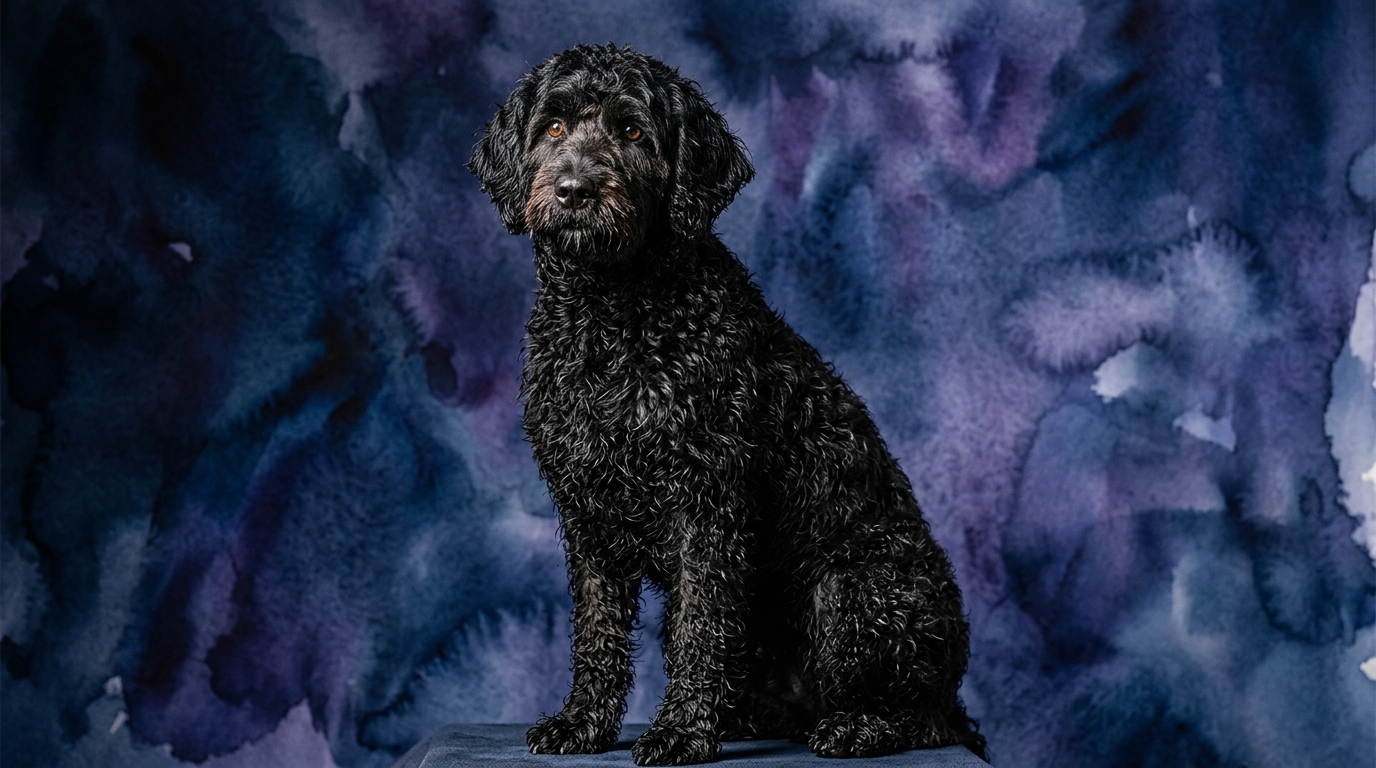
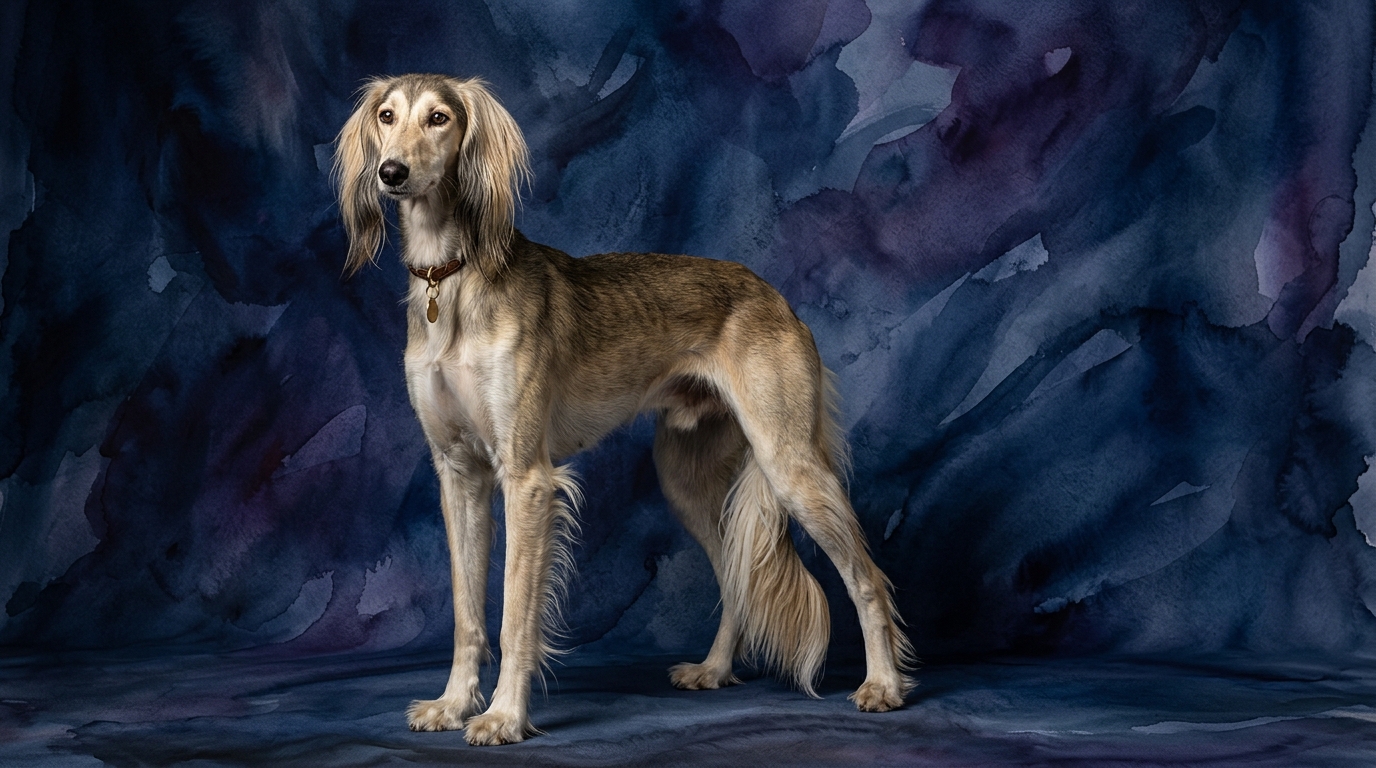
Side-by-Side Cognitive Profiles: PWD vs. Saluki
At The Cosmic Pet Pet IQ Lab, we assess canine intelligence across five key dimensions, and it's intriguing when two breeds register identical scores, compelling us to look deeper into their specific cognitive expressions. Both the Portuguese Water Dog and the Saluki score a 3/5 in Problem Solving, Training Speed, Social Intelligence, Instinctive Drive, and Memory. However, these scores manifest quite differently due to their distinct breed histories and inherent temperaments.
The **Portuguese Water Dog (PWD)**, a member of the Working Group, developed as an aquatic retriever and fisherman's assistant. Their 3/5 Problem Solving reflects an aptitude for practical, human-directed tasks, such as figuring out how to retrieve a specific item from water or navigating complex boat environments. Their 3/5 Training Speed indicates a moderate pace of learning, often driven by a desire to collaborate and please their handler, making them generally responsive to structured lessons. Social Intelligence at 3/5 suggests they are adept at reading human cues and thrive within a family unit, often forming strong bonds. Their Instinctive Drive, also 3/5, is centered around water work, retrieving, and physical activity, demonstrating a focused persistence in these areas. Finally, their 3/5 Memory means they retain learned commands, routines, and social interactions effectively over time, benefiting from consistent engagement.
The **Saluki**, originating from the Hound Group as an ancient sighthound, developed for independent hunting across vast desert landscapes. Their 3/5 Problem Solving manifests as strategic thinking during a chase, independently assessing terrain and predicting prey movements without human direction. Their 3/5 Training Speed implies they can learn, but their independent nature often means they weigh the 'value' of obeying a command, requiring patient and engaging methods. Social Intelligence at 3/5 for a Saluki often means a deep, discerning bond with their chosen few, while being more reserved or aloof with strangers, valuing quiet companionship over constant interaction. Their Instinctive Drive, also 3/5, is profoundly focused on sight-based pursuit, demonstrating an intense, single-minded focus when a moving object triggers their prey drive. Lastly, their 3/5 Memory is strong for routes, hunting grounds, and the people they trust, retaining experiences that shape their independent decision-making.
Where the Portuguese Water Dog Excels Cognitively
The Portuguese Water Dog's cognitive strengths shine particularly in collaborative, task-oriented scenarios. While both breeds score 3/5 in Problem Solving, the PWD's expression leans towards practical challenges that involve working alongside a human partner. They are adept at understanding multi-step commands and adapting their approach to achieve a goal set by their owner, such as navigating an agility course or finding a hidden toy. This reflects a cognitive style that prioritizes engagement and partnership.
Their 3/5 Training Speed, combined with their inherent biddability, often translates into a more accessible training experience for the average owner. PWDs tend to find satisfaction in learning and performing for their people, making them quite receptive to positive reinforcement. This willingness to engage and repeat tasks for a desired outcome — be it a treat, praise, or the opportunity to work — is a distinct cognitive advantage in structured learning environments, allowing them to build a broad repertoire of skills efficiently.
Where the Saluki Excels Cognitively
The Saluki's cognitive prowess is most evident in situations demanding independent thought and swift, autonomous decision-making. Their 3/5 Problem Solving score, unlike the PWD's collaborative bent, reflects an exceptional capacity for self-directed strategy, particularly in pursuit. A Saluki excels at assessing complex environmental factors during a high-speed chase, calculating trajectories, and adapting their movements to outmaneuver prey without human intervention. This makes them highly effective at solving dynamic, real-time problems on their own.
Furthermore, their 3/5 Instinctive Drive for sight-based hunting is a highly refined cognitive specialization. This isn't merely a physical urge; it involves an acute visual processing ability, rapid pattern recognition, and an unparalleled focus that allows them to filter out distractions and concentrate intensely on a moving target. This cognitive specialization means they are masters of their specific domain, demonstrating a unique form of intelligence geared towards their historical role as independent hunters.
Training Dynamics: PWD vs. Saluki
When it comes to training, the practical implications of their identical IQ scores diverge significantly due to their inherent motivations and historical roles. The Portuguese Water Dog, with its working heritage, generally approaches training with an eager-to-please attitude. Their 3/5 Training Speed is supported by a desire for interaction and a history of collaborative tasks, making them responsive to clear commands and consistent positive reinforcement. PWDs often thrive on having a 'job' to do and enjoy the mental stimulation of learning new tricks or performing complex routines, which reinforces their bond with their owner.
The Saluki, conversely, presents a different training landscape. While their 3/5 Training Speed indicates they are capable learners, their independent sighthound nature means they are less inclined to obey simply to please. A Saluki might learn a command quickly but then choose whether or not to execute it based on their own assessment of the situation or if something more compelling (like a squirrel) captures their attention. Training a Saluki requires immense patience, understanding of their strong prey drive, and motivation techniques that truly appeal to their independent spirit, often involving play or high-value rewards. Consistency and making training feel like their idea, rather than a directive, are key to success.
Lifestyle Suitability: Active vs. Relaxed Owners
The cognitive and physical needs of these two breeds dictate different ideal owner lifestyles. The Portuguese Water Dog thrives with active owners who can provide consistent mental and physical engagement. Their 3/5 Instinctive Drive for work and water means they need regular opportunities for exercise, problem-solving games, and structured activities like dog sports or extended walks with purpose. PWDs are generally not content to be couch potatoes; they require an owner who understands their need for a 'job' and can integrate them actively into family life, offering plenty of interaction and training sessions.
The Saluki, while also requiring significant exercise, suits owners who appreciate their unique blend of explosive energy and calm independence. Their exercise needs are often met with intense, short bursts of running in a secure, fenced area, allowing them to fully engage their sighthound instincts. However, once their physical needs are met, Salukis are typically quite relaxed indoors, often preferring to lounge elegantly. They are not as demanding of constant human interaction or structured tasks as a PWD, making them suitable for owners who enjoy a more independent canine companion but are committed to providing safe outlets for their powerful prey drive and bursts of speed.
The Verdict
Choose the Portuguese Water Dog if you seek a highly engaged, collaborative canine partner who thrives on structured tasks and constant interaction, eager to learn and work alongside you.
Opt for the Saluki if you admire independent thinkers, appreciate a quieter companionship indoors, and can provide safe, expansive spaces for them to express their innate sighthound speed and hunting instincts.
🧠 Find Your Pet's IQ Score
Our Pet IQ Lab assessment covers 25+ tests across 5 cognitive dimensions — personalized to your breed.
Take the Full IQ Test →Frequently Asked Questions
Do Portuguese Water Dogs require a lot of mental stimulation?
Yes, Portuguese Water Dogs benefit greatly from regular mental stimulation. Their 3/5 Problem Solving and 3/5 Training Speed mean they enjoy learning and performing tasks. Activities like puzzle toys, obedience training, agility, or even retrieving games help keep their active minds engaged and prevent boredom.
Are Salukis difficult to train due to their independence?
Salukis can present unique training challenges due to their independent nature and strong prey drive, even with a 3/5 Training Speed. They often need patient, consistent training methods that are highly motivating and make them feel like they are choosing to participate. Understanding their sighthound instincts is crucial for effective training and management.
How do their social intelligence scores (3/5) differ in practice?
For the Portuguese Water Dog, a 3/5 Social Intelligence typically means they are outgoing and enjoy interacting with family members and familiar people, often seeking engagement. For the Saluki, a 3/5 Social Intelligence often translates to a deep, loyal bond with their immediate family, but they can be reserved or aloof with strangers, preferring to observe rather than engage directly.