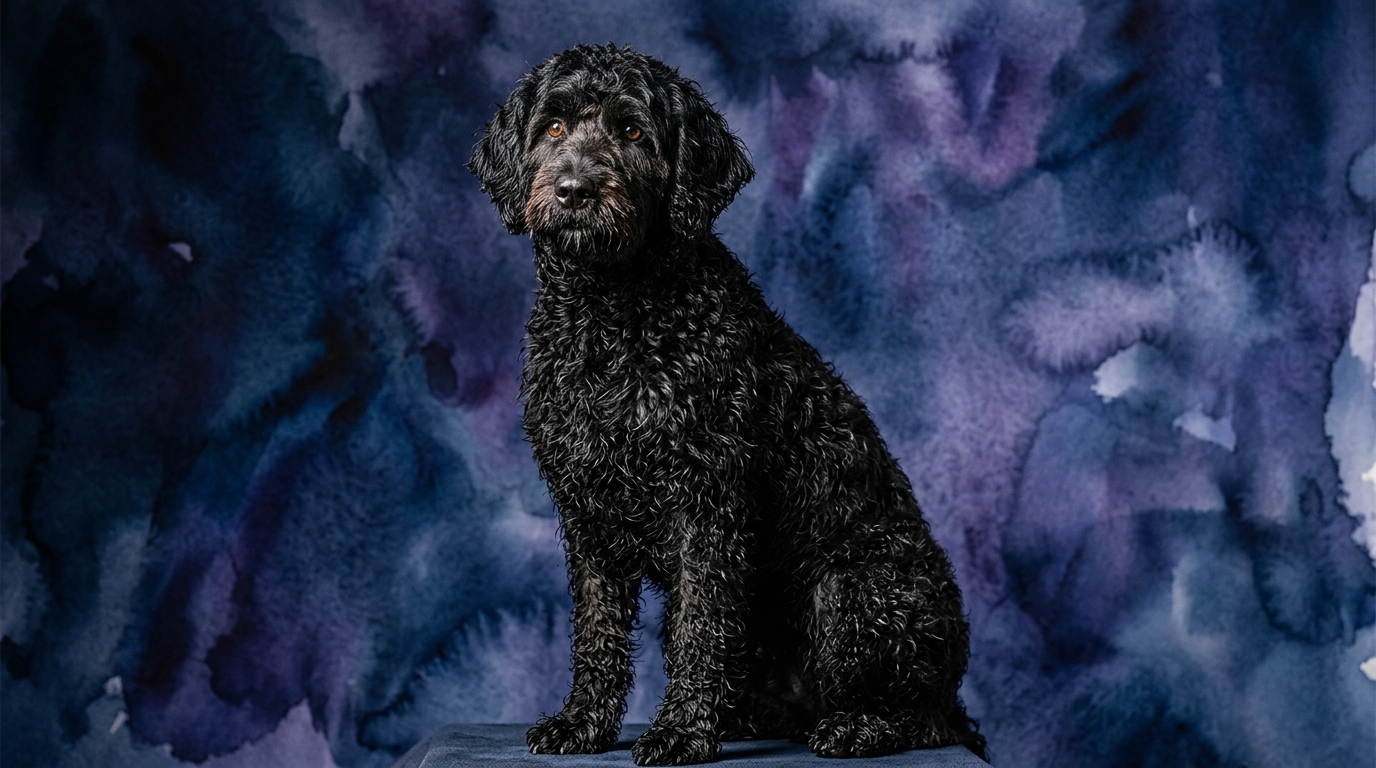
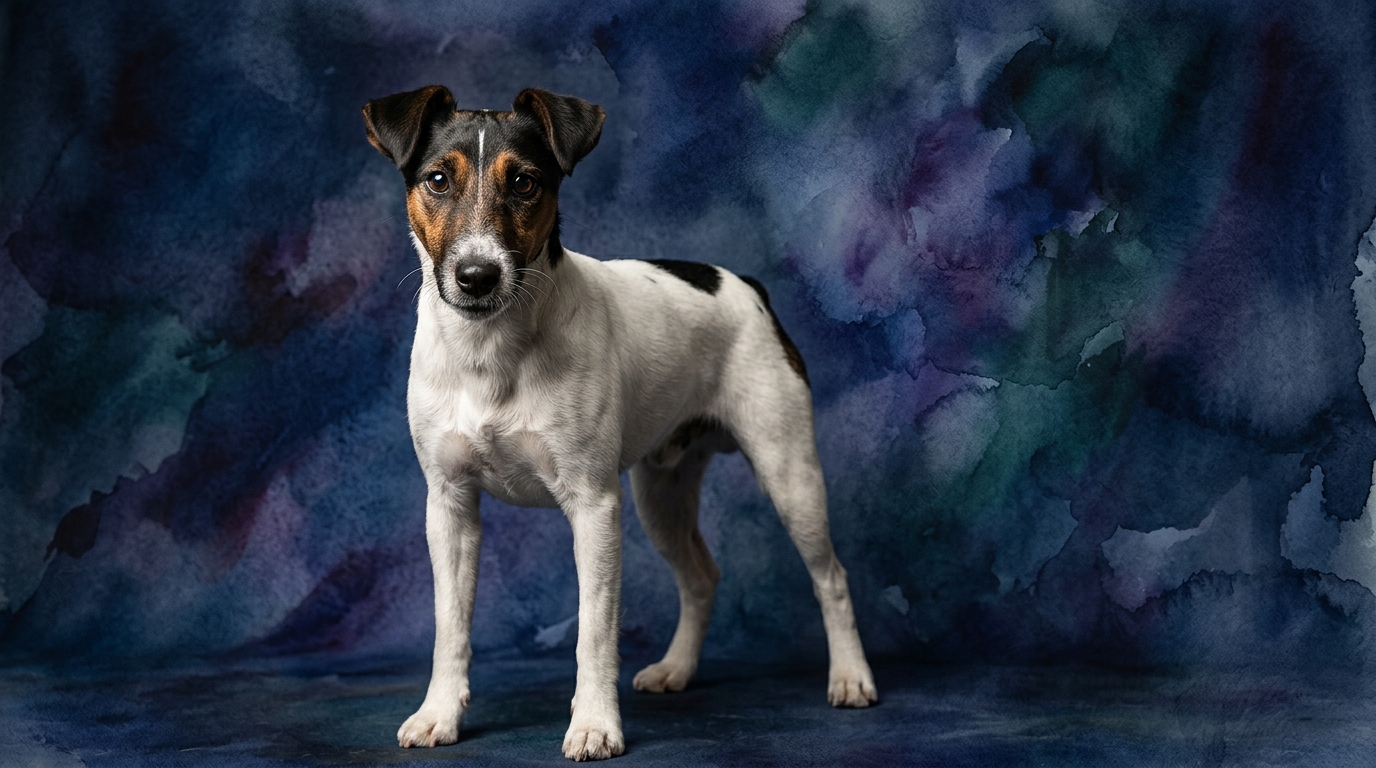
Side-by-Side IQ Profile: PWD vs. Smooth Fox Terrier
Despite both breeds registering a 3/5 across the board in our Pet IQ Lab, the application and expression of these cognitive abilities are profoundly shaped by their ancestral roles and inherent temperaments. This uniform scoring invites a closer look at the nuances, rather than a simple numerical comparison.
For the **Portuguese Water Dog**, a 3/5 in Problem Solving reflects their capacity to figure out tasks related to their working heritage, such as retrieving items from water or navigating complex environments to fulfill a directive from their handler. Their solutions are often cooperative and goal-oriented.
Their 3/5 Training Speed indicates a moderate pace for acquiring new commands, often thriving on consistent positive reinforcement and engaging, purpose-driven lessons. They absorb information steadily, valuing the interaction and the sense of having a 'job' to do.
A 3/5 in Social Intelligence means PWDs are adept at reading human cues and integrating into family dynamics, often forming strong, perceptive bonds. They understand social structures within their pack, though their enthusiastic nature can sometimes lead to boisterous interactions.
The PWD's 3/5 Instinctive Drive is centered around their original role as water retrievers and fishermen's aids, manifesting in a purposeful inclination towards swimming, retrieving, and working collaboratively. Their drives are geared towards partnership and task completion.
Their 3/5 Memory allows them to reliably recall learned commands, routines, and the intricate details of their working experiences or family life. This strong recall aids in their consistency and reliability as companions and working dogs.
Turning to the **Smooth Fox Terrier**, their 3/5 in Problem Solving typically manifests as tenacity and independent thought, particularly when pursuing a perceived 'prey' or navigating physical barriers. They are resourceful in finding ways to achieve their self-appointed goals, often requiring little human input.
A 3/5 in Training Speed means SFTs can quickly grasp new commands, but their independent nature often dictates *when* they choose to apply that knowledge. Learning is not the hurdle; consistent, compliant execution often requires more strategic motivation.
Their 3/5 Social Intelligence is expressed through their acute awareness of their surroundings and family, often making them excellent, albeit vocal, watchdogs. They bond deeply with their chosen people but retain an independent streak, preferring to observe and react on their own terms rather than constantly seeking approval.
The SFT's 3/5 Instinctive Drive is profoundly focused on its terrier heritage: hunting, digging, and chasing. This drive is a powerful, intrinsic motivator that can sometimes override learned behaviors, highlighting their specialized cognitive application.
Their 3/5 Memory means SFTs retain knowledge of hunting strategies, favored digging spots, and past interactions with remarkable clarity. They recall commands but might selectively 'forget' them if a more compelling instinctual drive presents itself.
Where the Portuguese Water Dog Wins Cognitively
While both breeds score identically, the Portuguese Water Dog often demonstrates a cognitive edge in tasks requiring sustained cooperation and the execution of multi-step sequences. Their problem-solving abilities are frequently applied to challenges that involve working *with* their handler, such as complex retrieving games or navigating agility courses where precision and communication are key.
Their social intelligence, while rated 3/5, leans towards a more integrated partnership, allowing them to anticipate human intentions and adapt their behavior to fit a shared goal. This makes them particularly adept at roles demanding a nuanced understanding of human-dog collaboration, where their memory for specific commands and routines enhances their overall reliability in a team setting.
Where the Smooth Fox Terrier Wins Cognitively
The Smooth Fox Terrier's cognitive strengths shine in scenarios demanding independent thought, tenacity, and quick, self-directed problem-solving. Their 3/5 problem-solving is often applied to figuring out how to bypass obstacles to reach a desired object or location, or how to outsmart a perceived rival, often without human direction.
Their instinctive drive, also a 3/5, is a powerful, singular force that fuels a highly specialized form of cognitive application focused on prey detection and pursuit. This allows them to excel in tasks requiring intense focus and persistent effort, such as earthdog trials or intricate scent work, where their memory for specific smells and locations is a distinct advantage.
Training Ease: PWD vs. Smooth Fox Terrier
When considering training ease, the Portuguese Water Dog generally presents a more straightforward path for conventional obedience. Their 3/5 training speed is often coupled with a genuine desire to engage with and please their people, making them responsive to positive reinforcement and consistent training methods. They thrive on having a 'job' and appreciate the structure of learning, which helps channel their moderate energy productively.
The Smooth Fox Terrier, despite also scoring 3/5 in training speed, can be significantly more challenging for traditional obedience. Their profound 3/5 instinctive drive, particularly for hunting and independent action, means they often prioritize their own investigations over following commands. Training an SFT demands immense patience, creativity, and the ability to make learning more compelling than their natural urges; otherwise, their problem-solving might be directed towards finding ways *around* commands rather than adhering to them. Consistency is paramount, often requiring owners to be more strategic in motivation and environment management.
Matching Breeds to Lifestyles: Active vs. Relaxed Owners
Neither the Portuguese Water Dog nor the Smooth Fox Terrier is suited for truly relaxed or sedentary owners; both require substantial mental and physical engagement. However, the *type* of activity they thrive on differs significantly, reflecting their unique cognitive profiles.
The Portuguese Water Dog is an excellent fit for active owners who enjoy structured activities like competitive dog sports (agility, obedience, dock diving), long hikes, and water-based adventures. Their cooperative problem-solving and social intelligence mean they genuinely thrive on shared experiences and having a purpose alongside their human companions.
The Smooth Fox Terrier appeals to active owners who can provide outlets for their strong hunting instincts and independent spirit. This might include earthdog trials, extensive walks focused on scent exploration, or interactive games that challenge their tenacity and mimic prey pursuit. They need mental stimulation that allows them to apply their independent problem-solving and satisfy their inherent drive, often through less structured, more exploratory activities.
The Verdict: When to Choose Each
The Verdict
Choose the Portuguese Water Dog if you seek a cooperative, task-oriented companion who thrives on shared activities and forms a deep, interactive bond, eager to work alongside you.
Opt for the Smooth Fox Terrier if you appreciate an independent, tenacious, and alert companion, willing to engage in creative problem-solving and channel their strong instincts in a less directed manner.
🧠 Find Your Pet's IQ Score
Our Pet IQ Lab assessment covers 25+ tests across 5 cognitive dimensions — personalized to your breed.
Take the Full IQ Test →Frequently Asked Questions
Are Portuguese Water Dogs good family pets?
Yes, Portuguese Water Dogs often form strong bonds with their families, displaying their 3/5 social intelligence by integrating well into household routines and enjoying interactive play. However, their moderate energy and need for mental engagement require an active family committed to their well-being.
Do Smooth Fox Terriers bark a lot?
Their 3/5 instinctive drive and alertness often lead Smooth Fox Terriers to be vigilant watchdogs, and they can be prone to barking at perceived intruders or interesting stimuli. This is a natural manifestation of their problem-solving applied to territory defense and requires consistent training to manage.
Can a Smooth Fox Terrier live in an apartment?
While smaller in stature, the Smooth Fox Terrier's pronounced 3/5 instinctive drive for hunting and digging, coupled with their alert nature, means they require significant mental and physical outlets to thrive in an apartment. Without consistent engagement, their independent problem-solving might lead to undesirable behaviors within a confined space.