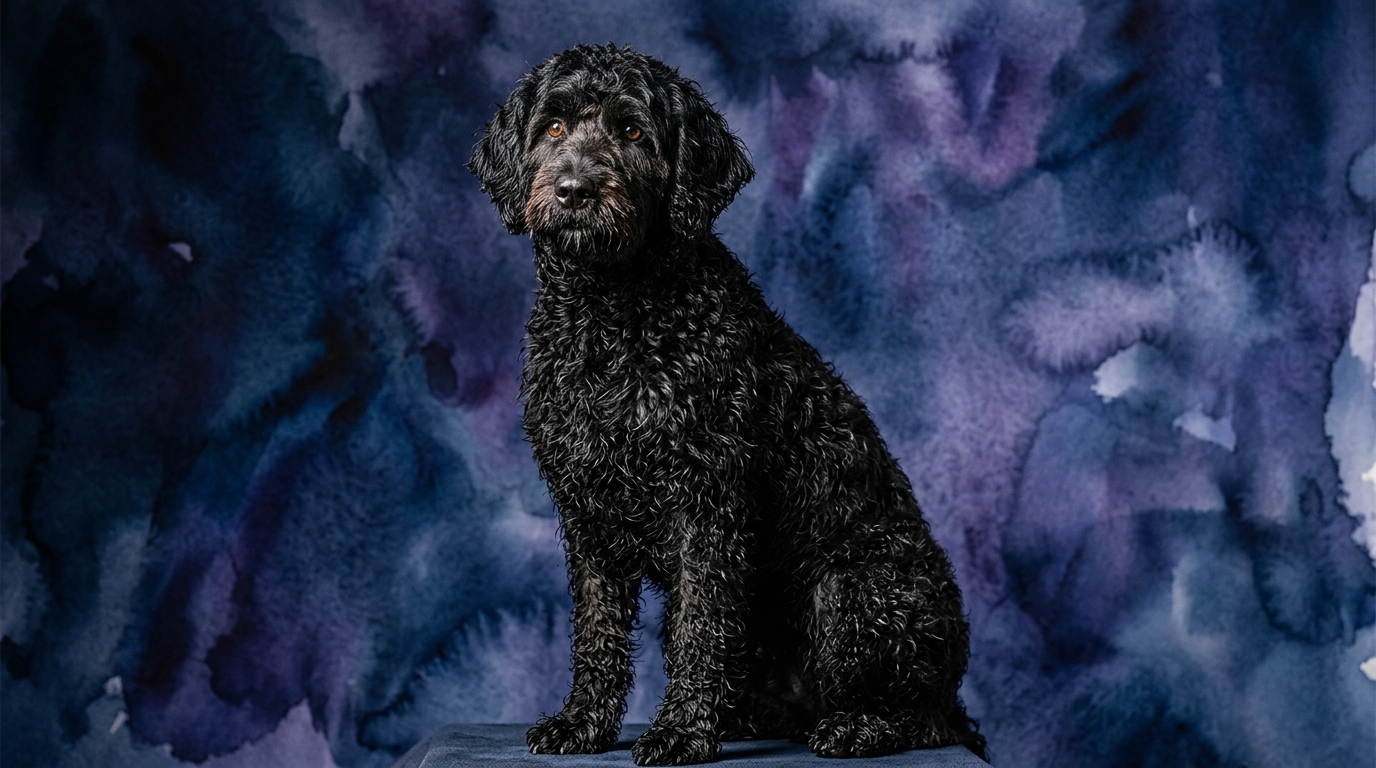
Side-by-Side Cognitive Profiles: Portuguese Water Dog
The Portuguese Water Dog (PWD), a breed from the Working group, exhibits a consistent 3/5 across all five assessed intelligence dimensions. For problem-solving, this score reflects a moderate aptitude for tackling novel situations, often translating to practical, physical solutions in their environment, such as figuring out how to retrieve objects from water or navigating complex terrain. Their solutions tend to be direct and task-oriented, driven by their working heritage.
A 3/5 in training speed indicates PWDs learn new commands at a moderate pace. They are generally eager to please and receptive, but their independent working spirit means they aren't always immediately compliant. Consistency and positive reinforcement are key to harnessing their moderate learning curve effectively, especially when their tasks feel purposeful.
Their social intelligence score suggests a moderate ability to interpret and respond to human and canine cues. PWDs are often attuned to their family's emotions and can adapt their behavior, yet they also possess a certain self-reliance. They form strong bonds and can be quite expressive in their interactions, but might not always prioritize social cues over an interesting task.
This moderate instinctive drive is rooted in their heritage as water-retrieving working dogs. Their instincts for retrieving, guarding, and herding are present but can be channeled and managed with appropriate outlets. This drive manifests as a natural inclination towards purpose-driven activities and a need for engagement. Finally, a moderate memory capacity means they retain learned information and experiences reasonably well, contributing to their trainability and ability to navigate familiar environments effectively.
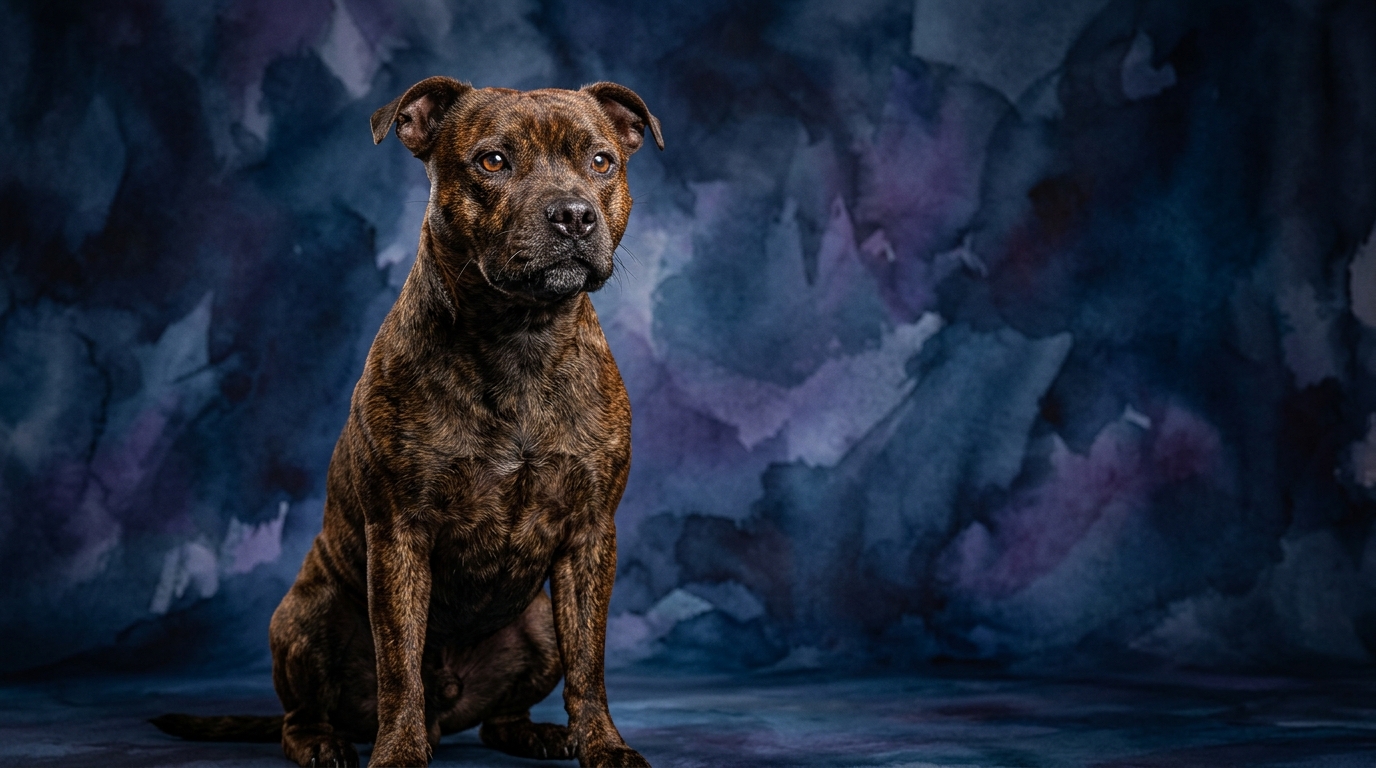
Side-by-Side Cognitive Profiles: Staffordshire Bull Terrier
The Staffordshire Bull Terrier (SBT), a member of the Terrier group, also registers a 3/5 across all five intelligence dimensions. For problem-solving, this often manifests as resourcefulness in navigating their immediate social and physical environment. They might figure out how to access a favorite toy or how to get closer to their beloved humans, with solutions that can be persistent and driven by their strong desire for connection or play.
A moderate training speed for SBTs means they absorb new information steadily. While they possess an eagerness to please their people, their strong will and occasional stubbornness can sometimes temper their learning pace. Engaging and positive methods are crucial to keep them focused and motivated, especially when training taps into their playful nature.
SBTs demonstrate their moderate social intelligence by often excelling in reading human emotions and intentions, often showing a high degree of empathy and understanding within their immediate family. Their social intelligence is deeply intertwined with their desire for close companionship, making them highly responsive to their owners' moods and cues and keen observers of family dynamics.
Their moderate instinctive drive is often expressed as a strong prey drive towards small, fast-moving objects, coupled with a deep desire for play and interaction. This drive is rooted in their terrier heritage and can be channeled through structured games and appropriate physical activity. SBTs exhibit a moderate memory, remembering past training, routines, and social interactions with clarity, which contributes to their ability to form strong, lasting bonds and recall learned behaviors once established.
Where the Portuguese Water Dog Wins Cognitively
While both breeds share a 3/5 problem-solving score, the Portuguese Water Dog’s cognitive strengths often lean towards practical, task-oriented challenges. Their historical role as fishing assistants required them to independently assess situations like retrieving nets or lost equipment from water. This means their 3/5 problem-solving frequently manifests as an ability to strategize and execute multi-step physical tasks, demonstrating persistence in achieving a tangible goal. They might excel at figuring out how to open a complex puzzle toy designed for physical manipulation, leveraging their dexterity and determination in a way that aligns with their working dog lineage.
Where the Staffordshire Bull Terrier Wins Cognitively
The Staffordshire Bull Terrier, despite the same 3/5 problem-solving score, often demonstrates a nuanced cognitive edge in social and emotional intelligence within their family unit. Their historical role as companions and family protectors, rather than working dogs, means their 3/5 social intelligence often translates into a profound understanding of human emotions and social dynamics. An SBT might more readily pick up on subtle changes in their owner's mood, offering comfort or initiating play at just the right moment. Their problem-solving might involve devising clever ways to gain attention or affection, showing a keen understanding of social cues and how to manipulate them gently for desired outcomes, rather than complex physical tasks.
Training Dynamics: PWD vs. SBT
Both breeds share a 3/5 training speed, but their underlying motivations and drives significantly impact the training experience. The Portuguese Water Dog, with its working dog background, is often motivated by task completion and a desire to engage in purposeful activities. They respond well to training that feels like a 'job,' and their moderate instinctive drive means they can focus on structured tasks. However, their independent streak means they might question commands or seek to understand the 'why' before complying, requiring patient and consistent instruction that appeals to their logical, task-oriented nature.
The Staffordshire Bull Terrier, while equally capable of learning at a moderate pace, brings a different dynamic to training. Their deep desire for human connection and play can be a powerful motivator, making them eager to please their beloved people. However, their strong terrier will and occasional exuberance can lead to distractions or stubbornness, especially if training isn't engaging or if they perceive a more enjoyable alternative. Their problem-solving might involve figuring out how to get attention rather than strictly adhering to a command. Training an SBT often requires creativity to keep them engaged, leveraging their playfulness and social intelligence, while firmly establishing boundaries to manage their moderate instinctive drives, particularly their prey drive.
Matching Canine Companions to Lifestyles
For the active owner seeking a partner in adventure, the Portuguese Water Dog often presents a compelling choice. Their moderate instinctive drive and physical problem-solving skills make them well-suited for activities like agility, dock diving, or hiking. They thrive on having a 'job' and require consistent mental and physical stimulation to prevent boredom. An owner who enjoys structured activities and can provide outlets for their water-loving, retrieving nature will find the PWD an engaging and capable companion.
Conversely, while still requiring regular exercise, the Staffordshire Bull Terrier can be a superb fit for owners who prioritize close companionship and interactive play over high-intensity, task-oriented activities. Their social intelligence and deep emotional connection make them wonderful family dogs who enjoy being involved in daily life, whether it's a brisk walk followed by snuggles on the couch or engaging in spirited play sessions in the yard. They adapt well to a relaxed home environment as long as their need for social interaction and moderate physical activity is met. Owners who appreciate a dog with a big personality and a strong desire for affection will find the SBT an incredibly rewarding companion.
The Verdict
Choose the Portuguese Water Dog if you seek a partner for varied, structured activities and appreciate a dog that thrives on purposeful engagement, offering a blend of independence and cooperation in a working context.
Choose the Staffordshire Bull Terrier if your priority is a deeply affectionate, socially intelligent companion who excels in family dynamics and enjoys interactive play, bringing a robust personality and unwavering loyalty to your home.
🧠 Find Your Pet's IQ Score
Our Pet IQ Lab assessment covers 25+ tests across 5 cognitive dimensions — personalized to your breed.
Take the Full IQ Test →Frequently Asked Questions
Do Portuguese Water Dogs need a lot of mental stimulation?
Yes, PWDs require consistent mental stimulation to keep their moderate problem-solving and instinctive drives engaged. Activities like puzzle toys, obedience training, and learning new tricks are essential to prevent boredom and channel their energy constructively.
Are Staffordshire Bull Terriers good with children?
Staffordshire Bull Terriers are often known for their patience and affectionate nature with children, earning them the nickname 'nanny dog.' However, proper socialization from a young age and supervision are always crucial to ensure positive interactions, given their moderate instinctive drives.
How do their grooming needs compare?
The Portuguese Water Dog has a single, non-shedding coat that requires regular grooming, including brushing and professional clipping every 6-8 weeks to prevent matting. The Staffordshire Bull Terrier has a short, smooth coat that sheds minimally and requires far less grooming, typically just weekly brushing.